Best Car Maintenance Fluids 2026: Oil, Coolant & Brake

Motor oil: Valvoline MaxLife High Mileage 5W-30 at $19 for 5 quarts is the top pick for vehicles over 75,000 miles — seal conditioners and extra detergent additives address the specific needs of older engines. Transmission fluid: ACDelco Dexron VI at $44/gallon is the OEM choice for GM vehicles and a broad compatible option for other Dexron VI-spec transmissions. Brake fluid: Liqui-Moly DOT 4 at $13 covers a complete brake system flush with its higher boiling point specification.
See Today’s Price →At a Glance
Showing 3 of 3 products
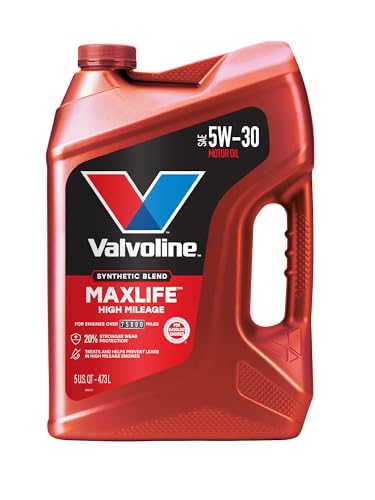
Valvoline MaxLife High Mileage 5W-30 Synthetic Blend Motor Oil 5 Quart
“Valvoline MaxLife is formulated for the specific needs of older engines — the seal conditioners genuinely help reduce minor oil seepage and consumption in high-mileage vehicles.”
See Today’s Price →What we like
Watch out for
Read Full Analysis
Valvoline MaxLife High Mileage 5W-30 Synthetic Blend is designed for vehicles with over 75,000 miles on the odometer. The formulation includes seal conditioners that swell and rejuvenate aging engine gaskets and seals — a key reason high-mileage vehicles leak oil. It also contains extra detergent additives that break down sludge buildup that accumulates in engines with extended oil change intervals. At $19 for 5 quarts, it costs comparably to standard motor oil while providing formulations specifically beneficial for older, higher-mileage engines. It is one of the most widely recommended motor oil upgrades for vehicles showing early signs of seep leaks or oil consumption. Best for any vehicle over 75,000 miles as a direct replacement at the next oil change interval.

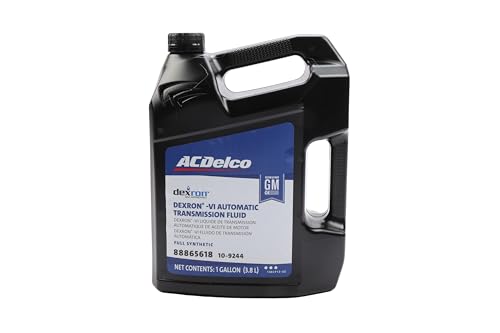
ACDelco Dexron VI Full Synthetic Automatic Transmission Fluid 1 Gal
“ACDelco Dexron VI is the factory-spec fluid for most modern GM automatic transmissions — using the correct specification prevents shift quality and longevity issues.”
See Today’s Price →What we like
Watch out for
Read Full Analysis
ACDelco Dexron VI Full Synthetic Automatic Transmission Fluid is the OEM-specification fluid for GM automatic transmissions and a compatible replacement for older Dexron III and Dexron IV transmissions. Full synthetic construction provides better performance at temperature extremes than conventional ATF, which is particularly important for towing applications and vehicles driven in cold climates where transmission warm-up time matters. At $44 per gallon, it is priced competitively against aftermarket Dexron VI alternatives. Best for GM vehicle owners due to the OEM brand match, and for owners of any vehicle specifying Dexron VI transmission fluid.

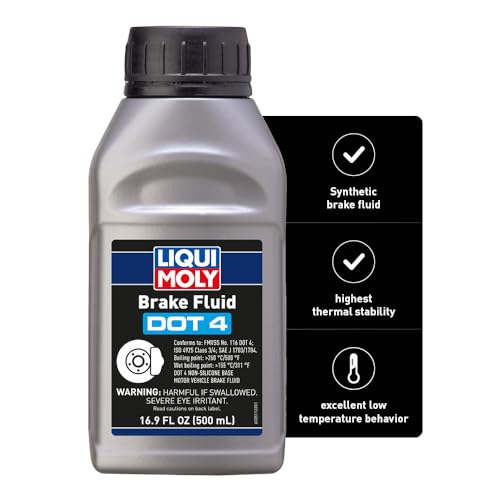
Liqui Moly Brake Fluid DOT 4 | 500 ML | SKU: 20154
“Liqui Moly DOT 4 brake fluid is a reliable choice for vehicles requiring DOT 4 spec — the higher dry/wet boiling points are important for spirited driving and performance vehicles.”
See Today’s Price →What we like
Watch out for
Read Full Analysis
Liqui-Moly DOT 4 Brake Fluid is a glycol ether-based fluid formulated to meet DOT 4 specifications with a higher dry boiling point than DOT 3 alternatives. The higher boiling point reduces vapor lock risk during repeated heavy braking — the primary reason brake fluid flush intervals exist. DOT 4 is backward compatible with DOT 3 systems and can be used as an upgrade fluid in vehicles that specify DOT 3. Liqui-Moly is a German lubricant brand with a strong reputation in European vehicle maintenance circles. At $13 for 500ml, it is appropriately sized for a single brake system flush with minor overflow for bleeding. Best for anyone doing a scheduled brake fluid flush (typically every 2 years or 24,000 miles per manufacturer recommendations).
Car Maintenance Fluids Buying Guide
 Photo by Kampus Production / Pexels
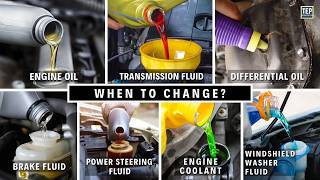
Vehicle fluids degrade over time and with use. Oil breaks down from heat cycling and combustion byproducts. Transmission fluid oxidizes and loses viscosity from heat. Brake fluid absorbs moisture from the air, lowering its boiling point each year. Staying on manufacturer-recommended fluid change intervals prevents the mechanical failures that happen when these fluids reach the end of their service life.
Motor Oil: Conventional, Synthetic Blend, and Full Synthetic
High-Mileage Motor Oil: What Makes It Different
Standard motor oil — even full synthetic — does not include the seal conditioning agents that high-mileage formulations add. As rubber seals and gaskets age, they shrink and harden, creating the small leaks and seeps that cause oil spots in driveways and gradual oil consumption between changes.
High-mileage additives:
- Seal conditioners: Cause aging rubber seals to swell slightly, improving their sealing contact
- Anti-wear agents: Higher concentrations to protect worn engine surfaces
- Extra detergents: Clean sludge from engines with history of extended change intervals
The rule: if your vehicle has over 75,000 miles or shows early seep leaks, switch to a high-mileage formulation at the next oil change.
Motor Oil Viscosity: What the Numbers Mean
The two numbers in motor oil ratings (e.g., 5W-30) describe cold-start flow (5W) and operating viscosity (30). The W designation (Winter) determines how easily oil flows on cold starts — lower is better for cold climates. The second number determines film thickness at operating temperature — use exactly what your owner's manual specifies.
Using a higher viscosity than recommended (e.g., 10W-40 when 5W-30 is specified) increases oil pressure but reduces flow to tight tolerances in modern engines. Using a lower viscosity may reduce film thickness below required levels. Follow manufacturer specs.
Automatic transmission fluid is often listed by manufacturers as "lifetime" or "sealed" — this refers to the transmission being sealed (no dipstick) rather than the fluid actually lasting forever. Most independent mechanics and transmission specialists recommend ATF changes every 30,000-60,000 miles for normal driving and 30,000 miles for vehicles that tow.
Dexron VI is a GM specification. Check your owner's manual for the correct ATF specification — using the wrong fluid can damage transmission seals and shift solenoids.

Brake fluid is hygroscopic — it absorbs moisture from the atmosphere through rubber brake lines over time. As moisture content increases, the fluid's boiling point decreases. Vapor lock (steam bubbles in the brake lines from overheated fluid) causes brake pedal fade — the pedal goes soft or to the floor under heavy repeated braking.
DOT 3 and DOT 4 are glycol ether-based fluids. DOT 4 has a higher boiling point (dry: 230°C vs. 205°C for DOT 3). DOT 4 is backward compatible with DOT 3 systems. DOT 5 is silicone-based and NOT compatible with DOT 3/4 systems — do not mix.
The standard service interval is every 2 years or 24,000 miles regardless of appearance. Brake fluid can look clean while being saturated with moisture — visual inspection cannot determine service condition.
If you're handling fluid changes yourself, our DIY oil change tools guide covers the drain pans, funnel sets, and socket kits that make the job straightforward. For coolant specifically, our antifreeze and coolant comparison covers the top brands and mix ratios for different climates. An OBD2 scanner is worth having alongside any fluid maintenance routine — it reads the engine codes that signal when service is actually needed rather than relying on mileage estimates alone.
Frequently Asked Questions
How do I know if my vehicle needs high-mileage motor oil?
Can I mix synthetic blend motor oil with full synthetic?
How do I know what transmission fluid my vehicle needs?
Is DOT 4 brake fluid better than DOT 3?
Can I check brake fluid condition myself at home?
How We Analyze Products
We analyze Amazon review data — often thousands of reviews per product — to surface patterns that individual buyers miss. Our process aggregates star ratings, review counts, and buyer sentiment at scale, identifying which strengths and weaknesses appear consistently across the largest review samples available.
Each product earned its placement through data: total review volume, average rating, and the specific praise and complaints that repeat most often across buyers. No manufacturer paid for placement on this page. Products appear here because buyers endorsed them at scale, not because a company asked us to feature them.
We use AI to summarize review sentiment — not to fabricate opinions, but to condense what thousands of buyers actually wrote into a readable format. The pros and cons you see reflect the most common themes found in verified purchaser reviews, paraphrased for clarity. We do not claim to have accessed Reddit, YouTube, or specific publications in generating these summaries.
Prices shown reflect Amazon pricing at the time this page was last generated. Click “See Today’s Price” to get the current live price on Amazon. Read our full methodology →