How to Start Detailing Your Car: Beginner Guide from Wash
The Chemical Guys TORQX Dual-Action Orbital Polisher is the best starting point for beginners learning car detailing — the dual-action design is safe for beginners who would burn paint with a single-action rotary polisher, and Chemical Guys' foam pad system produces professional paint correction results on first use.
How to Start Detailing Your Car Buying Guide
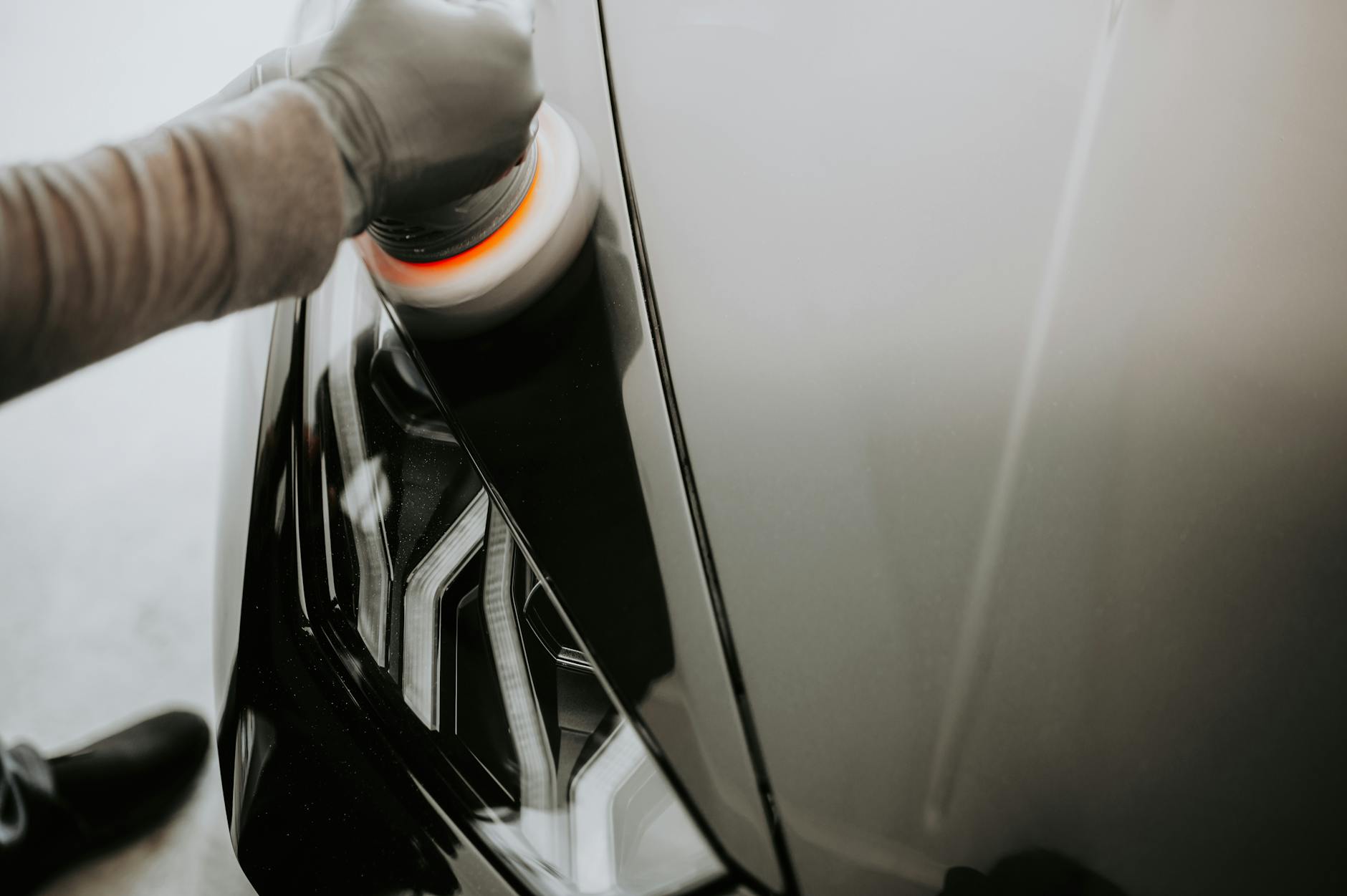 Photo by Luke Miller / Pexels
| Best For |
Beginners ready to tackle paint correction |
||
| Core Includes |
Wash soap, two buckets, wash mitt, microfibers |
||
| Skill Level |
Read manual, practice on test panel first |
||
| Time Per Session | |||
| Paint Risk |
Moderate — improper DA use can burn through clear coat |
||
| Our Pick For |
This guide is for you if:
-
You want to maintain your car's paint at home without paying $150-300 for professional detailing
-
You're confused between wax, paint sealant, and ceramic coating options
-
You're trying to restore or protect a car's paint and want to understand your options
Skip this guide if:
-
You're a professional detailer — this is written for DIY car owners
-
You just want the best product — see our auto care comparison pages
Quick verdict: Start with the two-bucket wash method to avoid adding swirl marks. Dry with a quality microfiber drying towel.
<Complete Car Detailing Guide for Beginners 2026
Car detailing is the process of thoroughly cleaning, restoring, and protecting a vehicle's surfaces — exterior paint, wheels, glass, and interior. A proper detail involves a specific sequence of steps; skipping or reversing them either wastes product or causes damage.
This guide walks through the complete process from first wash to final protection, covering tools, products, and common beginner mistakes at each stage.
The Detailing Sequence — Why Order Matters
Exterior sequence: 1. Pre-rinse / foam cannon prewash (remove loose dirt) 2. Two-bucket hand wash 3. Rinse and dry 4. Clay bar decontamination (as needed) 5. Paint correction: compound and/or polish (as needed) 6. Protection: wax, sealant, or ceramic coating 7. Wheel and tire treatment 8. Glass treatment Interior sequence: 1. Remove all trash and personal items 2. Vacuum seats, floors, and crevices 3. Brush and vacuum air vents 4. Wipe dashboard, console, and door panels 5. Clean leather or fabric seats 6. Glass (interior last — reduces re-contamination) Applying protection before correcting paint traps swirl marks under the coating. Cleaning glass first and then touching the dashboard with a dirty cloth re-contaminates it. The sequence exists because each step prepares the surface for the next.Step 1: The Two-Bucket Wash Method — The Foundation of Safe Washing
The single biggest cause of paint swirl marks is washing technique — specifically, dragging contaminated wash media across the paint. The two-bucket method eliminates this.
Setup:
- Bucket 1: Soapy water (car wash soap, not dish soap — dish soap strips wax and dries out rubber trim)
- Bucket 2: Clean rinse water
- Grit guards in both buckets: Plastic screens that sit on the bucket floor and keep dislodged dirt from getting back on your wash mitt
After washing, water spots form as minerals in tap water evaporate on the paint surface. Drying quickly and correctly prevents this.
Best drying methods: 1. Blower/leaf blower (automotive use): Blow water out of crevices, door handles, emblems, and mirrors first. Dramatically reduces the amount of towel contact required. 2. Microfiber waffle-weave drying towel: The large-format, high-GSM (grams per square meter) towels absorb 5–7x their weight in water. Lay the towel flat on the surface and drag gently — don't scrub. 3. Chamois: Traditional but less safe than microfiber — can scratch if contaminated.
Avoid: Bath towels, shop rags, paper towels — all scratch clear coat.
For towel recommendations, see our Best Microfiber Cleaning Cloths 2026 page.
Step 3: Clay Bar — The Decontamination Step Most Beginners Skip
What clay bar does: After washing, paint can still contain embedded contaminants that washing doesn't remove: industrial fallout (airborne iron particles from brake dust and rail dust), tree sap residue, overspray, and road tar. Clay bar mechanically removes these embedded particles. Do you need it? Run a clean plastic bag over a washed, dry panel. If the paint feels rough or gritty under the bag — like sandpaper — it needs clay. If it feels glassy smooth, skip it. How to clay: 1. Work in a shaded area on a cool surface 2. Spray clay lubricant generously on a small section (18x18 inch area) 3. Fold a small piece of clay bar into a flat disc 4. Glide the clay back and forth across the lubricated surface with light pressure 5. Wipe off residue with a clean microfiber towel 6. Fold the clay to expose a clean face after every few passes — if you drop it, throw it away After clay: Paint is now clean and ready for correction or protection. Apply protection (wax/sealant/ceramic) within 24–48 hours before contamination returns.Step 4: Paint Correction — Compound vs Polish vs One-Step
This is where most beginners get confused. Here's the hierarchy:
Compound (cutting compound): The most aggressive paint correction product. Contains larger abrasive particles that remove scratches, heavy oxidation, and deep swirl marks. Always followed by polish to remove the haze compounds leave behind.
Polish: Less aggressive than compound. Removes light swirl marks, fine scratches, water spot etching, and the hazing left by compound. Used alone for maintenance; used after compound for full correction.
All-in-one (AIO): Combines light cutting with polishing and some protection in one step. Less effective than a dedicated compound + polish sequence but much faster. Good for maintenance and mild correction.
Wax / Sealant / Ceramic: No corrective ability — these protect paint but don't remove scratches. Applying wax over scratched paint just makes scratches shiny.
The beginner decision tree:
-
Light swirl marks and maintenance: Polish or AIO
Watch Before You Buy

“The TORQX is the right first machine polisher for a beginner who's serious about paint correction. The DA action removes the risk of burning paint, and the Chemical Guys tutorial ecosystem makes the…”
See Today’s Price →What we like
- Chemical Guys TORQX dual-action random orbital combines forced rotation with free rotation — removes swirls without burning clear coat
- 8mm throw orbit creates more correction power than standard 6mm units for heavy oxidation removal
- Variable speed dial (1-6) gives control from light polish to heavy cut in a single tool
- Compatible with all 5-inch and 6-inch backing plates and foam pads — no proprietary pad system
Watch out for
- $154.99 is the premium tier on this page — entry-level polishers cost 60% less
- Heavier than compact orbital polishers at 5.1 lbs — fatigue on overhead or extended panel work
Read Full Analysis
The Chemical Guys TORQX is the most capable polisher on this page — 700W motor with 8mm throw delivers the material removal force needed to cut through oxidized paint, heavy swirl marks, and moderate scratches that lesser polishers leave behind. The compact head design reaches tight areas around mirrors, bumpers, and door handles that larger dual-action polishers miss. Variable speed dial and trigger enable precise control for beginners learning to polish without burning through clear coat. The ecosystem argument is the key consideration: Chemical Guys compounds, polishes, and pads are engineered to work together, and buying the TORQX while using their product line means each component performs at spec rather than mixing systems. Against the Adam's Polishes kit at rank 2, the TORQX is a standalone polisher — it doesn't include compounds or accessories. The Adam's kit provides complete detailing coverage across every panel of the car for $40 less, making it the better first purchase for beginners who need everything. Against the Meguiar's polish at rank 3, the TORQX is the machine that applies it at full effectiveness — hand-applied polish works but machine application with correct pad pressure produces measurably better results. The TORQX is the right purchase for detailers who already have a Chemical Guys product foundation and want to step up from hand application. For true beginners, start with the Adam's kit and add the polisher later.

“Adam's Polishes has an excellent reputation in the detailing community for quality and transparency. This kit covers wash, dry, and protect in quality products that work together correctly.”
See Today’s Price →What we like
- Professional detailer brand
- Covers paint, wheels, tires, glass, interior
- All full-size products
- No-filler premium formulas
- Outstanding customer support
Watch out for
- Premium price point
- Less tutorial content than Chemical Guys
- Smaller brand recognition than Meguiar's
Read Full Analysis
The Adam's Polishes Essentials kit is the right first purchase for a beginner detailer — it provides full-size professional-grade products covering paint, wheels, tires, glass, and interior in one box, eliminating the decision paralysis of assembling individual products. Adam's formulations are used by professional detailers who know chemistry; the products work without fillers or cheap additives that degrade performance and leave residue on trim. Against the Chemical Guys TORQX polisher at rank 1, the Adam's kit costs $40 less and provides complete product coverage versus a standalone machine — these aren't competitors. The correct sequence for a beginner is: start with the Adam's kit to learn proper wash and protect technique by hand, then add a dual-action polisher like the TORQX after developing paint correction confidence. Against the Meguiar's Ultimate Polish at rank 3, Adam's kit costs $105.32 more but covers every detailing step versus a single pre-wax product. Against the Detailer's Preference microfiber towels at rank 4, the Adam's kit likely includes towels for specific steps — check kit contents before buying separately. The smaller brand recognition versus Meguiar's or Chemical Guys is accurate but not a quality indicator — professional detailers frequently prefer Adam's for product consistency and customer support responsiveness. Best for: first-time detailers who want one comprehensive purchase to get started correctly.

“The benchmark beginner polish at an unbeatable price. If your car has light swirls and moderate shine loss, this single product delivers dramatic improvement without requiring a machine polisher.”
See Today’s Price →What we like
- Pre-wax glaze
- Swirl remover
- Adds shine
- Easy hand or machine apply
Watch out for
- Diminishing returns on swirl removal vs more aggressive compounds
- Does not remove deep scratches
- Glaze fills rather than permanently removes fine scratches
Read Full Analysis
Meguiar's Ultimate Polish is the lowest-cost entry on this page with a specific, non-negotiable purpose in the detailing sequence: it is a pre-wax glaze, not a standalone product. It goes on after washing and before wax or sealant application, filling fine swirl marks and light surface imperfections with diminishing abrasives while adding a gloss depth that bare paint lacks before protection is applied. At 4.6 stars from 4,757 reviews, it's among the most validated pre-wax products available. The honest scope limitation: Meguiar's Ultimate Polish fills light swirls optically — it doesn't permanently remove them. Moderate swirls and scratches require the Chemical Guys TORQX polisher at rank 1 with a cutting compound before this product. Using only this polish on heavily swirled paint will improve appearance temporarily, but the swirls remain in the clear coat and will re-appear as the polish wears. Against the Adam's kit at rank 2, this single product costs $105.32 less — appropriate as an add-on to an existing product inventory rather than a complete system. Against the microfiber towels at rank 4 and wash mitt at rank 5, the polish is a paint-stage product while towels and mitts are wash-stage supplies — all four have distinct roles in a complete detailing workflow. Works by hand or machine application; machine application produces better results with proper pad selection.

“Quality microfiber towels are non-negotiable for safe detailing. The Detailer's Preference 12-pack covers buffing, wax removal, glass, and interior in one purchase.”
See Today’s Price →What we like
- 320 GSM thick pile
- Extra-large 16x24 inch
- 12-pack great value
Watch out for
- Satin edge can scratch if dragged
- Bulky for storage
Read Full Analysis
The Detailer's Preference 12-pack provides the towel inventory that serious car washing requires — using too few towels is the primary cause of wash-induced swirl marks. A proper two-bucket wash technique uses one mitt for washing and fresh towels for every panel during drying; reusing a wet towel that's picked up dirt from the lower panels transfers that grit back to paint at 60 mph pressure. 12 large 16x24 inch towels at 320 GSM provides enough supply for a full exterior detail without re-folding to a contaminated side. Against the Adam's kit at rank 2, the towels are a single consumable supply versus a complete product system — both belong in a detailing setup. Against the AIDEA wash mitt at rank 5, the towels handle drying and buffing while the mitt handles washing — these are complementary tools in the wash workflow, not substitutes. The satin edge is the one real maintenance concern: satin-edged microfiber, if dragged across paint rather than blotted, can scratch clear coat. Proper technique — fold and press rather than drag — eliminates this risk entirely. For 12 towels, the cost per towel is $2.08, which is competitive for 320 GSM quality. Cheaper towels at lower GSM carry a higher scratch risk from lint and rough texture. Best purchased as a dedicated car-only set, separate from household microfiber towels that may carry cleaning chemical contamination.

“The wash mitt is the most important contact point in your car washing process. Chenille construction is the right choice for paint-safe washing, and the 2-pack gives you enough to separate upper and…”
See Today’s Price →What we like
- 2-pack provides one mitt per hand for a wash-and-rinse system
- chenille microfiber holds more water than foam or sponge alternatives
- scratch-free soft texture safe on clear coat
- machine washable for reuse
Watch out for
- Generic brand with no established warranty process
- mitts only available in gray — no color choice
- 'scratch-free' marketing claim untested for clear coat durability
- thin chenille may shed fibers early
Read Full Analysis
The AIDEA chenille microfiber wash mitt for a 2-pack is the correct tool for the wash step — chenille microfiber fingers trap dirt and grit inside the pile rather than dragging them across the paint surface the way a sponge or flat pad does. That mechanical difference is why professional detailers use chenille mitts rather than sponges: a sponge holds particles against the paint face-on while you scrub; chenille fingers encapsulate particles away from the paint surface. 5,360 reviews at 4.6 stars confirms consistent performance across a very large owner base, removing the guesswork about build quality consistency. The 2-pack enables a proper wash-rinse mitt system: one mitt for the upper body (cleaner), one for lower panels (more contaminated with road grime and brake dust). Against the Detailer's Preference towels at rank 4, the mitt handles the soap-and-water wash stage while towels handle drying — separate steps requiring separate tools. Against the Adam's kit at rank 2, the mitt is a single wash-stage consumable versus a complete multi-step product system. The 2-pack is the most affordable purchase on this page and arguably the most impact-per-dollar item for paint protection: correct wash technique with a quality mitt prevents the majority of wash-induced swirl marks that expensive polish and correction steps must later address.
Frequently Asked Questions
What's the difference between car polish and car wax?
What causes swirl marks and how do I remove them?
How long does car wax last vs ceramic coating?
Do I need a machine polisher or can I apply product by hand?
Can I use a pressure washer on my car?
What's the correct order for interior detailing?
How We Chose These Products
We evaluate car detailing products on abrasive particle size and correction ability, ease of application for beginners, product clarity and instructions, and protection durability. Machine polishers are assessed on oscillation speed range, throw (orbit size), pad compatibility, and vibration transmission to hands.
We compare each product’s Amazon listing, the manufacturer’s published specifications and Amazon customer ratings, shown with their review counts as Amazon’s data, and rank the products on how well they answer this page’s question. We do not test products in hand and we do not run our own analysis of review text. A publication or expert is named only where we cite its published findings about that product. No manufacturer paid for placement on this page.
A price appears only when Amazon’s API supplied it at a recent daily refresh, with the date and time beside it, and is withdrawn at 4 AM Central on the day after it turns 24 hours old; otherwise use “Check price on Amazon” for the live price. Read our full methodology →