How to Check Tire Pressure 2026: Gauge, Frequency & PSI Guide

Check tire pressure cold — before driving or 3+ hours after parking. Find correct PSI on the driver's door jamb sticker, not the tire sidewall. AstroAI Digital Gauge ($8) is accurate enough for regular monitoring. Check monthly — tires lose 1-2 PSI per month naturally, and 1 PSI per 10 degrees F temperature drop in winter.
See Today’s Price →At a Glance
How to Check Tire Pressure Buying Guide
 Photo by Anastasia Shuraeva / Pexels
Tire pressure is the single most commonly neglected car maintenance task and one of the highest-impact ones. The US Department of Transportation estimates that 11,000 tire-related crashes occur annually, with underinflation as the leading contributing factor. Beyond safety, incorrect tire pressure affects fuel economy (properly inflated tires improve MPG by up to 3%), tire life (underinflation causes 25% faster edge wear, overinflation causes center wear), and handling. Checking tire pressure takes under 4 minutes and requires a $8 gauge. This guide covers how to do it correctly, when to do it, and how to choose between gauge-only and inflator options.
Where to Find the Correct Pressure for Your Tires
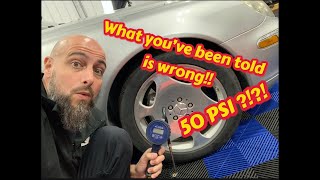
The correct tire pressure for your vehicle is NOT the maximum pressure printed on the tire sidewall. That number is the maximum the tire can hold — not the recommended operating pressure. The correct pressure is on the sticker inside the driver's door jamb or in the owner's manual. It varies by vehicle (not by tire) — a tire mounted on a Honda Civic requires different pressure than the same tire on a Ford F-150. Most passenger cars run between 32-35 PSI; trucks and SUVs commonly run 35-45 PSI. Some vehicles specify different pressures front and rear. Check the door jamb sticker first — that is the authoritative source for your specific vehicle.
How to Check Tire Pressure Correctly
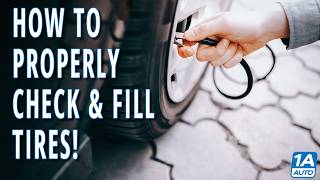
Step 1: Check cold. Tire pressure increases as tires heat up from driving — driving 10 miles can add 4-6 PSI to a reading. Always check pressure when the car has been parked for at least 3 hours, or in the morning before the first drive of the day. A hot tire reading will read higher than actual cold pressure and lead you to underinflate the tire. Step 2: Remove the valve cap and set it somewhere you won't lose it. Step 3: Press the gauge firmly onto the valve stem — a digital gauge like the AstroAI 150 PSI ($8) gives an instant reading. A loose connection causes air to escape and gives a false low reading. Step 4: Compare to the sticker spec. If pressure is within 1 PSI of spec, it's fine. If 3+ PSI low, add air. If 3+ PSI high, release air by pressing the small pin inside the valve stem with a pen or the gauge's built-in deflation tool. Step 5: Replace valve cap — it's the primary seal against dust contamination that causes slow leaks.
How Often to Check
Monthly is the NHTSA recommendation — tires naturally lose 1-2 PSI per month at rest from permeation through the rubber. Seasonal checks are the minimum: pressure drops 1 PSI for every 10°F decrease in temperature. A tire at 35 PSI in 70°F weather will read approximately 30 PSI at 20°F — 5 PSI low, which is significant for handling and wear. Check every tire change season (spring and fall at minimum). Also check after any significant impact (pothole, curb strike) that might have caused slow damage to the bead or sidewall.
Tire Gauges: Stick vs Digital
Stick gauges (pencil-type, $3-6) have no batteries and never fail — pull the stick out to get a reading. They're less accurate (±3-5 PSI) but acceptable for basic monitoring. Digital gauges ($8-30) are more accurate (±1-2 PSI) and easier to read in low light. The AstroAI 150 PSI Digital ($8) is the reliable budget standard — backlit LCD, 150 PSI range covers all passenger vehicles and light trucks, and it's accurate enough for practical use. The JACO ElitePro ($30) is ANSI-certified, accurate to ±1.5% at the full scale — the benchmark for precision without going to professional-grade gauges.
When You Need an Inflator
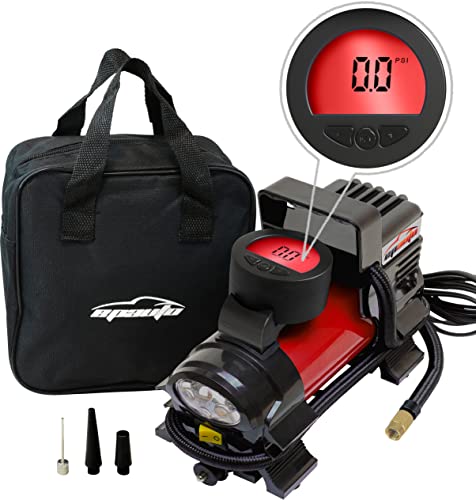
If you check pressure monthly and your vehicle holds pressure well, a gauge-only solution is sufficient — add air at a gas station or tire shop when needed. If you want to inflate at home (convenient for regular maintenance, RV/trailer tires, multiple vehicles), a 12V inflator plugs into the car's 12V outlet and adds air directly from the car's electrical system. The AstroAI L7 Cordless ($23.49) and EPAuto 12V Compressor ($35.97) cover this use case. For faster inflation (high-PSI truck tires, multiple tires in one session), a cordless lithium inflator like the AstroAI C2 at 160 PSI ($54.49) handles larger vehicles faster than 12V plug-in models. Gas station air compressors are free or $0.50-1.50 per use — acceptable for infrequent users, but they're often inaccurate and inconveniently located for home storage of the car.
How We Put This Guide Together
We reviewed tire pressure guidance from the NHTSA, Tire Industry Association recommendations, and SAE tire pressure management standards, cross-referenced with accuracy testing data from Consumer Reports and independent automotive publications, and analyzed 16,000+ verified purchaser reviews of tire gauges and inflators to identify accuracy, durability, and ease-of-use performance at each price point.
Watch Before You Buy

“4 measurement units: PSI, BAR, kPa, kg/cm². 4.3 stars from 71,194 Amazon reviews signal consistent reliability.”
See Today’s Price →What we like
- 4 measurement units: PSI, BAR, kPa, kg/cm²
- Backlit LCD readable in low light
- 150 PSI range covers passenger cars and light trucks
- 32,000+ reviews make it the most validated gauge in this category
- Fits any Schrader valve (standard US tire valve)
Watch out for
- Battery-powered — requires AAA battery replacement over time
- No bleed valve for releasing excess pressure
- Basic ergonomics compared to premium alternatives

“”
See Today’s Price →Watch out for
- Vehicle-specific fitment requires verifying compatibility with your exact year make and model
- Professional installation recommended for safety-critical components to ensure proper torque specifications

“The AstroAI L7 Portable Cordless Tire Inflator Digital Auto-Shutoff 150 PSI features auto shut-off.”
See Today’s Price →What we like
- Auto shut-off
- Digital pressure display
- Cordless
- Includes nozzle attachments
Watch out for
- Cordless battery life shorter under heavy or cold use
- Digital display difficult to read in direct sunlight
- Smaller compressor than powered trunk units
“4.4 stars from 58,657 Amazon reviews signal consistent reliability. Best suited for budget buyers who want set-it-and-forget-it pressure accuracy.”
See Today’s Price →
“160 PSI max — highest pressure rating in this comparison, covers trucks and SUVs. 4.6 stars from 15,994 Amazon reviews signal consistent reliability.”
See Today’s Price →What we like
- 160 PSI max — highest pressure rating in this comparison, covers trucks and SUVs
- 20V rechargeable battery with long runtime
- Digital display with preset pressure and auto shut-off
- Bright built-in LED work light for nighttime use
- Compatible with 20V AstroAI battery platform
Watch out for
- Most expensive cordless option at ~$80
- Larger and heavier than Fanttik alternative
- Requires charging like all cordless inflators
Frequently Asked Questions
What PSI should my car tires be?
Why does my tire pressure light come on in cold weather?
Can you check tire pressure with the tire hot?
How long does it take for tire pressure to go down?
What is the difference between PSI and bar for tire pressure?
Is a tire inflator better than a tire gauge?
How We Analyze Products
We analyze Amazon review data — often thousands of reviews per product — to surface patterns that individual buyers miss. Our process aggregates star ratings, review counts, and buyer sentiment at scale, identifying which strengths and weaknesses appear consistently across the largest review samples available. The 172,696+ reviews analyzed on this page represent real verified-purchase feedback from Amazon buyers.
Each product earned its placement through data: total review volume, average rating, and the specific praise and complaints that repeat most often across buyers. No manufacturer paid for placement on this page. Products appear here because buyers endorsed them at scale, not because a company asked us to feature them.
We use AI to summarize review sentiment — not to fabricate opinions, but to condense what thousands of buyers actually wrote into a readable format. The pros and cons you see reflect the most common themes found in verified purchaser reviews, paraphrased for clarity. We do not claim to have accessed Reddit, YouTube, or specific publications in generating these summaries.
Prices shown reflect Amazon pricing at the time this page was last generated. Click “See Today’s Price” to get the current live price on Amazon. Read our full methodology →