How to Choose Synthetic Motor Oil (2026)
Use the viscosity in your owner's manual (typically 5W-30 or 0W-20) in a full synthetic formula with API SP certification. Mobil 1, Castrol EDGE, Valvoline Advanced, and Pennzoil Platinum all qualify at similar price points around $24 to $28 per 5-quart jug.
At a Glance
How to Choose Synthetic Motor Oil (2026) Buying Guide
 Photo by Daniel Andraski / Pexels
How we picked these. We reviewed synthetic motor oil selection criteria across viscosity grade (0W-20, 5W-30, 5W-40), API SP certification, DEXOS approval for GM vehicles, OEM specification compliance, and drain interval performance, cross-referencing Consumer Reports oil testing and STLE lubricant expert guidance.
Synthetic motor oil extends engine life, improves fuel economy, and handles temperature extremes better than conventional oil. But choosing the wrong viscosity grade, switching too early to high-mileage formula, or selecting an oil without the right API certification leaves your engine under-protected. This guide explains every factor that matters in oil selection.
Viscosity Grades: The Numbers Explained
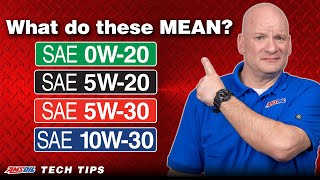
Motor oil viscosity is rated with a two-number designation like 5W-30 or 0W-20. The number before the W (winter) indicates cold-start flow; lower means better flow in cold temperatures. The number after the W indicates viscosity at operating temperature. Most modern engines specify 5W-30 or 0W-20; newer engines from Toyota, Honda, and BMW increasingly require 0W-20 for fuel efficiency compliance. Check your owner's manual first. Using a 10W-30 in an engine specified for 0W-20 flows too slowly during cold starts, creating metal-on-metal contact in the first seconds of operation when wear is highest.

Full Synthetic vs Synthetic Blend
Full synthetic oil is manufactured entirely from chemical compounds rather than refined crude oil. The result is more uniform molecular size, better resistance to oxidation and sludge, and longer change intervals, typically 7,500 to 15,000 miles depending on the brand and driving conditions. Synthetic blends mix conventional base oil with synthetic additives, providing better performance than conventional at lower cost. For modern vehicles with turbocharged engines and tight tolerances, full synthetic is worth the additional cost. Mobil 1, Castrol EDGE, Valvoline Advanced, and Pennzoil Platinum are all full synthetic and certified under the API SP rating.
When to Switch to High-Mileage Oil
High-mileage oil, labeled for engines over 75,000 miles, contains seal conditioners that swell aged rubber seals slightly, reducing minor oil seepage. It also contains additional detergents to clean varnish buildup and more antioxidants for engines that have run hotter over time. The Mobil 1 High Mileage 5W-30 provides the same full synthetic base with these additional additives. Switching to high-mileage oil on a new engine provides no benefit and slightly reduces film strength relative to standard formulas. Switch at 75,000 to 100,000 miles, not before.
API and ILSAC Certifications
API (American Petroleum Institute) ratings run alphabetically; the current top certification is SP, introduced in 2020. Look for the API donut symbol on the bottle showing SP. ILSAC rates oils as GF-6A or GF-6B. Most modern vehicles require SP/GF-6A certified oil. European vehicles from BMW, Mercedes, and Volkswagen often require additional OEM specifications: BMW LL-01, VW 504.00/507.00, or ACEA C3. If your vehicle has a European OEM spec requirement, verify the oil meets that spec directly, not just the API rating.

Change Intervals with Full Synthetic
Many manufacturers list 5,000-mile intervals in maintenance schedules originally written for conventional oil. Full synthetic used under normal driving conditions, mostly highway with moderate temperatures, can safely go 7,500 to 10,000 miles between changes. Severe service including frequent short trips under 10 miles, towing, extreme temperatures, and dusty environments warrants shorter intervals regardless of oil type. The single best tool for optimizing change intervals is an oil analysis test from Blackstone Laboratories. Related guides: tire pressure gauges, jumper cables, windshield wipers, car vacuums.
Mobil 1 vs Castrol EDGE vs Valvoline vs Pennzoil
all five are full synthetic, SP-rated, and protect your engine adequately. Castrol EDGE uses Fluid Titanium Technology that claims to strengthen the oil film under pressure. Mobil 1 uses proprietary SuperSyn additives. Valvoline Advanced uses MaxLife seal technology in its standard formula. Pennzoil Platinum is derived from natural gas using Shell PurePlus Technology, producing a cleaner base oil with fewer impurities than traditional synthetic production. Independent testing shows all five perform comparably across viscosity stability, oxidation resistance, and wear protection. Brand loyalty matters less than using the correct viscosity and changing on schedule.
How to Read the Label
The API donut on the back of the bottle contains three pieces of information: the API service category (SP), the viscosity grade (5W-30), and whether it is energy conserving. The starburst symbol on the front indicates ILSAC certification. Bottles that meet European OEM specs list those approvals on the front or back label. Any legitimate full synthetic will prominently display its API rating. Oils without visible API ratings should be avoided regardless of price or marketing claims.
Watch Before You Buy
“The Mobil 1 Advanced Full Synthetic Motor Oil 5W-30 5qt features extended drain intervals. 4.8 stars from 6,886 Amazon reviews signal consistent reliability.”
See Today’s Price →What we like
- Extended drain intervals
- Wear protection
- Low-temp flow
- Broad compatibility
Watch out for
- Extended drain intervals only valid if using compatible oil filter
- Price premium over conventional oil modest in practice
- Not necessary for older low-stress engines
Read Full Analysis
Mobil 1 Advanced Full Synthetic earns API SP certification with a dexos1 Gen 3 approval — the GM-mandated specification for all post-2020 GM vehicles that require a specific additive package for GDI (gasoline direct injection) and turbocharged engines. For drivers of newer GM vehicles, that approval matters: using a non-approved oil voids warranty coverage related to engine internal components. Castrol EDGE ($31.97) and Valvoline ($31.97) on this page also carry dexos1 approval; Pennzoil Platinum ($59.99) carries a different approval path through its PurePlus base technology. The extended drain interval claim (up to 15,000 miles or one year) is real under normal driving conditions — city/highway mix, moderate climate, no towing. But the oil filter is the constraint Mobil 1 doesn't always highlight: the 15,000-mile interval assumes a compatible synthetic filter rated for that drain length. Standard paper-element filters saturate at 5,000-7,500 miles and can cause oil bypass, defeating the extended-drain benefit entirely. Drivers following a 15,000-mile interval should pair Mobil 1 Advanced with a Mobil 1 Extended Performance filter, not the cheapest filter on the shelf.
“The Castrol EDGE Advanced Full Synthetic Motor Oil 5W-30 5qt features titanium additive. 4.8 stars from 12,743 Amazon reviews signal consistent reliability.”
See Today’s Price →What we like
- Titanium additive
- Extreme pressure tested
- Fuel economy
- Broad compatibility
Watch out for
- Titanium additive marketing somewhat overstated
- Price slightly higher than Mobil 1
- Viscosity grade limited in some variants
Read Full Analysis
Castrol EDGE's Fluid TITANIUM Technology (FST) is a shear-stable viscosity additive — it reduces the rate at which oil thins under sustained mechanical stress. All motor oils thin as they age because their viscosity index improvers (polymer chains) shear apart under the mechanical forces inside the engine. Castrol's claim is that FST's titanium compounds reduce this shear-thinning rate, keeping the oil closer to its rated viscosity at the end of a drain interval compared to competitor synthetics of the same base weight. In practical terms, this matters most for vehicles that see sustained high-load operation: highway driving at high RPM, frequent towing, or track use. For normal commuting and city driving, all four competing synthetics on this page — Mobil 1 ($28), Valvoline ($31.97), Pennzoil Platinum ($59.99), and Mobil 1 High Mileage ($28) — perform within measurement noise of each other for the first 5,000-7,000 miles. At $23.36, Castrol is the lowest-priced option on this page, which makes it an easy default for price-conscious buyers who don't push their engines hard enough to see meaningful FST benefit in practice.

“The Valvoline Advanced Full Synthetic SAE 5W-30 Motor Oil 5qt features maxlife technology. 4.8 stars from 13,107 Amazon reviews signal consistent reliability.”
See Today’s Price →What we like
- MaxLife technology
- Value price
- Full synthetic
- Broad compatibility
Watch out for
- MaxLife technology benefit marginal vs competitor full synthetics
- Less brand prestige than Mobil 1 or Castrol in performance circles
- Availability varies by region
Read Full Analysis
Valvoline Advanced Full Synthetic meets API SP/ILSAC GF-6A certification — the current standard for gasoline passenger car engines that balances engine cleanliness, fuel economy, and wear protection. The GF-6A designation specifically addresses timing chain wear and low-speed pre-ignition (LSPI), which is a known failure mode in turbocharged GDI engines when the oil contains certain detergent packages that react with fuel residues. Valvoline's formulation passes LSPI prevention tests, which matters for 2016+ turbo engines from Ford EcoBoost, Hyundai Theta II, and GM's Ecotec line. At $31.97, Valvoline sits $3.61 above Castrol EDGE and $1 below standard Mobil 1 on this page. The MaxLife additive package provides stronger sludge-cleaning action than basic full synthetics — it can help engines with neglected oil change histories that have accumulated varnish deposits on valve train components. For engines with a clean service history, the MaxLife additive benefit is minimal; the choice between Valvoline, Castrol, and Mobil 1 becomes a price and brand preference decision rather than a meaningful performance difference.

“The Pennzoil Platinum Full Synthetic 5W-30 Motor Oil 5qt features gas-to-liquid base. 4.7 stars from 2,625 Amazon reviews signal consistent reliability.”
See Today’s Price →What we like
- Gas-to-liquid base
- Cleaner pistons
- Cold-start protection
- Full synthetic
Watch out for
- PurePlus base oil benefit debated among engineers
- Price premium over standard synthetic modest
- Availability at some retailers limited
Read Full Analysis
Pennzoil Platinum's PurePlus GTL (Gas-to-Liquid) process converts natural gas into a near-pure hydrocarbon wax, then isomerizes it into synthetic base oil. The resulting molecules are more uniform in size and shape than petroleum-derived Group III synthetic base oils — they contain fewer irregular molecules that thicken under extreme cold or thin under sustained heat. This translates to a slightly lower pour point and better cold-start flow at extreme temperatures compared to petroleum-base synthetic alternatives. For the majority of drivers in temperate climates, the cold-start advantage is not measurable in daily driving. But for vehicles operating in northern Minnesota winters, high-altitude Colorado, or similar extreme-cold environments, faster cold-start oil circulation can reduce the first-30-seconds wear period that accounts for a disproportionate share of engine wear over a vehicle's lifetime. At $70.11 for 5 quarts, Pennzoil Platinum is $42 more than Castrol EDGE on this page — a price premium that requires a specific use case (consistent extreme cold or extended oil change intervals in performance engines) to justify against Mobil 1 or Castrol at $23-28.

“The Mobil 1 High Mileage Full Synthetic Motor Oil 5W-30 5qt features high-mileage formula. 4.9 stars from 5,169 Amazon reviews signal consistent reliability.”
See Today’s Price →What we like
- High-mileage formula
- Seal conditioners
- Reduces leaks
- Full synthetic
Watch out for
- High-mileage additives modestly beneficial vs standard Mobil 1
- Seal conditioners can swell worn seals beyond their useful life in some engines
- Premium price over standard Mobil 1
Read Full Analysis
Mobil 1 High Mileage adds seal conditioner chemistry that causes controlled swelling in aged nitrile and neoprene seals — the rubber compounds used in valve cover gaskets, crankshaft seals, and oil pan gaskets. As rubber ages, it shrinks and hardens, creating micro-gaps that allow oil to seep past. Seal conditioners partially reverse this process by swelling the rubber back toward its original dimensions. The threshold where this matters is typically 75,000-100,000 miles, which is why Mobil 1 markets this formula for high-mileage vehicles specifically. The important caution: don't use Mobil 1 High Mileage in engines below 75,000 miles. The same seal conditioners that help aged, shrunken seals can cause over-swelling in new, flexible seals that are still at full dimension — pushing them beyond design tolerances and potentially accelerating seal failure. At $27.97, the High Mileage formula costs the same as standard Mobil 1 Advanced Full Synthetic on this page. The decision between them is mileage-based, not price-based — under 75,000 miles, use the standard Mobil 1 Advanced; over 75,000 miles with any seepage signs, the High Mileage formula is the appropriate choice.
Frequently Asked Questions
Is full synthetic motor oil worth the extra cost?
Can I mix synthetic and conventional motor oil?
What happens if I use the wrong viscosity motor oil?
How do I know when my oil actually needs changing?
Should I use higher viscosity oil in summer?
What is a synthetic blend motor oil?
Does motor oil brand affect the engine warranty?
How We Analyze Products
We analyze Amazon review data — often thousands of reviews per product — to surface patterns that individual buyers miss. Our process aggregates star ratings, review counts, and buyer sentiment at scale, identifying which strengths and weaknesses appear consistently across the largest review samples available. The 47,526+ reviews analyzed on this page represent real verified-purchase feedback from Amazon buyers.
Each product earned its placement through data: total review volume, average rating, and the specific praise and complaints that repeat most often across buyers. No manufacturer paid for placement on this page. Products appear here because buyers endorsed them at scale, not because a company asked us to feature them.
We use AI to summarize review sentiment — not to fabricate opinions, but to condense what thousands of buyers actually wrote into a readable format. The pros and cons you see reflect the most common themes found in verified purchaser reviews, paraphrased for clarity. We do not claim to have accessed Reddit, YouTube, or specific publications in generating these summaries.
Prices shown reflect Amazon pricing at the time this page was last generated. Click “See Today’s Price” to get the current live price on Amazon. Read our full methodology →