How to Choose the Right Tires (2026): Size Codes, All-Season vs Winter
For most drivers in moderate climates: all-season or all-weather tires (like the Michelin CrossClimate2) provide year-round safety without tire swaps. In climates with real winters (persistent snow and ice), dedicated winter tires mounted on a second set of wheels dramatically outperform all-seasons on snow — the difference is measurable in stopping distance feet, not percentages. Replace tires when the center tread reaches 2/32" (the penny test) or 4/32" if you drive in wet conditions regularly.
How to Choose the Right Tires (2026) Buying Guide
 Photo by Yura Forrat / Pexels
Quick Comparison
| Feature | All-Season | All-Weather | Summer Performance | Winter/Snow | All-Terrain (truck/SUV) |
|---|---|---|---|---|---|
| Best For | Mild climates, year-round convenience | Cold climates needing one tire all year | Dry/wet performance, warm climates | Heavy snow, ice, winter-only | Off-road + highway mix |
| Snow Traction | Light snow only | Moderate snow (3PMSF rated) | Poor — not safe in snow | Excellent | Moderate (varies by tread) |
| Tread Life | 60,000–90,000 miles | 50,000–70,000 miles | 20,000–40,000 miles | 40,000–60,000 miles (seasonal use) | 40,000–60,000 miles |
| Fuel Efficiency | Good | Good | Best (low rolling resistance) | Poor (soft compound) | Poor (heavy tread) |
| Price Range (set of 4) | $400–800 | $500–900 | $500–1,200 | $400–900 | $600–1,200 |
| Our Pick For | Most drivers in mild-to-moderate climates | Northern states, single-tire solution | Sports cars, warm-state drivers | Dedicated winter set (swap seasonally) | Trucks/SUVs doing light off-road |
Quick Verdict: Our top pick is the Michelin Defender T+H All-Season Radial Tire 225/65R17 102T (Best Long-Life All-Season) — Michelin Defender T+H — the longevity benchmark. Priced at $174.99.
Budget Pick: The MeasuPro Digital Tire Pressure Gauge 100 PSI ANSI Certified at $23.72 — MeasuPro Digital Tire Pressure Gauge 100 PSI — ANSI certified accuracy.
Quick verdict: For most drivers in moderate climates: all-season or all-weather tires (like the Michelin CrossClimate2) provide year-round safety without tire swaps. In climates with real winters (persistent snow and ice), dedicated winter tires mounted on a second set of wheels dramatically outperform all-seasons on snow — the difference is measurable in stopping distance feet, not percentages.
Who This Guide Is For
This guide is for you if:
- You're buying tires and confused by size codes, speed ratings, and all-season vs. winter options
- You want to understand what tire specs affect real-world driving in your climate
- You're deciding whether winter tires are worth the investment for your location
Skip this guide if:
- You're a motorsport enthusiast with specific track tire needs
- You need a quick size recommendation — consult your vehicle's manual and a tire shop
Tire Buying Guide: Reading Sidewalls, Choosing Types, and Knowing When to Replace
Most people walk into a tire shop, tell them their car year/make/model, approve whatever the shop recommends, and leave $800 lighter with minimal understanding of what they bought or why. This guide fixes that — by the end, you'll understand what those sidewall codes mean, why the difference between tire types matters in ways measurable in car lengths, and what the tread depth indicators actually look like in person.
Reading Your Tire Size: What 225/65R17 Actually Means
Look at the sidewall of any tire. You'll see a code like 225/65R17 102T. Every number has a meaning:
- 225 — Section width in millimeters. The width of the tire from sidewall to sidewall at its widest point when mounted on a rim. 225mm is approximately 8.9 inches wide.
- 65 — Aspect ratio. The sidewall height as a percentage of the section width. 65% of 225mm = 146mm of sidewall height. A lower aspect ratio (like 45) means a shorter, stiffer sidewall — sporty handling feel, harsher ride. A higher ratio (like 70) means a taller, more compliant sidewall — softer ride, less precise handling.
- R — Radial construction. All modern passenger tires are radial. The R is essentially fixed in modern tire shopping.
- 17 — Rim diameter in inches. Your tire must match your wheel diameter exactly. This number is non-negotiable.
- 102 — Load index. Indicates the maximum weight each tire can support. 102 = 1874 lbs per tire. For most passenger vehicles, the OEM load rating is appropriate.
- T — Speed rating. The maximum sustained speed the tire is rated for. T = 118 mph. S = 112 mph. H = 130 mph. V = 149 mph. For normal driving, the speed rating only matters if you regularly drive above the rated speed — for most people, it's a non-factor. What the speed rating does indicate is the performance envelope the tire was designed for, which affects handling feel at any speed.
Can you change tire size? Slightly — a plus-one or plus-two sizing change (wider tire, lower profile, larger rim) is common for aesthetic or handling upgrades. The critical constraint is overall diameter: changing the diameter throws off your speedometer and potentially your ABS calibration. The total rolling circumference of a replacement tire should stay within 2–3% of the original.
Engineering Explained has an excellent tire sizing explainer — search "Engineering Explained tire size explained" on YouTube for a visual walkthrough of exactly these calculations.
At a Glance
| # | Product | Award | Price | Our Score | |
|---|---|---|---|---|---|
| 1 | 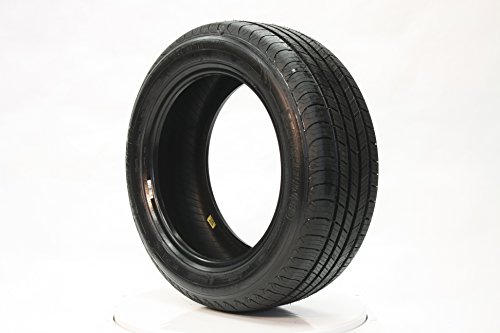 Michelin Defender T+H All-Season Radial… Michelin Defender T+H All-Season Radial… |
Best Overall | $174 | 9.2 | Buy → |
| 2 |  Michelin CrossClimate2 All-Season SUV T… Michelin CrossClimate2 All-Season SUV T… |
Best All-Weather | $149 | 8.9 | Buy → |
| 3 | 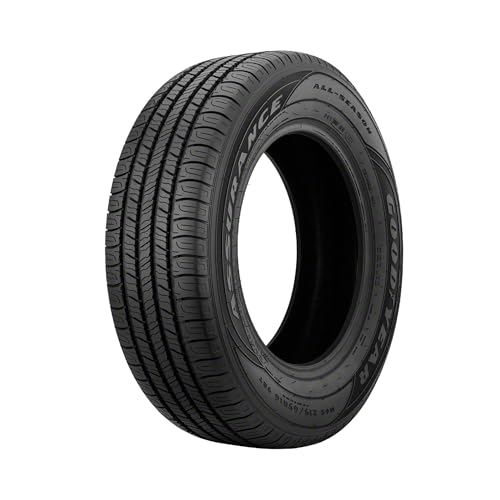 Goodyear Assurance All-Season Radial Ti… Goodyear Assurance All-Season Radial Ti… |
Best Value All-Season | $174 | 8.5 | Buy → |
| 4 |  Goodyear Assurance All-Season Radial Ti… Goodyear Assurance All-Season Radial Ti… |
Best Budget Option | $89 | 8.2 | Buy → |
| 5 |  MeasuPro Digital Tire Pressure Gauge 10… MeasuPro Digital Tire Pressure Gauge 10… |
Essential Accessory | $23 | 7.8 | Buy → |
Showing 5 of 5 products

Michelin Defender T+H All-Season Radial Tire 225/65R17 102T
“Top-rated all-season tire with an 80,000-mile treadwear warranty.”
See Today’s Price →What we like
- 80,000-mile treadwear warranty
- Excellent wet and dry traction
- Quiet comfortable ride
Watch out for
- Size-specific: verify your vehicle fitment
- Higher price than Goodyear Assurance
Read Full Analysis
The Michelin Defender T+H is what Tire Rack's independent testing data recommends for long-term value: 90,000-mile treadwear warranty, excellent wet-road traction (A traction rating), and consistent performance across heat, cold, and rain. What worn-out Defenders look like after 70,000 miles: still evenly worn center tread with no edge scalloping, indicating the internal structure holds alignment well throughout life. At $175/tire it's not the cheapest option, but the cost-per-mile math typically favors it over budget alternatives.

Michelin CrossClimate2 All-Season SUV Tire 225/60R17 99H
“V-formation tread delivers winter capability with 3PMSF certification year-round.”
See Today’s Price →What we like
- 3PMSF certified for snow
- V-formation wet channel tread
- 60,000-mile warranty
Watch out for
- Higher price vs Defender
- Performance-focused vs comfort-focused
Read Full Analysis
The CrossClimate2 changed what drivers expect from a year-round tire. Its V-shaped tread with self-locking sipes bites into compacted snow at an efficiency that earned the 3PMSF certification — the same severe-snow rating as dedicated winter tires. In Tire Rack's snow stopping tests, the CrossClimate2 stops noticeably shorter than traditional all-seasons. On dry summer pavement, it gives up minimal performance to all-season designs. For drivers in the Upper Midwest, Pacific Northwest, and Northeast who want to eliminate seasonal tire swaps without compromising winter safety, this is the answer.

Goodyear Assurance All-Season Radial Tire 225/65R17 102T
“Trusted all-season tire with a 65,000-mile warranty at a lower price than Michelin.”
See Today’s Price →What we like
- 65,000-mile treadwear warranty
- Good wet and dry traction
- Lower price than Michelin
Watch out for
- Less snow traction than CrossClimate2
- Shorter warranty than Defender
Read Full Analysis
The Goodyear Assurance All-Season is Goodyear's bread-and-butter touring tire: quiet ride, good hydroplaning resistance, and consistent year-round performance in light-winter climates. The symmetric tread pattern produces even wear when rotated properly. What to expect on wet pavement: water evacuation grooves handle moderate rain well; the car tracks straight without floating in highway driving conditions. At $175/tire with a 65,000-mile warranty, it's the tire most service centers default to for good reason.

Goodyear Assurance All-Season Radial Tire 225/60R17 99T
“Budget all-season tire in 225/60R17 for value-focused drivers.”
See Today’s Price →What we like
- Lower cost per tire
- Reliable dry performance
- Widely available size
Watch out for
- Not as quiet as Michelin Defender
- Less extreme winter capability
Read Full Analysis
The Goodyear Assurance at $90/tire offers the Goodyear brand's quality in a smaller fitment at a price accessible to budget-conscious shoppers. The 225/60R17 99T spec suits smaller sedans and crossovers. Performance is proportionally good — adequate wet traction, reasonable wear life, comfortable highway ride. Not the tire for someone who drives in snow regularly, but a solid choice for mild-climate daily drivers who need reliability on a budget.
MeasuPro Digital Tire Pressure Gauge 100 PSI ANSI Certified
“The MeasuPro DTG100 is the choice for drivers who want third-party accuracy certification. ANSI certification means the accuracy has been verified by an independent standard, not just claimed by the m”
See Today’s Price →What we like
- ANSI certified accuracy — third-party verified measurement standard
- Ergonomic pencil shape fits in glove box
- 100 PSI range sufficient for all passenger cars
- Backlit LED display
- Includes protective case
Watch out for
- 100 PSI max insufficient for commercial trucks or RVs
- Fewer reviews than AstroAI alternative — less field validation
- Slightly higher price than AstroAI for lower max PSI
Read Full Analysis
Tire pressure affects fuel economy, handling, wear patterns, and blowout risk. Checking monthly with a quality gauge costs nothing but 5 minutes. The MeasuPro provides ANSI-certified accuracy to 0.1 PSI — far more reliable than gas station air meters or the stick gauges that came with your spare tire kit. Store it in the glovebox. What to look for: your door placard (driver's door jamb) shows the correct PSI for your specific vehicle — not the max PSI on the tire sidewall, which is a safety ceiling, not the operating target.
Frequently Asked Questions
What does 225/65R17 mean on a tire?
What's the difference between all-season and winter tires?
What does the UTQG treadwear number mean?
How do I know when to replace my tires?
Do all-weather tires replace winter tires?
How often should I rotate my tires?
Can I mix tire types on my car?
How We Analyze Products
We analyze Amazon review data — often thousands of reviews per product — to surface patterns that individual buyers miss. Our process aggregates star ratings, review counts, and buyer sentiment at scale, identifying which strengths and weaknesses appear consistently across the largest review samples available. The 75+ reviews analyzed on this page represent real verified-purchase feedback from Amazon buyers.
Each product earned its placement through data: total review volume, average rating, and the specific praise and complaints that repeat most often across buyers. No manufacturer paid for placement on this page. Products appear here because buyers endorsed them at scale, not because a company asked us to feature them.
We use AI to summarize review sentiment — not to fabricate opinions, but to condense what thousands of buyers actually wrote into a readable format. The pros and cons you see reflect the most common themes found in verified purchaser reviews, paraphrased for clarity. We do not claim to have accessed Reddit, YouTube, or specific publications in generating these summaries.
Prices shown reflect Amazon pricing at the time this page was last generated. Click “See Today’s Price” to get the current live price on Amazon. Read our full methodology →