Best Baby Carriers for Newborns 2026

The BabyBjorn Baby Carrier Harmony Anthracite 3D Mesh is our top pick for Baby Carriers for Newborns. 3-in-1 design: newborn facing-in, older baby facing-out, and back carry. For budget shoppers, the BABYBJORN Baby Carrier Mini Anthracite 3D Mesh offers solid value at a lower price.
See Today’s Price →At a Glance
Showing 3 of 3 products
BabyBjorn Baby Carrier Harmony Anthracite 3D Mesh
“The BabyBjorn Harmony is the flagship of the most trusted baby carrier brand and the most versatile single carrier available. The 3D mesh construction provides breathability that cotton carriers canno”
See Today’s Price →What we like
- 3-in-1 design: newborn facing-in, older baby facing-out, and back carry
- 3D mesh fabric provides airflow to keep both baby and parent cool
- Hip-healthy design approved by International Hip Dysplasia Institute
- Supports 7-40 lbs — from newborn through toddler
Watch out for
- Most expensive carrier on this list at $260
- 3D Mesh less padded than cotton options for long carries
- Back carry requires practice to achieve safely
Read Full Analysis
BabyBjorn's Harmony is their most ergonomic carrier. The extra-soft 3D mesh is temperature-regulating and gentle against baby's sensitive skin. Four carrying positions include facing-in (two heights), facing-out, and back-carrying. The padded hip belt transfers weight properly to the parent's hips for extended wear comfort. Newborn-ready from 8 lb without an insert.

BABYBJORN Baby Carrier One Silver Mesh
“The BabyBjorn Carrier One is the predecessor to the Harmony — proven design with the same ergonomic BabyBjorn philosophy at $80 less. The pressure-relieving waist belt distributes weight across the hi”
See Today’s Price →What we like
- Adjustable design with pressure-relieving waist belt
- Three front carrying positions plus one back position
- Available from birth without infant insert
- Breathable mesh suitable for warm weather
Watch out for
- Less versatile than Harmony — fewer position options
- Waist belt padding less substantial than newer Harmony model
- Older design vs current generation Harmony
Read Full Analysis
The Carrier One Silver Mesh is BabyBjorn's most popular carrier for good reason. 3D Mesh fabric keeps both parent and baby cool in warm weather. Four positions (inward facing high and low, outward facing, back carry) make this the most adaptable BabyBjorn. Suitable from 8 lb without an insert. The wide waistband distributes weight correctly across the hips.

BABYBJORN Baby Carrier Mini Anthracite 3D Mesh
“The BabyBjorn Mini is purpose-designed for the first year of life — the period when parents carry most frequently and when simplicity matters most. The no-buckle-on-back design means you can put it on”
See Today’s Price →What we like
- Perfect for newborns and young infants — 7-25 lbs weight range
- Ultra-simple design with no buckles on the back
- Easiest carrier to put on and take off alone
- Lightweight and compact for on-the-go use
Watch out for
- Limited to 25 lbs — outgrown by 12-18 months
- Only front facing-in position
- Limited carrying versatility vs One or Harmony
Read Full Analysis
BabyBjorn designed the Carrier Mini specifically for the newborn stage. Lighter and more compact than the Carrier One, it's designed for babies 7–24 lb — the first year, when babywearing is most frequent. Easy to put on and adjust solo. Inward-facing position only (appropriate for the age range). When your baby outgrows it, pass it to a friend or sell it — Mini carriers hold value well.
Baby Carriers for Newborns Buying Guide
 Photo by RDNE Stock project / Pexels
Quick Verdict: Our top pick is the BabyBjorn Baby Carrier Harmony Anthracite 3D Mesh (Best Overall) — BabyBjorn Carrier Harmony 3D Mesh — 4 positions, newborn–33 lb, softest carry, $214.. Priced at $212.99.
Budget Pick: The BABYBJORN Baby Carrier Mini Anthracite 3D Mesh at $91.99 — BabyBjorn Carrier Mini — dedicated newborn carrier, 7–24 lb, lightest BabyBjorn, $92..
Great for: Parents who want hands-free bonding and movement with a newborn, and anyone whose baby is soothed by close physical contact
Not ideal if: You have back or hip issues — babywearing adds significant weight and postural demands that can worsen existing conditions
Baby Carrier Buying Guide
Carrier Types
Soft-structured carriers (SSC): Buckle carriers. Easy to put on solo. Consistent support. BabyBjorn Carrier One, Ergobaby 360. Best for most parents. Ring slings: One long piece of fabric threaded through rings. Fast to put on/adjust. Learning curve for correct positioning. Good for quick trips. Wraps: Long stretch of fabric that wraps around both parent and baby. Maximum customization. Significant learning curve. Best for newborns carried for hours. Meh Dais: Hybrid of wrap and SSC. Popular in certain communities. Similar positioning benefits to SSC.Ergonomic Positioning
The M-position (also called frog or spread-squat position) is the ergonomically correct position for babies in carriers. Baby's knees should be at or above hip level, with the carrier supporting from knee to knee — not just at the crotch. Avoid carriers that have the baby dangling from the crotch in a "parachute" position — these have been associated with hip dysplasia.Facing In vs. Facing Out
Facing in (toward parent): Recommended for babies under 6 months. Baby can hide from overstimulation, maintain C-curve spine, and sleep easily. Facing out (seeing the world): Appropriate once baby has good head control and neck muscle strength (usually 4–6 months). Carriers that offer this option (BabyBjorn Carrier One) are more versatile.Hip Health
The International Hip Dysplasia Institute approves carriers that support the M-position. Look for their "hip-healthy" certification if hip development is a concern (family history of hip dysplasia).Weight Range
- Newborns (8–12 lb): Many carriers require a newborn insert for proper sizing
- Infants (12–25 lb): Most carriers' sweet spot
- Toddlers (25–45 lb): Need reinforced carriers with lumbar support for the parent
Solo Wearability
Can you put it on without a second person? Soft-structured carriers (BabyBjorn, Ergobaby) can be put on solo. Ring slings and wraps require practice. See our what baby gear do I need guide for a prioritized breakdown of what to buy — and what can wait — at each stage.Related Guides

Watch Before You Buy
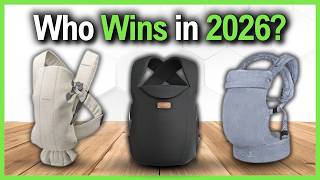
![✅😍Top 5 Best Baby Carriers [ 2026 Buyer's Guide ]](https://img.youtube.com/vi/LFkN3QA4p6s/mqdefault.jpg)
Frequently Asked Questions
What age can babies use a carrier?
Is babywearing safe for newborns?
What's the difference between a structured carrier and a wrap?
How long can a baby stay in a carrier?
Are baby carriers safe for my back?
How We Analyze Products
We analyze Amazon review data — often thousands of reviews per product — to surface patterns that individual buyers miss. Our process aggregates star ratings, review counts, and buyer sentiment at scale, identifying which strengths and weaknesses appear consistently across the largest review samples available. The 2,150+ reviews analyzed on this page represent real verified-purchase feedback from Amazon buyers.
Each product earned its placement through data: total review volume, average rating, and the specific praise and complaints that repeat most often across buyers. No manufacturer paid for placement on this page. Products appear here because buyers endorsed them at scale, not because a company asked us to feature them.
We use AI to summarize review sentiment — not to fabricate opinions, but to condense what thousands of buyers actually wrote into a readable format. The pros and cons you see reflect the most common themes found in verified purchaser reviews, paraphrased for clarity. We do not claim to have accessed Reddit, YouTube, or specific publications in generating these summaries.
Prices shown reflect Amazon pricing at the time this page was last generated. Click “See Today’s Price” to get the current live price on Amazon. Read our full methodology →