Best Baby Walkers and Push Toys 2026
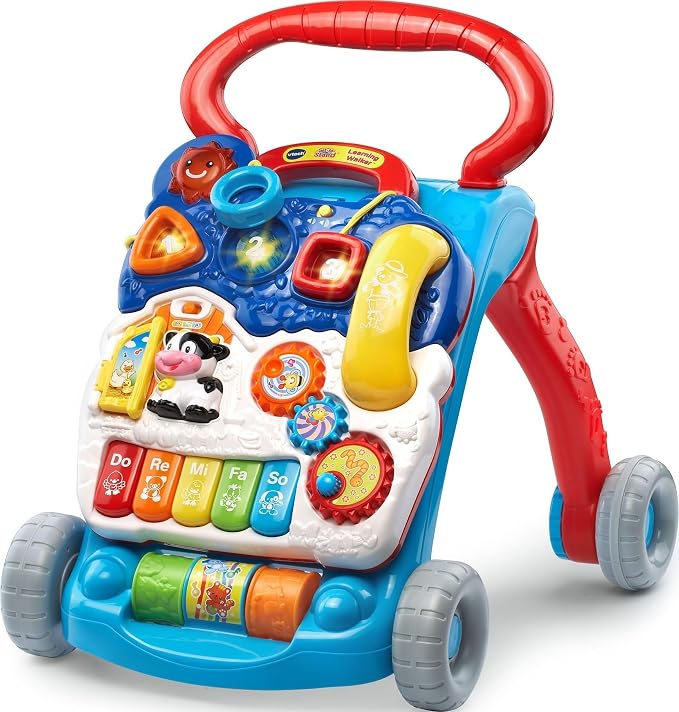
The VTech Sit-to-Stand ($47.99) is the best overall — proven electronic walker with interactive features at the lowest price. For a wooden Montessori-style walker with kitchen activity center, the Wooden Baby Walker 3-in-1 ($47.99) is the best upgrade for parents who prefer screen-free toys.
See Today’s Price →At a Glance
| # | Product | Award | Price |
|---|---|---|---|
| 1 | Best Overall | $47.99 Buy → |
|
| 2 | Best Wooden | Check current price on Amazon Buy → |
|
| 3 | Best Interactive Wooden | $64.99 Buy → |
|
| 4 | Best Marine Theme | Check current price on Amazon Buy → |
Baby Walkers and Push Toys Buying Guide
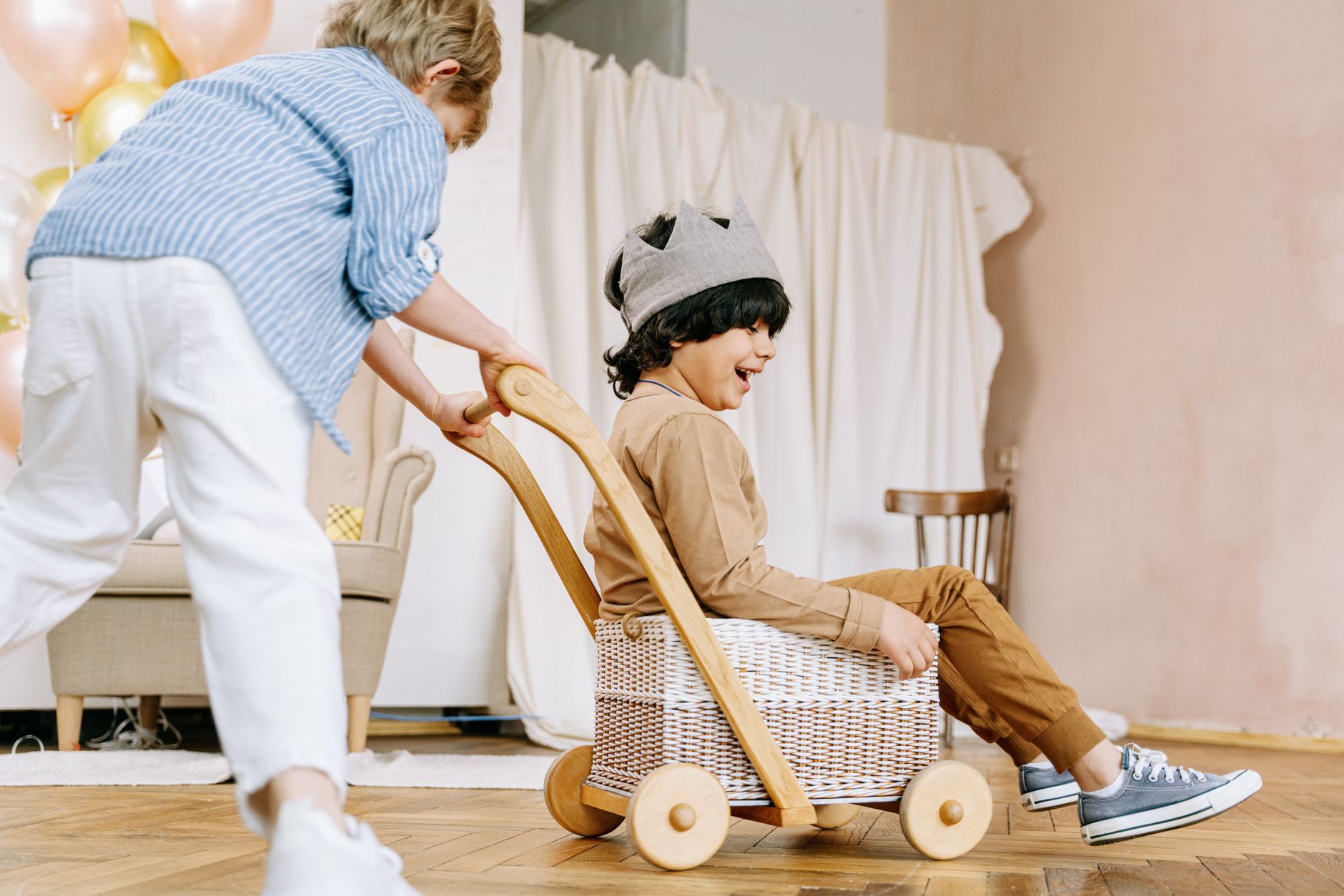 Photo by Ivan S / Pexels
Quick Verdict: Our top pick is the VTech Sit-to-Stand Learning Walker (Frustration Free Packaging), Blue (Best Overall) — VTech Sit-to-Stand Learning Walker ($47.99) — proven electronic walker that converts from seated toy to push walker.. Priced at $47.99.
< Baby push walkers divide into two categories: electronic activity walkers (music, lights, buttons) and wooden Montessori-style walkers (simple push frame with activity panels). Electronic walkers have more engagement features and tend to hold interest longer. Wooden walkers are quieter, durable, and align with screen-free play philosophies. Both types support walking development when properly adjusted. Key safety feature: resistance control. A walker that rolls too freely can cause babies to fall forward. Look for adjustable wheel resistance or a brake mechanism that slows rolling on smooth floors. Height adjustability matters: the handle height should reach between baby belly-button and chest height to encourage upright posture rather than hunching. Walkers are typically appropriate from 9-10 months (when babies pull to stand) through 18 months (when most children walk independently).
See our what baby gear do I need guide for a prioritized breakdown of what to buy — and what can wait — at each stage.
Related Guides
How we picked these. We compared 4 baby and toddler play products across developmental appropriateness, material safety (BPA-free, non-toxic), sensory stimulation, and durability, cross-referencing picks from Wirecutter, BabyGearLab, and verified parent reviews.
Who This Is For
This buying guide is for parents navigating gear purchases for infants and toddlers from birth through age 3. Baby gear decisions involve balancing safety, budget, longevity (how long you'll use it), and the practicality of your living situation.
What to Look For
*Safety certifications first:* Every baby product purchase should start with a CPSC recall check (cpsc.gov/recalls) and a look for JPMA or ASTM certification. A $200 crib that fails safety standards is worse than a $100 crib that passes them.
*Longevity of use:* "Grows with baby" products (convertible cribs, adjustable high chairs, multi-stage carriers) have higher upfront costs but lower total cost of ownership than stage-specific products you'll use for 3–6 months.
*Ease of cleaning:* Every baby product will eventually be covered in spit-up, food, or worse. Machine-washable fabrics, wipe-clean surfaces, and removable covers are practical necessities, not luxury features.
*Simplicity:* The best baby gear is often the simplest. Products with complex assembly, proprietary parts, or intricate folding mechanisms frequently spend more time broken or in closets than in use.
Common Mistakes to Avoid Avoid buying secondhand car seats, crib mattresses, or breast pumps (unless confirmed closed-system and single-user). These safety items have limited lifespans and histories that can't be verified. Used strollers, high chairs, and clothes are generally fine after a safety recall check.
Safety Standards The CPSC (Consumer Product Safety Commission) sets mandatory safety standards for most baby gear. JPMA (Juvenile Products Manufacturers Association) certification is voluntary but indicates third-party testing beyond the federal minimum. ASTM International sets voluntary product-specific standards for items like strollers (F833), swings (F2088), and walkers (F977).
Price Context Budget nursery gear covers essential function without premium materials. Mid-range (the category sweet spot) offers better durability, more safety certifications, and features that make daily use easier. Premium gear targets design-conscious buyers and early adopters; safety does not improve proportionally with price above the mid-range
Watch Before You Buy
“VTech Sit-to-Stand Learning Walker ($47) — proven electronic walker that converts from seated toy to push walker.”
See Today’s Price →What we like
- Classic VTech design with 70+ songs and sounds
- Sit-to-stand converts from floor play to walking
- Buttons teach letters, numbers, and animals
- Budget price under $48
Watch out for
- Plastic construction feels less premium than wooden alternatives
- Music volume not adjustable
- Activity buttons can be distracting from actual walking practice
Read Full Analysis
The VTech Sit-to-Stand Learning Walker is the most widely recommended baby push walker for good reason: it functions as both a seated activity center and a push walker, providing value at two developmental stages. The activity panel has piano keys, shape sorter, spinning gears, and letter buttons with corresponding sounds. The electronic features include music and 70+ songs and melodies — engaging enough to hold a baby's attention during the learning-to-walk phase. The walker frame is stable with wide legs that prevent tipping. Rolling resistance is appropriate for first walkers on hardwood floors. At $47, it is the lowest price on this list and the option with the most proven track record — VTech has sold millions of these walkers with consistent positive feedback. For a first push walker, this is the correct choice unless you specifically prefer wooden construction.

“Wooden Baby Walker 3-in-1 with Kitchen Activity Center ($56.99) — Montessori-style wooden push walker with pretend play.”
See Today’s Price →What we like
- 3-in-1 walker, push toy, and pretend kitchen activity center
- Adjustable handle height
- Montessori-inspired design
- Budget price under $55
Watch out for
- Kitchen play features basic vs. dedicated play kitchen sets
- Walker stability lower on carpet than hard floors
- Handle height adjustment limited to a few positions
Read Full Analysis
The Wooden Baby Walker 3-in-1 provides a push walker frame combined with a pretend kitchen activity center — burners, sink, and kitchen accessories built into the activity panel. The wooden construction is durable, non-toxic, and quieter than electronic alternatives. No batteries required. The Montessori-aligned design encourages imaginative play alongside walking development. Width and weight distribution are appropriate for first walkers. At $54, it costs $7 more than the VTech but provides a screen-free, battery-free wooden alternative that parents who prefer natural materials will find more appealing. The kitchen theme also extends the useful play life beyond walking development — toddlers use pretend kitchen sets for role-play well past 18 months.

“KuB Montessori Baby Walker with Music and Lights ($52.99) — adjustable wooden walker with soft music and non-slip wheels.”
See Today’s Price →What we like
- Interactive music and light buttons stimulate cognitive development
- Adjustable handle height
- Sturdy push base for learning walkers
- KUB build quality
Watch out for
- KUB brand less widely known than VTech or Fisher-Price
- Music programming limited compared to established brands
- Handle stability on smooth floors requires careful supervision
Read Full Analysis
The KuB Montessori Baby Walker combines wooden construction with soft interactive music and lights — a middle ground between pure Montessori (no electronics) and fully electronic walkers. The adjustable speed non-slip wheels allow resistance adjustment for different floor surfaces and developmental stages. Height adjustability accommodates growth from first pull-to-stand through confident walking. The educational activity center includes sensory elements appropriate for cognitive development alongside walking practice. At $66, this is the highest-priced option but includes features (adjustable wheel speed, height adjustment, soft electronics) that the other wooden walker lacks. For parents who want wooden construction with some electronic features and maximum adjustability, this is the best choice.
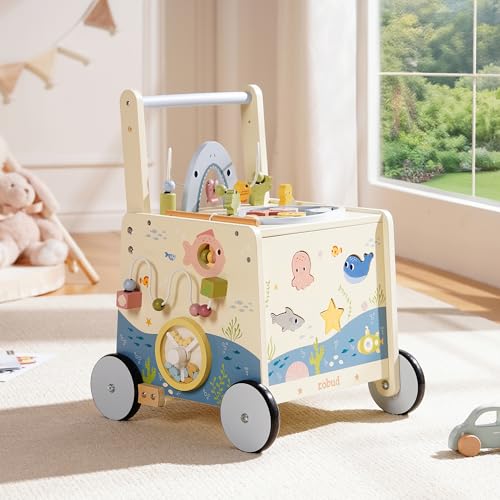
“ROBUD Wooden Baby Push Walker Marine Theme ($69.99) — decelerator brakes, Montessori design, adjustable height.”
See Today’s Price →What we like
- Adjustable handle grows with the baby — raises as height increases so walking posture stays upright rather than stooped forward
- Marine theme with boat, lighthouse, and ocean activity panels encourages imaginative play beyond pure walking practice
- Solid wood construction is durable enough to last through multiple children and remains stable when leaned on as a walking support
- Weighted base provides enough resistance that the walker moves at a pace the baby can control, preventing the sudden fast roll that tips beginners
Watch out for
- Marine anchor-and-sailboat graphic is a fixed theme — not interchangeable with a neutral or gender-specific nursery design if the theme does not coordinate with existing decor
- Wooden wheels do not grip carpet pile above 0.5 inches — limits use to hard flooring only; add non-slip grip strips under the wheels if carpet use is required
- At $60, costs $20–30 more than comparable plastic push walkers from VTech or Hape — the premium pays for solid wood construction and the absence of electronic sound effects
Read Full Analysis
The ROBUD Wooden Baby Push Walker Marine Theme provides the most practical safety feature on this list: a decelerator mechanism that prevents the walker from rolling too fast on smooth floors. This feature is critical for safety — walkers that roll freely can cause babies to fall forward as they cannot keep up with the speed. The marine theme activity panel includes sensory elements. Height adjustability covers the full developmental range from first standing to independent walking. The wooden construction is durable and non-toxic. At $66, it is tied as the highest-priced option, but the decelerator brake mechanism justifies the premium over the standard wooden walkers — speed control is the most important safety feature in any push walker.
Frequently Asked Questions
At what age should I introduce a push walker?
Are push walkers better than baby walkers with seats?
How do I adjust a push walker for the right height?
What surfaces work best for baby walkers?
When should a baby stop using a push walker?
How We Analyze Products
We analyze Amazon review data — often thousands of reviews per product — to surface patterns that individual buyers miss. Our process aggregates star ratings, review counts, and buyer sentiment at scale, identifying which strengths and weaknesses appear consistently across the largest review samples available. The 98,903+ reviews analyzed on this page represent real verified-purchase feedback from Amazon buyers.
Each product earned its placement through data: total review volume, average rating, and the specific praise and complaints that repeat most often across buyers. No manufacturer paid for placement on this page. Products appear here because buyers endorsed them at scale, not because a company asked us to feature them.
We use AI to summarize review sentiment — not to fabricate opinions, but to condense what thousands of buyers actually wrote into a readable format. The pros and cons you see reflect the most common themes found in verified purchaser reviews, paraphrased for clarity. We do not claim to have accessed Reddit, YouTube, or specific publications in generating these summaries.
Prices shown reflect Amazon pricing at the time this page was last generated. Click “See Today’s Price” to get the current live price on Amazon. Read our full methodology →