Best Baby Socks for Newborns and Infants 2026

The Falari 24-Pack Newborn Infant Baby Socks ($17.99) is the best overall for most parents — 24 pairs in one pack means you'll have socks for months before running out, and the thick cotton construction keeps them on better than thin socks. For older babies who are starting to pull up, the Hanes Non-Skid Socks ($14.99) add grip dots that prevent slipping on hardwood.
See Today’s Price →At a Glance
| # | Product | Award | Price |
|---|---|---|---|
| 1 | Best Overall | $17.99 Buy → |
|
| 2 | Best Non-Skid | $14.99 Buy → |
|
| 3 | 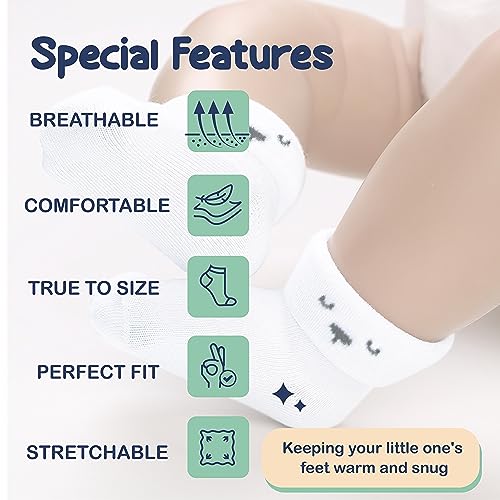 Mother's Choice Organic Cotton Ba… Mother's Choice Organic Cotton Ba…Mother's Choice |
Best Organic | $14.99 Buy → |
| 4 |  Little Me 20-Pack Newborn Baby In… Little Me 20-Pack Newborn Baby In…Little Me |
Best Unisex Pack | $16.99 Buy → |
| 5 | Best for Girls 6-12m | $11.99 Buy → |
|
| 6 | Best for Toddler Girls | $11.99 Buy → |
Baby Socks for Newborns and Infants Buying Guide
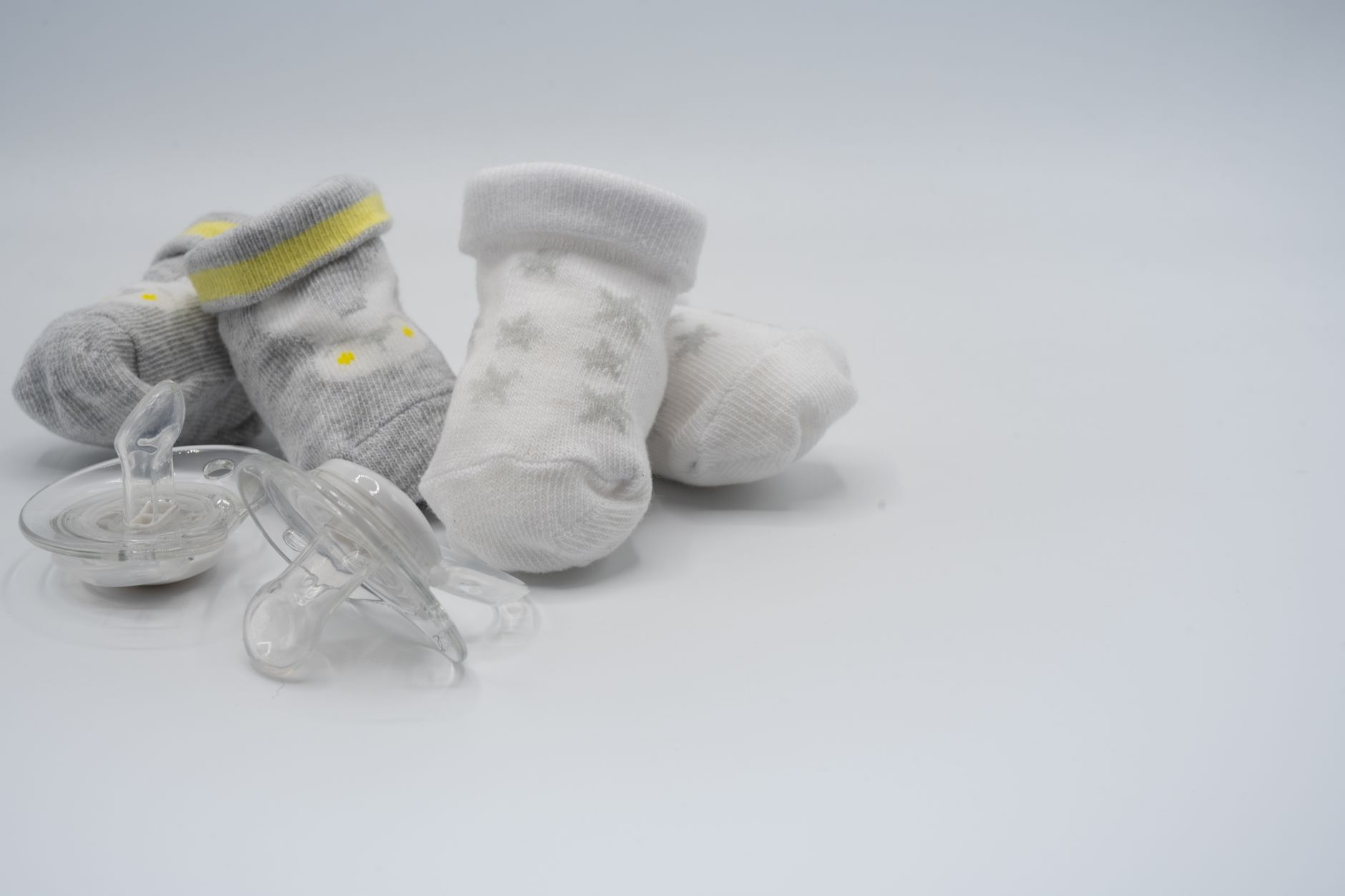 Photo by Abel García / Pexels
Baby socks have a 90% chance of falling off within 30 minutes of being put on — it's one of the universal parenting experiences. The socks that stay on longest have either a snug ribbed cuff that grips the ankle or a longer leg opening that tucks under a onesie snap. Understanding fit and age sizing is more important than brand when choosing infant socks.
How we picked these. We compared 6 baby sock packs across cuff grip (how well they stay on), material softness (cotton content and knit density), sock thickness, age-range accuracy, pack count value, and ease of sorting. We cross-referenced The Bump and Baby Center product guides, real parent reviews on Amazon, and washing durability reports. Products were selected to cover different age ranges and needs from newborn through 24 months.
Stay-On Design: What Actually Works
The ribbed cuff is the most important design feature. A tight rib cuff (especially a double-ribbed band) creates friction against the ankle and prevents the sock from sliding down. Socks with only a single thin rib band fall off within minutes. The Falari 24-pack uses a tight rib cuff that most parents report keeps socks on through full days. For babies with very slim ankles, slightly thicker socks create more friction and stay on better than thin dress socks.
Non-Skid Grips: When You Need Them
Non-skid dots become important when babies start pulling themselves up on furniture (usually 7-9 months) and during the early walking phase (10-14 months). Before that, non-skid grips are a nice-to-have but not essential. The Hanes Non-Skid Socks are specifically designed for the 12-24 month age range — appropriate timing for the grip feature.
Organic Cotton: Worth the Upgrade?
Organic cotton (certified GOTS or OEKO-TEX) is grown without synthetic pesticides. For babies with eczema-prone or very sensitive skin, organic cotton can reduce minor irritation. The Mothers Choice Organic Cotton socks use GOTS-certified organic cotton — the only meaningful certification to look for. For babies without skin sensitivity, conventional cotton socks are equally soft and significantly cheaper per pair.
Price Tiers
Budget (under $12/pack): Hanes EZ Sort packs. 10-pair packs with color-coding by size — convenient for families with babies in different sizes. Mid-range ($13-$17): Mothers Choice Organic, Little Me, Falari. Best material quality and pack size combination for everyday use. Best value ($17-$19): Falari 24-pack is the standout — the highest pair count at a low per-pair price, covering a full season without rebuying.

Common Mistakes
Buying the wrong age range: newborn socks fit 0-3 months (babies under 12 lbs); infant socks fit 3-12 months; toddler socks fit 12-24 months. If you buy newborn socks for a 4-month-old, they're already too small. Buy one size ahead. Storing unsorted socks in a drawer: the Hanes EZ Sort system (color-coded by size) saves 5 minutes of sorting per laundry load over the course of a year — surprisingly significant.
Watch Before You Buy
“The Falari 24-Pack Newborn Infant Baby Socks 0-6 Month features 24 pairs per pack. Best suited for parents who want a bulk supply of reliable socks for the first 6 months.”
See Today’s Price →What we like
- 24 pairs per pack
- Tight rib cuff stays on
- Thick cotton construction
- Variety of colors
- Excellent value per pair
Watch out for
- Sizes run 0-6 months only
- Some color variation in lot batches
- Not organic
Read Full Analysis
Falari's 24-pair count is the defining advantage on this page — at $17.99 that breaks down to under $0.75 per pair, well below every competing option including the Hanes Girls EZ Sort at $17.99 which offers fewer pairs total. The tight rib cuff construction is the key durability differentiator: most newborn socks fall off constantly because cuffs are too loose, while Falari's rib knit grips the ankle without constricting. The limitation is age range — 0 to 6 months covers only the newborn period, requiring a separate purchase as the baby grows into 12-24 month sizing. Falari 24-Pack suits parents stocking up during the newborn period who want a deep supply of reliable everyday socks. For parents who prioritize organic materials, Mothers Choice at $14.99 is the GOTS-certified alternative; for babies moving into the crawling stage, Hanes Non-Skid at $14.99 adds rubber grip for hardwood floors.

“The Hanes Baby Boys Non-Skid Socks 12-24 Months features non-skid rubber dots on sole. Best suited for babies starting to pull up and walk on hardwood or tile floors.”
See Today’s Price →What we like
- Non-skid rubber dots on sole
- Snug cuff
- 12-24 month sizing
- Machine washable
- Trusted brand
Watch out for
- Boys' sizing only
- Only 1 size range (12-24m)
- Non-skid dots can wear over many washes
Read Full Analysis
Hanes's rubber grip dots on the sole are what separate these from every other sock on this page — the 12-24 month sizing window directly corresponds to when babies begin pulling up and taking first steps on hardwood or tile floors, making the non-skid feature genuinely functional rather than decorative. At $14.99, Hanes delivers name-brand reliability at the same price as Mothers Choice Organic, but with a practical mobility-stage advantage that organic cotton alone does not offer. The limitation is timing: this is a 12-24 month product, so it does not help during the newborn phase covered by Falari and Mothers Choice. Hanes Non-Skid is the right pick once babies enter the pull-up and cruising stage. For the newborn phase, Falari's 24-pack at $17.99 is more cost-effective; for sensitive-skin babies at any stage, Mothers Choice Organic at the same $14.99 offers chemical-free construction.
“The Mothers Choice Organic Cotton Baby Socks 0-6 Months 12 Pairs features gots-certified organic cotton. Best suited for parents prioritizing organic materials for babies with sensitive or…”
See Today’s Price →What we like
- GOTS-certified organic cotton
- Extra soft
- No synthetic dyes
- 12 pairs
- Gender-neutral colors
Watch out for
- Pricier per pair than conventional cotton
- 0-6 months only
- May shrink slightly on first wash
Read Full Analysis
Mothers Choice stands alone on this page as the only GOTS-certified organic option — every other sock uses conventional cotton or synthetic blends, while Mothers Choice guarantees no pesticides, synthetic dyes, or chemical processing agents made contact with the fiber. At $14.99 for 12 pairs that is $0.25 more per pair than Falari's 24-pack, a modest premium given the certification overhead. The practical limitation is that GOTS-certified construction can cause slight shrinkage on the first wash — cold wash and air dry is recommended to maintain sizing. Mothers Choice Organic suits parents of babies with eczema-prone or highly sensitive skin where chemical dye or pesticide residue contact could trigger reactions. For non-sensitive-skin newborns, Falari's 24-pack at $17.99 delivers more pairs at a lower per-unit cost without sacrificing softness.
“The Little Me 20-Pack Baby Socks Infant Toddler Unisex Black features 20 pairs. Best suited for parents who want unisex colors and a generous pack count for mixed-gender households.”
See Today’s Price →What we like
- 20 pairs
- Unisex black works for any gender
- Good cuff tension
- Soft cotton
- Durable after washing
Watch out for
- Only available in solid black — no color-coding by child or day of week
- All-one-color 20-pack limits wardrobe coordination
- Not made from organic cotton
Read Full Analysis
Little Me's 20-pair unisex black pack solves a specific problem: households with multiple children or parents who do not want to track gender-coded socks across mixed laundry loads. The solid black colorway means no sorting by child or gender, and 20 pairs provides enough buffer to get through a full week without running a sock-specific load. At $16.99 it sits between Falari ($17.99 for 24 pairs) and Mothers Choice ($14.99 for 12 pairs) — slightly worse value per pair than Falari, but the unisex utility justifies the trade-off for the right household. Little Me 20-Pack suits mixed-gender households or parents who want to eliminate sock-sorting entirely. For pure quantity, Falari's 24-pack at $17.99 wins on pairs per dollar; for color variety or organic materials, other options on this page are the stronger fits.

“The Hanes Baby Girls EZ Sort Ankle Socks 10-Pack 6-12 Months features ez sort color-coding by size. Best suited for families with multiple children who need color-coded socks sorted by age and size.”
See Today’s Price →What we like
- EZ Sort color-coding by size
- 10 pairs
- Affordable
- Machine washable
- Gender-specific fit
Watch out for
- Girls only
- 10 pairs may not last long before washing
- Color coding system has a learning curve
Read Full Analysis
Hanes's EZ Sort system is the distinctive feature here — color-coded socks allow parents with multiple children to sort by size at a glance without checking labels, a quality-of-life advantage that becomes genuinely useful once a household has two kids in different size ranges simultaneously. At $11.99 for 10 pairs this is the lowest price on this page, making it the most cost-effective option for the 6-12 month window. The limitation is scope: this is a girls-only product in a single size bracket, so it does not serve households with boys or babies outside the 6-12 month range. Hanes EZ Sort suits parents of baby girls in the 6-12 month window who want an organized color-coded system without spending more than necessary. For unisex households, Little Me's 20-pack at $16.99 solves the gender-neutral problem; for newborns under 6 months, Falari's 24-pack at $17.99 covers the earliest stage.

“The Hanes Baby Girls EZ Sort Ankle Socks 10-Pack 12-24 Months features toddler sizing 12-24m. Best suited for toddler girls transitioning to walking who need everyday ankle socks.”
See Today’s Price →What we like
- Toddler sizing 12-24m
- EZ Sort color system
- 10 pairs
- Good ankle coverage for walking stage
Watch out for
- Girls only
- Same per-pair price as larger Falari pack
- No non-skid option
Frequently Asked Questions
What size socks does a newborn need?
How many pairs of socks does a newborn need?
What material is best for baby socks?
When do babies need non-skid socks?
How do I keep baby socks from falling off?
How We Analyze Products
We analyze Amazon review data — often thousands of reviews per product — to surface patterns that individual buyers miss. Our process aggregates star ratings, review counts, and buyer sentiment at scale, identifying which strengths and weaknesses appear consistently across the largest review samples available. The 35,723+ reviews analyzed on this page represent real verified-purchase feedback from Amazon buyers.
Each product earned its placement through data: total review volume, average rating, and the specific praise and complaints that repeat most often across buyers. No manufacturer paid for placement on this page. Products appear here because buyers endorsed them at scale, not because a company asked us to feature them.
We use AI to summarize review sentiment — not to fabricate opinions, but to condense what thousands of buyers actually wrote into a readable format. The pros and cons you see reflect the most common themes found in verified purchaser reviews, paraphrased for clarity. We do not claim to have accessed Reddit, YouTube, or specific publications in generating these summaries.
Prices shown reflect Amazon pricing at the time this page was last generated. Click “See Today’s Price” to get the current live price on Amazon. Read our full methodology →