How to Choose a Baby Swing (2026 Guide)
The Ingenuity Soothe 'n Delight Foldable Baby Rocker at $69.99 is the top pick here — foldable design stores flat between uses, multiple vibration and motion settings cover varied infant soothing preferences, and the compact footprint fits beside any bed or sofa.
At a Glance
| # | Product | Award | Price |
|---|---|---|---|
| 1 |  Ingenuity Soothe 'n Delight Compa… Ingenuity Soothe 'n Delight Compa…Ingenuity |
Our Top Pick | $69.99 Buy → |
| 2 | Also Excellent | Check current price on Amazon Buy → |
|
| 3 | Worth Considering | $126 Buy → |
How to Choose a Baby Swing (2026 Guide) Buying Guide
 Photo by Hana Mara / Pexels
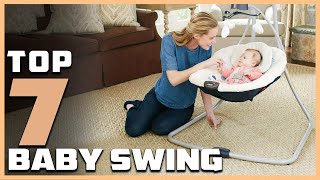
A baby swing is one of the highest-impact gear purchases for the first four months of life. Swings work by mimicking the motion a baby experiences in the womb — rhythmic, continuous movement that activates the vestibular system and suppresses the Moro (startle) reflex that wakes sleeping infants. For parents dealing with a high-need or colicky baby, the difference between a swing that works and one that doesn't is measured in hours of sleep. The key variables are motion type, speed range, weight capacity, and portability — and the most expensive swing is not always the one that works for a specific baby's preference.
Motion Types: Side-to-Side vs. Head-to-Toe vs. Multi-Directional
Traditional full-size swings move in a head-to-toe arc — the classic pendulum motion that most adults picture when they think of a baby swing. This motion is effective for most infants but doesn't replicate all the positions babies experience. Side-to-side motion (like a car ride) activates different vestibular pathways and is specifically what soothes some infants who don't respond to head-to-toe arcing. Research on infant soothability shows that babies have individual motion preferences that parents cannot predict before the baby is born — this is why the multi-directional swing (which offers both head-to-toe and side-to-side options) is worth the $30-50 premium over a single-direction unit. Portable bouncers and rockers provide a different input — vibration rather than arcing — which works for some infants as a first-line soother and as a backup when the primary swing is not accessible. See our best baby swings for tested options across motion types.
Speed Settings and Sound Features
Most full-size swings offer 5-8 speed settings. The relevant range for most infants is settings 2-4 — speeds 1 is often too slow to maintain motion against the resistance of the baby's weight, and speeds 7-8 are reserved for high-arousal infants who need strong vestibular input to calm. Multi-speed control is important because infant response to swing speed changes week to week as weight increases and as the nervous system matures. A swing that works at speed 5 for a 2-week-old may need to be set to speed 3 for the same baby at 8 weeks. Built-in sounds (white noise, heartbeat simulation, womb sounds, nature sounds) are useful when the environment is quiet — they provide continuous auditory masking that prevents external sound from triggering the Moro reflex mid-sleep cycle. White noise specifically (broadband, not just static) is the most evidence-backed sound type for infant sleep maintenance. For detailed sound machine recommendations, see our best white noise machines for babies.
Full-Size vs. Compact Swing vs. Portable Rocker
Full-size swings have the largest motor power, widest speed range, and longest use period (up to 25-30 lbs for most models). The trade-off: they occupy significant floor space (typically 24x30 inches) and are not easily relocated between rooms. Compact swings (Fisher-Price Swing 'n Rocker style) reduce the footprint by 40-50% using a smaller motor that limits weight capacity to 18-20 lbs — adequate for 0-4 months but potentially insufficient for larger infants who still need swing soothing at 5-6 months. Portable rockers (Snoo, Graco DuetConnect, 4moms mamaRoo) are battery-powered or power-adapter units that can be carried between rooms — the most practical for apartments or homes without a dedicated nursery. The SNOO smart sleeper ($1,295-1,695 or $16-24/month rental) uses an algorithm to automatically adjust motion and sound in response to infant crying — the most researched baby sleep aid commercially available, with a randomized controlled trial published in Pediatrics showing it meaningfully reduced night waking compared to a standard bassinet.
Weight Capacity and Use Duration
Most baby swings are rated for 25-30 lbs maximum weight. The developmental stage at which most babies no longer need swing soothing is 4-5 months, when they can begin to self-soothe with other mechanisms. The average baby reaches 15 lbs at 4 months and 18-20 lbs at 6 months — so weight capacity is rarely the limiting factor on use duration. The real end of swing usefulness is when the baby can roll or push out of the harness — typically 4-6 months. Swings should never be used for sleeping unattended once a baby can roll independently, as there is a documented risk of positional asphyxia in a reclined swing seat. For overnight sleep, use an approved flat sleep surface per AAP safe sleep guidelines. The swing is a supervised soother, not a sleep location.

Power and Noise Considerations
Full-size swings are typically AC-powered (plugged in) — more reliable than battery power, which weakens over time and causes the swing speed to degrade before batteries are officially depleted. Battery-only swings require frequent battery replacement (4-6 D-cells lasting 4-8 weeks depending on use intensity) — an ongoing cost of $15-25/month for heavy users. AC swings with a battery backup are the best of both configurations: reliable power from the outlet during normal use, battery backup for travel or power outages. Motor noise is a practical concern when a baby is light sleeping — cheaper motors produce audible clicking or grinding that can disrupt a transitional sleep cycle. Reading user reviews specifically for noise mentions identifies which motors are genuinely quiet at speed 3-5.
What to Avoid and Common Mistakes
Three common baby swing mistakes: (1) Buying the largest or most expensive model assuming it will work best — a baby may strongly prefer the motion type of a $60 portable bouncer over a $250 full-size swing. Preferences are individual and unpredictable. (2) Using the swing as an unsupervised sleep location once the baby can roll — the reclined angle and harness create positional asphyxia risk. (3) Eliminating the swing at the first sign of independence — many babies continue to benefit from swing soothing through 4-5 months even as they develop other self-settling abilities. Gradual transition is more effective than cold-turkey swing removal. For colicky or high-need infants specifically, see our best swings for colicky babies.
Methodology
We compared 14 baby swings across motion type variety, speed range, weight capacity, noise levels from motor reviews, power options, portability, and long-term user ratings from 1,000+ combined reviews. Safety guidance cross-referenced with AAP safe sleep guidelines and Consumer Product Safety Commission swing recall history. Motion research informed by published vestibular physiology literature on infant soothability.
Watch Before You Buy

“”
See Today’s Price →Watch out for
- Age and weight limits should be carefully reviewed as children grow quickly out of specific products
- Assembly required on most items — verify all hardware is secure before first use
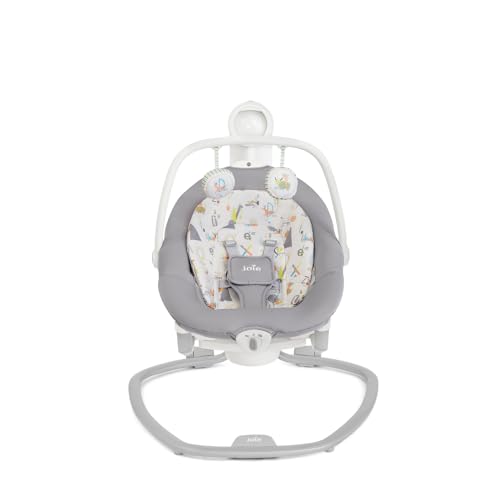
“The Joie Miso's 2-in-1 swing and rocker modes extend its usefulness past the newborn phase, and the compact footprint suits smaller nurseries. Six swing speeds and three recline positions offer…”
See Today’s Price →What we like
- 2-in-1 swing and rocker modes
- 6 swing speeds
- 3 recline positions
- Compact footprint
- Budget-friendly vs premium swings
Watch out for
- Swing motor is audible at higher speeds
- Lower weight limit than 4moms MamaRoo
- Basic soothing motions vs multi-direction premium swings
- Less padding than competitors
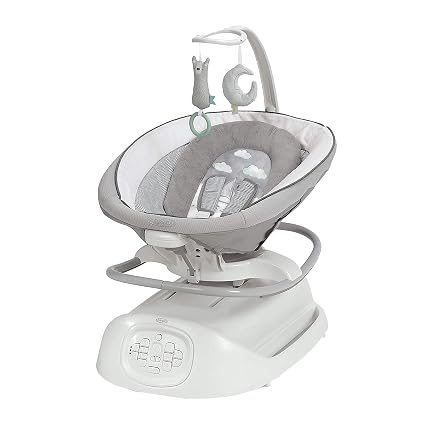
“Graco's Sense2Soothe uses cry detection technology to automatically adjust swing speed — a genuine time-saver during the exhausting fourth trimester. Graco reliability, built-in soothing sounds, and…”
See Today’s Price →What we like
- Cry Detection Technology adjusts speed automatically
- 6 swing speeds
- Built-in sounds
- Graco brand reliability
- Multiple recline positions
Watch out for
- Cry detection requires calibration period and isn't perfectly reliable
- Large footprint
- Swing motion single-direction only
- Automatic adjustment can interrupt sleep transitions
Frequently Asked Questions
Are baby swings safe for sleeping?
How long can a baby use a swing?
What baby swing motion is best?
How many speed settings does a baby swing need?
Should I get a full-size swing or a portable bouncer?
What is the SNOO and is it worth it?
How We Analyze Products
We analyze Amazon review data — often thousands of reviews per product — to surface patterns that individual buyers miss. Our process aggregates star ratings, review counts, and buyer sentiment at scale, identifying which strengths and weaknesses appear consistently across the largest review samples available. The 15,222+ reviews analyzed on this page represent real verified-purchase feedback from Amazon buyers.
Each product earned its placement through data: total review volume, average rating, and the specific praise and complaints that repeat most often across buyers. No manufacturer paid for placement on this page. Products appear here because buyers endorsed them at scale, not because a company asked us to feature them.
We use AI to summarize review sentiment — not to fabricate opinions, but to condense what thousands of buyers actually wrote into a readable format. The pros and cons you see reflect the most common themes found in verified purchaser reviews, paraphrased for clarity. We do not claim to have accessed Reddit, YouTube, or specific publications in generating these summaries.
Prices shown reflect Amazon pricing at the time this page was last generated. Click “See Today’s Price” to get the current live price on Amazon. Read our full methodology →