How to Choose a High Chair in 2026: Buyer's Guide
For most families, a full-size high chair with a five-point harness, dishwasher-safe tray, adjustable footrest, and recline for younger babies covers all needs from 6 months through toddlerhood. Convertible high chairs that transition to a booster or toddler chair extend usable life to age 5 or longer.
How to Choose a High Chair Buying Guide
 Photo by Vanessa Loring / Pexels
High chairs cause more feeding frustration and safety incidents than almost any other piece of baby gear, and the problems are almost always preventable through informed selection. The most common complaints are: tray too difficult to remove one-handed, straps impossible to clean, chair unstable on smooth floors, and recline insufficient for younger babies who cannot yet sit upright. Each of these is evaluable before purchase by reading the tray attachment mechanism description, checking whether straps are removable or machine washable, looking at the base width, and verifying the recline degrees.
Tray Design and One-Handed Operation
The tray is the most-used mechanical component of a high chair and the most common source of frustration. You will remove and replace the tray dozens of times per week while holding a baby or managing a toddler with the other hand. The tray must be operable one-handed. The best trays use a single button or lever release and slide on and off smoothly. Two-handed latch mechanisms that require squeezing both sides simultaneously are problematic when you are holding food or a child. Tray inserts that go in the dishwasher are standard on most quality chairs — verify that the entire tray or at minimum the insert is top-rack dishwasher safe, since food residue in tray crevices requires more than a wipe to clean properly. Our best high chairs rates tray mechanism ease across all tested models. For budget options, see best high chairs under $100.
Harness Safety and JPMA Certification

A five-point harness (two shoulder straps, two hip straps, crotch strap) is the safety standard for high chairs. Three-point harnesses (hip and crotch only) provide less restraint and are not recommended. The harness must be adjusted snugly — you should be able to slip no more than two fingers under the shoulder straps. Never use a high chair without the harness fastened, even for older toddlers who resist it. JPMA (Juvenile Products Manufacturers Association) certification indicates the chair has been tested against ASTM safety standards for stability, restraint system strength, and hardware durability. This is the certification to look for. The harness straps must be washable — they will be covered in food regularly. Look for straps that detach fully from the chair for machine washing or are made from a smooth material that wipes clean easily.
Recline Positions for Younger Babies
Babies are typically ready for a high chair when they can sit with support, around 4 to 6 months. At 4 to 5 months, many babies cannot maintain a fully upright position during an entire meal. A recline feature (typically 2 to 3 recline positions) allows the chair to support a baby who is learning to sit without requiring the baby to sustain full upright posture. Full recline is not safe for eating — always move to an upright or semi-reclined position for feeding. Recline is also useful for brief rest periods or for babies who fall asleep after feeding. By 8 to 9 months, most babies can maintain upright posture for meals and recline becomes less necessary. If you plan to use the high chair from 4 to 5 months, verify the chair has a recline mode.
Adjustability: Footrest, Height, and Tray Position

A footrest is not a luxury — it is an ergonomic necessity. When a child hangs their legs without foot support, it creates an unstable sitting position that affects their ability to focus and self-feed. An adjustable footrest that grows with the child from 6 months through toddlerhood maintains proper posture at each developmental stage. Height adjustability allows the chair to pull up to different table heights, which matters for families who eat at the table rather than using only the tray. Tray depth adjustability — moving the tray closer or farther from the child — helps position the eating surface correctly at different ages and body sizes. Chairs that adjust in all three dimensions (height, footrest, tray) have significantly longer useful lives. Our high chair comparison compares adjustability ranges across standard and convertible models.
Convertible High Chairs vs. Standard High Chairs
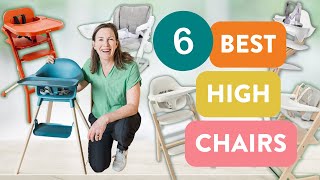
Convertible high chairs transform into a booster seat, toddler chair, or combination of both as the child grows. The Graco Slim Snacker converts to a toddler seat. The Stokke Tripp Trapp transforms from infant chair to adult chair with accessory changes. Convertible chairs cost more upfront but eliminate the need to buy a separate booster seat or toddler chair, and some work through elementary school age. Standard high chairs are typically simpler in design, easier to clean, and less expensive, but have a usable life of 2 to 3 years. If space is limited or you plan multiple children, a convertible chair often delivers better long-term value. If you want the simplest, easiest-to-clean option and do not mind purchasing a booster later, a quality standard high chair is the more practical choice.
At a Glance
| # | Product | Award | Price |
|---|
How We Analyze Products
We analyze Amazon review data — often thousands of reviews per product — to surface patterns that individual buyers miss. Our process aggregates star ratings, review counts, and buyer sentiment at scale, identifying which strengths and weaknesses appear consistently across the largest review samples available.
Each product earned its placement through data: total review volume, average rating, and the specific praise and complaints that repeat most often across buyers. No manufacturer paid for placement on this page. Products appear here because buyers endorsed them at scale, not because a company asked us to feature them.
We use AI to summarize review sentiment — not to fabricate opinions, but to condense what thousands of buyers actually wrote into a readable format. The pros and cons you see reflect the most common themes found in verified purchaser reviews, paraphrased for clarity. We do not claim to have accessed Reddit, YouTube, or specific publications in generating these summaries.
Prices shown reflect Amazon pricing at the time this page was last generated. Click “See Today’s Price” to get the current live price on Amazon. Read our full methodology →