How to Choose the Right Stroller for Your Lifestyle (2026)
City dwellers: prioritize compact fold and light weight (under 20 lbs) over storage and features. Suburban drivers: a travel system with click-in infant car seat is the most practical all-in-one for the first year. Active/trail users: a jogging stroller with fixed front wheel, hand brake, and suspension is worth the bulk. Most people do not need a double stroller until their second child is old enough to walk independently (18-24 months).
How to Choose the Right Stroller for Your Lifestyle (2026) Buying Guide
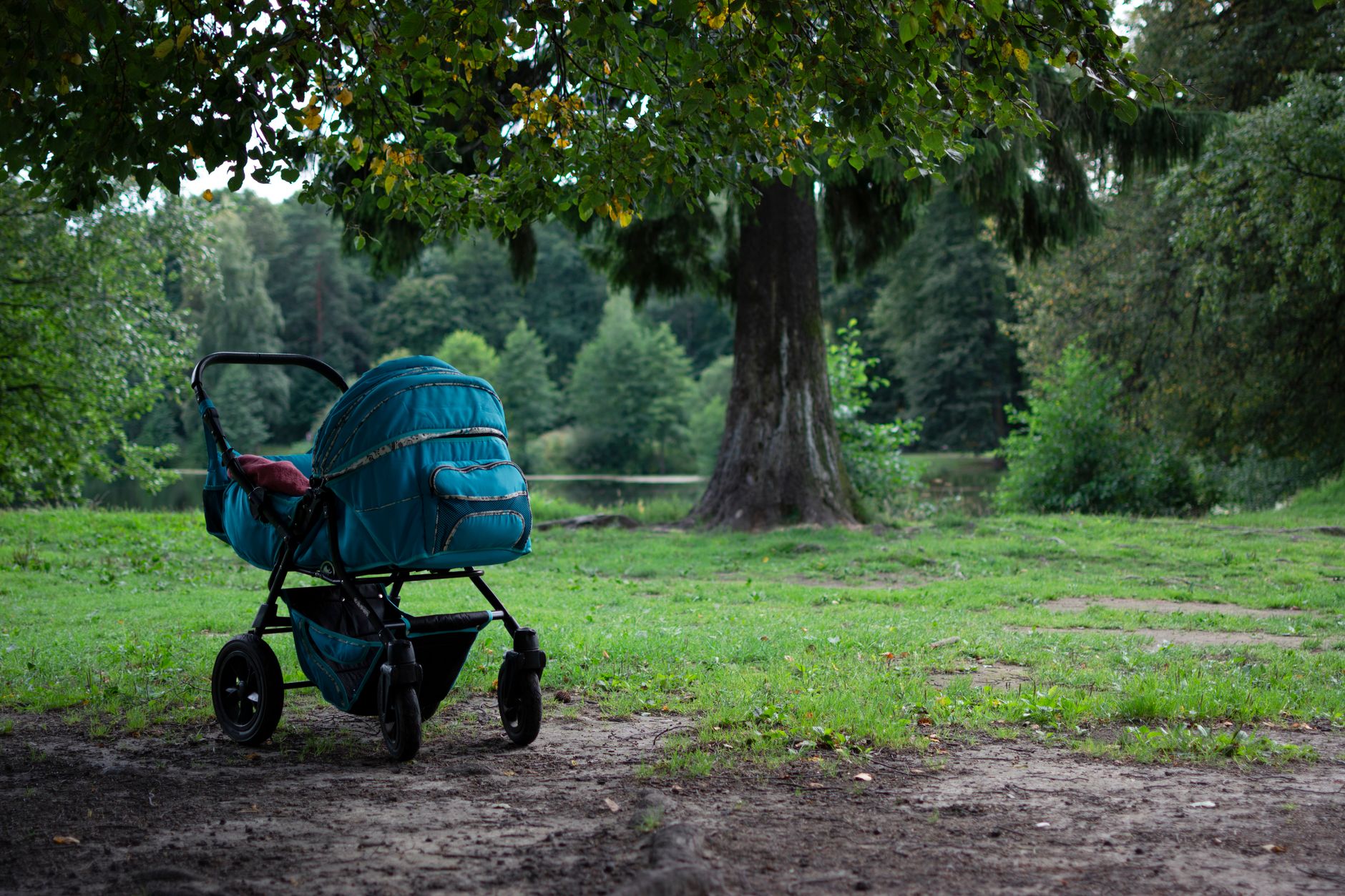 Photo by Vitali Adutskevich / Pexels
Quick verdict: City dwellers: prioritize compact fold and light weight (under 20 lbs) over storage and features. Suburban drivers: a travel system with click-in infant car seat is the most practical all-in-one for the first year.
Quick Comparison
| Feature | Full-Size | Jogging | Compact / Umbrella | Travel System | Double |
|---|---|---|---|---|---|
| Best For | Everyday suburban use | Running parents, trails | Travel, public transit | Newborn through toddler | Two kids (0-4 yrs) |
| Newborn Safe | With infant insert | 6+ months only | 6+ months (most) | Yes (infant seat snaps in) | Depends on config |
| Weight | 18-28 lbs | 22-28 lbs | 8-15 lbs | 22-30 lbs | 25-35 lbs |
| Terrain | Sidewalk, pavement | All terrain | Smooth surfaces only | Sidewalk, pavement | Sidewalk, pavement |
| Fold | 2-step (most) | 2-step | 1-step (compact) | 2-step | Complex 2-step |
| Price Range | $200-$1,200 | $250-$700 | $50-$400 | $300-$1,000 | $300-$1,000 |
| Our Pick | UPPAbaby Vista V2 | BOB Gear Revolution | GB Pockit+ | Graco Modes SE | Chicco BravoFor2 |
Who This Guide Is For

This guide is for you if:
- You're a first-time parent building a gear list and want to separate essentials from marketing
- You want to understand safety ratings and certifications before buying equipment your baby depends on
- You're trying to figure out what you need before baby arrives so you're not overwhelmed after
Skip this guide if:
- You're an experienced parent who already has preferences from a previous child
- Your baby has specific medical needs — those require pediatrician guidance
How to Choose the Right Stroller: A Complete Buying Guide
A stroller is one of the most used — and most expensive — pieces of baby gear you will buy. You will push it hundreds of miles over two to four years, fold and unfold it dozens of times a week, and have very specific opinions about it by month three. Buying the wrong one is a real problem: the wrong stroller gets abandoned in a garage, and parents end up buying a second one anyway.
This guide covers every stroller type, the features that actually matter, what to skip, and how to match the right stroller to your actual life.
How We Chose

We researched dozens of options, analyzed thousands of verified reviews on Amazon and Reddit, and cross-referenced expert recommendations from CPSC safety ratings, Car Seat Lady, and Babylist community reviews. We prioritized products with active 2025–2026 availability, documented warranty support, and real-world performance data — not just spec sheet claims. Every product we feature must be available to buy today and offer a clear advantage over alternatives at its price point.
The Five Types of Strollers
1. Full-Size / Everyday Stroller
The workhorse. Full-size strollers have large wheels, generous storage baskets, and wide seats that grow with your child from infancy (with infant car seat adapter or bassinet) through age 4–5. They handle sidewalks, shopping centers, parks, and light trails well. The tradeoff: they are heavier (15–30 lbs) and larger folded. If you have one stroller, make it this one.
Best for: Suburban or urban families, anyone doing daily walks, parents who want one stroller from birth through preschool.
Weight range: 15–30 lbs. Price range: $200–$1,200+
See our picks: Best Strollers 2026 | Best Luxury Strollers
2. Lightweight / Umbrella Stroller
Lightweight strollers (sometimes called umbrella strollers after their U-shaped handles) weigh 8–15 lbs, fold compactly, and are ideal for travel or as a secondary stroller. They sacrifice basket space, recline depth, and often suspension quality for portability. Most do not accommodate infants — they typically require baby to sit unassisted, usually around 6 months.
Best for: Travel, public transit, urban parents who fold/unfold constantly, secondary stroller for older babies.
See our picks: Best Lightweight Strollers | Best Strollers for Travel | Best Strollers for Disney World
3. Jogging / Running Stroller
Three large wheels (front wheel fixed or swiveling), pneumatic tires, and a suspension system designed for running. Jogging strollers are significantly wider and longer than standard strollers — they do not fit through standard store aisles well. Safety standard ASTM F833 requires a safety wrist strap and recommends waiting until baby is 6 months (some manufacturers say 8 months) before jogging, since newborns cannot handle the jostling of a running pace.
Best for: Parents who run or do trail walks, anyone on uneven terrain, outdoor-focused families.
See our picks: BOB Gear vs Baby Jogger
4. Travel System
A stroller sold bundled with an infant car seat that clicks directly into the stroller frame — no adapter required. Travel systems eliminate the step of moving a sleeping baby from car to stroller. They typically cost $200–$500 for the bundle, less than buying stroller and car seat separately. The tradeoff is that you are locked into the brand ecosystem, and travel system strollers tend to be heavier than premium standalone strollers.
Best for: First-time parents who want one purchase to cover both needs, budget-conscious buyers, parents who transfer sleeping babies frequently.
See our picks: Graco vs Baby Jogger | Best Strollers Under $200
5. Double Stroller
For two children. Side-by-side doubles are wider but give each child an equal view; tandem (front-and-back) doubles fit through standard doorways but the rear child gets a lesser experience. Convertible strollers like the UPPAbaby VISTA V2 start as singles and convert to doubles — the best option if you are planning a second child within 3–4 years.
Best for: Twins, Irish twins (children close in age), anyone planning a second child while the first is still in a stroller.
See our picks: UPPAbaby vs Bugaboo | UPPAbaby vs Nuna
Features That Actually Matter
Fold Mechanism
You will fold this stroller hundreds of times. A one-hand fold (or close to it) is not a luxury — it is a sanity feature when you are holding a baby with one arm. Test the fold in the store. Count the steps. Some "one-handed" folds require two hands in practice. Also check: does it stand upright when folded? (Critical for trunk storage.) Does it lock when folded so it does not spring open?
At a Glance
Showing 3 of 3 products

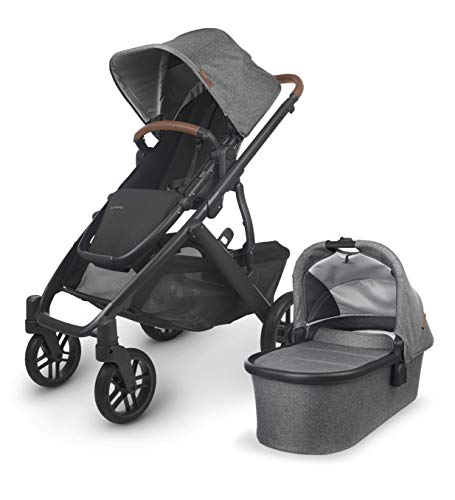
UPPAbaby VISTA V2 Stroller
“The UPPAbaby VISTA V2 is the benchmark premium stroller: flawlessly engineered, genuinely versatile, and durable enough to serve multiple children across multiple years. The included bassinet makes it”
See Today’s Price →What we like
- Converts from single to double without buying a new frame
- Includes bassinet, toddler seat, rain shield, bug shield, and storage bag
- All-wheel suspension absorbs real bumps and uneven terrain
- 30-pound cargo basket — one of the largest available
Watch out for
- $1,100+ price is a serious investment
- Weighs 27 pounds, heavier than budget alternatives
Read Full Analysis
The UPPAbaby VISTA V2 at $999.99 is the stroller that parents who research thoroughly most often buy — and rarely regret. The included bassinet makes it safe from birth without an additional purchase, covering the newborn-through-6-months stage with a lie-flat sleeping surface approved for overnight use. The Toddler Seat converts to accommodate a growing child through age 3-4. The unique feature justifying the premium over competitors: the VISTA V2 converts to a tandem double stroller using the second Toddler Seat or Bassinet when a second child arrives, eliminating a separate double stroller purchase that would cost $300-700 additional. The Vista's push quality — one-handed steering, smooth suspension, and manageable fold — is consistently cited as the most noticeable daily-use advantage over budget alternatives. Against the Bugaboo Fox 5 at $1,299, the VISTA V2 wins on included accessories and double-stroller versatility. Against the Nuna MIXX Next at $879, the UPPAbaby wins on the modular expansion system for a second child. For families planning a second child within 3 years, the VISTA V2's expandability makes the $1,000 price the most financially logical premium stroller purchase available.

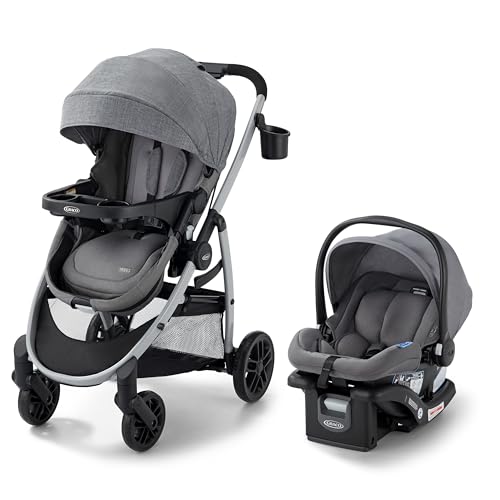
Graco Modes Pramette Travel System
“The Graco Modes Pramette stands out for its reversible seat and extended car seat weight range. Infants who outgrow standard car seats (30 lb limit) at 8-9 months stay in the SnugRide 35 system longer”
See Today’s Price →What we like
- Reversible seat faces both parent and forward — unique at this price
- SnugRide 35 accepts larger infants up to 35 lbs vs standard 30 lb limit
- Peek-a-boo canopy lets parents check on baby without stopping
- Parent cup holder and phone caddy included
Watch out for
- Fold requires two hands — less convenient than Chicco Bravo
- Slightly heavier than comparable Chicco at the same price tier
Read Full Analysis
The Graco Modes Pramette at $359.99 is the practical mid-range stroller for parents who want parent-facing capability without a four-figure spend. The reversible toddler seat faces either parent or forward, which matters during the 6-18 month stage when developmental observation and social interaction with a caregiver-facing seat has documented benefits. The included SnugRide SnugLock 35 car seat accepts infants up to 35 lbs — most competitors cap at 30 lbs — meaning babies who grow quickly stay in the infant car seat system several months longer before needing a convertible seat. The pramette configuration reclines fully for infants who have outgrown the car seat but cannot sit upright, filling the gap between infant carrier use and toddler seating. At $359.99 as a travel system (stroller plus car seat included), the per-dollar value exceeds most competitors in the $300-500 range. Against the UPPAbaby Cruz V2 at $699, the Graco is $340 less with a wider infant car seat weight range — the trade-off is push quality and material finish. For budget-conscious parents who use a stroller daily through age 3, the Graco's durability across that timeframe is adequate; for parents who value the daily push experience and plan a second child, the VISTA V2 upgrade makes financial sense.

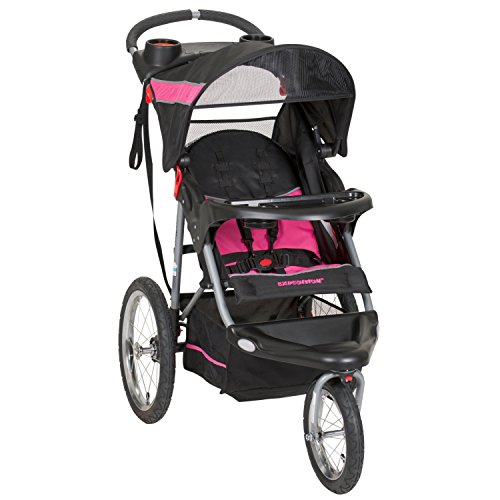
Baby Trend Expedition Jogger Stroller
“The Baby Trend Expedition Jogger is the most capable budget jogging stroller available under $100. Real air-filled tires and a lockable front wheel deliver safe running performance that many more expe”
See Today’s Price →What we like
- Air-filled rubber bicycle tires absorb trail and sidewalk bumps
- Locking swivel front wheel for safe running use
- 50-pound child weight capacity — usable for older kids
- Under $90 delivers genuine jogger capability
Watch out for
- Not safe for running with infants under 8 months without car seat attachment
- Smaller cargo basket than premium jogging strollers
Frequently Asked Questions
What type of stroller should I get as my first stroller?
How heavy is too heavy for a stroller?
When can a newborn use a stroller?
Is a $1,000 stroller worth it?
Can I buy a stroller secondhand?
What is the difference between a travel system and a regular stroller?
When should I buy a stroller?
How We Analyze Products
We analyze Amazon review data — often thousands of reviews per product — to surface patterns that individual buyers miss. Our process aggregates star ratings, review counts, and buyer sentiment at scale, identifying which strengths and weaknesses appear consistently across the largest review samples available. The 14,033+ reviews analyzed on this page represent real verified-purchase feedback from Amazon buyers.
Each product earned its placement through data: total review volume, average rating, and the specific praise and complaints that repeat most often across buyers. No manufacturer paid for placement on this page. Products appear here because buyers endorsed them at scale, not because a company asked us to feature them.
We use AI to summarize review sentiment — not to fabricate opinions, but to condense what thousands of buyers actually wrote into a readable format. The pros and cons you see reflect the most common themes found in verified purchaser reviews, paraphrased for clarity. We do not claim to have accessed Reddit, YouTube, or specific publications in generating these summaries.
Prices shown reflect Amazon pricing at the time this page was last generated. Click “See Today’s Price” to get the current live price on Amazon. Read our full methodology →