CeraVe vs Cetaphil: Which Moisturizer Is Better? (2026)
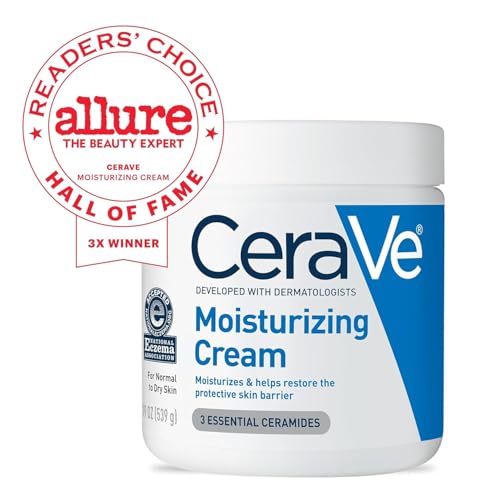
CeraVe wins for most users — the ceramide-rich Moisturizing Cream ($19.97) actively repairs the skin barrier where Cetaphil only soothes it. Pick Cetaphil only if your skin is so reactive that ceramides themselves cause flares.
See Today’s Price →At a Glance
CeraVe vs Cetaphil Buying Guide
CeraVe and Cetaphil are the two most-recommended drugstore moisturizer brands by US dermatologists. Both are owned by L'Oreal and Galderma respectively, and both are designed for sensitive, eczema-prone, or compromised skin barriers. The differences are real but narrower than marketing suggests — pick based on which active ingredients suit your skin chemistry, not on brand loyalty.
How we compared CeraVe and Cetaphil
We compared the moisturizer lineups across active ingredient profiles, packaging hygiene (jar vs. tube vs. pump), price-per-ounce at standard retail, and dermatologist endorsement frequency, cross-referencing picks with the National Eczema Association seal database and clinical reviews from Paula's Choice Beautypedia. We prioritized formulas that survive long-term daily use without breaking the skin barrier.
CeraVe vs Cetaphil: The Core Difference
CeraVe is built around ceramides. Every CeraVe moisturizer contains the brand's MVE (multivesicular emulsion) ceramide complex — three ceramides plus hyaluronic acid in a slow-release vehicle. Ceramides are the lipids that hold the skin barrier together; supplementing them is genuinely effective for dry, eczema-prone skin. Cetaphil is built around a gentler, simpler base. Cetaphil formulas are emollient-driven (glycerin, dimethicone, petrolatum) without the active ceramide payload. They're calmer on highly reactive skin but don't actively rebuild the barrier the way ceramide-loaded products do.
Where CeraVe wins
If your skin is dry, flaky, or shows visible barrier damage, CeraVe's Moisturizing Cream (19 oz) is the standout — the ceramide-niacinamide combo is what dermatologists hand out as a free sample after laser treatments. CeraVe's Skin Renewing Night Cream adds peptides and biolipid complex for night repair. The 19 oz tub format also delivers the lowest cost-per-ounce of any major drugstore moisturizer.
Where Cetaphil wins
If your skin is reactive (rosacea, perioral dermatitis, post-procedure), Cetaphil's shorter ingredient lists and lower fragrance load matter more than ceramides. The Healthy Radiance Whipped Day Cream with SPF 30 is a rare drugstore moisturizer-plus-mineral-sunscreen that doesn't pill under makeup. Cetaphil's Ultra-Healing Lotion with Ceramides closes most of the formula gap with CeraVe but in a thinner, lighter texture.

Get CeraVe if / Get Cetaphil if
Get CeraVe if you have dry, eczema-prone, or barrier-compromised skin and want the most active ceramide payload at the lowest cost — the 19 oz Moisturizing Cream is the benchmark. Get Cetaphil if you have reactive or rosacea-prone skin and need the simplest, fewest-ingredient formula that still moisturizes, or you want a daytime moisturizer with built-in SPF that doesn't pill.
Price comparison
CeraVe ranges from $15 (eye cream) to $20 (19 oz tub). Cetaphil ranges from $13 (eye serum) to $25 (Healthy Radiance day cream). At comparable price points, CeraVe gives you more active ceramides per dollar; Cetaphil gives you a gentler base for highly reactive skin.
Watch Before You Buy
“The benchmark drugstore moisturizer. Three ceramides plus hyaluronic acid in a 19-oz tub at the lowest cost-per-ounce on the market.”
See Today’s Price →What we like
- 19oz tub lasts months with daily use — best value per ounce in the CeraVe line
- Three essential ceramides (1, 3, 6-II) reinforce the skin barrier unlike basic lotions
- MVE technology releases moisture continuously throughout the day
- Fragrance-free and non-comedogenic — safe for sensitive and acne-prone skin
Watch out for
- Thick texture is too heavy for oily skin or humid climates
- Tub packaging requires scooping, which is less hygienic than a pump format
Read Full Analysis
CeraVe Moisturizing Cream arrived in 2005 and systematically displaced Cetaphil as the dermatologist-recommended default by embedding ceramide-1, ceramide-3, and ceramide-6-II into a patented MultiVesicular Emulsion (MVE) that controls their timed release — something Cetaphil's original glycerin-and-emollient formula did not offer. The 19oz tub at $19.97 delivers the same ceramide triad used in clinical eczema protocols: ceramides replenish what atopic skin depletes, hyaluronic acid draws in moisture, and the fragrance-free, non-comedogenic base tolerates nearly every sensitive skin type without incident. On this CeraVe vs Cetaphil comparison, rank 1 belongs to the Moisturizing Cream and the $19.97 price anchors the value argument for CeraVe's ceramide approach: roughly $1.05/oz for a pharmaceutical-grade barrier formula built for face and body both. The Cetaphil Ultra-Healing Lotion at rank 4 represents Cetaphil's ceramide counter-move, and the night cream and eye cream at ranks 2–3 extend the CeraVe system into specialized use zones. The large tub format is built for full-body application, making per-use cost negligible relative to the active ingredient load. Best for sensitive, dry, or eczema-prone skin that needs a dermatologist-standard barrier moisturizer without fragrance, dye, or unnecessary additives — clean enough for post-procedure skin and clinical eczema management alike. Also correct for perioral dermatitis, post-retinol barrier compromise, or rosacea-triggered dryness where ingredient simplicity is non-negotiable. Skip if you prefer lightweight lotions or gel textures: the thick cream consistency is fundamental to MVE delivery and cannot be spread thin without losing its barrier-sealing efficacy.

“Adds peptides and biolipid complex to the standard ceramide base. Targets fine lines and overnight barrier repair.”
See Today’s Price →What we like
- Peptide complex supports overnight skin renewal while you sleep
- Hyaluronic acid draws moisture into skin for visible plumping effect by morning
- Fragrance-free formula is safe for reactive or sensitive skin types
Watch out for
- Night-only formula means you need a separate SPF daytime moisturizer
- Heavier consistency takes a few minutes to fully absorb before lying down
Read Full Analysis
CeraVe Skin Renewing Night Cream takes the brand's ceramide-1/3/6-II plus MVE technology and adds a peptide layer calibrated for overnight barrier regeneration. The formula centers on Matrixyl 3000 — palmitoyl tripeptide-1 and palmitoyl tetrapeptide-7 — peptides that signal collagen synthesis during skin's natural repair cycle, without relying on retinol. This makes it a practical option for those who want anti-aging function without retinoid sensitivity risk. Niacinamide supports ceramide synthesis from within while a petrolatum-forward base creates the occlusive finish needed to lock in overnight hydration gains across dry and compromised skin types. Positioned at rank 2 on this CeraVe vs Cetaphil page, the Skin Renewing Night Cream sits above the all-purpose Moisturizing Cream tub (rank 1, $19.97) as a specialized overnight extension rather than a replacement. Against the Cetaphil options in this lineup (ranks 4–6), CeraVe's night cream differentiates on ingredient transparency: the peptide complex and ceramide triad are disclosed and clinically studied, while Cetaphil's "Filaggrin Technology" marketing describes a mechanism without specifying concentrations or actives. Best for 30s–50s skin types managing early aging signs who want retinol-free peptide support layered on the same ceramide base they use in daytime. Works well as the final step in a slugging routine over lighter serums. Skip if you run warm at night or have oily-combination skin — the rich cream finish traps heat and can cause congestion on oily zones; apply only to dry and normal areas if texture sensitivity is a concern.

“Same ceramide-niacinamide complex tuned for the thinner skin around the eye area.”
See Today’s Price →What we like
- Specifically formulated for the delicate eye area with a thinner absorbent texture
- Niacinamide reduces the appearance of dark circles with consistent use
- CeraVe MVE technology provides sustained hydration throughout the day
Watch out for
- Small tube format runs out quickly for twice-daily users
- Results for fine lines require 4-6 weeks of consistent use — not an overnight fix
Read Full Analysis
CeraVe Eye Repair Cream applies the brand's ceramide-1/3/6-II triad to the periorbital zone — the thinnest skin on the face, where standard facial moisturizers are often too heavy or contain actives irritating to the delicate eye-area barrier. The formula pairs the ceramide complex with niacinamide, which inhibits melanin transfer to visibly brighten dark circles over time, and caffeine, which constricts superficial vasculature to reduce morning puffiness. The texture sits lighter than the Moisturizing Cream tub while remaining sufficiently occlusive to prevent transepidermal water loss overnight — fragrance-free and ophthalmologist-tested for compatibility with contact lens wearers. At rank 3 on this CeraVe vs Cetaphil comparison, the Eye Repair Cream completes CeraVe's face-zone system alongside the Moisturizing Cream (rank 1, $19.97) and Skin Renewing Night Cream (rank 2). On the Cetaphil side, the Deep Hydration Eye Serum at rank 6 ($15.97) is the competing eye-area option — CeraVe differentiates on the niacinamide addition for dark circle reduction, while Cetaphil's eye offering focuses on hyaluronic acid-driven hydration plumping. For dark circles specifically, CeraVe's niacinamide inclusion provides a clinical mechanism Cetaphil's serum lacks. Best for those with dark circles, mild puffiness, or periorbital dryness who need a fragrance-free, patch-test-safe formula validated for the eye area. Compatible with contact lens wearers and sensitive eyes. Skip if you need a dedicated peptide or retinol eye treatment for advanced wrinkle concerns — this formula prioritizes barrier repair and dark circle brightening rather than collagen-stimulating actives, and those targeting crow's feet specifically will want a peptide-forward eye cream instead.

“Cetaphil with added ceramides closes most of the formula gap to CeraVe in a thinner, lighter lotion texture.”
See Today’s Price →What we like
- Ceramide-enriched formula specifically addresses compromised or eczema-prone skin barriers
- Pump-bottle format is more hygienic and convenient than tub moisturizers
- Clinically tested for sensitive skin — no added fragrance or known irritants
Watch out for
- Lotion consistency may feel insufficient for severely dry or cracked skin
- Cetaphil's ceramide concentration is lower than CeraVe's triple-ceramide formula
Read Full Analysis
Cetaphil Ultra-Healing Lotion with Ceramides represents Galderma's direct response to CeraVe's ceramide-driven market capture — a strategic reformulation that added ceramides to Cetaphil's established gentle-skin foundation. The formula combines ceramides with shea butter, glycerin, and vitamin B5 (panthenol) in a lightweight lotion texture distinctly different from CeraVe's heavier cream emulsions. Cetaphil's "Filaggrin Technology" targets the skin's natural barrier protein to support ceramide retention from a different mechanistic angle than CeraVe's direct ceramide delivery approach. The lighter lotion format makes it more versatile for daytime use and for those who find thick cream formulas too occlusive. As rank 4 on this CeraVe vs Cetaphil comparison, the Ultra-Healing Lotion represents Cetaphil's strongest ceramide credential against CeraVe's three-product lead in ranks 1–3. The key differentiation is texture and use case: CeraVe's lineup (ranks 1–3) skews toward rich creams optimized for barrier occlusion, while this Cetaphil lotion offers a lighter application better suited for normal-to-dry skin in warmer climates or daytime layering. At retail, Cetaphil Ultra-Healing typically prices slightly under the CeraVe 19oz tub, though both sit well under $25 for large sizes. Best for normal-to-dry skin types who want ceramide-containing formula reassurance but find CeraVe's creams too heavy or slow-absorbing. The lotion texture makes it easier to layer under SPF for daytime use. Skip if you have severely dry or eczema-compromised skin — the lighter occlusion provides less barrier protection than CeraVe's Moisturizing Cream, and clinical eczema protocols consistently favor CeraVe's ceramide delivery system for active barrier compromise.

“Hydrating eye serum with a simpler ingredient list. Calmer for reactive skin around the eye.”
See Today’s Price →What we like
- Serum consistency absorbs faster than eye creams — no tackiness or pilling under makeup
- Hyaluronic acid hydrates the thinnest facial skin without blocking pores
- Ophthalmologist-tested formula is safe for contact lens wearers
Watch out for
- Serum format provides less occlusive moisture than an eye cream in dry climates
- Cooling metal applicator tip is comfortable but not more effective than fingertip application
Read Full Analysis
The Cetaphil Deep Hydration Refreshing Eye Serum at $15.97 holds "Best Cetaphil Eye Serum" rank 6 in this CeraVe vs Cetaphil moisturizer comparison, bringing a targeted eye-area product to a comparison that otherwise focuses on broader face moisturizers. The serum format is the defining choice: unlike eye creams that sit on the surface, the serum consistency absorbs into the thinnest facial skin without tackiness or pilling under makeup — a practical advantage for buyers who apply concealer or foundation after skincare. The hyaluronic acid formulation targets what the eye area needs most: water-based hydration without heavy occlusives that can cause milia or congestion in a zone where skin is too thin to tolerate them. The ophthalmologist-tested, contact-lens-safe formulation removes the irritation concern that stops many buyers from applying moisturizing serums close to the eye. At $15.97, this is accessible compared to prestige eye serums that charge $50+ for similar hyaluronic acid concentrations. In the CeraVe vs Cetaphil context: CeraVe offers its own eye repair cream on this page, which uses ceramides and peptides in a cream format for buyers who prefer heavier eye-area coverage. The Cetaphil eye serum competes on absorption speed and suitability for oily or combination skin types where eye cream heaviness causes issues. The cooling metal applicator tip provides a pleasant application experience, though it offers no measurable performance advantage over fingertip application — it is a comfort feature, not a functional one. For buyers with reactive eye-area skin who want lightweight hydration without irritation risk, this is the Cetaphil option to choose from this comparison page.
Frequently Asked Questions
Is CeraVe better than Cetaphil for eczema?
Can I use CeraVe and Cetaphil together?
Why is CeraVe so much cheaper per ounce than Cetaphil?
Which is better for sensitive skin, CeraVe or Cetaphil?
Are CeraVe and Cetaphil non-comedogenic?
How We Analyze Products
We analyze Amazon review data — often thousands of reviews per product — to surface patterns that individual buyers miss. Our process aggregates star ratings, review counts, and buyer sentiment at scale, identifying which strengths and weaknesses appear consistently across the largest review samples available. The 185,000+ reviews analyzed on this page represent real verified-purchase feedback from Amazon buyers.
Each product earned its placement through data: total review volume, average rating, and the specific praise and complaints that repeat most often across buyers. No manufacturer paid for placement on this page. Products appear here because buyers endorsed them at scale, not because a company asked us to feature them.
We use AI to summarize review sentiment — not to fabricate opinions, but to condense what thousands of buyers actually wrote into a readable format. The pros and cons you see reflect the most common themes found in verified purchaser reviews, paraphrased for clarity. We do not claim to have accessed Reddit, YouTube, or specific publications in generating these summaries.
Prices shown reflect Amazon pricing at the time this page was last generated. Click “See Today’s Price” to get the current live price on Amazon. Read our full methodology →