How to Remove Makeup Properly: Method Guide for Every Skin Type (2026)
For waterproof makeup: use a cleansing balm or oil-based cleanser first, then follow with a gentle face wash (double cleanse). Micellar water removes light makeup but leaves residue with waterproof formulas. Cotton rounds are more effective than face cloths for eye makeup. Never use makeup wipes as your only removal method — they smear more than they remove.
At a Glance
| # | Product | Award | Price |
|---|
How to Remove Makeup Properly Buying Guide
 Photo by www.kaboompics.com / Pexels
The makeup removal step is the most rushed part of skincare routines and the most consequential. Left-on mascara causes lash breakage, foundation residue blocks pores, and eye makeup leaves a film that contributes to milia (small white bumps around eyes). Understanding why different products work differently for different makeup types prevents incomplete removal that causes skin problems.
Why Makeup Wipes Fall Short
Makeup wipes are convenient but mechanically inefficient — they smear makeup across the face rather than dissolving and lifting it. The friction required to "wipe" off stubborn foundation or waterproof mascara causes mechanical damage to the skin barrier, especially around the delicate eye area. Consumer Reports testing consistently shows makeup wipes leave 20-30% of foundation residue on skin compared to cleansing balms or micellar water. Use wipes for: travel emergencies, gym bag convenience when full removal isn't possible. Never as the sole removal method as part of a skincare routine. The correct approach after wipes: a proper cleanser to remove residue that the wipe left behind.
Makeup Removal Methods by Formula
Light/Minimal Makeup (tinted moisturizer, light foundation, non-waterproof mascara): Micellar water is adequate. Garnier Micellar Cleansing Water ($9) is the most-reviewed drugstore option — apply to a cotton round, press against closed eye for 10 seconds, then sweep downward (not back and forth). Follow with a gentle cleanser if you wear any amount of face makeup. Medium/Full Coverage Foundation + Non-Waterproof Eye Makeup: Double cleanse: Step 1 is an oil-based first cleanser (cleansing balm, cleansing oil, or micellar water with oil). Step 2 is your regular face wash. The oil-based step dissolves makeup without stripping; the regular cleanser removes oil and residual makeup. DHC Deep Cleansing Oil ($29) and Clinique Take the Day Off Cleansing Balm ($32) are the highest-reviewed products in their respective formats. Waterproof Makeup (waterproof mascara, longwear foundation, waterproof liner): Requires an oil-based first cleanser — micellar water and foam cleansers cannot fully dissolve waterproof formulas. The oil dissolves the polymer-based waterproofing compound. Apply cleansing balm or oil to dry skin, massage for 60 seconds, add water to emulsify, rinse. Follow with regular cleanser. For eye area specifically: a dedicated eye makeup remover with oil phase (Neutrogena Oil-Free Eye Makeup Remover, $9; Lancome Bi-Facil, $36) on a cotton pad pressed against the lash line for 10-15 seconds before gentle removal.

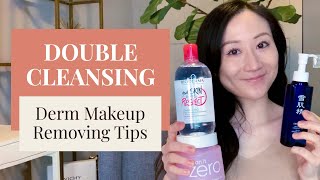
The Double Cleanse Method
Developed in Korean skincare and now mainstream in dermatology recommendations. Two-step process:
Step 1 — Oil phase: Cleansing balm, cleansing oil, or micellar water with oil. Dissolves sunscreen, makeup, and sebum (oil-based impurities). Apply to dry skin, massage 45-60 seconds, add water, emulsify, rinse. Best products: Clinique Take the Day Off Cleansing Balm ($32), Farmacy Green Clean ($34), DHC Deep Cleansing Oil ($29).
Step 2 — Water phase: Your regular face wash (gel, foam, cream). Removes water-based impurities (sweat, pollution, residual oil from step 1). The step-2 cleanser can be gentler than if used alone because step 1 has done the heavy lifting.
Double cleansing is most important on days you wear SPF and/or makeup. On bare-face, light-activity days, a single gentle cleanser is sufficient.
Eye Makeup: Special Considerations
The eye area has the thinnest skin on the face (0.5mm vs. 2mm average face skin) and the most sensitive. Aggressive rubbing causes mechanical damage that accelerates fine lines around the eyes. Proper technique: soak a cotton round in eye makeup remover (oil-based), press against closed eye for 10-15 seconds to dissolve mascara and liner, then gently sweep downward. Repeat with a fresh cotton round until no color transfers. Never use dry cotton on eyes — friction without lubrication breaks lashes. For lash extensions: oil-free removers only — oil dissolves extension adhesive. Micellar water (oil-free) is safe for lash extension wear. Cleansing balms and oils are not.
By Skin Type
Oily skin: Double cleanse with gel or foam second cleanser. Cleansing oil won't cause breakouts when properly emulsified and rinsed — the "oil causes oiliness" concern is a myth for properly formulated cleansing oils. Dry/sensitive skin: Cleansing balm (less rinse-through required than oil, more hydrating feel) as first step. Cream or milk second cleanser. Avoid micellar water on sensitive skin — some formulas contain isopropyl alcohol or high concentrations of surfactant that strip dry skin. Acne-prone skin: Double cleanse is especially important — leaving foundation and sunscreen residue on acne-prone skin worsens breakouts. Use oil first cleanser then a BHA or salicylic cleanser as second step for simultaneous makeup removal and pore management.
What We Recommend
Drugstore complete routine: Garnier Micellar Water ($9) for light days, Neutrogena Eye Makeup Remover ($9) for eye area, CeraVe Hydrating Cleanser ($14) as second cleanser. Upgrade pick: Clinique Take the Day Off Cleansing Balm ($32) as oil step for all makeup types. See our full best face washes, best face cleansers, and best micellar water for specific product picks.

How We Analyze Products
We analyze Amazon review data — often thousands of reviews per product — to surface patterns that individual buyers miss. Our process aggregates star ratings, review counts, and buyer sentiment at scale, identifying which strengths and weaknesses appear consistently across the largest review samples available.
Each product earned its placement through data: total review volume, average rating, and the specific praise and complaints that repeat most often across buyers. No manufacturer paid for placement on this page. Products appear here because buyers endorsed them at scale, not because a company asked us to feature them.
We use AI to summarize review sentiment — not to fabricate opinions, but to condense what thousands of buyers actually wrote into a readable format. The pros and cons you see reflect the most common themes found in verified purchaser reviews, paraphrased for clarity. We do not claim to have accessed Reddit, YouTube, or specific publications in generating these summaries.
Prices shown reflect Amazon pricing at the time this page was last generated. Click “See Today’s Price” to get the current live price on Amazon. Read our full methodology →