Best Winter Jackets 2026: Down, Puffer & Insulated Picks

For dry cold climates, the Columbia Autumn Park Down delivers the best warmth-per-dollar. For wet winters with mixed precipitation, the North Face ThermoBall Eco 2.0's synthetic insulation stays warm when wet—crucial in regions that cycle between snow, sleet, and rain.
See Today’s Price →At a Glance


Showing 3 of 3 products
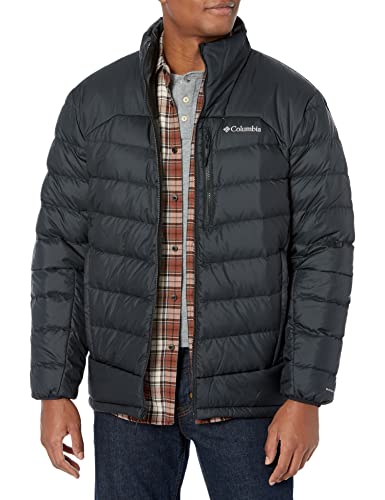
Columbia Autumn Park Down Jacket Men's
“The Columbia Autumn Park Down delivers legitimate goose down warmth at a price that undercuts North Face and Patagonia by $60-130.”
See Today’s Price →What we like
- 650-fill down provides excellent warmth-to-weight ratio
- Omni-Tech waterproof breathable shell
- Zippered handwarmer pockets
Watch out for
- Down loses insulation when wet
- Bulkier than synthetic alternatives
Read Full Analysis
The Columbia Autumn Park Down punches considerably above its $120 price point because it uses genuine 650-fill goose down insulation—not synthetic fill, not recycled down that's lost significant loft. At 650 fill power, you get a warmth-to-weight ratio that makes this jacket appropriate for temperatures down to about 15°F without layering underneath. The Omni-Tech waterproof breathable shell handles light snow and brief rain exposure. The insulated hood adds meaningful warmth to your face and ears in wind. Zippered handwarmer pockets keep your hands functional on the walk from the parking lot to the office. The honest limitation: 650 fill power is not expedition-grade down. Below 10°F or in sustained wet conditions, you'll want heavier insulation or a waterproof outer layer. Down also compresses in storage and needs periodic reshaking after washing to restore loft. But for the vast majority of North American winters—where temperatures range from 15°F to 40°F and precipitation is mostly rain at the margins—the Columbia Autumn Park Down delivers everything you need at a price that's difficult to argue against.

The North Face ThermoBall Eco Jacket 2.0 Men's
“The ThermoBall Eco 2.0 solves the main problem with down—it stays warm when wet, making it the smarter choice for climates that mix rain, sleet, and cold.”
See Today’s Price →What we like
- ThermoBall clusters retain warmth even when wet
- Packable into one pocket
- Made with recycled materials (PFAS-free)
Watch out for
- Less warm than equivalent fill-power down at same weight
- Premium price
Read Full Analysis
The North Face ThermoBall Eco 2.0 solves the fundamental problem with down: when it gets wet, it collapses and loses 70-80% of its insulating value. ThermoBall clusters mimic the round-cluster structure of goose down but are made from recycled PET materials—they maintain their shape and air-trapping capacity even after soaking. The result is a jacket that you can wear through a mix of rain and cold without the anxiety of knowing your insulation has turned into a wet, cold sponge. The packable design compresses into its own chest pocket, weighing under 15 oz for most men's sizes. The tradeoffs at $180 are real: ThermoBall provides about 85% of the warmth of equivalent down at the same weight, so you're paying more for wet-weather reliability than raw warmth. In a purely dry cold environment, the Columbia down at $120 is warmer. But for Seattle winters, Pacific Northwest hiking, or anywhere precipitation is a constant companion, the ThermoBall's wet-weather performance justifies every dollar of the premium.

Patagonia Nano Puff Jacket Men's
“The Nano Puff is Patagonia's answer to the puffy jacket—breathable enough to layer, warm enough to stand alone in fall and mild winter conditions, and built to last 10+ years.”
See Today’s Price →What we like
- PrimaLoft Gold insulation—warmth when wet
- Wind- and water-resistant shell
- Patagonia's legendary durability and repairability
Watch out for
- Expensive relative to warmth delivered
- Not a standalone cold-weather jacket below 20°F
Read Full Analysis
The Patagonia Nano Puff occupies a specific niche: it's the insulated layer you throw over a base layer for fall hiking, under a rain shell for cold days, or standalone for mild winter city use. The PrimaLoft Gold insulation strikes a better balance between breathability and warmth than most synthetic fills—it doesn't trap heat during aerobic activity the way a heavier down jacket does. The wind- and water-resistant 10-denier shell is impressively durable for its weight. At under 12 oz for most men's sizes, the Nano Puff barely registers in a daypack. The construction is bonded and sewn with Patagonia's typically meticulous quality—the seams won't delaminate after two seasons the way some budget synthetics do. The honest limitation: the Nano Puff is not a standalone cold-weather jacket. Below 25°F in wind, you'll want it under a shell or layered with a midlayer. The $250 price point is also difficult for a jacket that's most accurately described as a midlayer. But if you're buying a lifetime jacket that you'll wear 100+ days per year across 10+ years—which is what Patagonia's repair guarantee supports—the per-wear cost calculus changes significantly.
Winter Jackets Buying Guide
 Photo by Spyros Boutsikos / Pexels
Best Winter Jacket: Canada Goose Expedition or The North Face McMurdo Parka
For extreme cold-weather performance (temperatures below 0°F): the Canada Goose Expedition Parka at $1,095-1,395 uses 625 fill-power white duck down, Arctic Tech outer shell (windproof, water-resistant polyester-cotton blend), and coyote fur trim — the field jacket worn by researchers in Antarctica, rated to -30°C. For a high-performance down parka at a more accessible price: The North Face McMurdo Parka at $300-380 provides 550-fill goose down, waterproof-rated DryVent shell, and a fur-trim hood — appropriate for temperatures down to -10°F with layering. The Canada Goose premium reflects higher fill power, better shell materials, and the brand's standing in the luxury outerwear market rather than a large functional gap for most wearers.
Down Fill Power: What It Means

Fill power measures the loft of down — how many cubic inches one ounce of down occupies. Higher fill power means more air trapped per ounce of down, producing more warmth at less weight. 500-550 fill: budget to mid-range, warm for temperatures above 20°F. 600-700 fill: high-performance, appropriate for sub-zero conditions with less bulk. 800-900 fill: premium expedition-grade, maximum warmth-to-weight ratio. Fill power only matters relative to the fill weight — a 550-fill jacket with 600g of down outperforms an 800-fill jacket with 200g of down. Check both fill power AND fill weight for accurate comparison.
Down vs. Synthetic Insulation
Down (Canada Goose, Moncler, Patagonia Down Sweater): Best warmth-to-weight ratio and compressibility. Loses insulating ability when wet — wet down collapses and provides minimal warmth. The correct choice for cold, dry climates where the jacket stays dry.
Synthetic (Patagonia Nano Puff, Arc'teryx Atom): Insulates when wet — the critical advantage over down in wet climates. Heavier and less compressible than equivalent down warmth. Better for Pacific Northwest, UK, and any climate with frequent precipitation.
Treated down (RDS, Responsible Down Standard; hydrophobic down): Down treated to resist moisture — bridges the gap between standard down and synthetic. Performs better than untreated down in wet conditions while maintaining most of down's compressibility advantage.
The Bottom Line

The North Face McMurdo Parka for the best balance of warmth and price at $350. Canada Goose Expedition for expedition-grade extreme cold at $1,200. Patagonia Down Sweater Hoody for a packable mid-layer and light jacket at $280. Columbia Omni-Heat Infinity Jacket for the best budget insulated jacket at $180. Match the jacket's temperature rating to your actual climate — a jacket rated to -30°F is overkill (and unnecessarily expensive) for a city that rarely drops below 15°F.
Related Guides

Frequently Asked Questions
Down vs synthetic insulation—which is warmer?
How do I wash a down jacket?
What temperature is a winter jacket good to?
Can you wear a winter jacket in rain?
What is Omni-HEAT?
How We Analyze Products
We analyze Amazon review data — often thousands of reviews per product — to surface patterns that individual buyers miss. Our process aggregates star ratings, review counts, and buyer sentiment at scale, identifying which strengths and weaknesses appear consistently across the largest review samples available.
Each product earned its placement through data: total review volume, average rating, and the specific praise and complaints that repeat most often across buyers. No manufacturer paid for placement on this page. Products appear here because buyers endorsed them at scale, not because a company asked us to feature them.
We use AI to summarize review sentiment — not to fabricate opinions, but to condense what thousands of buyers actually wrote into a readable format. The pros and cons you see reflect the most common themes found in verified purchaser reviews, paraphrased for clarity. We do not claim to have accessed Reddit, YouTube, or specific publications in generating these summaries.
Prices shown reflect Amazon pricing at the time this page was last generated. Click “See Today’s Price” to get the current live price on Amazon. Read our full methodology →