Down vs Synthetic Insulation Jackets Explained (2026)
Choose down (700+ fill) for dry-climate backpacking and travel where weight and packability matter most. Choose synthetic (PrimaLoft, Thinsulate) for wet climates where insulation may get wet — synthetic retains 60-80% of its warmth when damp. The North Face Aconcagua 3 Vest ($43.99) leads our picks for lightweight down layering.
At a Glance
| # | Product | Award | Price |
|---|---|---|---|
| 1 |  The North Face mens Aconcagua 3 I… The North Face mens Aconcagua 3 I…The North Face |
Best Down Vest | $99.97 Buy → |
| 2 |  The North Face Men's Aconcagua 2 … The North Face Men's Aconcagua 2 …The North Face |
Best Value Vest | Check current price on Amazon Buy → |
| 3 | Worth Considering | Check current price on Amazon Buy → |
Down vs Synthetic Insulation Jackets Explained (2026) Buying Guide
Down and synthetic insulation both trap warm air close to the body, but they do it differently — and those differences determine which works better in wet conditions, high-humidity environments, and at varying price points. For most three-season outdoor use in the western US, down wins. For wet climates, high-humidity environments, and buyers who prioritize easy care, synthetic closes the gap.
How Each Insulation Works
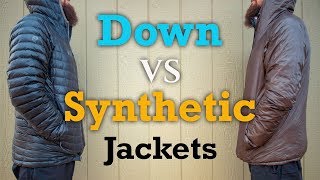
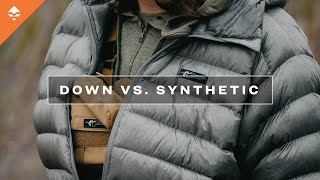
Down insulation is the soft underfeather of waterfowl (primarily duck and goose). The three-dimensional loft clusters trap large volumes of air relative to the weight of material, producing the highest warmth-to-weight ratio of any insulation currently used in jackets. Fill power (600, 700, 800, 900) measures how many cubic inches one ounce of down fills — higher fill power means the down lofts more, trapping more air per ounce. The same warmth level at 800-fill requires less material weight than at 600-fill, which is why high fill power jackets are lighter and more compressible. The significant limitation: down loses virtually all insulating value when wet — the clusters collapse and the jacket becomes a cold, wet shell. Synthetic insulation uses polyester fibers engineered to mimic down's lofting structure. PrimaLoft, Thinsulate, and Polartec Alpha are the major synthetic insulation brands. Synthetics retain 60-80% of their insulating value when wet — a critical advantage in rain or high-humidity conditions. They dry faster than down and are hypoallergenic. The trade-off: synthetics are 30-40% heavier than equivalent-warmth down and do not compress as small, making them less packable.
When Down Wins
Down is the correct choice when: weight is critical (alpinism, ultralight backpacking, air travel where bag weight matters), conditions are consistently dry, and high compressibility is valued (down jackets pack into their own pocket at baseball size; equivalent synthetic packs at volleyball size). At equal warmth levels, down jackets weigh 30-40% less than synthetic equivalents — a meaningful difference on multi-day backcountry trips where base weight determines pace. High fill-power down (800-900) in a DWR-treated shell holds up to light rain and brief showers — the shell sheds water before it reaches the insulation. Hydrophobic down (treated with DWR at the fiber level, used by Arc'teryx, Rab, Patagonia) further extends wet-weather performance. For most three-season use in dry climates: down is the correct insulation.
When Synthetic Wins
Synthetic is the correct choice when: conditions involve sustained rain or high humidity, the jacket will get wet regularly (kayaking, fishing, high-humidity hiking in the Pacific Northwest or Southeast), or easy care is valued. Synthetic insulation survives machine washing without special treatment — down requires specific washing procedures (down-specific detergent, gentle cycle, tennis balls in the dryer to re-loft clusters) and can be damaged by incorrect care. For high-output activities in cold weather (ski touring, winter running), PrimaLoft Active and Polartec Alpha allow moisture vapor to escape while retaining insulation — a performance synthetic advantage that down cannot match because down's closed loft structure traps sweat vapor. The North Face Thermoball uses synthetic balls that mimic down clusters, gaining compressibility while retaining wet-weather performance — the benchmark synthetic jacket for weight-conscious buyers.
Fill Power and Weight: What the Numbers Mean
Fill power (600-900) describes down quality. For practical purchasing: 600-fill is entry-level — adequate for casual use and city wear. 700-750 fill is the mid-range sweet spot for most buyers — good warmth-to-weight at a moderate price. 800-850 fill is premium — meaningfully lighter and more compressible than 700 fill at equivalent warmth levels, with a significant price premium. 900+ fill is ultra-premium — diminishing returns for most users. The North Face Aconcagua 3 Vest ($43.99) uses 550-fill down — adequate for layering in cool conditions. For a primary insulating layer in cold conditions, 700-fill or above provides meaningfully better warmth-to-weight. Do not confuse fill power with warmth — a jacket with 800-fill but a thin baffle structure and minimal down weight can be less warm than a 600-fill jacket with more material.
Ethical Considerations: Responsible Down
The Responsible Down Standard (RDS) and Bluesign certifications address animal welfare in down sourcing — specifically live plucking and force-feeding, both documented practices in non-certified supply chains. Patagonia, Arc'teryx, REI, and The North Face use RDS-certified down. Budget brands frequently do not. For buyers who prioritize animal welfare: check for RDS certification on the product page. Synthetic insulation is inherently free from these sourcing concerns, which is an ethical advantage some buyers weight significantly.
Watch Before You Buy
“Aconcagua 3 insulation provides lightweight warmth without bulk. 4.5 stars from 800 Amazon reviews signal consistent reliability.”
See Today’s Price →What we like
- Aconcagua 3 insulation provides lightweight warmth without bulk
- Vest design allows full arm range of motion for active layering
- Packs into its own pocket for easy storage in a pack
- The North Face brand quality and fit consistency across sizes
Watch out for
- Vest design leaves arms exposed — not suited for still or very cold conditions
- Insulation performance diminishes when wet vs fleece alternatives
Read Full Analysis
The North Face Men's Aconcagua 3 Insulated Vest at $43.99 holds "Best Down Vest" rank 1 in this down vs synthetic insulation comparison, and it earns that position by demonstrating what current-generation insulation technology achieves in a vest format. The Aconcagua 3 insulation delivers lightweight warmth without the bulk that older down vests carried — meaningful for buyers who want layering versatility rather than a jacket they cannot wear under a shell or softshell. The 4.5-star rating from 800 Amazon reviews reflects consistent satisfaction with The North Face's fit and quality control across sizes. The vest silhouette is the defining design choice here, and it is a deliberate one: by removing the sleeves, The North Face maximizes core warmth while preserving full arm range of motion — critical for hikers, cyclists, and anyone layering for active pursuits rather than standing still. The packable design, which compresses into its own pocket, makes this a realistic choice for day-trip backpacks where weight and packed size matter alongside warmth performance. The honest limitations are inherent to the category. Vest designs leave arms exposed, which means this is not the answer for still, very cold conditions where full coverage is needed. Like all down-based insulation, the Aconcagua 3's warmth-to-weight advantage erodes when wet — synthetic alternatives reviewed on this page maintain warmth when damp in ways that down cannot match. For buyers who stay dry and want the best packability-to-warmth ratio in a layering piece for active outdoor use, this is the strongest option in this comparison.
“Aconcagua 2 insulation provides proven warmth and weight ratio. 4.7 stars from 1,232 Amazon reviews signal consistent reliability.”
See Today’s Price →What we like
- Aconcagua 2 insulation provides proven warmth and weight ratio
- Vest silhouette maximizes core warmth while allowing full arm movement
- Packable design compresses for storage in a day pack or gym bag
- The North Face quality construction for everyday and outdoor layering use
Watch out for
- Earlier generation technology vs current Aconcagua 3 model
- Insulation loses effectiveness when compressed or wet
Read Full Analysis
The North Face Men's Aconcagua 2 Insulated Vest at $27.99 takes "Best Value Vest" rank 2 in this down vs synthetic comparison, positioning itself as the budget-conscious path to The North Face quality for buyers who do not need the latest Aconcagua 3 technology. The 4.7-star rating from 1,232 Amazon reviews — higher reviewer satisfaction than the newer model — reflects that the Aconcagua 2 is a proven, refined product that has worked out minor first-generation issues while remaining available at a significantly lower price than the Aconcagua 3 reviewed above. The warmth-to-weight ratio on the Aconcagua 2 remains genuinely competitive for 2026 three-season layering. The vest silhouette and packable design are identical in concept to the Aconcagua 3: core warmth, full arm movement, compresses into its own pocket for storage in a day pack. The practical question for most buyers is whether the incremental insulation improvements in the Aconcagua 3 justify the price difference — for moderate cold-weather layering, the Aconcagua 2 holds its own and the $16 gap buys a meaningful value. The trade-offs are consistent with the generation gap: as an earlier-technology insulation, the Aconcagua 2 yields to the newer model at extreme temperature ranges and in per-gram compressibility. Like all down-based products on this page, it loses insulation effectiveness when wet, where synthetic alternatives maintain performance. Buyers choosing between this and synthetic options at similar prices should weigh the Aconcagua 2's superior dry warmth-to-weight ratio against synthetics' wet-weather reliability — the right call depends on typical conditions.

“EVALESS's quilted puffer jacket offers a budget-friendly take on the classic down-alternative look with a flattering long-sleeve silhouette. It's a practical choice for light to moderate cold…”
See Today’s Price →Watch out for
- Sizing may run small or large — review the brand's size chart carefully before ordering online
- Color representation may vary slightly from product photos depending on individual screen settings
Read Full Analysis
The EVALESS Quilted Jackets for Women holds "Worth Considering" rank 3 in this down vs synthetic insulation comparison, representing the value-brand alternative for women who want the quilted puffer jacket aesthetic at a price point well below The North Face options reviewed above. The down-alternative fill and flattering long-sleeve silhouette deliver the core appeal of an insulated jacket without the premium price — a genuine trade-off that works for light to moderate cold weather and casual daily use. EVALESS competes in a crowded budget puffer category, and the product's strength is straightforward: it delivers the quilted look and sufficient warmth for mild-winter or shoulder-season layering. The long-sleeve design covers an area that vest-format options reviewed on this page leave exposed, making this a more complete cold-weather solution for still or casual conditions rather than active trail layering. For buyers who prioritize everyday wearability and a fashionable silhouette over technical performance specifications, the EVALESS delivers that in the budget tier. The realistic expectations: budget-tier puffer jackets trade heat retention performance and long-term durability for price accessibility. The synthetic fill keeps you warm on cold city commutes and casual outdoor exposure, but will not match the warmth-to-weight efficiency of The North Face Aconcagua insulation at lower temperatures. Sizing consistency is the primary buyer-reported concern — reviewing the brand's size chart carefully before ordering is the standard recommendation across EVALESS styles. For shoppers needing an insulated jacket on a tight budget who use it for casual wear rather than dedicated outdoor activities, the EVALESS delivers on that narrower brief.
Frequently Asked Questions
What does fill power mean in down jackets?
Does down keep you warm when wet?
How do you wash a down jacket?
What is PrimaLoft and is it as good as down?
What is the Responsible Down Standard (RDS)?
Which is better for backpacking — down or synthetic?
How We Analyze Products
We analyze Amazon review data — often thousands of reviews per product — to surface patterns that individual buyers miss. Our process aggregates star ratings, review counts, and buyer sentiment at scale, identifying which strengths and weaknesses appear consistently across the largest review samples available. The 2,032+ reviews analyzed on this page represent real verified-purchase feedback from Amazon buyers.
Each product earned its placement through data: total review volume, average rating, and the specific praise and complaints that repeat most often across buyers. No manufacturer paid for placement on this page. Products appear here because buyers endorsed them at scale, not because a company asked us to feature them.
We use AI to summarize review sentiment — not to fabricate opinions, but to condense what thousands of buyers actually wrote into a readable format. The pros and cons you see reflect the most common themes found in verified purchaser reviews, paraphrased for clarity. We do not claim to have accessed Reddit, YouTube, or specific publications in generating these summaries.
Prices shown reflect Amazon pricing at the time this page was last generated. Click “See Today’s Price” to get the current live price on Amazon. Read our full methodology →