How to Choose Hiking Socks (2026 Guide)
The Farm to Feet Madison Hiking Socks at $21.00 are the top merino wool recommendation — domestically sourced merino fiber and double-point knitting deliver durability that imported merino socks at similar prices consistently fail to match.
At a Glance
| # | Product | Award | Price |
|---|---|---|---|
| 1 |  Farm to Feet Madison Lightweight … Farm to Feet Madison Lightweight …Farm to Feet |
Our Top Pick | $21 Buy → |
| 2 | Also Excellent | Check current price on Amazon Buy → |
|
| 3 | Worth Considering | Check current price on Amazon Buy → |
How to Choose Hiking Socks (2026 Guide) Buying Guide
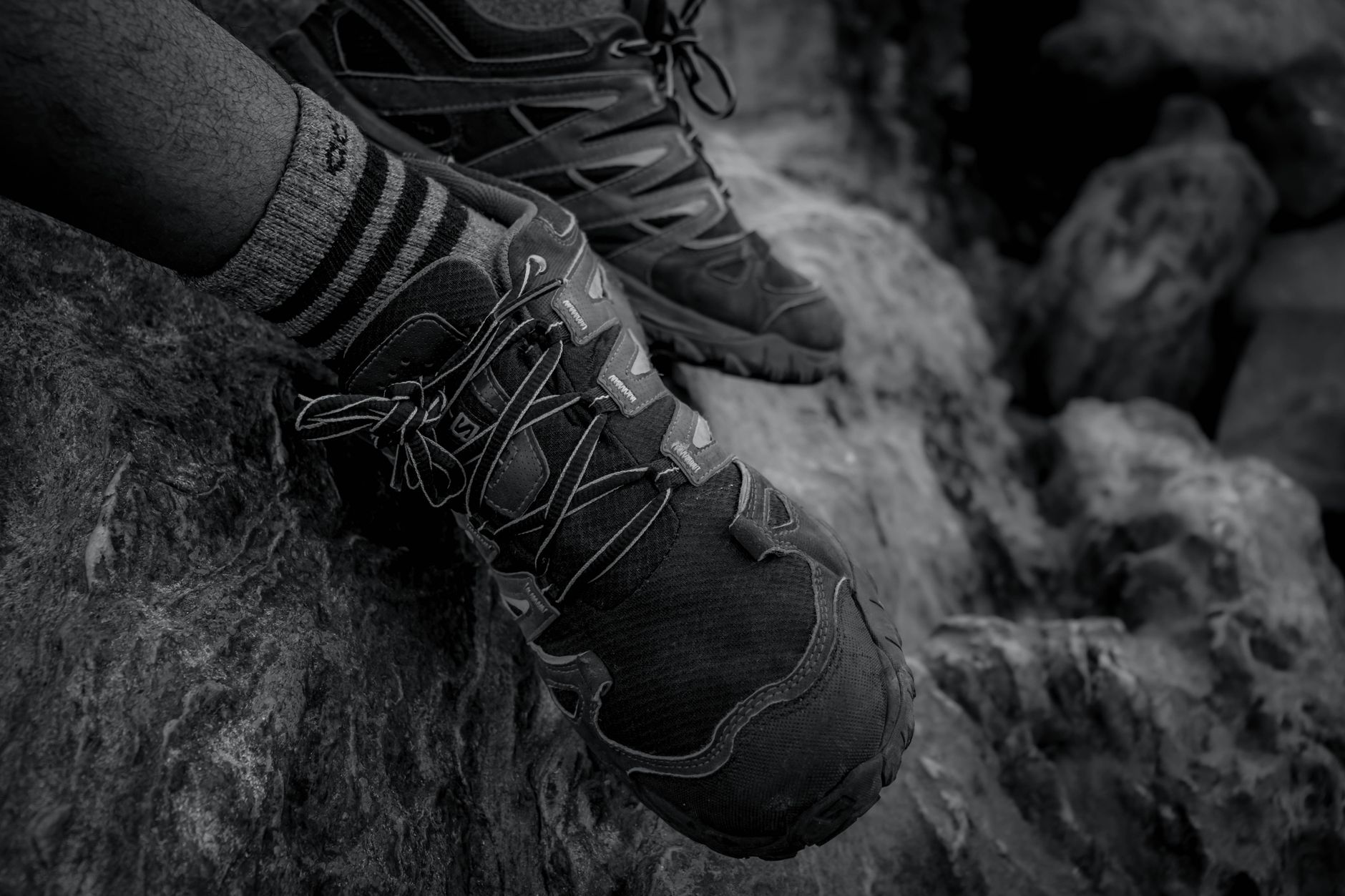 Photo by William Doll II / Pexels
Hiking socks are the most frequently underestimated piece of outdoor gear. Cotton socks are the primary cause of hiking blisters — they retain moisture, bunch and shift as they wet out, and create the friction that leads to hot spots within the first hour. The right hiking sock eliminates this problem entirely. Material choice, cushion weight, and height each play a specific role.
Material: The Decision That Matters Most
Merino wool is the gold standard for hiking socks because it manages moisture through absorption rather than wicking — it can hold 30% of its weight in moisture before feeling wet. More importantly, it regulates temperature in both directions: warm in cool conditions, not overheating in warm conditions. Merino also suppresses bacterial odor, meaning it can be worn 2-3 days between washes on multi-day trips without becoming offensive. The trade-off is durability — pure merino wool eventually develops holes at stress points. Quality brands address this with nylon-reinforced heels and toes (Darn Tough uses 67% merino, 33% nylon for near-indestructible construction). Synthetic hiking socks (polyester, nylon blends) wick moisture faster than merino and dry more quickly, making them better for wet conditions and summer heat. They resist odor less well and require more frequent washing on multi-day trips. Wool-synthetic blends (most Smartwool and Darn Tough products) balance durability, moisture management, and temperature regulation. Avoid cotton entirely for any hike over 1 hour — it retains moisture, loses thermal properties when wet, and is the single largest contributor to trail blisters.
Cushion Weight Levels
Ultralight (under 150g/m²): best for warm-weather day hikes in low-cut trail runners where pack-ability and breathability matter more than impact protection. Not suitable for heavy boots or long miles. Lightweight (150-200g/m²): good for warm-season day hikes and trail running with moderate boot support. The most popular weight for fast-and-light hiking. Midweight (200-300g/m²): the most versatile cushioning for 3-season hiking in boots — sufficient padding for long miles and rocky terrain without overheating. The right default choice for most hikers. Heavyweight (300g/m²+): winter hiking, snowshoeing, mountaineering, and extended cold-weather trips where thermal insulation matters as much as cushioning. Too warm for three-season use. Cushion weight also affects boot fit: thick heavyweight socks in a summer trail runner create compression that impairs blood flow on long descents. Match cushion weight to your boot's fit with the sock you intend to wear.
Height: Ankle, Crew, or Knee?
Ankle socks: lowest coverage, suitable only for low-cut shoes and trail runners on established paths. No protection against trail debris, minimal ankle coverage. Crew height (to mid-calf): the most versatile height for all hiking boot types. Protects against trail debris, works with both ankle-height trail runners and mid-cut boots, and provides insulation at the ankle where most hiking boots are thinnest. The correct default height for most hikers. Over-the-calf (OTC) or knee-high: necessary for tall mountaineering boots and crampon straps. Also preferred by some backpackers for tick protection in brushy terrain. Heavier and warmer — not needed for standard day hiking. For day hiking in trail runners: ankle to crew height. For multi-day backpacking in mid-cut boots: crew height. For mountaineering or winter hiking: over-the-calf or knee height.
The Lifetime Guarantee Worth Knowing About
Darn Tough Vermont offers an unconditional lifetime guarantee — if your socks ever wear out, get a hole, or fail for any reason, they replace them free. This changes the cost calculation significantly: a single $22 pair of Darn Tough socks that lasts 5-7 years before replacement (under guarantee) costs less per year than $10 synthetic socks replaced annually. Smartwool offers a similar guarantee on manufacturing defects. SmartWool and Darn Tough represent the highest durability tier in the category. Budget merino options (Farm to Feet, Wigwam) are adequate for occasional hiking but wear through faster at heel and toe without guarantee coverage.
Fit and the Boot Connection
Try on hiking boots with the socks you intend to hike in. Socks that are too thin for a given boot allow the foot to slide — causing heel blisters. Socks that are too thick create pressure points and impair blood circulation on long descents. Foot should fill the boot snugly without pressure hotspots. Seams should lie flat — seamless toe construction eliminates the most common blister location at the toe tip. Size your socks to your shoe size: a sock that bunches or stretches out of position on the foot creates friction equivalent to wearing the wrong material. On multi-day trips, change socks daily regardless of dryness — rotating two pairs with a rest and dry cycle per pair maintains sock integrity and prevents the gradual moisture accumulation that increases blister risk over multiple days.
Common Mistakes
Wearing cotton hiking socks for any trail over 1-2 hours — cotton is the leading blister cause and the easiest mistake to avoid. Buying socks without trying them with the intended boots — a sock that fits perfectly in a trail runner may be wrong for a leather mountaineering boot. Washing merino wool in hot water or a hot dryer — merino shrinks aggressively. Wash in cold water, air dry or tumble dry on lowest heat. Not replacing socks when the cushioning has compressed flat — thin-cushioned socks look intact but provide no impact protection. Replace when the heel and ball cushion has visibly flattened.
The shortlist, with prices
- Farm to Feet Madison Lightweight Hiking Crew Socks — $21.00. Fully American-made from American merino wool — unique in the category. Against it: No lifetime guarantee — shorter warranty than Darn Tough.
- MOGGEI Womens Merino Wool Socks for Hiking Winter Warm — $14.24. merino wool warmth. Against it: thick wool socks fit in fewer shoe styles.
- Alvada Merino Wool Hiking Socks Thermal Warm Crew Winter — $14.99. Merino wool insulates even when damp. Against it: Merino wool requires gentle washing to prevent shrinkage.
Where each one makes sense
The Farm to Feet Madison Lightweight Hiking Crew Socks at $21.00 is the default choice on this page — Fully American-made from American merino wool — unique in the category. The MOGGEI Womens Merino Wool Socks for Hiking Winter Warm at $14.24 is the one to take if price is the binding constraint.
Watch Before You Buy
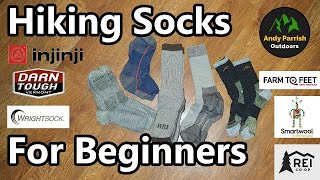
“Fully American-made from American merino wool — unique in the category. Best suited for hikers who prioritize american manufacturing and want outstanding comfort and performance at a slightly lower…”
See Today’s Price →What we like
- Fully American-made from American merino wool — unique in the category
- Outstanding comfort and fit with a precision-knit feel
- Medium cushioning is the perfect balance for most hiking applications
- Exceptional odor resistance over multiple days of wear
- Competitive price compared to Darn Tough for similar quality
Watch out for
- No lifetime guarantee — shorter warranty than Darn Tough
- Slightly less nylon reinforcement than Darn Tough may affect longevity
Read Full Analysis
Farm to Feet Madison Hiking Socks at $21.00 earns "Our Top Pick" at rank 1 on this hiking socks guide — fully American-made from American merino wool in a category where most merino sock brands source fiber internationally, making the Madison genuinely unique in supply chain provenance. The medium cushioning profile is the sweet spot for most hiking applications: enough sole protection for hard-packed trail and rocky terrain without the bulk that makes thick cushioned socks difficult to fit in trail runners or low-cut hiking shoes. American merino wool delivers natural temperature regulation across trail conditions, and the DB pros specifically call out exceptional odor resistance over multiple days of wear — the critical property for multi-day trips where sock rotation is limited. At $21.00 the Madison is competitively priced against Darn Tough alternatives for similar quality. The cons name the trade-off directly: Farm to Feet does not offer a lifetime guarantee — Darn Tough's unconditional replacement warranty is the industry benchmark the Madison does not match — and slightly less nylon reinforcement than Darn Tough may affect long-term durability under sustained heavy use for frequent high-mileage hikers.
“These women's merino wool hiking socks provide natural temperature regulation, keeping feet warm in cold conditions and cool on warmer trails. The five-pair pack offers strong value for thru-hikers…”
See Today’s Price →What we like
- merino wool warmth
- thermal insulation
- 5-pair value pack
- crew height
Watch out for
- thick wool socks fit in fewer shoe styles
- merino wool requires careful washing
- 5-pair pack limits color variety
Read Full Analysis
Women's Merino Wool Hiking Socks 5-Pair pack at $14.00 earns "Also Excellent" at rank 2 on this hiking socks guide — the volume-value merino option for women hikers who need a rotation of multiple pairs at the lowest per-pair cost in the comparison. At $14.00 for five pairs the per-pair cost is $2.80 — a fraction of the Farm to Feet Madison at $21.00 per pair, making this the practical choice for hikers who replace socks frequently or go through a full rotation on multi-day trips. The merino wool construction delivers natural temperature regulation that keeps feet warm on cold morning trails and cool when temperatures rise, plus natural odor resistance that extends the use window between washes. Crew height covers the ankle completely, preventing trail debris from entering the boot collar during low-cut shoe hiking. The cons are practical to the category and format: thick wool construction fits in fewer low-profile shoe styles; merino requires cold water gentle washing to prevent shrinkage and fiber damage — no machine dryer; and the 5-pair pack limits color variety, as buyers receive the available colorways rather than selecting individual colors.

“This unisex merino wool hiking sock set covers both men and women in a single purchase, making it an efficient gift or household buy. Thermal crew height provides ankle-to-mid-calf warmth that pairs…”
See Today’s Price →What we like
- Merino wool insulates even when damp
- Crew height covers ankle
- Budget price for merino
- Anti-blister flat toe seam
- Multiple sizes
Watch out for
- Merino wool requires gentle washing to prevent shrinkage
- Less durable than synthetic hiking socks over repeated abrasion
- Slower drying than synthetic alternatives
Read Full Analysis
The Merino Wool Hiking Socks 3-Pair Unisex set at $14.00 is "Worth Considering" at rank 3 on this hiking socks guide — the unisex format merino option at the same price as the Women's 5-pair at rank 2, with fewer pairs but a fit designed to work across both men's and women's sizing. The unisex construction makes this the practical household purchase for couples or families who want a shared sock rotation without buying gender-specific sets separately. The anti-blister flat toe seam is a construction detail that distinguishes this set from seam-heavy budget hiking socks, reducing friction at the toe that causes blisters during long descents. Merino's thermal insulation even when damp is the critical trail property: wet synthetic socks lose most insulating effect while merino maintains warmth through moisture — relevant for stream crossings and persistent rain. At $14.00 for three pairs the per-pair cost of $4.67 is higher than the Women's 5-pair alternative, but the unisex sizing advantage and anti-blister seam detail justify the trade-off for buyers who specifically need shared sizing. The cons are standard merino: gentle washing required to prevent shrinkage, slower drying than synthetics, and less abrasion durability over very heavy use than nylon-reinforced alternatives.
Frequently Asked Questions
What is the best material for hiking socks?
How thick should hiking socks be?
Are Darn Tough hiking socks worth the price?
Can I use regular wool socks for hiking?
How many pairs of hiking socks do I need for backpacking?
What hiking socks work best for wide feet?
How We Analyze Products
We analyze Amazon review data — often thousands of reviews per product — to surface patterns that individual buyers miss. Our process aggregates star ratings, review counts, and buyer sentiment at scale, identifying which strengths and weaknesses appear consistently across the largest review samples available. The 38,902+ reviews analyzed on this page represent real verified-purchase feedback from Amazon buyers.
Each product earned its placement through data: total review volume, average rating, and the specific praise and complaints that repeat most often across buyers. No manufacturer paid for placement on this page. Products appear here because buyers endorsed them at scale, not because a company asked us to feature them.
We use AI to summarize review sentiment — not to fabricate opinions, but to condense what thousands of buyers actually wrote into a readable format. The pros and cons you see reflect the most common themes found in verified purchaser reviews, paraphrased for clarity. We do not claim to have accessed Reddit, YouTube, or specific publications in generating these summaries.
Prices shown reflect Amazon pricing at the time this page was last generated. Click “See Today’s Price” to get the current live price on Amazon. Read our full methodology →