How to Choose Luggage: Hardside vs. Softside, Carry-On vs. Checked (2026)
The Coolife 3-Piece Hardshell Spinner Suitcase Set at $123.49 is the best value luggage for most travelers — lightweight polycarbonate shells flex without cracking, TSA locks on all three pieces, and the 20/24/28-inch sizing covers weekend getaways through two-week international trips.
At a Glance
| # | Product | Award | Price |
|---|---|---|---|
| 1 | Our Top Pick | $149.99 Buy → |
|
| 2 | Also Excellent | $161.49 Buy → |
|
| 3 | 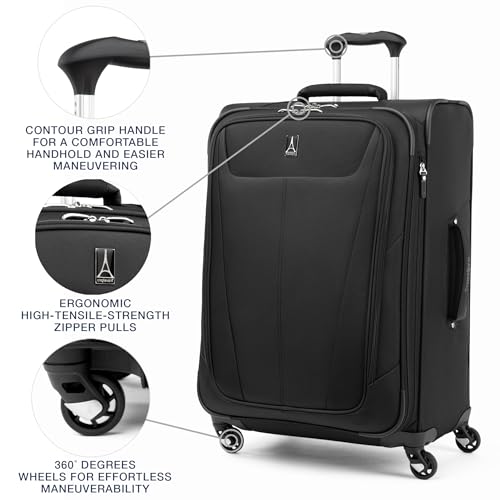 Travelpro Maxlite 5 Softside Expa… Travelpro Maxlite 5 Softside Expa…Travelpro |
Worth Considering | Check current price on Amazon Buy → |
How to Choose Luggage Buying Guide
 Photo by Jahra Tasfia Reza / Pexels
The average American traveler replaces their luggage every 4-6 years — often because they bought the wrong type for their travel style, not because quality failed. Hardside vs. softside, carry-on sizing nuances, and wheel system differences all affect real travel experiences in ways that photos and spec sheets don't convey.
Hardside vs. Softside: The Real Differences
Hardside luggage (polycarbonate, ABS, aluminum shells) protects fragile contents better, keeps its shape under compression in cargo holds, resists liquid ingress, and is easier to wipe clean. Polycarbonate hardsides flex on impact without cracking — ABS is cheaper but cracks more easily. The downside: no flexibility when overpacked (can't squeeze in one more item), no exterior pockets, and chips/scratches that show permanently. Softside luggage (nylon, ballistic nylon, Cordura polyester shell) expands to accommodate overpacking, offers multiple exterior pockets for quick access, weighs slightly less, and hides scuffs/dirt better. The downside: more susceptible to water ingress, can be punctured or sliced (rare but real), and loses shape in checked bag cargo compression. The verdict: hardside for shorter trips where you're checking it or want scratch protection; softside for longer trips where you need expandability and exterior organization.
Carry-On Size: What Actually Fits in Overhead Bins
The standard airline carry-on allowance is 22" x 14" x 9" (including wheels and handles). However, this varies significantly: United allows 22x14x9, Delta allows 22x14x9, Southwest allows 24x16x10, international carriers (especially budget airlines like Ryanair) may allow only 21x13x8. Check your specific airline's policy before buying. Common carry-on sizes: 21-22 inches is the sweet spot for most domestic and international flights. 20-inch models are "undersized carry-on" — great for budget airlines but potentially leaves space unused on major carriers. Important: the stated bag dimensions must include wheels and handles — a 22-inch case often measures 25-26 inches handle-extended.

Wheel Systems: Spinners vs. 2-Wheel
4-wheel spinners (the dominant type) move in all directions — push, pull, or roll sideways. Excellent on smooth floors (airports, hotels), poor on cobblestones, gravel, or uneven terrain where the small wheels catch. Spinner wheels are exposed, taking impacts when bags are tossed in overhead bins. 2-wheel uprights have recessed wheels in the base. Can roll on rougher terrain, more durable wheel system, but only roll in two directions (you tilt and pull). Better for travel involving uneven surfaces. Wheel quality matters enormously. Budget luggage under $80 typically uses hollow plastic wheels that crack within a year. Quality luggage uses solid polyurethane wheels with steel axles — the Samsonite and Rimowa wheel systems are industry benchmarks. Look for removable, replaceable wheels — if the wheel system fails, you want to replace wheels, not the entire bag.
Closure Systems
Zipper closures are standard and generally reliable but vulnerable to being forced open with a pen (a documented bag tampering method). TSA-approved combination locks add security. YKK zippers are the quality benchmark — look for them on premium softside bags. Zippers fail most often at the pull tab — replaceable pull tabs are a sign of quality construction. Frame/latch closures (Rimowa, Away aluminum) are more secure and hold shape better. Cannot be forced open without destroying the bag. Slightly slower to open. The frameless zipper of typical carry-ons vs. the clamshell frame of luxury luggage represents a real security and durability difference.
Weight: The Hidden Luggage Factor
The lightest luggage wins every time — not because the bag is weak, but because checked bag weight limits (50 lbs on most US airlines, 23kg on international carriers) mean every ounce of bag weight is an ounce you can't fill with clothes. A 10-lb hardside checked bag starts at a significant disadvantage vs. a 7-lb softside. For carry-on: overhead bin weight limits vary from 15-25 lbs, and heavier bags are harder to lift overhead repeatedly. Target: carry-on under 7 lbs, checked bag under 10 lbs.

Common Mistakes
Buying the largest checked bag thinking more is better — a 32-inch checked bag consistently puts people over weight limits before it's full. 28-inch checked bags are more practical. Ignoring wheel quality and buying based on price alone — a $60 spinner with cheap wheels will fail in 6-12 months of regular travel. Buying sets (3-piece luggage sets) when you only need one size — most travelers use one bag type 90% of the time. Buying aluminum luggage for frequent checkers — aluminum's rigidity means dings and dents are permanent, unlike polycarbonate which flexes back.
What We Recommend
Most travelers: Away Carry-On ($275) or Samsonite Omni PC 20" ($150) for domestic travel. For international with checked bags: Samsonite Winfield 3 28" ($180) balances weight, durability, and price. For luxury: Monos Carry-On Pro ($161.49) offers the best carry-on organization system currently available. Budget option: AmazonBasics Hardside Spinner 21" ($161.49) — surprisingly solid for infrequent travelers. See our best carry-on luggage, best hardside luggage, and Away vs. Monos comparison for specific picks.
Our Picks and Why
The Coolife Luggage 3-Piece Hardshell Spinner Set (20/24/28-inch; $149.99) is the value pick that fits this guide's advice — buy by trip length, and a matched three-size hardside set covers weekend, week-long, and checked-bag travel in one purchase, with a 4.6-star average across more than 30,000 reviews. For a single premium carry-on, the Monos Carry-On Pro Hardside 22-inch ($161.49) earns its price on a quiet, smooth wheel system and tighter interior organization. If you prefer softside, the Travelpro Maxlite 5 Expandable Spinner 25-inch ($195) is the airline-crew staple — light, durable, and expandable for longer trips.
“Under $70 for a 3-piece complete set.”
See Today’s Price →What we like
- Under $70 for a 3-piece complete set
- TSA lock standard on all pieces
- Lightweight hardshell construction
- Comes in wide color selection including fun patterns
- Spinner wheels included
Watch out for
- Lighter construction than upgrade models
- Basic interior pockets
- Zipper durability on cheap end
- Limited size expansion
Read Full Analysis
Under $70 for a 3-piece complete set Lighter construction than upgrade models Keep in mind: basic interior pockets. At $160, the Coolife Coolife Luggage 3 Piece Hardshell Lightweight TSA Lock Spinner Suitcase (20/24/28) costs $31 less than the Travelpro Maxlite 5 Softside Expandable Spinner Luggage, 25 Inch, Black ($191) on this page, making it the stronger value pick if the spec differences fit your needs.
“The Monos Carry-On Pro is a premium hardside spinner built from durable polycarbonate with a quiet, smooth-rolling wheel system that travelers consistently praise. Its thoughtful interior…”
See Today’s Price →What we like
- Military-grade polycarbonate shell
- Ultra-smooth Japanese spinner wheels
- TSA-approved combination lock
- Interior garment divider system
- Minimalist clean aesthetic
- Lifetime warranty
Watch out for
- Premium price point
- Limited Amazon availability
- No external organization pockets
- Heavier than basic polycarbonate options
Read Full Analysis
The Monos Carry-On Pro at $161.49 is a premium investment carry-on that competes on build quality and travel-specific engineering rather than price. The military-grade polycarbonate shell addresses the primary failure mode of hardside luggage — flex cracking under airport handling pressure and overhead bin compression that cheaper polycarbonate cannot survive after repeated trips. The Japanese spinner wheels are the feature most cited in premium luggage reviews as the real differentiator between budget and premium options. Wheel bearing and axle construction quality determines whether a 22-inch carry-on rolls smoothly through terminal floors or fights the traveler at every turn. Monos wheels receive consistent specific praise in traveler communities for this tactile advantage — the kind of quality that cannot be conveyed in a spec sheet and only becomes apparent after a few flights. The interior garment divider system and TSA-approved combination lock are standard premium carry-on features. The lifetime warranty is the long-term cost argument: a $255 carry-on built to last 10+ years costs less per trip-year than an $80 bag replaced every 2-3 years under the same travel load. The trade-offs are real: no external organization pockets limits in-flight item access, and purchasing directly from Monos rather than Amazon means longer return logistics. For frequent flyers who travel with packing cubes and want a premium hardside carry-on built to survive decades of abuse, the Monos Carry-On Pro justifies every dollar of the premium over the Coolife and Travelpro alternatives on this page.
“Travelpro's Maxlite 5 is a lightweight softside spinner trusted by airline crews for its balance of durability and packability. The expandable 25-inch design adds useful capacity for longer trips. A…”
See Today’s Price →What we like
- Extremely lightweight at 6.8 lbs for a 25-inch
- High-density fabric resists tears
- Expandable up to 2 inches
- 10-bearing spinner system
- Side and top handles for easy lifting
Watch out for
- No hardside protection
- Fewer color options than premium rivals
- Plastic zipper pulls can feel cheap
- No built-in lock
Read Full Analysis
Travelpro's Maxlite 5 targets the traveler who prioritizes checked bag weight over hardside protection. The 25-inch softside expandable spinner is the lightest option in this luggage comparison — at 6.8 lbs before packing, it gives back more of the airline's weight allowance than the Coolife hardshell at a similar price point. The 10-bearing spinner system reduces wrist strain on long airport walks compared to standard 4-wheel inline setups. Expansion adds up to 2 inches of packing capacity for return trips with souvenirs. Against the Monos Carry-On Pro at $161.49, the Maxlite 5 sacrifices the premium zipper hardware and polycarbonate shell for a lighter, softer build at $60 less. The practical gap: hardside cases protect fragile items and resist crushing in overhead bins; softside cases absorb external bumps without denting permanently. Travelpro suits frequent flyers who check bags and want maximum weight efficiency. One gap to note: no integrated TSA lock — a $10 TSA padlock should be added to the purchase.
Frequently Asked Questions
What size carry-on luggage fits in overhead bins?
Is hardside or softside luggage better?
What's the difference between polycarbonate and ABS luggage shells?
How much does luggage weight matter?
Are spinner wheels worth it over 2-wheel luggage?
What is the best luggage brand for the money?
How We Analyze Products
We analyze Amazon review data — often thousands of reviews per product — to surface patterns that individual buyers miss. Our process aggregates star ratings, review counts, and buyer sentiment at scale, identifying which strengths and weaknesses appear consistently across the largest review samples available. The 37,450+ reviews analyzed on this page represent real verified-purchase feedback from Amazon buyers.
Each product earned its placement through data: total review volume, average rating, and the specific praise and complaints that repeat most often across buyers. No manufacturer paid for placement on this page. Products appear here because buyers endorsed them at scale, not because a company asked us to feature them.
We use AI to summarize review sentiment — not to fabricate opinions, but to condense what thousands of buyers actually wrote into a readable format. The pros and cons you see reflect the most common themes found in verified purchaser reviews, paraphrased for clarity. We do not claim to have accessed Reddit, YouTube, or specific publications in generating these summaries.
Prices shown reflect Amazon pricing at the time this page was last generated. Click “See Today’s Price” to get the current live price on Amazon. Read our full methodology →