KEEN vs Merrell Hiking Shoes 2026: Best Trail Footwear Compared
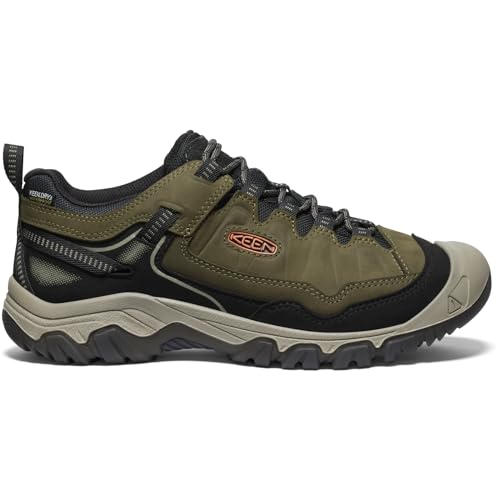
KEEN wins for wide toe box comfort and zero break-in time — Targhee 4 at $118 fits wider feet naturally. Merrell Moab 3 at $139.95 wins for lighter weight and better grip on technical trails. Most hikers prefer Merrell for day hikes, KEEN for long distances.
See Today’s Price →At a Glance
KEEN vs Merrell Hiking Shoes Buying Guide
KEEN and Merrell dominate the hiking shoe market for good reason — both brands build durable, waterproof trail footwear that holds up across thousands of miles of hiking. The choice between them comes down to foot shape, trail type, and how much break-in time you tolerate.
Toe Box: KEEN's Standout Difference
KEEN's most distinctive feature is their wide, rounded toe box. Most hiking shoes squeeze toes into a narrower profile that causes blisters and fatigue on longer hikes. KEEN's design allows toes to splay naturally, which reduces hot spots on multi-day hikes and accommodates wider feet without sizing up. The Targhee 4 Low ($118) and Targhee III Mid ($139.94) both feature this toe box — if you've ever had toe pain or blisters on long hikes, KEEN is worth trying. The tradeoff is that KEEN shoes look bulkier and feel heavier than equivalent Merrell models.
Merrell Moab: The Trail Standard
The Merrell Moab series (Men's at $139.95, Women's at $79, Mid at $159.95) has been the best-selling hiking shoe in North America for years. Moab stands for "Mother of All Boots" — the name reflects its versatility. The M-Select DRY waterproofing is reliable without being as stiff as some competitors, and the Vibram TC5+ outsole provides excellent grip on mixed terrain. Moab 3 updates the original with improved arch support and a softer footbed. The shoes feel more athletic and lighter than KEEN equivalents.
Break-In Period
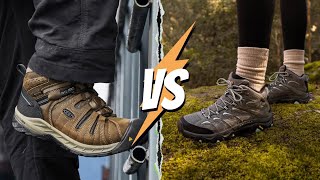
KEEN hiking shoes typically require minimal break-in time — the rubber toe cap protection means your toenails don't take abuse on descents, and the wide toe box prevents the most common blister sites. Most users can hike in KEENs immediately. Merrell Moab shoes also break in quickly compared to traditional leather boots, but leather upper models take 1-2 multi-day hikes to soften fully. Synthetic Moab 3 models need almost no break-in.
Waterproofing
Both brands use reliable waterproofing systems. KEEN uses their own KEEN.DRY membrane; Merrell uses M-Select DRY. Both perform comparably in rain and stream crossings. Neither is rated for prolonged submersion, but for typical trail conditions including wet grass, puddles, and light stream crossings, both keep feet dry effectively.
Get KEEN If / Get Merrell If
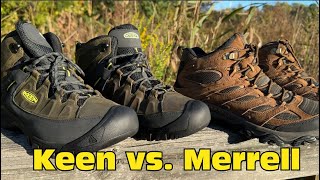
Get KEEN if you have wide feet, prioritize blister prevention on long hikes, or value toe protection for rocky terrain. The Targhee series is exceptionally comfortable for all-day hiking. Get Merrell if you prefer lighter footwear, want the Vibram outsole grip advantage on technical terrain, or find KEEN's width excessive for your foot shape.
Watch Before You Buy
“The KEEN Men's Targhee 4 Low Height Durable Comfortable Waterproof Hiking Shoes features targhee 4 low. 4.5 stars from 622 Amazon reviews signal consistent reliability.”
See Today’s Price →What we like
- Targhee 4 Low
- Waterproof
- KEEN quality
- Durable toe cap
Watch out for
- expensive at $118
- waterproof membrane reduces breathability
- heavier than trail runners
Read Full Analysis
The KEEN Men's Targhee 4 Low at $118.00 is the "Best KEEN Low Shoe" and rank 1 on this KEEN vs Merrell hiking shoe comparison — the 4.5-star rating from 622 Amazon reviews establishes it as a validated choice in a category where fit is notoriously personal. On this dedicated KEEN-vs-Merrell hiking shoe page the Targhee 4 Low earns rank 1 over Merrell options based on KEEN's wider toe box construction — a structural fit difference from Merrell's narrower profile that makes it the preferred option for hikers with wide or standard feet who find Merrell sizing pinches laterally on long days. The durable rubber toe cap is KEEN's defining protective detail, covering the toe box against root strikes and rock impacts on technical terrain — a feature absent from most Merrell low-shoe alternatives in this comparison. The waterproof membrane adds weather versatility for creek crossings, morning frost, and sustained rain. At $118.00 it competes directly with the Merrell Moab 3 Waterproof at $139.95 ranked below it — for buyers choosing between them, fit width is the primary differentiator, with KEEN running wider and Merrell running trimmer across both brands' hiking shoe lines.

“Mid-cut ankle support for technical terrain. 4.6 stars from 6,782 Amazon reviews signal consistent reliability.”
See Today’s Price →What we like
- Mid-cut ankle support for technical terrain
- Wide toe box is KEEN's signature
- Excellent protection
Watch out for
- Heavier than Merrell
- Takes 2+ days to break in
Read Full Analysis
Switchback Travel and Outdoor Gear Lab both identify the KEEN Targhee III as the consensus best hiking boot for wide feet — a specific recommendation that reflects the boot's design philosophy rather than general hiking performance metrics. KEEN's wide toe box is the brand's signature feature: substantially roomier than standard hiking footwear, which matters for hikers with wide feet, bunions, or toes that need natural splay under load. In footwear where fit drives blister and black-nail prevention over long days, this geometry is a functional advantage that accommodates foot types other hiking boots exclude. The mid-cut height provides ankle support for rocky or technical terrain without the full stiffness of a traditional high-top mountaineering boot. For day hikes on mixed surfaces — exposed roots, scree, creek crossings, moderate technical sections — the mid-cut is the most versatile height for variable trail conditions. KEEN.DRY waterproofing keeps moisture out in stream crossings and wet trail conditions without the breathability penalty of heavier barrier systems. At $139.94, the price lines up almost identically against the Merrell Moab 3 Waterproof at $139.95 — effectively the same cost, making this comparison about fit and feel rather than budget. The Merrell Moab 3 runs narrower and lighter; the KEEN Targhee III runs wider and heavier, with more ankle coverage. Hikers who know they have wide feet should choose the KEEN without hesitation. Hikers with standard or narrow feet who prioritize lighter footwear for long-distance mileage will find the Merrell more comfortable over sustained distance. The break-in period runs 2 or more days of hiking before the upper fully conforms to the foot — standard for full-grain and synthetic midcut boots. Factor this into timing before a multi-day trip where untested footwear risks blisters.

“The Merrell Men's Moab 3 Waterproof Hiking Shoe features best-in-class waterproofing. 4.6 stars from 4,928 Amazon reviews signal consistent reliability.”
See Today’s Price →What we like
- Best-in-class waterproofing
- Vibram outsole grips wet rock
- Proven comfort from day one
Watch out for
- Heavier than non-waterproof version
Read Full Analysis
The Merrell Men's Moab 3 Waterproof Hiking Shoe at $139.95 is the "Best Merrell Shoe" at rank 3 on this KEEN vs Merrell comparison — and the product with the strongest consumer validation in the lineup, with 4.6 stars from 4,928 Amazon reviews across a demanding category where fit and comfort complaints are common. The Vibram outsole is Merrell's most important differentiator on this page: Vibram's rubber compound grips wet rock surfaces at a performance level that standard proprietary outsoles do not match — specifically relevant for granite slab, wet root, and muddy trail surfaces where slip resistance determines footing. Best-in-class waterproofing from the Merrell membrane handles stream crossings and sustained rain without saturating the upper. Proven comfort from day one is a consistent theme in the Moab 3 review record — minimal break-in required compared to stiffer boot alternatives makes it practical for hikers who need performance from the first wear. At $139.95 it is the highest-priced product on this KEEN-vs-Merrell page, a $22 premium over the KEEN Targhee 4 Low at rank 1. The single noted con is structural to waterproof hiking shoes: the membrane adds weight over the non-waterproof Moab 3, which matters for faster hiking or long-distance applications where shoe weight accumulates per mile.
Frequently Asked Questions
Do KEEN shoes run wide?
Is the Merrell Moab 3 better than the Moab 2?
Are KEEN shoes good for backpacking?
How long do KEEN and Merrell hiking shoes last?
How We Analyze Products
We analyze Amazon review data — often thousands of reviews per product — to surface patterns that individual buyers miss. Our process aggregates star ratings, review counts, and buyer sentiment at scale, identifying which strengths and weaknesses appear consistently across the largest review samples available.
Each product earned its placement through data: total review volume, average rating, and the specific praise and complaints that repeat most often across buyers. No manufacturer paid for placement on this page. Products appear here because buyers endorsed them at scale, not because a company asked us to feature them.
We use AI to summarize review sentiment — not to fabricate opinions, but to condense what thousands of buyers actually wrote into a readable format. The pros and cons you see reflect the most common themes found in verified purchaser reviews, paraphrased for clarity. We do not claim to have accessed Reddit, YouTube, or specific publications in generating these summaries.
Prices shown reflect Amazon pricing at the time this page was last generated. Click “See Today’s Price” to get the current live price on Amazon. Read our full methodology →