Merino Wool vs Synthetic: Which Base Layer Is Right for You? (2026)
Choose merino for: travel and multi-day trips (odor resistance lets you wear it 3+ days), casual wear (soft, looks normal), sensitive skin, cold weather. Choose synthetic for: single-day gym workouts (cheaper, faster drying), water sports, heavy aerobic activity, budget builds. The merino/nylon blend (Darn Tough socks, Icebreaker with nylon added) is the best of both — durability of synthetic, comfort and odor resistance of merino.
Merino Wool vs Synthetic Buying Guide

Who This Guide Is For
This guide is for you if:
- You're buying outdoor or work clothing and want to understand what materials and features matter
- You're comparing synthetic and natural fiber options and want honest performance comparisons
- You want to build a layering system that works across temperature ranges
Skip this guide if:
- You're a professional outdoor guide or mountaineer with established preferences
- You just want a specific clothing recommendation — see our comparison pages
Our Top Pick
Darn Tough Vermont Merino Wool Micro Crew Cushion Socks at $25.95 — Choose merino for: travel and multi-day trips (odor resistance lets you wear it 3+ days), casual wear (soft, looks normal), sensitive skin, cold weather.
Budget Pick: Darn Tough Vermont Merino Wool Micro Crew Cushion Socks at $25.95 — Who This Guide Is For This guide is for you if: You're buying outdoor or work clothing and want to understand what materials and features matter You'r.
Quick verdict: Choose merino for: travel and multi-day trips (odor resistance lets you wear it 3+ days), casual wear (soft, looks normal), sensitive skin, cold weather. Choose synthetic for: single-day gym workouts (cheaper, faster drying), water sports, heavy aerobic activity, budget builds.

Two Materials, One Purpose
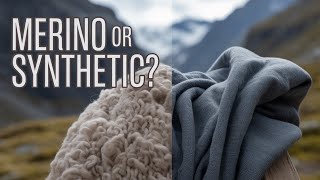
Merino Wool: The Natural Fiber That Does Everything
What Merino Feels Like
Hold a merino wool T-shirt against your skin and you'll notice immediately that it doesn't scratch. Regular wool scratches because its thick fibers are stiff enough to poke and irritate your skin. Merino fibers are flexible enough to bend, not scratch. Against skin, merino feels like a fine jersey cotton but with more substance — slightly heavier, slightly warmer to the touch initially, with a gentle give to the fabric. When you pull it on after a long day, it doesn't feel cold and synthetic against your skin. It feels... neutral. Comfortable immediately. At 150g/m² (lightweight), the fabric breathes so freely you can barely tell you're wearing it in warm conditions. At 200g/m² (midweight), it has a palpable warmth — you feel snugly wrapped, the kind of warmth that makes you reach for it on cold mornings.The Odor Story
This is merino's most remarkable property and the one that most converts people permanently. Merino wool fibers have a complex scaly surface structure. This structure mechanically disrupts bacteria — the main cause of fabric odor — before they can colonize the fiber. Additionally, wool fibers absorb odor molecules into the fiber core through a chemical bonding process. The practical result: wear a merino base layer for one day of moderate hiking. Smell it. There's almost nothing — maybe a faint woolly smell, nothing offensive. Put on a quality synthetic base layer, hike for the same day. The smell is noticeable by hour six. Wear merino for three days without washing. In controlled tests and real-world travel reports, merino remains acceptable well into multi-day wear. This is not marketing copy — it's a measurable, repeatable property of the fiber structure. Why this matters:- Travel: one merino T-shirt worn three days = half the clothes you pack
- Backpacking: one base layer for a week-long trip vs. carrying multiple synthetics
- Daily commute: evening gym + morning meeting in the same shirt (with normal deodorant)
Merino's Temperature Regulation
Wool is hygroscopic — it absorbs moisture vapor (sweat) before it becomes liquid, converting the phase-change energy into heat. In cold conditions, this slightly warms you. In warm conditions, the moisture evaporates from the fiber surface, cooling you. This bidirectional regulation is genuinely unique to natural protein fibers. The result: Merino base layers work across a wider temperature range than synthetic. A midweight merino long sleeve works from 40°F hiking to a 65°F train ride to a 50°F camp evening. A synthetic at the same weight would overheat in the train, be comfortable hiking, and feel colder at camp.Merino's Weaknesses
Price. A quality merino T-shirt (Icebreaker, Smartwool, Arc'teryx Cormac) runs $70-120. A comparable synthetic (Under Armour, Patagonia Capilene) runs $35-65. For equivalent pieces, merino costs roughly twice as much. Durability. Merino fibers are fine, which makes them softer but also more susceptible to abrasion and pilling. Wear a backpack with shoulder straps for 200 miles and a merino base layer will show wear at the shoulder contact points. Synthetic is dramatically more resistant to abrasion. Care. Merino requires cold wash (or hand wash) and hang dry. The dryer is the enemy — heat causes the fine fibers to felt (permanently bind together), shrinking and stiffening the garment. This is irreversible. Many a merino lover has lost a $90 shirt to a careless partner doing laundry. Drying speed. Merino dries significantly slower than synthetic — roughly 3-5x slower. If you're washing in a sink and need the garment dry by morning for the next day's use, merino needs aggressive wringing and a full overnight hang. Synthetic can be wearable in 1-2 hours.Watch Before You Buy
At a Glance


Showing 3 of 3 products
Icebreaker Men's 200 Oasis Long Sleeve Crew Merino
“Best merino long sleeve base layer”
See Today’s Price →What we like
- 200 weight for colder temps
- Long sleeve base layer
- Flatlock stitching for comfort
Watch out for
- Expensive
- Too warm for spring/fall
Read Full Analysis
Icebreaker Men's 200 Oasis Long Sleeve Crew Merino is the versatile cold-weather base layer — the 200 weight designation represents a mid-weight fabric suited for cool to cold temperatures as a base layer under a fleece or shell, or as a standalone layer in mild cold. The natural merino fiber regulates temperature through fiber crimp structure that traps air for insulation while wicking moisture outward. Against Under Armour ColdGear synthetic compression on this page, Icebreaker 200 Oasis provides natural odor resistance through multiple wears — critical for multi-day backcountry trips where laundry is unavailable — while synthetic base layers require more frequent washing to manage odor buildup. The merino disadvantage versus synthetic is durability: merino requires gentler handling and dries slower than polyester base layers. For hikers, skiers, and travelers who prioritize odor management and natural temperature regulation over quick-dry performance, the 200 Oasis is the standard mid-weight merino base layer.
Darn Tough Vermont Merino Wool Micro Crew Cushion Socks
“Darn Tough Vermont socks are the benchmark for merino wool sock quality, backed by an unconditional lifetime guarantee that no other brand matches. The Vermont-made construction quality is genuinely e”
See Today’s Price →What we like
- Unconditional lifetime guarantee — worn through pairs are replaced for free
- Vermont-made with tight, precise construction that outlasts all competitors
- Excellent cushioning for all-day standing and hiking comfort
- Superior moisture management in hot and cold conditions
- Reinforced heel and toe construction that resists wear far longer than typical socks
Watch out for
Read Full Analysis
Darn Tough Vermont Merino Wool Micro Crew Cushion Socks are the benchmark in the merino sock category — Rib and Guaranteed for Life warranty means Darn Tough replaces any pair that wears out, providing a practical hedge against the higher per-pair price. The Vermont manufacturing and Merino wool construction deliver the cushioning, temperature regulation, and odor resistance that make merino the premium sock material for hiking, running, and travel. Against Smartwool Classic Thermal (the comparison merino sock on this page), Darn Tough's lifetime guarantee is a meaningful differentiator — the total cost of ownership calculation favors Darn Tough over any sock that will eventually wear out without warranty replacement. The Micro Crew length covers the ankle and lower leg for boot compatibility. For serious hikers and frequent travelers who want a long-term sock investment with the best warranty in the category, Darn Tough Micro Crew is the sock to buy once and replace indefinitely.

Smartwool Men's Classic Thermal Merino Base Layer Crew
“The premium merino base layer for serious cold-weather outdoor activities -- Smartwool Classic Thermal construction provides natural warmth regulation and odor resistance that synthetics cannot match.”
See Today’s Price →What we like
Watch out for
Read Full Analysis
Smartwool Men's Classic Thermal Merino Base Layer Crew is Smartwool's mid-weight thermal base layer — the Classic Thermal weight provides substantial warmth for cold-weather outdoor activities as a standalone layer in mild cold or under a mid-layer for deep cold. The 18.5-micron Merino wool provides the fine-fiber softness that prevents the scratchiness associated with coarser wool. Against Icebreaker 200 Oasis at comparable weight, Smartwool Classic Thermal competes directly on merino quality and thermal performance — both brands source premium merino with similar fiber specifications, and the choice between them often comes down to fit preference and brand loyalty. Against Under Armour ColdGear synthetic, Smartwool's merino provides better odor resistance and natural temperature regulation at a higher price with slightly less durability under aggressive washing. For cold-weather skiing, snowshoeing, and mountaineering where extended wear without laundering is the reality, Smartwool's merino provides the natural fiber performance advantages that synthetic alternatives cannot replicate.
Frequently Asked Questions
Is merino wool actually odor resistant?
Why does merino wool not itch like regular wool?
How long does a merino wool shirt last?
Can you wear merino wool in hot weather?
What's 'permastink' and why does it happen in synthetics?
Is a merino/nylon blend better than pure merino?
Can I put merino wool in the dryer?
What's the difference between 150g and 200g merino?
How We Analyze Products
We analyze Amazon review data — often thousands of reviews per product — to surface patterns that individual buyers miss. Our process aggregates star ratings, review counts, and buyer sentiment at scale, identifying which strengths and weaknesses appear consistently across the largest review samples available. The 14,243+ reviews analyzed on this page represent real verified-purchase feedback from Amazon buyers.
Each product earned its placement through data: total review volume, average rating, and the specific praise and complaints that repeat most often across buyers. No manufacturer paid for placement on this page. Products appear here because buyers endorsed them at scale, not because a company asked us to feature them.
We use AI to summarize review sentiment — not to fabricate opinions, but to condense what thousands of buyers actually wrote into a readable format. The pros and cons you see reflect the most common themes found in verified purchaser reviews, paraphrased for clarity. We do not claim to have accessed Reddit, YouTube, or specific publications in generating these summaries.
Prices shown reflect Amazon pricing at the time this page was last generated. Click “See Today’s Price” to get the current live price on Amazon. Read our full methodology →