Best Investment Apps for Beginners (2026)
Fidelity and Charles Schwab are the top picks for beginners who want a full-service brokerage with zero commissions, strong educational resources, and access to index funds with no minimums. Acorns is best for beginners who struggle to save and invest regularly — its round-up automation removes friction. Robinhood is best for beginners who want to trade stocks and options frequently, though its interface can encourage overtrading.
Investment Apps for Beginners (2026) Buying Guide
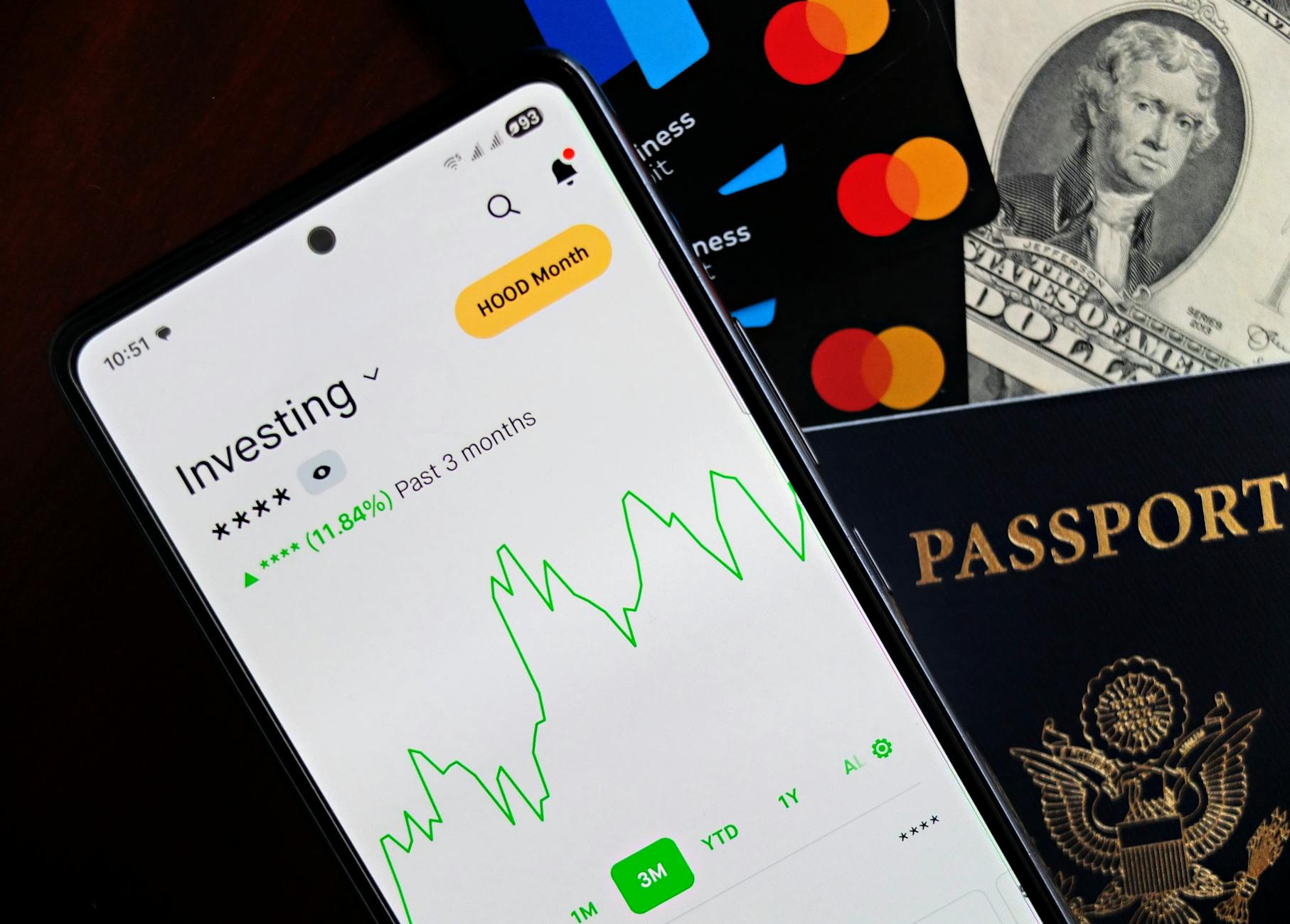 Photo by DΛVΞ GΛRCIΛ / Pexels
In 2026, you can open a brokerage account with $1 and start investing in minutes — but the abundance of options makes choosing harder, not easier. The right investment app depends on your goals: building long-term wealth (index funds, IRAs), learning to trade stocks, or simply automating savings into investments without thinking about it. Getting this choice right matters because your first investing experience shapes your habits for decades.
Full-Service Brokerages: Fidelity and Schwab
Fidelity and Charles Schwab are consistently ranked the best investment platforms for beginners. Both offer: zero commission on stocks and ETFs, zero account minimums, extensive educational resources, fractional shares (buy $5 of Amazon stock, not a full share), access to target-date funds and index funds from Vanguard, iShares, and their own funds, and retirement account options (Roth IRA, traditional IRA, 401k rollovers). Fidelity's ZERO index funds have literal 0% expense ratios — no fee at all to hold them. This is the most beginner-friendly cost structure in the industry.
For a first-time investor starting a Roth IRA, Fidelity's interface guides you through the setup clearly, offers automated investing (set a monthly contribution that auto-invests into your chosen fund), and has phone and chat support. Schwab offers a similar experience with strong in-person branch access if you prefer face-to-face help. Both are vastly superior to bank brokerage offerings (Chase You Invest, Bank of America Merrill Edge offer fewer funds and worse interfaces) for the same zero-cost structure. See our Best Brokerage Accounts for Beginners for detailed comparisons.
Acorns: Automated Micro-Investing for Savings-Challenged Beginners
Acorns rounds up every debit card purchase to the nearest dollar and invests the difference. Spend $3.47 on coffee, and $0.53 goes into your investment account. The average Acorns user invests $30–$50 per month through round-ups without making any active decisions. For beginners who struggle to find money to invest or who would never open a brokerage account and select funds themselves, Acorns removes 100% of the friction. The $3/month fee (for Acorns Personal) sounds small but is high percentage-wise on small balances — at $1,000 in assets, the fee equals 3.6% annually, far above any fund's expense ratio.
Acorns is most valuable for its behavioral impact: it makes investing automatic and invisible. Once your balance grows to $5,000+, the fee percentage drops to 0.72%, which is more reasonable. At $10,000+, consider migrating to Fidelity or Schwab where the same index fund portfolios are available at near-zero cost. Use Acorns as a training wheel, not a permanent solution. Its portfolio is composed of Vanguard ETFs — the same funds you'd choose at Fidelity anyway, just with a higher fee wrapper.
Robinhood: Best for Active Trading, Risky for Beginners
Robinhood pioneered commission-free trading and remains popular for stock and options trading. Its clean, gamified interface is easy to use — and therein lies the danger for beginners. Research consistently shows Robinhood users trade more frequently than users of traditional brokerages, and more frequent trading typically produces worse returns due to transaction costs, taxes, and behavioral errors. The app's notification system, confetti animations on first trades, and simplified options interface are designed to increase engagement, not optimize your financial outcomes.
Robinhood is appropriate for beginners who understand the risks and want to learn about individual stocks and options in a low-stakes environment. It's inappropriate as a primary retirement savings vehicle — Fidelity or Schwab serve that purpose better. Robinhood Gold ($5/month) adds margin trading and Level II quotes — beginners should never use margin, as leveraged losses can exceed your initial deposit. For serious long-term investing, Robinhood's lack of retirement account support (no Roth IRA until recently, still limited) and its engagement-driven design make it a secondary tool, not a primary one.
What to Invest In: Index Funds vs. Individual Stocks
For beginners, a three-fund portfolio (total US market index fund, total international index fund, bond index fund) provides broad diversification at minimal cost. The Vanguard Total Stock Market ETF (VTI), iShares Core MSCI Total International Stock ETF (IXUS), and Vanguard Total Bond Market ETF (BND) are available at Fidelity, Schwab, and most major brokerages for $0 commission. This approach outperforms most actively managed funds and most individual stock pickers over 10+ year periods, according to decades of academic research.
Individual stocks are appropriate for a small portion of a beginner's portfolio — perhaps 5–10% as a learning allocation. Buying fractional shares of companies you understand helps you learn how markets work without overconcentrating your savings in single companies. Never put more than 5% of your investable assets in a single stock, especially early in your investing journey. For retirement investing specifically, see our Best Retirement Accounts guide to understand how Roth IRA, traditional IRA, and employer 401k options interact.
Automated Investing and Robo-Advisors
Robo-advisors (Betterment, Wealthfront, Schwab Intelligent Portfolios) build and automatically rebalance a diversified portfolio based on your risk tolerance and goals. They're ideal for beginners who want professional portfolio allocation without selecting individual funds. Betterment charges 0.25% annually — on $10,000 that's $25/year for hands-off management. Schwab Intelligent Portfolios charges nothing but requires a $5,000 minimum and holds a cash allocation that earns less than a HYSA. Wealthfront at 0.25% offers tax-loss harvesting on accounts over $100,000. For beginners with less than $10,000, Fidelity's target-date funds (automatic allocation by retirement year, 0.12% expense ratio) offer similar automation at lower cost. See our Best Robo-Advisors for detailed platform comparisons.
At a Glance
| # | Product | Award | Account Min | Expense Ratio | Key Feature |
|---|
How We Evaluate Financial Products
We compare financial products based on objective criteria: annual fees, APR ranges, rewards rates, sign-up bonuses, and key perks. We do not factor in issuer relationships or compensation when determining rankings. Products are ranked based on overall value for the target use case described on this page.
Rates and terms change frequently. We update these pages regularly, but always verify current rates directly on the issuer’s website before applying. APR ranges shown reflect the full possible range — your actual rate depends on your creditworthiness.
This content is for informational purposes only and should not be considered financial advice. We compare products; we do not advise on which product is right for your personal financial situation. Read our full methodology →