Best Robo-Advisors 2026: Betterment, Wealthfront & SoFi
Fidelity Go is the best robo-advisor for most beginners — free management on the first $25,000, then 0.35% annually, using Fidelity's own zero-fee index funds. Betterment and Wealthfront both charge 0.25% annually and both earned top scores across reviewers for tax-loss harvesting and portfolio quality. Schwab Intelligent Portfolios charges 0% but requires a $5,000 minimum. For the clearest no-fee starting point: Fidelity Go. For the most sophisticated tax optimization: Wealthfront. Consult a financial advisor to determine if robo-advising fits your specific situation.
Robo-Advisors Buying Guide
 Photo by AlphaTradeZone / Pexels
Best Robo-Advisors for 2026: Automated Investing That Actually Works
A robo-advisor is software that manages an investment portfolio for you: it picks diversified index funds based on your risk tolerance, automatically rebalances when allocations drift, and in premium tiers, harvests tax losses to offset gains. In 2026, four platforms earned the highest possible scores across NerdWallet, Bankrate, and Morningstar rankings: Betterment, Wealthfront, Schwab Intelligent Portfolios, and Fidelity Go.
What Robo-Advisors Do (and Don''t Do)
They do:
- Build a diversified portfolio of low-cost ETFs matched to your risk tolerance
- Automatically rebalance when market moves push allocations off target
- Reinvest dividends automatically
- Tax-loss harvest (premium tier) — sell losers to offset taxable gains
- Provide a dashboard showing performance, allocation, and projected retirement date
They don''t do:
- Provide personalized financial advice (they ask questions but aren''t licensed advisors)
- Select individual stocks (they use index funds and ETFs)
- Guarantee returns (past performance is not predictive)
- Replace a human financial advisor for complex situations (estate planning, divorce, business sale)
Fee Comparison: What You Actually Pay
| Platform | Annual Fee | Minimum | Tax-Loss Harvesting |
|---|---|---|---|
| Fidelity Go | 0% (<$25K), 0.35% above | $0 | No |
| Betterment | 0.25% (digital), 0.40% (premium) | $0 | Yes |
| Wealthfront | 0.25% | $500 | Yes |
| Schwab Intelligent | 0% | $5,000 | Yes ($50K+) |
On $50,000 invested, annual fee impact: Fidelity Go = $175, Betterment = $125, Wealthfront = $125, Schwab = $0. But Schwab''s "0% fee" portfolios hold 6–10% in cash (Schwab Bank earns the spread on this), which is a hidden cost averaging roughly 0.20–0.40% annually depending on interest rates.
Our Top Pick
For most beginners: Fidelity Go. Free management on the first $25,000 means most new investors pay nothing. Fidelity''s own zero-expense-ratio index funds (no underlying fund fees) and best-in-class customer service (24/7 phone support) make it the strongest all-around choice. Once your balance exceeds $25,000, the 0.35% fee is still competitive.
Great for: First-time investors, anyone already banking at Fidelity, and investors under $25K who want professional-quality portfolio management at no cost.
Not ideal if: You want tax-loss harvesting below $25K (Betterment or Wealthfront), or need a broader range of account types including 529s (Wealthfront supports 529 plans; Fidelity Go does not).
Tax-Loss Harvesting: The Hidden Value of Premium Robo-Advisors
Tax-loss harvesting sells positions that are down to realize a loss, which offsets taxable capital gains elsewhere in your portfolio (up to $3,000/year can offset ordinary income). Wealthfront claims its tax-loss harvesting has added 1.8% annually for some clients in taxable accounts — though individual results vary significantly based on portfolio size and market conditions. This benefit only applies to taxable brokerage accounts; it has no value in IRAs or 401(k)s which are already tax-advantaged.
How We Evaluated These Platforms

We assessed robo-advisors using NerdWallet, Bankrate, and Morningstar rankings for 2025–2026, verifying fee structures and features directly on each platform''s published terms as of March 2026. Four platforms earned the highest scores across all major review sources.
- Total annual cost — Management fee plus underlying fund expense ratios
- Minimum investment — $0 minimum rated highest for accessibility
- Tax-loss harvesting — Availability and minimum balance threshold
- Account types supported — Taxable, Roth IRA, Traditional IRA, 401(k) rollover
- Human advisor access — Cost and quality of human backup for complex questions
Past performance does not guarantee future results. Robo-advisors involve market risk including possible loss of principal. Consult a financial advisor to determine if automated investing is appropriate for your situation.
At a Glance
Fidelity Go
“Free management on first $25K with zero-fee index funds — best deal in robo-advising for new investors.”
What we like
- Free management on first $25,000
- Uses Fidelity's own 0% expense ratio index funds
- $0 minimum investment
- 24/7 customer service and 200+ branches
- Automatic rebalancing included
Watch out for
- 0.35% annual fee kicks in above $25,000
- No tax-loss harvesting at any balance level
- Fewer account types vs. Wealthfront (no 529)
Rates as of April 9, 2026. Terms apply. Verify on issuer site.
Betterment
“0.25% fee + tax-loss harvesting from dollar one with no minimum — top-rated across all major reviewers.”
What we like
- 0.25% annual fee — one of the lowest with full features
- $0 minimum investment
- Tax-loss harvesting included at all balance levels
- Premium tier: CFP access for 0.40% at $100K+
- Socially responsible portfolio option
Watch out for
- 0.25% fee vs. $0 at Fidelity Go below $25K
- No 529 college savings plan support
- Cash management account rate below top HYSAs
Rates as of April 9, 2026. Terms apply. Verify on issuer site.
Wealthfront
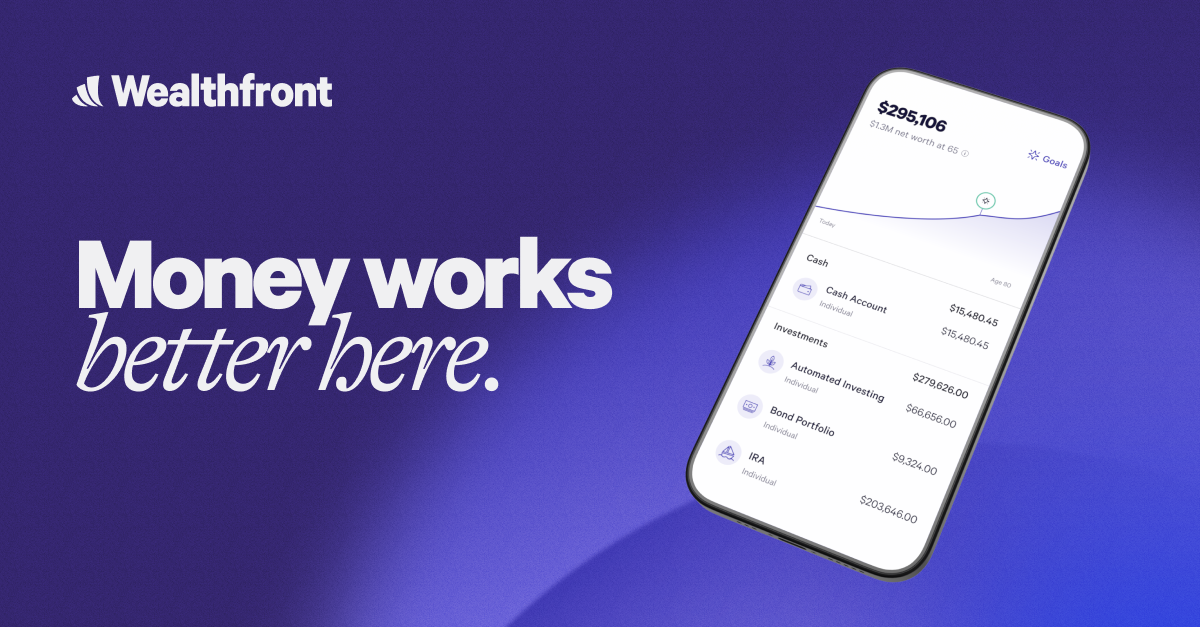
“Best tax optimization including direct indexing at $100K+, plus 529 support and Path planning tool.”
What we like
- 0.25% annual fee with advanced tax optimization
- Tax-loss harvesting + direct indexing at $100K+
- 529 college savings plan supported
- 4.00%+ APY cash account
- Path financial planning tool included
Watch out for
- $500 minimum investment (higher than Betterment)
- No human CFP access (fully automated)
- 0.25% fee costs more than Fidelity Go below $25K
Rates as of April 9, 2026. Terms apply. Verify on issuer site.
Schwab Intelligent Portfolios
“0% management fee with Schwab backing — best at $50K+ where tax-loss harvesting offsets cash drag.”
What we like
- 0% annual management fee
- Tax-loss harvesting available at $50,000+
- Schwab institutional backing + 300+ branches
- Wide range of ETFs and asset classes
Watch out for
- $5,000 minimum investment — highest of top robo-advisors
- Holds 6–10% in cash (Schwab earns the spread, ~0.20–0.40% hidden cost)
- Premium tier ($30/month) needed for CFP access
Rates as of April 9, 2026. Terms apply. Verify on issuer site.
Frequently Asked Questions
Are robo-advisors safe?
Can a robo-advisor beat the market?
What's the difference between Betterment and Wealthfront?
Should I use a robo-advisor or invest in index funds myself?
Can I transfer my existing IRA to a robo-advisor?
How We Evaluate Financial Products
We compare financial products based on objective criteria: annual fees, APR ranges, rewards rates, sign-up bonuses, and key perks. We do not factor in issuer relationships or compensation when determining rankings. Products are ranked based on overall value for the target use case described on this page.
Rates and terms change frequently. We update these pages regularly, but always verify current rates directly on the issuer’s website before applying. APR ranges shown reflect the full possible range — your actual rate depends on your creditworthiness.
This content is for informational purposes only and should not be considered financial advice. We compare products; we do not advise on which product is right for your personal financial situation. Read our full methodology →