How to Pay Off Debt Fast in 2026
1. List debts by interest rate, highest first. 2. Pay minimums on all except the top-rate debt. 3. Put every extra dollar toward that balance. 4. When paid, roll that payment to the next debt. This is the debt avalanche method — it saves the most in interest. Snowball (smallest balance first) works better for motivation.
How to Pay Off Debt Fast Buying Guide
 Photo by Monstera Production / Pexels
How to Pay Off Debt Fast: Avalanche vs. Snowball vs. Consolidation
America owes $1.13 trillion in credit card debt as of Q4 2025 (Federal Reserve). The average credit card rate hit 21.5% APR — the highest since tracking began in 1994. At that rate, a $5,000 balance making $150/month minimum payments takes 4 years and costs $2,100 in interest. This guide shows you how to eliminate that same debt in under 2 years and save over $1,500.
The Two Core Methods

Debt Avalanche — Maximum Savings
List all debts by interest rate, highest first. Put every extra dollar toward the highest-rate debt while paying minimums on everything else. Once paid off, roll that payment into the next-highest. Why it wins mathematically: you destroy the most expensive debt first, so less compound interest accumulates. A household with $15,000 in debt saves an average of $1,200–$2,400 more with avalanche vs. snowball, depending on rate spread.
Debt Snowball — Maximum Momentum
List debts by balance, smallest first. Put every extra dollar toward the smallest balance. Each payoff gives a psychological win that keeps you going. Why it sometimes wins in practice: a 2016 Harvard Business Review study found people are more likely to eliminate debt when they see accounts closing, even if mathematically suboptimal. If you've failed at debt payoff before, snowball may be your better bet.
Debt Consolidation — When It Makes Sense
A balance transfer card (0% APR for 15–21 months) or personal loan (6–12% APR) lets you consolidate high-rate debt into one lower-rate payment. This only works if:
- Your credit score qualifies you for a rate meaningfully below what you're paying
- You stop adding new debt during the payoff period
- The balance transfer fee (typically 3–5%) is less than the interest you'd save
Example: Moving $8,000 from a 22% APR card to a 0% balance transfer card saves roughly $1,760 in interest over 12 months — even after a $240 transfer fee. Personal loans at 8–10% work similarly for amounts too large for transfer limits.
Our Top Pick

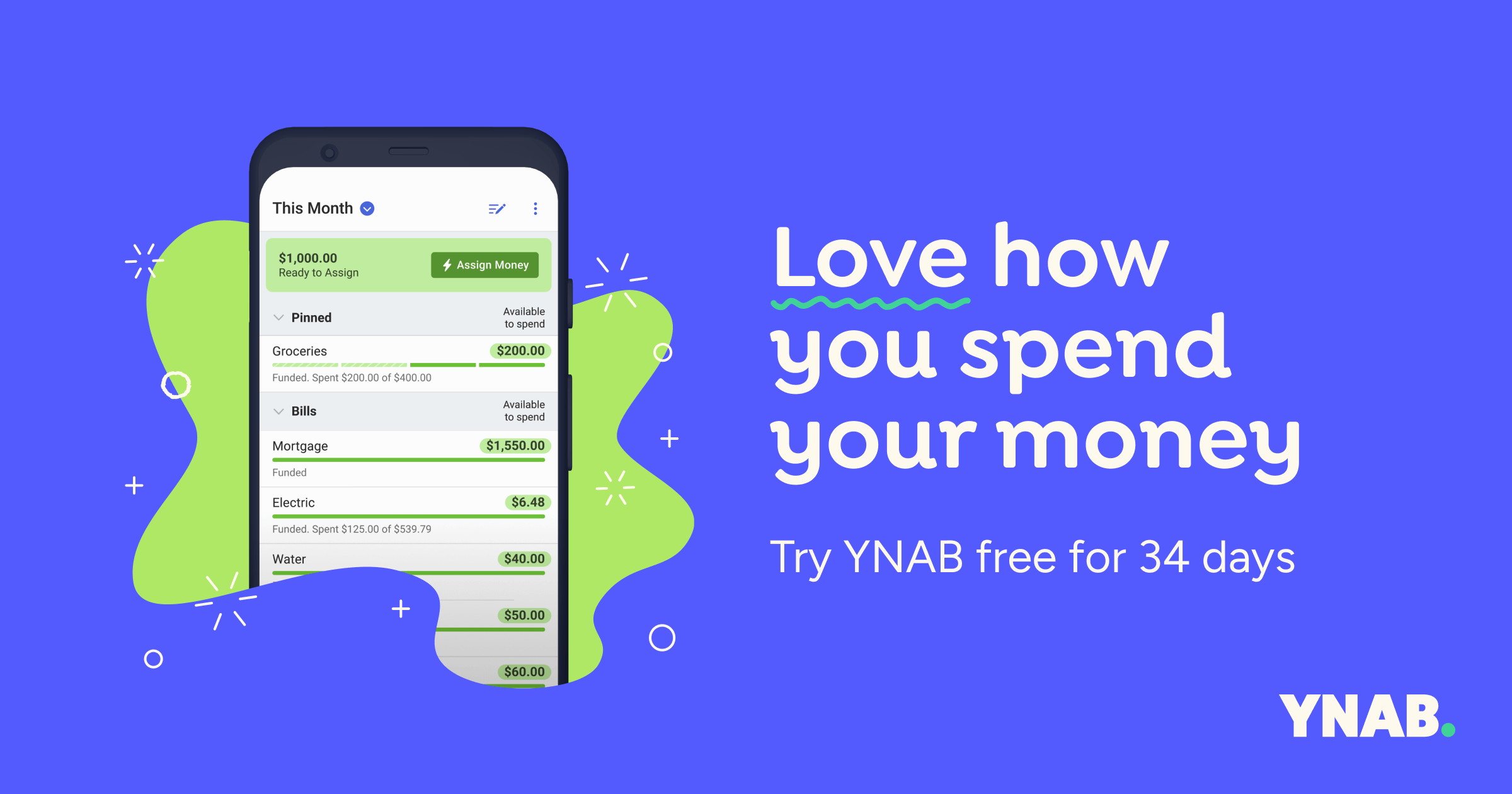
For most people: Debt avalanche with YNAB for tracking. YNAB's "give every dollar a job" method naturally supports aggressive debt payoff by making discretionary spending visible. Users report paying off $6,200 in debt in their first year on average (YNAB internal data, 2024).
Great for: Anyone with credit card, medical, personal loan, or student loan debt who wants a structured, math-backed plan.
Not ideal if: You're dealing with secured debt (mortgage, auto loan) where refinancing is usually a better lever than early payoff, or if bankruptcy may be more appropriate (consult a financial advisor).
Step-by-Step Action Plan
- Step 1: List every debt — creditor, balance, minimum payment, interest rate
- Step 2: Build a $1,000 starter emergency fund before aggressive payoff (prevents new debt from emergencies)
- Step 3: Choose avalanche or snowball based on your personality and rate spread
- Step 4: Find your "extra" dollars — cut subscriptions, sell unused items, pick up hours, redirect any windfalls (tax refund, bonus)
- Step 5: Automate minimum payments on all debts to protect your credit score
- Step 6: Attack your target debt with every extra dollar, every month
- Step 7: Celebrate each payoff, then immediately roll that payment to the next debt
How We Evaluated These Tools

We assessed debt payoff and budgeting tools across five dimensions: ease of use, debt tracking features, payoff calculator accuracy, cost relative to value, and real-user outcomes from independent reviews. We prioritized tools with transparent pricing, no deceptive upsells, and verified track records of helping users reach debt freedom. CFPB and FTC guidelines informed our assessment of debt consolidation products.
- Debt tracking depth — Can it import accounts, show payoff timelines, and project savings?
- Method flexibility — Does it support both avalanche and snowball, letting you switch?
- Real user outcomes — Published data on average debt paid off or time to payoff
- Transparency — Clear fee structure, no hidden charges or auto-upsells
- CFPB compliance — No practices flagged by Consumer Financial Protection Bureau
All tools listed must be available today and clearly beneficial relative to their cost. Rates and statistics as of March 2026. Consult a financial advisor before making decisions about large debt restructuring.
At a Glance
YNAB (You Need A Budget)
“Best-in-class debt payoff budgeting with proven user outcomes and full avalanche/snowball support.”
What we like
- Zero-based budgeting forces active debt payoff
- Both avalanche and snowball supported
- Real-time bank sync catches every dollar
- Users average $6,200 debt paid in year one (YNAB 2024)
- Strong educational resources and live workshops
Watch out for
- $14.99/month or $99/year subscription required
- Learning curve for zero-based budgeting method
- No direct debt settlement or consolidation tools
Rates as of April 9, 2026. Terms apply. Verify on issuer site.
Tally — Automated Debt Manager
“Set-it-and-forget-it avalanche automation for credit card debt — removes human error from the equation.”
What we like
- Automatically pays highest-rate cards first (avalanche)
- One monthly payment simplifies multi-card debt
- Free to use — Tally earns from its own credit line
- No credit score impact to apply
- Shows exact months until debt-free
Watch out for
- Requires a Tally credit line (approval not guaranteed)
- Only works for credit card debt, not other loan types
- App discontinued for new users in some markets — verify availability
Rates as of April 9, 2026. Terms apply. Verify on issuer site.
Undebt.it — Debt Snowball Calculator
“Best free option for modeling avalanche vs. snowball without sharing bank credentials.”
What we like
- Free tier supports both avalanche and snowball
- Visual payoff timeline and interest savings projections
- Debt-free date calculator with extra payment modeling
- No account linking required — manual entry only
- Privacy-first: no bank credentials needed
Watch out for
- No bank sync — requires manual updates
- Premium plan ($12/year) needed for some charts
- Less polished UI than YNAB
Rates as of April 9, 2026. Terms apply. Verify on issuer site.
Frequently Asked Questions
Which pays off debt faster — avalanche or snowball?
Should I invest while paying off debt?
Will paying off debt hurt my credit score?
Is debt consolidation ever a bad idea?
How much should I pay extra on debt each month?
What about debt settlement or debt relief companies?
How We Evaluate Financial Products
We compare financial products based on objective criteria: annual fees, APR ranges, rewards rates, sign-up bonuses, and key perks. We do not factor in issuer relationships or compensation when determining rankings. Products are ranked based on overall value for the target use case described on this page.
Rates and terms change frequently. We update these pages regularly, but always verify current rates directly on the issuer’s website before applying. APR ranges shown reflect the full possible range — your actual rate depends on your creditworthiness.
This content is for informational purposes only and should not be considered financial advice. We compare products; we do not advise on which product is right for your personal financial situation. Read our full methodology →