Air Purifier Buying Guide: HEPA, Carbon, UV — What Actually Works (2026)
For most homes: a True HEPA purifier with an activated carbon pre-filter, sized to run at medium speed continuously in your target room. HEPA removes particles (dust, pollen, pet dander, mold spores, smoke particles). Carbon removes odors and VOCs. UV-C adds modest antimicrobial effect but is not a substitute for HEPA. Match the CADR rating to your room size — undersized units running on high create noise without adequate air changes per hour.
Air Purifier Buying Guide Buying Guide
 Photo by Tim Witzdam / Pexels
The air inside your home contains a mix of pollutants your respiratory system was not designed to handle in concentrated form: particulate matter from cooking, pet dander, mold spores, dust mite fragments, VOCs from furniture and cleaning products, and in wildfire-affected regions, fine smoke particles that penetrate deeply into lung tissue. The right air purifier addresses specific pollutants in a specific room. The wrong one runs constantly, sounds expensive, and does very little. Understanding the technology makes the difference.
What Indoor Air Pollution Actually Consists Of (and What Can Make You Sick)
The EPA's indoor air quality research identifies four primary categories of indoor pollutants that air purifiers can address:
Particulate matter (PM2.5 and PM10): Fine particles from cooking smoke, candles, pet dander, dust mite debris, pollen, mold spores, and outdoor air pollution entering through ventilation. PM2.5 (particles under 2.5 microns) is the most health-relevant — these particles are small enough to bypass the nose and throat and reach the deep lung tissue, where long-term exposure is linked to cardiovascular and respiratory disease by the EPA's National Ambient Air Quality Standards research. HEPA filtration addresses this category.

Volatile organic compounds (VOCs): Gases released by furniture, paints, cleaning products, adhesives, and synthetic building materials. Common VOCs include formaldehyde (from pressed wood furniture), benzene (from attached garages), and toluene (from adhesives). VOC concentration is typically highest in new construction and after renovation. Activated carbon filtration addresses VOCs; HEPA does not.
Biological contaminants: Bacteria, viruses, mold spores, and dust mite allergens. HEPA filtration captures mold spores and large biological particles. UV-C light can inactivate bacteria and viruses that pass through the UV chamber, though effectiveness depends on exposure time and UV intensity. No air purifier eliminates all biological contaminants — they reduce concentration.
Odors: Pet odors, cooking smells, cigarette smoke residue, and musty/mold odors. These are gases, not particles, and are addressed only by activated carbon (charcoal) filtration. HEPA filtration has zero effect on odors.

Understanding which category applies to your situation is the entire basis of air purifier selection. A household with severe pet allergies needs maximum HEPA filtration. A home with new furniture off-gassing formaldehyde needs activated carbon. A wildfire-affected area needs both. The rest of this guide maps technology to problem.
HEPA Filtration: The Only Particle Filter Standard That Matters
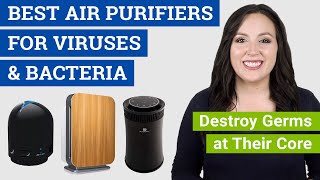
HEPA (High-Efficiency Particulate Air) is not a brand — it is a performance standard defined by the U.S. Department of Energy. A True HEPA filter captures 99.97% of particles at 0.3 microns (the most penetrating particle size) and larger. This covers the particle size range that includes dust mite allergens, mold spores, pet dander, pollen, and PM2.5 fine particles from smoke and combustion.
True HEPA vs. "HEPA-type" and "HEPA-like": These unregulated marketing terms describe filters that do not meet the 99.97% at 0.3 micron standard. A "HEPA-type" filter may capture 85–95% of particles — which sounds adequate but means 5–15% of particulate matter passes through, including the finest and most health-relevant particles. This distinction matters most for allergy and asthma sufferers. Any purifier advertised for allergies, asthma, or smoke should explicitly state "True HEPA" with the 99.97% at 0.3 micron specification. Our best air purifiers for allergies covers only True HEPA units tested for allergen capture.

HEPA filter grades above standard: H13 and H14 HEPA (medical-grade) capture 99.95% and 99.995% of particles at 0.3 microns respectively, compared to standard HEPA's 99.97%. These grades appear in hospital air handling systems and some premium consumer purifiers (IQAir, Blueair 600 series). For most home applications, standard True HEPA is sufficient — the difference between 99.97% and 99.995% capture rate is meaningful only in medical or laboratory settings with immunocompromised occupants.
Filter replacement: HEPA filters are consumables. Most manufacturers recommend replacement every 6–12 months depending on air quality and runtime. A purifier with a $12/year replacement filter is a different total cost of ownership than one with a $80/year replacement filter. Factor this into the purchase decision — see our air purifier filter replacement guide for compatibility and cost data.
Activated Carbon: The Only Technology That Addresses Odors and VOCs
Activated carbon (also called activated charcoal) is a porous form of carbon with an enormous surface area — a single gram can have a surface area of 500–3,000 square meters. This surface area adsorbs (binds) gas molecules including VOCs, odors, and some chemical compounds. Unlike HEPA filtration, which physically traps particles, activated carbon chemically binds gas-phase pollutants.
How much carbon matters: This is the most important spec that marketing obscures. A thin carbon pre-filter (typically 1–3mm of carbon granules, used in many budget purifiers) provides minimal VOC adsorption and primarily handles mild odors. A thick activated carbon filter (1–4 lbs of granular carbon, used in higher-end purifiers) provides meaningful VOC reduction. For serious VOC or odor concerns — new construction, cigarette smoke, attached garages — carbon weight matters more than the presence of "activated carbon" in the spec sheet. IQAir's GC MultiGas and Austin Air's HealthMate use substantial carbon beds (lbs, not grams) for serious chemical sensitivity applications.
Carbon saturation: Unlike HEPA filters that become more effective as they load up (captured particles help capture more particles), activated carbon becomes less effective as adsorption sites fill up. Carbon filters need replacement on schedule regardless of visual appearance. In high-VOC environments, replacement frequency increases significantly from the stated 12-month standard.
For smoke removal specifically — including wildfire smoke and cigarette smoke — you need both HEPA (for smoke particles, which are 0.1–1.0 microns) and activated carbon (for smoke gases and odors). A HEPA-only purifier addresses the particle component of smoke but not the gaseous component. See our air purifiers for smoke for units rated for both particle and odor removal.
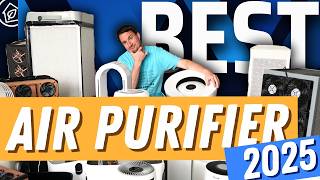
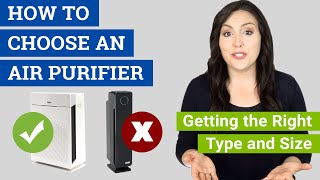
Watch Before You Buy
At a Glance
Showing 3 of 3 products
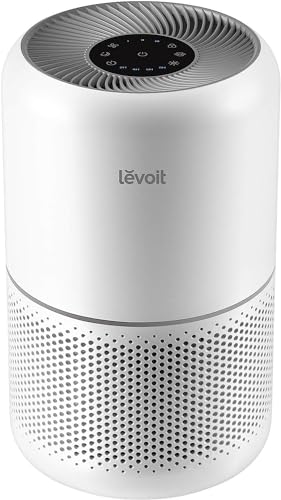
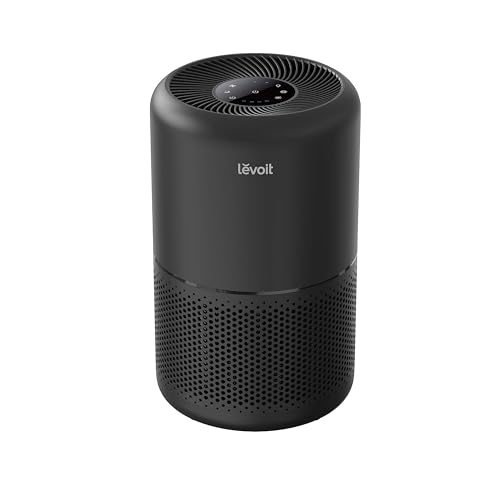
Levoit Core 300 True HEPA Air Purifier
“The best air purifier for small rooms and bedrooms. Nearly silent, true HEPA filtration, and 55,000 reviews prove it works.”
See Today’s Price →What we like
- True HEPA captures 99.97% of particles down to 0.3 microns
- Quiet — 24 dB on lowest setting (nearly silent)
- 55,000+ reviews confirm performance
- Compact footprint for small rooms
Watch out for
- Covers up to ~219 sq ft — not for large rooms
- No air quality sensor or auto-mode
Levoit Core 300-P Air Purifier (Pet Allergy Version)
“The Levoit Core 300-P is the right purifier for small bedrooms (under 220 sq ft) with pet allergies specifically — the pet-tuned HEPA filter captures pet dander and neutralizes pet odors effectively a”
See Today’s Price →What we like
- Pet allergy-specific filter formulation optimized for pet dander and odor capture
- Compact 8.7-inch footprint fits on desks and nightstands — highly portable between rooms
- At $99.99, accessible price for adding a second unit to a secondary bedroom
- 24 dB sleep mode comparable to the Coway for bedroom use
- Interchangeable filter options (pet, toxin absorber, smoke) allow customizing to your allergy type
Watch out for
- 219 sq ft coverage is the smallest in this comparison — limited to small rooms
- CADR of 139-145 is the lowest in the comparison — cannot adequately filter medium-large rooms
- No air quality sensor or auto mode — manual speed selection only
- Filter replacement cost ($18-25 every 6-8 months) adds up relative to the unit price
GermGuardian AC4825E 3-in-1 Air Purifier with HEPA Filter
“The GermGuardian AC4825E is the most accessible true HEPA purifier on the market at $79.99. It won't clean a large room quickly, but for a small bedroom or personal space, it reduces allergens, dust, ”
See Today’s Price →What we like
- Genuine HEPA filter (99.97%) in a sub-$100 tower purifier
- UV-C light adds antimicrobial layer — kills viruses and bacteria on the filter
- Activated carbon captures odors and VOCs
- Tall tower form fits easily beside furniture or in corners
- 52,000+ reviews — one of the most-reviewed air purifiers on Amazon
Watch out for
- CADR 118/99/125 CFM (dust/smoke/pollen) — lowest on this page; effective for rooms under 150 sq ft
- UV-C lamp requires annual replacement (~$10); no alert when lamp burns out
- No auto mode or air quality sensor — purely manual operation
Frequently Asked Questions
What is the most important factor when choosing an air purifier?
What room size rating should I look for?
How often do air purifier filters need to be replaced?
Are air purifiers effective against smoke and odors?
Do air purifiers help with allergies and asthma?
How We Analyze Products
We analyze Amazon review data — often thousands of reviews per product — to surface patterns that individual buyers miss. Our process aggregates star ratings, review counts, and buyer sentiment at scale, identifying which strengths and weaknesses appear consistently across the largest review samples available. The 275,614+ reviews analyzed on this page represent real verified-purchase feedback from Amazon buyers.
Each product earned its placement through data: total review volume, average rating, and the specific praise and complaints that repeat most often across buyers. No manufacturer paid for placement on this page. Products appear here because buyers endorsed them at scale, not because a company asked us to feature them.
We use AI to summarize review sentiment — not to fabricate opinions, but to condense what thousands of buyers actually wrote into a readable format. The pros and cons you see reflect the most common themes found in verified purchaser reviews, paraphrased for clarity. We do not claim to have accessed Reddit, YouTube, or specific publications in generating these summaries.
Prices shown reflect Amazon pricing at the time this page was last generated. Click “See Today’s Price” to get the current live price on Amazon. Read our full methodology →