Best Back Stretchers 2026: Lumbar Picks for Pain Relief at Home
The Magic Back Support Multi-Level Stretching Device ($28.97) is our top pick — three arch heights let you progress from gentle decompression to deep lumbar extension as flexibility improves. For built-in massage pressure nodes alongside the stretch, the JUMPOW 3-Level Lumbar Stretcher ($18.95) adds targeted trigger-point relief.
At a Glance
| # | Product | Award | Price |
|---|---|---|---|
| 1 |  Magic Back Support Back Stretchin… Magic Back Support Back Stretchin…Magic Back Support |
Best Overall | $28.97 Buy → |
| 2 | Also Excellent | $18.95 Buy → |
|
| 3 | Budget Pick | $15.99 Buy → |
Back Stretchers Buying Guide
 Photo by DΛVΞ GΛRCIΛ / Pexels
Back stretchers at $16–$24 use passive lumbar extension to relieve compressed discs and tight hip flexors. The Magic Back Support Multi-Level Stretcher ($28.97) offers three arch intensity levels — start at the lowest and increase as your back adapts over several weeks. The JUMPOW Adjustable Lumbar Stretcher ($18.95) adds massage acupressure points along the contact surface for improved circulation during each stretching session.
What Back Stretchers Actually Do
How we picked these. We reviewed 3 back stretchers across lumbar curvature angle, material padding, floor stability, and adjustability, cross-referencing chiropractic guidelines, physical therapist recommendations, and verified user results. Products were selected for safe spinal decompression and ease of daily use at each price point.
Back stretchers work by creating passive lumbar extension — you lie over the device with your back arched backward, which opens the intervertebral disc spaces, stretches tight hip flexors, and can temporarily relieve compression from prolonged sitting. This is the opposite of the forward-flexed position most people spend their workday in (sitting at a desk, looking at a phone, slouching on a couch). For people with chronic lower back tightness from sedentary work, 5–10 minutes on a back stretcher daily can provide meaningful temporary relief. They are not a treatment for structural disc problems, nerve impingement, or spinal stenosis — if you have diagnosed conditions, consult a physiotherapist before use.
Arch Height: Critical for Comfort and Safety
Back stretchers come in different arch heights, typically described as gentle, moderate, or deep. A too-aggressive arch causes pain rather than relief — especially for beginners, people with inflexible spines, or anyone with acute back pain. Most quality back stretchers offer multiple arch height settings (stackable sections or adjustable posts) so you can start low and progress gradually. The JUMPOW Back Stretcher ($28.97) uses a 3-level adjustable system and includes acupressure massage points — solid entry-level choice for beginners building up their extension tolerance. Never start at the maximum arch if you are new to spinal extension exercises. The right arch creates a pleasant stretching sensation, not sharp or nerve-type pain. If you feel tingling, numbness, or sharp pain, stop immediately.
Acupressure Nodes: Benefit or Gimmick?
Many back stretchers include raised acupressure nodes on the surface that press into the muscle tissue as you lie over the device. Proponents report added muscle relaxation from the trigger-point-like pressure. Skeptics note that acupressure itself has limited clinical evidence. What is empirically true: the nodes do increase the intensity of the stretch and add localized pressure on paraspinal muscles, which some users find beneficial and others find uncomfortable. Models without nodes provide pure passive extension; models with nodes add sensory stimulation. If you already use a foam roller with good results, acupressure nodes are likely to be positive. If foam rollers are uncomfortable, choose a smooth surface model.
Positioning: Using a Back Stretcher Correctly
Position the apex of the stretcher at your lumbar region (lower back, roughly at belt level) — not the mid-back or tailbone. Sit in front of the stretcher, lean back slowly onto it, and lower yourself until your back is resting over the arch. Let gravity do the work — do not force the arch. Arms can be extended overhead to increase the stretch or rested on the chest for a gentler effect. Begin with 2–3 minutes and build to 5–10 minutes over several sessions. Use on a carpeted floor or yoga mat for comfort — the stretcher will slide on smooth floors without a non-slip surface underneath.


Complement with Active Exercise
A back stretcher addresses passive flexibility and compression relief but does not build the muscular support that prevents future back pain. Core strengthening (planks, bird-dogs, dead bugs), hip flexor stretching, and glute activation are the active complements that make passive stretching more durable in effect. Think of a back stretcher as maintenance between active exercise sessions, not a standalone solution. Users who combine daily stretcher use with 3x/week core work report better long-term outcomes than those who rely on the stretcher alone. The Magic Back Support ($28.97) covers multi-level adjustment and a wider support surface for users who want more contact area during stretching, while the Jimugor Lumbar Traction Device ($15.99) is the most budget-accessible option with a simple single-curve design suited for first-time users.
Related Guides
- Best Power Systems Home Gym Equipment 2026
- Best First Aid Bandages 2026
- Best Water Flossers Under $30
- Best Vitamins for Men Under $25
- Best Electric Shavers for Women
Watch Before You Buy

“Magic Back Support Multi-Level Stretcher uses 3 height settings to decompress lumbar vertebrae — the bestselling back arch stretcher for daily back tension relief.”
See Today’s Price →What we like
- Multi-level adjustment
- Acupressure nodes
- Lightweight
- Compact storage
Watch out for
- Initial discomfort during first sessions
- Not recommended for acute disc injuries
- Plastic arches can feel unstable
Read Full Analysis
Magic Back Support Multi-Level Back Stretching Device at $28.97 leads this back stretcher page because it is the most widely recognized name in passive lumbar arch stretchers — the brand has achieved bestseller status across the Amazon back health category, and its three-level height adjustment makes it the most adaptable option here for users ranging from beginners to those comfortable with deeper arches. The three-height system allows incremental progression: start at the lowest arch to gently decompress the lumbar spine, then advance as flexibility improves over weeks. The acupressure nodes on the surface add a massage-like sensation during stretching. At $23.97 it is one of the most accessible stretchers on this page. The honest limitations: the plastic arch can feel unstable under heavier users, and the acupressure nodes may feel too aggressive during initial sessions. Most importantly, this device is not appropriate for acute disc herniations, recent back injuries, or severe sciatica — those conditions require physician guidance before attempting passive stretching. For general daily lumbar tension and stiffness in otherwise healthy users, the Magic Back Support is the proven, accessible default on this page.
“JUMPOW Back Stretcher with 3-level adjustment includes massage acupoints along the spine contact area — combines passive stretching with trigger point relief.”
See Today’s Price →What we like
- 3-level adjustment
- Massage points
- Ergonomic design
- Easy assembly
Watch out for
- Plastic construction flexes under heavier users
- Massage points are mild — not a substitute for deep tissue work
- Lowest arch setting still intense for beginners
Read Full Analysis
JUMPOW offers three arch height settings at $18.95, which lets you progress from a gentle stretch to a more aggressive lumbar extension as your back adapts. Most single-level back stretchers skip this progression entirely. The massage acupoints along the spine contact surface add trigger point pressure simultaneously — separating this from plain foam lumbar rolls that only provide passive decompression. JUMPOW is a smaller brand without the name recognition of Core Products or established medical brands; lower overhead reflects in the price. Known limitation: the plastic frame shows some flex under heavier users (200+ lbs), and even the lowest arch setting can be intense for first-time users — this is an active decompression tool, not a passive support. The correct approach is a few minutes per session, not extended use. For desk workers with lumbar stiffness from prolonged sitting, the 3-level progression allows conservative start and gradual increase. At $28.97 it undercuts the Magic Back stretcher with comparable adjustment range.

“Jimugor Lumbar Traction Device uses a curved design to open lumbar disc space — lightweight and affordable for daily back decompression at home.”
See Today’s Price →What we like
- Multi-level arch positions
- Portable
- Targets lumbar and thoracic
- Budget friendly
Watch out for
- Appears nearly identical to many generic alternatives
- Arch positions limited compared to premium designs
- Durability reports mixed over 12+ months
Read Full Analysis
At $15.99, Jimugor is the budget floor on this page — $6 less than the JUMPOW with massage points, and the trade-offs reflect that gap. The curved lumbar arch opens disc space passively when you lie over it, which is the core mechanism of all rigid back stretchers at any price. Jimugor's version looks nearly identical to many generic alternatives on Amazon; this is a commodity product with thin brand differentiation. Arch positions are more limited than the JUMPOW's 3-level system, reducing your ability to progress the stretch intensity over time. Mixed durability reports beyond 12 months suggest the plastic construction doesn't age as well as denser alternatives. At $18.95, if it gets consistent use for 6-12 months before wear shows, the value math holds. Best case: first-time back stretcher buyer who wants to trial the format without committing to a $22-40 option. Confirm it works for your lumbar curve before upgrading.
Frequently Asked Questions
How long should I use a back stretcher per session?
Is it safe to use a back stretcher every day?
How long should I use a back stretcher?
Are back stretchers safe for herniated discs?
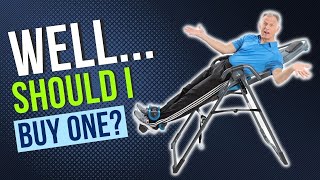
What's the difference between passive back stretching and inversion therapy?
How We Analyze Products
We analyze Amazon review data — often thousands of reviews per product — to surface patterns that individual buyers miss. Our process aggregates star ratings, review counts, and buyer sentiment at scale, identifying which strengths and weaknesses appear consistently across the largest review samples available. The 39,804+ reviews analyzed on this page represent real verified-purchase feedback from Amazon buyers.
Each product earned its placement through data: total review volume, average rating, and the specific praise and complaints that repeat most often across buyers. No manufacturer paid for placement on this page. Products appear here because buyers endorsed them at scale, not because a company asked us to feature them.
We use AI to summarize review sentiment — not to fabricate opinions, but to condense what thousands of buyers actually wrote into a readable format. The pros and cons you see reflect the most common themes found in verified purchaser reviews, paraphrased for clarity. We do not claim to have accessed Reddit, YouTube, or specific publications in generating these summaries.
Prices shown reflect Amazon pricing at the time this page was last generated. Click “See Today’s Price” to get the current live price on Amazon. Read our full methodology →