Best Electric Toothbrushes 2026: Oscillating & Sonic
The Philips Sonicare DiamondClean 9300 is our pick: four modes at three intensities, a light ring that warns when you press too hard, app-guided brushing and up to 14 days per charge. Choose the Philips Sonicare ProtectiveClean 4100 if you want a pressure sensor and a two-week battery without the app and the extra modes.
Electric Toothbrushes Buying Guide
 Photo by Andrey Matveev / Pexels
Electric toothbrushes improve plaque removal by 20–50% over manual brushing, but the practical gains concentrate — not at the upper end of this range. The Quip is the minimalist choice: sonic vibration, slim design, and a subscription refill service favored by frequent travelers. The Oral-B Pro 1000 and Philips Sonicare ProtectiveClean 4100 are the clinical workhorses — pressure sensors, two-minute timers, and oscillating or sonic heads that match what dental hygienists recommend. The Colgate hum ($249.99) adds app coaching for those who want data on their brushing habits.
Best Budget Pick: Quip Electric Toothbrush with Sonic Vibration — Best minimalist choice — lowest price, simplest design. Best for Also Excellent: Philips Sonicare ProtectiveClean 4100 — Philips Sonicare ProtectiveClean 4100 delivers Philips's sonic. ---Oscillating-Rotating (Oral-B) vs. Sonic (Philips): Which Technology is Better
How we picked these. Products were selected for plaque removal effectiveness and gum safety at each price point.
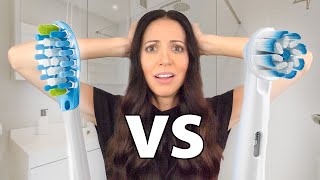
Oral-B's oscillating-rotating-pulsating technology moves a small round brush head back and forth and pulses while rotating, physically contacting and scrubbing each tooth surface. Philips Sonicare's sonic technology vibrates at 31,000 brush strokes per minute, creating fluid dynamics that drive toothpaste and water beneath the gum line and between teeth beyond where bristles contact directly. Both produce better plaque removal than manual brushing.

Clinical comparison studies show small differences between technologies in specific patient populations. Oscillating-rotating brushes (Oral-B) show a slight advantage in gingivitis reduction in meta-analyses. Sonic brushes show advantages for hard-to-reach interdental areas. For practical purposes, both technologies are clinically superior to manual and the right choice depends on personal preference, comfort, and which you'll use consistently.
Pressure Sensors: Why They Matter for Gum Health
Over-brushing with too much pressure is a common cause of gum recession — the irreversible loss of gum tissue that exposes tooth roots. A pressure sensor that vibrates, changes modes, or stops pulsing when you press too hard teaches correct pressure over time. The Oral-B Pro 1000 has a basic pressure sensor; the iO Series 9 has an AI-powered pressure feedback system that tracks force in multiple zones. For users who've been told by a dentist they brush too hard, a pressure sensor is clinically relevant, not just a feature.
Brushing Modes: Which Ones Are Actually Useful
The Oral-B Pro 1000 has one mode: Daily Clean. Research shows this covers the clinical needs of most users — the standard mode is calibrated for optimal plaque removal. Additional modes (Sensitive, Whitening, Gum Care) in premium models serve specific use cases: post-dental work sensitivity, whitening optimization, and targeted gum massage. If you have sensitive teeth, a Sensitive mode that reduces intensity is useful. For standard oral health, one mode is sufficient.

App Connectivity: Does It Actually Help
Oral-B and Philips offer apps that track brushing time, pressure, and coverage zone by zone. For adults with established brushing habits who brush correctly and consistently, app feedback adds minimal value. For people who skip sections of their mouth, brush too short, or need motivation to brush consistently, app coaching provides genuine benefit. The iO Series 9's 3D Teeth Tracking AI is the most sophisticated implementation — using head motion data to map coverage in real time. Whether this level of sophistication improves outcomes versus simpler feedback depends entirely on the user's current habits.
Related Guides
For a detailed head-to-head, see our Oral B Vs Quip Toothbrush comparison.
For a detailed head-to-head, see our Philips Vs Oral B Electric Toothbrush comparison.
Watch Before You Buy

“Sonicare's app-connected brush: four modes (Clean, White+, Gum Health, Deep Clean+) at three intensities, a light ring that warns when you press too hard, and up to 14 days per charge.”
See Today’s Price →What we like
- 12 settings: four modes (Clean, White+, Gum Health, Deep Clean+) at three intensities
- A light ring at the base warns when you press too hard
- Pairs with the Sonicare app for guided brushing and reminds you when to replace the head
- Up to 14 days of regular brushing per charge, with a travel case in the box
- Two heads included: an A3 Premium All-in-One and a C3 Premium Plaque Control
Watch out for
- You pay for the app, four modes and premium heads; a simpler Sonicare with a pressure alert costs less
- A3 and C3 premium replacement heads cost more than Sonicare's basic heads
Read Full Analysis
Philips rates the DiamondClean 9300 at up to 62,000 bristle movements per minute, and its 12 settings come from four modes - Clean, White+, Gum Health and Deep Clean+ - at three intensity levels. A light ring at the base of the handle lights up when you press too hard; ease off and it goes out. The brush pairs with the Sonicare app for guided brushing, and a replacement reminder tracks how often and how hard you brush before telling you to change the head. A full charge lasts up to 14 days of regular brushing, and the box holds a travel case and two brush heads: an A3 Premium All-in-One and a C3 Premium Plaque Control. Philips' own figure for the A3 head is up to 2000% more plaque removed than with a manual toothbrush. The trade-off is price: you are paying for the app, the four modes and the premium heads, and a simpler model on this page gives you a sonic clean with a pressure alert for less.
Skip this if: You don't want an app-connected brush - you are paying for the app, the four modes and the premium heads.
“Philips Sonicare ProtectiveClean 4100 hits the sweet spot — pressure sensor, two modes, and Sonicare's proven sonic cleaning technology at an accessible price.”
See Today’s Price →What we like
- Philips Sonicare's sonic technology at the lowest Sonicare entry price
- 28,000+ reviews confirm consistent performance for budget sonic option
- Brush head replacement reminder prevents using worn heads past effectiveness
- Pressure sensor with visual alert protects against gum recession
- 2-week battery life handles regular use between charges
Watch out for
- Single cleaning mode - no mode selection like the higher-tier Sonicare handles
- No Bluetooth app connectivity — manual brushing feedback only
Read Full Analysis
The Philips Sonicare ProtectiveClean 4100 strips the DiamondClean lineup down to its essentials and delivers them at a more accessible price. You get a single Clean mode running Sonicare's proven sonic technology, a 2-minute timer with 30-second quadrant intervals to pace your brushing, and the pressure sensor that pulses when you bear down too hard. The battery lasts up to two weeks per charge — same as the flagship. The C2 Optimal Plaque Control brush head included in the box is designed for everyday plaque removal and fits all Sonicare handles, making future replacement straightforward. The handle itself is lightweight and easy to maneuver, with a simple one-button interface that makes it approachable for first-time electric toothbrush users. The honest limitation is mode selection — you only get one, so if your dentist has recommended a gum-care or whitening mode, you'll want to step up. The ProtectiveClean 4100 doesn't support BrushSync head detection either, which means no automatic program switching if you swap brush heads. But for the vast majority of people who simply want effective daily plaque removal without paying for features they'll never use, this is the sweet spot in Sonicare's lineup.

“Colgate hum smart toothbrush connects to an app with real-time coaching — the best option for building better brushing habits and tracking consistency.”
See Today’s Price →What we like
- 3 cleaning modes with Bluetooth app guidance at a budget price
- 4-week battery life is the longest in this comparison
- App-based coverage coaching for users who want guided brushing without premium pricing
- Colgate brand backing from a major dental health company
Watch out for
- Smaller user base and head ecosystem than Oral-B and Philips
- hum replacement heads have fewer options and less widespread availability
Read Full Analysis
The Colgate hum offers something unusual at this price point: real-time brushing feedback via Bluetooth. The companion app maps your mouth into zones and tracks whether you've adequately covered each area, turning brushing from a timed habit into a coached routine. Three modes — Daily, Sensitive, and Whitening — cover the most common needs, and the sonic vibration motor runs through a standard 2-minute smart timer. Battery life is genuinely impressive at four weeks per charge, making it the longest-lasting option in this comparison. The slim handle is comfortable for smaller hands and takes up minimal counter space. The limitation is the app dependency. Without the app, you're essentially paying for a one-mode sonic toothbrush with a timer — a decent device but not differentiated from cheaper alternatives. The coaching feedback, which is the hum's main selling point, requires you to keep your phone nearby and the app open during every brushing session. Some users find this motivating; others find it impractical. The Sensitive mode is genuinely useful for those with gum sensitivity, but the pressure sensor feedback is less immediate than the Oral-B Pro 1000's physical indicator. Best for habit-builders and parents who want accountability data.

“Quip electric toothbrush has the most elegant design available: slim profile, built-in timer, and subscription refill program for always-fresh bristles.”
See Today’s Price →What we like
- Lowest price on this list at $25
- Slim minimalist design
- 2-minute timer with 30-second quadrant pulses
- AAA battery lasts 3 months — no charging needed
Watch out for
- Single cleaning mode only
- No pressure sensor on original model
- AAA battery adds ongoing cost
- No Bluetooth app
Read Full Analysis
The Quip is built around a philosophy of simplicity: one mode, one speed, one sleek form factor. Its sonic vibration motor runs at a single setting with a built-in 2-minute timer and 30-second quadrant pulses — everything you actually need for a dentist-recommended brushing session. The slim, all-metal design is the most travel-friendly of any electric toothbrush in this price range, small enough to slip into a toiletry bag without bulk. The AAA battery powers approximately three months of twice-daily brushing before replacement — no charging cable or dock needed, which is convenient for frequent travelers. The brush head design is intentionally minimal, with a soft-bristle head that attaches magnetically to the handle. The honest trade-off is feature absence. There's no pressure sensor, no multiple modes, and no connectivity — if any of those matter to you, you'll need to look elsewhere. The AAA battery, while convenient, means ongoing consumable costs beyond just brush head replacements. Quip's subscription model delivers new heads and batteries every three months, which is convenient but adds up if you prefer to source replacements yourself. Best suited for travelers, minimalists, or anyone upgrading from a manual brush who wants electric benefits without device complexity.
Frequently Asked Questions
Is the Oral-B iO Series 9 worth the price over the Pro 1000?
How often should I replace my electric toothbrush head?
Can I use an electric toothbrush with braces?
What is the difference between Philips Sonicare ProtectiveClean 4100 and DiamondClean 9300?
Do electric toothbrushes really remove more plaque than manual?
How We Chose These Products
We evaluate electric toothbrushes on cleaning efficacy and brushing technology, pressure sensor accuracy for protecting gum health, brushing modes and their clinical utility, app integration quality and whether it meaningfully improves oral health, battery life, brush head availability and cost, and value relative to proven dental health outcomes at the price paid.
We compare each product’s Amazon listing, the manufacturer’s published specifications and Amazon customer ratings, shown with their review counts as Amazon’s data, and rank the products on how well they answer this page’s question. We do not test products in hand and we do not run our own analysis of review text. A publication or expert is named only where we cite its published findings about that product. No manufacturer paid for placement on this page.
A price appears only when Amazon’s API supplied it at a recent daily refresh, with the date and time beside it, and is withdrawn at 4 AM Central on the day after it turns 24 hours old; otherwise use “Check price on Amazon” for the live price. Read our full methodology →