Best Ice Pack for Injuries (2026)

The best affordable ice pack for injuries is FlexiKold Gel Soft Ice Pack, which uses a flexible gel that conforms to ankles, knees, and shoulders when frozen — the most important feature for effective cold therapy on irregular joint surfaces.
See Today’s Price →At a Glance
| # | Product | Award | Price |
|---|---|---|---|
| 1 | FlexiKold Gel Soft Flexible Ice P… NatraCure |
Best Overall | $7.99 as of Nov 21, 8:29 AM CT details Buy → |
| 2 | Best Budget Pack | $7.59 as of Nov 21, 8:48 AM CT details Buy → |
|
| 3 |  Gel Soft Flexible Ice Pack rester's choice |
Best Premium | $14.99 as of Nov 21, 8:41 AM CT details Buy → |
| 4 |  Puritan's Pride Vitamin E 450 Mg,… Puritan's Pride |
Check price on Amazon Buy → |
Ice Pack for Injuries (2026) Buying Guide
 Photo by Ollie Craig / Pexels
Great for: Anyone managing muscle soreness, menstrual cramps, arthritis, or post-workout recovery at home
Not ideal if: Your pain is acute and unexplained — heat and ice address symptoms; unexplained new pain needs medical evaluation first
- Vitamin Supplement Guide: What You Actually Need
- Sleep Products That Actually Work
Who This Is For and What to Look For
Injury-specific ice packs differ from general-purpose cold packs in size, flexibility, and how they conform to body contours. For joint injuries (knee, ankle, shoulder), flexible gel packs that wrap around the joint outperform rigid ice blocks in therapeutic contact and comfort.
- Flexible gel vs. rigid ice: FlexiKold stays pliable when frozen — it wraps around ankle and knee contours for even cold distribution. Rigid packs lose contact with curved surfaces, reducing therapeutic effect to contact points only.
- Size for injury location: Medium (7.5x11.5 in) covers knees, ankles, elbows, and shoulders. Large (10.5x14.5 in) covers lower back, hips, and thighs. Small packs are best for hands, wrists, and feet. Buying a pack too small for the injury area means inadequate coverage.
- Compression integration: Wrap-style combination packs (ice + neoprene wrap) provide simultaneous compression and cold — the two most evidence-supported components of acute injury care (RICE protocol). For ankle and knee injuries where both are needed, combination wraps are worth the modest premium.
- Instant packs for away from home: Dynarex disposable instant packs work with no freezer — squeeze, shake, and apply immediately. Essential for sports bags, first aid kits, and travel.
Common Mistakes
Icing for longer than 20 minutes continuously — the paradoxical hunting response causes vasodilation after 20 minutes of cold, which can increase swelling. The correct protocol is 20 minutes on, 20+ minutes off, repeated as needed.
Watch Before You Buy
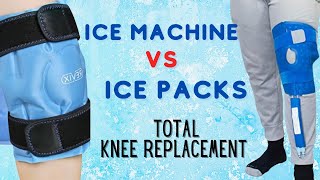
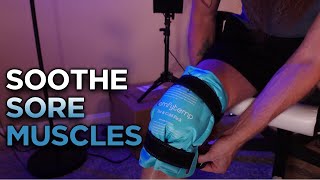
“FlexiKold Gel Soft Ice Pack — flexible when frozen, conforms to joints, protective wrap included.”
See Today’s Price →What we like
- 7.5 x 11-inch medium gel pack
- Gel the maker says stays pliable when frozen
- Double-sealed seams and an extra-thick nylon exterior
- Listed for knees, elbows, shoulders, back, hip and neck
Watch out for
- Sold as a freezer cold pack - the listing does not describe heating it
- No strap or cover is listed
Read Full Analysis
FlexiKold Gel ice pack uses a gel formulation that remains pliable even when fully frozen, allowing it to wrap around ankle curves, knee contours, and shoulder joints rather than lying flat against them. This contact surface conformity is critical for effective cold therapy — a flat pack on a curved joint loses direct contact over much of the joint area. The included cover provides the protective barrier between the pack and skin. Stays cold approximately 20-25 minutes, matching the recommended icing duration. The slim profile fits under most compression wraps.

“BICAREE Reusable Ice Bag — dual hot/cold use in a reusable bag format.”
See Today’s Price →What we like
- Fill it with ice and water for cold, or hot water for heat
- Wide, leak-proof cap for adding ice cubes
- Comes with a cover
- Lightweight, waterproof and foldable
Watch out for
- Needs ice or hot water each time - there is no gel to keep frozen
- BICAREE recommends water no hotter than 122°F
Read Full Analysis
BICAREE reusable pack works as both a cold pack (frozen) and a hot pack (microwave or hot water), providing both cold therapy for acute injuries and heat therapy for chronic pain and muscle relaxation from a single purchase. The bag-style design fills with ice or heat, with a leak-proof seal. The flexible design wraps around joints. The best value for dual hot/cold therapy at home.
“This large flexible gel ice pack covers broad injury areas like pulled backs, shoulders, or quads that smaller packs cannot reach. It works for both cold and heat therapy and the soft flexible…”
See Today’s Price →What we like
- Large 11 x 14.5-inch pad for the back, hips or thighs
- Gel stays pliable when frozen, per the listing
- Use it cold, or warm it in the microwave
- Sectional construction and binding made to prevent leaks
Watch out for
- About 2.6 pounds - bulkier than smaller packs, as its maker notes
- Needs a cloth between the pack and your skin
Read Full Analysis
The Gel Soft Large ice pack earns its place on an injury recovery page by offering genuine coverage where smaller packs fall short. For large muscle groups — quads, hamstrings, lower back — the oversized flexible format covers more surface area than the compact BICAREE gel pack or the standard FlexiKold, reducing repositioning mid-treatment. The soft outer layer conforms around joints rather than sitting rigid against skin, which matters when you're wrapping a knee or shoulder. Hot or cold use adds range: heat for pre-workout stiffness, cold for acute swelling after an injury. It's the most expensive gel option on this page. The FlexiKold handles targeted joints — wrists, ankles, elbows — more precisely because its smaller footprint sits where you direct it without draping over adjacent tissue. The Gel Soft wins when the treatment area is large, not when precision matters. The gel can migrate toward edges after extended use, which changes pressure distribution, and the overall size makes it slightly unwieldy for anyone looking for a pack that stays put on a single joint. Buy it if you're treating broad muscle groups or want one pack that handles both heat and cold; skip it if your injuries are typically localized and the FlexiKold's price and size suit you better.
“Puritan's Pride Vitamin E softgels deliver 400 IU in rapid-release liquid-filled capsules — the softgel form absorbs faster than compressed tablet alternatives. GMP-certified manufacturing and one…”
See Today’s Price →Watch out for
- Supplements are not a substitute for a varied whole-food diet and healthy lifestyle
- Results vary by individual — consult a healthcare provider before starting any new supplement
Frequently Asked Questions
How long should I ice an injury?
Should I ice immediately after an injury?
Can you use ice packs on muscle soreness?
How do I prevent ice burn from a gel pack?
What is the difference between a reusable ice pack and an instant cold pack?
How We Chose These Products
We compare each product’s Amazon listing, the manufacturer’s published specifications and Amazon customer ratings, shown with their review counts as Amazon’s data, and rank the products on how well they answer this page’s question. We do not test products in hand and we do not run our own analysis of review text. A publication or expert is named only where we cite its published findings about that product. No manufacturer paid for placement on this page.
A price appears only when Amazon’s API supplied it at a recent daily refresh, with the date and time beside it, and is withdrawn at 4 AM Central on the day after it turns 24 hours old; otherwise use “Check price on Amazon” for the live price. Read our full methodology →