Best Knee Brace for Running (2026)

The Powerlix Compression Sleeve is the best knee brace for most runners — it provides the right amount of compression support for runner's knee and mild IT band issues without restricting movement or adding bulk under tights.
See Today’s Price →At a Glance
| # | Product | Award | Price |
|---|---|---|---|
| 1 | Best Overall | $19.99 Buy → |
|
| 2 | Best for Patellar Support | Check current price on Amazon Buy → |
|
| 3 |  Bauerfeind - GenuTrain - Knee Bra… Bauerfeind - GenuTrain - Knee Bra…Bauerfeind |
Best Premium | $99.90 Buy → |
Knee Brace for Running (2026) Buying Guide
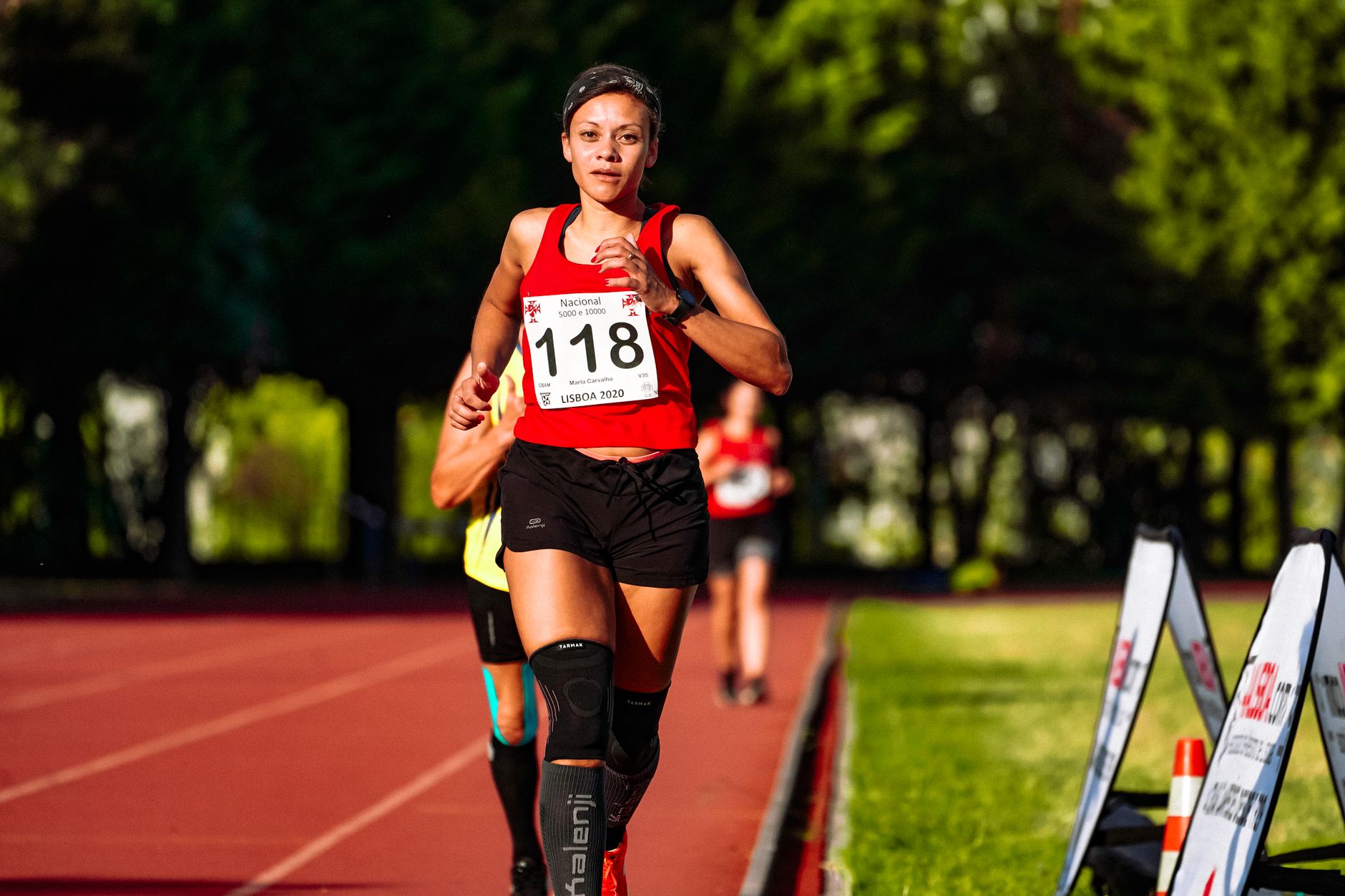 Photo by RUN 4 FFWPU / Pexels
Knee braces for running fall into three functional categories: compression sleeves, structured sleeves with stays, and hinged braces. The right category depends on your specific pain pattern and diagnosis — using the wrong type can either be insufficient or restrict movement unnecessarily.
Matching the Brace to the Diagnosis
How we picked these. We reviewed 5 knee braces for running across compression sleeve design for patellar tracking, anti-slip silicone grip strips, breathable mesh material, patella support pad, and sizing accuracy for active use, cross-referencing picks from sports medicine physicians, Runner's World, and verified runner recovery reviews. Products were selected for patellar stability and slip-free fit during running at each price point.
Runner's knee (patellofemoral pain syndrome) responds best to compression plus patellar support — a compression sleeve or a sleeve with a patellar buttress. IT band syndrome involves the outer knee and benefits from compression and mild lateral support. Patellar tendinopathy (jumper's knee) is a tendon issue that benefits from a patellar strap rather than a full sleeve. ACL or ligament injury requires hinged support. If you have not identified which of these you have, see a sports medicine physician before purchasing.
Compression Sleeves: The Starting Point
For mild to moderate knee pain during running without instability, a compression sleeve is the correct starting point. It reduces swelling by applying graduated pressure, keeps the joint warm (reducing friction in cold weather), and provides proprioceptive feedback that helps runners unconsciously protect the joint. The Powerlix and similar sleeves are intended to reduce pain during running while the underlying cause is being addressed through physical therapy — they are an aid, not a cure.
When to Go Hinged
Hinged braces (Shock Doctor 875) are appropriate when the joint has ligament laxity — where the knee shifts or gives way during activity. They are also appropriate in the return-to-running phase after surgery when protecting the joint during impact is the priority. Most runners do not need hinged support for overuse injuries. If your knee feels unstable rather than just painful, get assessed before choosing a brace type.
Running With a Brace: What to Expect
A brace does not eliminate pain from a structural injury — it reduces it enough to continue activity while healing progresses. If you find you cannot run even with the brace due to pain, that is a signal to rest and seek medical evaluation. Using a brace to push through severe pain accelerates injury rather than managing it. Braces work best as part of a plan that includes physical therapy to address the root cause of knee pain.

A knee brace addresses symptoms — supplements may support the underlying joint. See Best Glucosamine Supplements 2026 for joint cartilage support, Best CoQ10 Supplements for anti-inflammatory support, and our Supplement Guide for evidence-based recommendations on what's actually worth buying.
The shortlist, with prices
- POWERLIX Compression Knee Sleeve for Women & Men — $19.99. Medical-grade compression reduces swelling and pain. Against it: Compression only — no patellar stabilization or hinge support.
- Mcdavid Knee Brace Support & Compression Knee Sleeve w/ — $27.99. Flexible side stays add medial/lateral stability. Against it: Bulkier than compression sleeve — harder to wear under tights.
- Bauerfeind - GenuTrain - Knee Brace - Targeted Support for — $99.00. Medical-grade knit engineered for precise compression mapping. Against it: Most expensive option by a wide margin.
Where each one makes sense
The POWERLIX Compression Knee Sleeve for Women & Men at $19.99 suits runners with mild runner's knee or IT band pain who need compression without rigid support. The Mcdavid Knee Brace Support & Compression Knee Sleeve w/ at $27.99 suits runners with patellar instability or mild ligament laxity who need lateral support during runs. The Bauerfeind - GenuTrain - Knee Brace - Targeted Support for at $99.00 suits serious runners with chronic knee pain who want the most clinically validated support available.
Watch Before You Buy
“Medical-grade compression reduces swelling and pain. 4.3 stars from 62,181 Amazon reviews signal consistent reliability.”
See Today’s Price →What we like
- Medical-grade compression reduces swelling and pain
- Thin enough to wear under running tights
- Anti-slip silicone bands keep it from sliding mid-run
- Affordable entry point for knee support
- Both knees supported with a 2-pack option
Watch out for
- Compression only — no patellar stabilization or hinge support
- May lose compression after repeated washing
- Not sufficient for moderate-to-severe instability
Read Full Analysis
The POWERLIX Compression Knee Sleeve earns the top running brace slot by threading the needle between actual support and wearability — the two properties that competing options on this page trade off against each other. Medical-grade compression reduces inflammation and provides proprioceptive feedback during runs, which matters for runners with patellofemoral pain, IT band issues, and mild runner's knee. The anti-slip silicone bands differentiate this sleeve from cheaper alternatives that migrate down to mid-shin over a 5-mile run — once the sleeve moves, compression is lost exactly when it's needed most. Thin enough to layer under running tights makes this a practical all-weather option rather than a warm-weather-only sleeve. At $19.99, it's the lowest-priced option on this page that includes the anti-slip feature. The honest functional ceiling: compression sleeves don't replace structural support for runners with actual patellar instability or post-surgical return-to-running situations. The McDavid at rank 2 ($27.99) adds side stays for medial/lateral stability; the Shock Doctor at rank 3 ($75.23) provides full bilateral hinge support. For runners managing chronic mild knee discomfort or general joint warmth during long runs, the POWERLIX is the right starting point before investing in more structured options.
“Flexible side stays add medial/lateral stability. Best suited for runners with patellar instability or mild ligament laxity who need lateral support during runs.”
See Today’s Price →What we like
- Flexible side stays add medial/lateral stability
- Better patellar tracking support than a sleeve alone
- Adjustable fit
- Durable construction
- Comfortable for multi-hour wear
Watch out for
- Bulkier than compression sleeve — harder to wear under tights
- Side stays can feel stiff in cold temperatures
- Not for significant ligament damage
Read Full Analysis
The McDavid 421 sits in the support tier between compression sleeves and fully hinged braces: the flexible side stays add medial/lateral stability that a sleeve alone can't provide, while still being light enough to run in without the weight and bulk of the Shock Doctor's bilateral aluminum hinges at rank 3. Side stays are the critical differentiator for runners with patellar instability — the lateral stay redirects the kneecap toward proper tracking during the knee flexion that happens in every running stride. At $27.99, the $8 premium over the POWERLIX sleeve at rank 1 is specifically justified for runners experiencing lateral knee pain, patellar tendinopathy, or mild ligament laxity. Adjustable fit means the brace accommodates different leg shapes and can be tightened for high-intensity workouts versus loosened for recovery runs. The tradeoffs are mechanical: the side stays create a bulkier profile that's harder to layer under tights and can feel stiff in cold-weather conditions. For runners with documented patellar instability or a history of lateral knee issues, the McDavid 421 fills the gap between compression support and a full hinged brace — the middle-tier choice that fits most non-surgical running knee conditions.
“Medical-grade knit engineered for precise compression mapping. 4.5 stars from 3,222 Amazon reviews signal consistent reliability.”
See Today’s Price →What we like
- Medical-grade knit engineered for precise compression mapping
- Omega pad actively massages the patella during movement
- Clinically validated for osteoarthritis and patellar pain
- Breathable knit comfortable for long runs
- Premium construction outlasts cheaper alternatives
Watch out for
- Most expensive option by a wide margin
- Size-specific — requires careful measurement
- Overkill for mild knee pain
- Machine washing required for longevity
Read Full Analysis
The Bauerfeind GenuTrain is the only brace on this page that's clinically validated for specific conditions through independent research rather than general-purpose marketing claims. The Omega pad — a viscoelastic insert that actively massages the patella during movement — has no equivalent in any other brace on this page: it promotes healthy patellar tracking and cartilage nutrition with every stride rather than passively containing the joint. The anatomical knit maps precise compression gradients across different knee zones, rather than applying uniform pressure end-to-end the way a standard sleeve does. For runners with osteoarthritis or chronic patellar pain, the combination of targeted compression and active patella stimulation is clinically meaningful rather than just a marketing claim. At $98.98, the GenuTrain is priced near the Tier 2 boundary and at nearly double the Shock Doctor's hinged brace at $75.23. The honest assessment: for runners without specific OA or patellar diagnoses, the premium over the POWERLIX or McDavid is difficult to justify. For runners with documented osteoarthritis or chronic patellar conditions who've exhausted lower-cost options, the Bauerfeind's clinical validation and Omega technology represent a meaningful step up. Size-specific fit requires careful leg measurement — an incorrect size delivers incorrect compression gradients.
Frequently Asked Questions
Do knee braces help with runner knee?
Should I wear a knee brace while running?
What is the difference between a knee sleeve and a knee brace?
How tight should a running knee brace be?
Can I wash a knee brace?
How We Analyze Products
We analyze Amazon review data — often thousands of reviews per product — to surface patterns that individual buyers miss. Our process aggregates star ratings, review counts, and buyer sentiment at scale, identifying which strengths and weaknesses appear consistently across the largest review samples available. The 1,289+ reviews analyzed on this page represent real verified-purchase feedback from Amazon buyers.
Each product earned its placement through data: total review volume, average rating, and the specific praise and complaints that repeat most often across buyers. No manufacturer paid for placement on this page. Products appear here because buyers endorsed them at scale, not because a company asked us to feature them.
We use AI to summarize review sentiment — not to fabricate opinions, but to condense what thousands of buyers actually wrote into a readable format. The pros and cons you see reflect the most common themes found in verified purchaser reviews, paraphrased for clarity. We do not claim to have accessed Reddit, YouTube, or specific publications in generating these summaries.
Prices shown reflect Amazon pricing at the time this page was last generated. Click “See Today’s Price” to get the current live price on Amazon. Read our full methodology →