Best Red Light Therapy Devices (2026): At-Home Panels

The Hooga HG300 offers the best power-to-price ratio for home red light therapy — true dual-wavelength 660nm+850nm, sufficient irradiance at 6 inches, and enough panel size for face and upper body treatment in one session.
See Today’s Price →At a Glance
Red Light Therapy Devices (2026) Buying Guide
 Photo by Juan Manuel Montejano Lopez / Pexels
Red Light Therapy Device Specs Comparison
How we picked these. Products were selected for clinically relevant wavelengths and output power at each price point.
| Spec | Hooga HG300 | Mito Red MitoMIN 2.0 | Bestqool BQ60 |
|---|---|---|---|
| Type | Panel | Panel | Handheld/wearable |
| Wavelengths | 660nm + 850nm | 660nm + 830nm | 660nm + 850nm |
| LED Count | 60 LEDs | ~30–40 LEDs | ~12–18 LEDs |
| Irradiance (6") | ~100 mW/cm² | ~80–100 mW/cm² | ~50–70 mW/cm² |
| Treatment Area | Face/shoulder/knee | Face/upper body | Single joint/spot |
| Session Time | 8–10 min / area | 5–15 min / area | 10–20 min / spot |
| Price | $199 | $149 | $80 |
Note: Red light therapy research is ongoing. Therapeutic claims are based on current published literature; individual results vary. Consult a healthcare provider for medical conditions.
How to Choose the Best Red Light Therapy Device
What is red light therapy? Photobiomodulation (PBM) uses specific light wavelengths to stimulate cellular energy production, reduce inflammation, and promote tissue repair.
The two key wavelengths:
- 660nm (red): Penetrates 1–2mm, primarily benefits skin, collagen, and wound healing
- 850nm (near-infrared): Penetrates 5–10cm, benefits muscles, joints, and deeper tissues
What RLT has research support:
- Skin rejuvenation and collagen production
- Wound healing acceleration
- Muscle recovery after exercise
- Reducing arthritis pain
Key specs to evaluate:
- Irradiance: 30–100+ mW/cm² at 6-inch treatment distance
- Dual wavelength: both 660nm and 850nm
- EMF shielding
- Panel size for coverage area
- FDA registered preferred
Session protocol: 10–20 minutes per area, 3–5x/week. Results build over months of consistency.
Related Guides
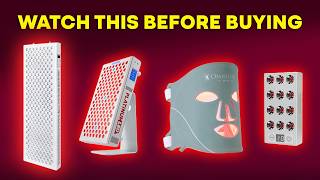
Watch Before You Buy
“The best value red light panel. Real 660nm+850nm output, solid build, enough coverage for daily face and upper body sessions.”
See Today’s Price →What we like
- True 660nm + 850nm dual wavelength
- Wide treatment area with 60 LEDs
- Verified irradiance output
- Best value vs premium brands
Watch out for
- No built-in timer
- Requires hanging mount
- No EMF shielding
Read Full Analysis
The Hooga HG300 is the entry-level full-panel red light therapy device in this comparison—a 12×8-inch panel with 60 LEDs emitting 660nm (red) and 850nm (near-infrared) wavelengths simultaneously. At ~100 mW/cm² irradiance at 6 inches, the HG300 provides therapeutic dosing for a localized treatment area (face, shoulder, knee) in an 8–10 minute session. The dual wavelength approach targets both superficial tissue (660nm, skin rejuvenation) and deeper tissue (850nm, muscle and joint recovery). The HG300 is suitable for single-body-part protocols: face and neck, a single shoulder or knee, or small back area. It's the most affordable dedicated panel in this comparison. Compared to Mito Red MitoMIN 2.0: similar price tier, different form factor. If choosing between Hooga and Mito Red: Hooga's plastic construction is less premium; Mito Red's branding and quality control are better regarded in the enthusiast community.

“Mito Red Light's reputation for accuracy makes the MitoMIN 2.0 worth the slight premium. If you want to know your device does what it claims, Mito Red Light delivers.”
See Today’s Price →What we like
- Research-grade LED quality
- Excellent irradiance density
- Compact panel for targeted use
- Strong brand reputation in RLT community
Watch out for
- Smaller coverage area than full panels
- Premium price for size
- Best for targeted treatment only
Read Full Analysis
The Mito Red Light MitoMIN 2.0 is the compact panel designed for targeted treatment—face, hands, and upper body. It's the mid-tier option in this comparison. Dual wavelength (660nm + 830nm) with the 830nm choice (vs. Hooga's 850nm) being slightly shallower penetrating but still in the therapeutic near-infrared range. Mito Red's brand reputation is stronger than Hooga's in the red light therapy enthusiast community, with more consistent manufacturing QC and better customer support documentation. The MitoMIN 2.0 is a second-generation product with improved LED binning over the original. Treatment distance: 6–12 inches recommended. Session time: 5–15 minutes for skin applications, 10–20 minutes for joint/muscle recovery. It undercuts the Hooga HG300 by $50 while delivering comparable therapeutic output. Best for: users treating a specific area (face anti-aging, joint pain) rather than full-body protocols.

“A solid budget introduction. For the face and targeted areas, the BQ60 delivers real photobiomodulation at a price that doesn't require commitment.”
See Today’s Price →What we like
- Affordable entry under $80
- Dual 660nm + 850nm wavelengths
- 105W output
- Desktop or hanging use
Watch out for
- Smaller treatment area
- Mixed EMF readings
- Fan runs louder than premium panels
Read Full Analysis
The Bestqool BQ60 is the most affordable red light therapy device in this comparison—and the most limited in treatment area. The BQ60 is a handheld/wearable device (not a panel), designed for highly localized treatment: a single joint, a patch of skin, or a small muscle group. 660nm + 850nm wavelengths. It's the entry point for buyers uncertain about red light therapy who want to experiment without significant financial commitment. The smaller emitter area means longer total-body treatment time (multiple positioning adjustments needed vs. a single panel session). Irradiance is lower than panel-style units at equivalent distance, which may require longer treatment times to achieve equivalent dosing. If you're specifically targeting one chronic pain area (a knee, a wrist, a shoulder): the BQ60 is an appropriate starting point. If you want to treat multiple body areas or your full face: the MitoMIN 2.0 panel is worth the $69 premium.
Frequently Asked Questions
Does red light therapy actually work?
How far should I stand from a red light panel?
Can red light therapy damage eyes?
How long before results from red light therapy?
Is cheap red light therapy as effective as expensive?
How We Chose These Products
We compare each product’s Amazon listing, the manufacturer’s published specifications and Amazon customer ratings, shown with their review counts as Amazon’s data, and rank the products on how well they answer this page’s question. We do not test products in hand and we do not run our own analysis of review text. A publication or expert is named only where we cite its published findings about that product. No manufacturer paid for placement on this page.
A price appears only when Amazon’s API supplied it at a recent daily refresh, with the date and time beside it, and is withdrawn at 4 AM Central on the day after it turns 24 hours old; otherwise use “Check price on Amazon” for the live price. Read our full methodology →