Best Walker Tennis Balls for Seniors 2026
Deluxe Precut Walker Tennis Ball Glides are the best overall — thicker rubber construction holds the slit together better than budget balls, reducing how often they need to be replaced. The standard 4-Pack ($9.99) is the most affordable entry point for trying walker tennis balls. The Magicorange 12-Pack ($16.99) with felt pads is the best value for long-term use — having 6-12 replacement sets on hand means never running out when one wears through.
Walker Tennis Balls for Seniors Buying Guide
 Photo by cottonbro studio / Pexels
## How to Choose Walker Tennis Balls
Walker tennis balls are one of the most practical and inexpensive mobility aids available — a set of precut tennis balls that slip over the rear legs of a standard walker turns a scraping, dragging walker into a smooth-gliding tool that's quieter on floors and easier to push. Here's what to know.
Walker legs are typically capped with rubber tips designed for stationary support — they grip the floor to prevent sliding. This is correct for stationary use, but when walking, users push the walker forward and back repeatedly. Rubber tips drag against the floor at each step, requiring more effort to move the walker and creating noise that can be disruptive in hospitals, assisted living facilities, and quiet home environments.

Tennis balls solve this by providing a smooth, slightly compressible surface that glides over floors while still providing enough friction to prevent the walker from sliding uncontrollably. The ball compresses slightly under the walker's weight, giving it slight cushioning that also reduces vibration through the walker frame.

The choice between precut tennis balls and standard tennis balls you cut yourself:
Precut walker balls: The slit is factory-cut to the correct size for standard walker leg tips. The cut is clean and consistent. No tools required — just press the ball onto the walker tip. Precut balls are the practical choice for most users.

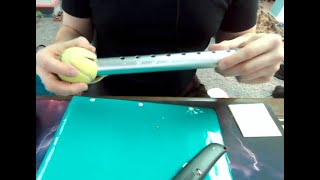
DIY-cut standard tennis balls: Cheaper per ball (tennis balls are $2-3 each in bulk), but require cutting with a utility knife — a safety concern for some users, especially those with limited hand strength or dexterity. The cut quality varies, and a too-wide or jagged slit allows the ball to fall off the walker while in use.
For most seniors and caregivers, precut balls at $2.50-3.75 each are worth the convenience premium over standard balls.
Standard 4-Pack Precut Walker Tennis Balls: Best Entry Point

The basic precut 4-pack at $9.99 is the standard starting point. Standard tennis ball construction (pressurized felt) works adequately for this purpose. The main limitation: standard tennis ball felt wears through faster on rough concrete and outdoor surfaces compared to purpose-built walker glides with thicker felt or rubber bases. For primarily indoor use on smooth floors, standard tennis balls last 3-6 months.
Deluxe Precut Walker Tennis Ball Glides: Best Quality

The "Deluxe" designation typically indicates thicker rubber construction around the slit area, which keeps the ball securely on the walker tip without loosening over time. Standard tennis balls can gradually work loose with repeated use, eventually falling off — a safety hazard. Deluxe versions have a tighter, more secure fit. At $13.45, the cost premium over basic tennis balls is modest and the durability improvement is genuine.
Magicorange 12-Pack with Felt Pads: Best Long-Term Value
The 12-pack at $16.99 ($1.42 per ball) provides a full year or more of walker maintenance for most users. Having a full supply on hand eliminates the scenario where a worn-through tennis ball isn't replaced promptly because no spares are available. The included felt pads add an extra layer of floor protection — the felt acts as a final buffer between the ball and the floor surface, particularly useful on hardwood where bare ball-to-floor contact can leave marks under heavy use.
Signs that tennis balls need replacement:
- Flat spot development: Constant contact with the floor wears a flat spot on the bottom of the ball, reducing the gliding benefit
- Felt wearing through: Once the felt has worn through to the rubber, the ball slides less smoothly
- Ball loosening: If the ball consistently slips off the walker during use, it needs replacement
- Visible compression: If the ball no longer returns to its original round shape after use, the pressure has dissipated
For daily walkers, typical replacement interval is 3-6 months for standard tennis balls, 6-12 months for deluxe versions.
- Smooth indoor floors (hardwood, tile, laminate, linoleum): Excellent glide, quiet
- Low-pile carpet: Good glide, some resistance
- Hospital and care facility floors: The original use case — excellent
- Outdoor concrete and pavement: Felt wears through quickly (replace every 1-2 months with heavy outdoor use)
- High-pile carpet: The balls compress into the carpet and provide little glide benefit
- Gravel and rough surfaces: Not appropriate
Slit quality: A clean, appropriately-sized slit that holds the ball securely on the walker tip is the most important feature. Check that the slit fits your specific walker leg diameter — most standard walkers use a consistent tip diameter, but verify if using a non-standard walker. Felt thickness: Thicker felt lasts longer on abrasive surfaces. Pack size: Buy more than you immediately need — having replacements on hand prevents delayed replacement of worn balls.
Walker tennis balls are an affordable accessory where quality differences are meaningful. The $4 difference between the basic 4-pack ($9.99) and the deluxe version ($13.45) buys notably more secure attachment and longer service life. The 12-pack ($16.99) provides the best per-ball value and the supply security of always having replacements available.
At a Glance


Showing 3 of 3 products
Deluxe Precut Walker Tennis Ball Glides for Seniors
“A step up from basic walker balls — the deluxe construction holds up better on rough surfaces and daily use.”
See Today’s Price →
Magicorange Precut Walker Tennis Balls with Felt Pads Black 12-Pack
“The 12-pack with felt pads is the right buy for care facilities or families managing multiple mobility aids.”
See Today’s Price →What we like
Watch out for
- Black-on-yellow creates intentional high contrast for caregiver visibility — standard yellow or gray tennis balls blend more discreetly with walker frames if appearance matters to the user
- 12-pack is overkill for a single walker requiring 4 balls — buy the 4-pack first to verify hole diameter fits your walker tubing before purchasing in bulk
- Pre-cut hole diameter varies between production batches — balls that slide on walker tubing can be secured with a small amount of rubber adhesive inside the hole before installation
Precut Walker Tennis Balls for Seniors and Furniture Legs 4-Pack
“Pre-cut walker tennis balls are the simplest, most cost-effective way to protect floors and smooth walker movement.”
See Today’s Price →Frequently Asked Questions
How do I put tennis balls on a walker?
Do I put tennis balls on all four legs of a walker?
Will tennis balls scratch hardwood floors?
How long do walker tennis balls last?
Are there alternatives to tennis balls for walkers?
How We Analyze Products
We analyze Amazon review data — often thousands of reviews per product — to surface patterns that individual buyers miss. Our process aggregates star ratings, review counts, and buyer sentiment at scale, identifying which strengths and weaknesses appear consistently across the largest review samples available. The 7,704+ reviews analyzed on this page represent real verified-purchase feedback from Amazon buyers.
Each product earned its placement through data: total review volume, average rating, and the specific praise and complaints that repeat most often across buyers. No manufacturer paid for placement on this page. Products appear here because buyers endorsed them at scale, not because a company asked us to feature them.
We use AI to summarize review sentiment — not to fabricate opinions, but to condense what thousands of buyers actually wrote into a readable format. The pros and cons you see reflect the most common themes found in verified purchaser reviews, paraphrased for clarity. We do not claim to have accessed Reddit, YouTube, or specific publications in generating these summaries.
Prices shown reflect Amazon pricing at the time this page was last generated. Click “See Today’s Price” to get the current live price on Amazon. Read our full methodology →