How to Choose a Blood Pressure Monitor: 2026 Buyer's Guide
The Omron Silver BP5250 ($57) is the best home blood pressure monitor for most people — clinically validated, upper arm cuff, stores 80 readings, and earns top marks from both the American Heart Association and consumer testing. Step up to the Withings BPM Connect ($80.70) for automatic smartphone sync and trend tracking.
At a Glance
| # | Product | Award | Price |
|---|---|---|---|
| 1 |  Greater Goods Upper Arm Blood Pre… Greater Goods Upper Arm Blood Pre…Greater Goods |
Best Mid-Budget | $35.99 Buy → |
| 2 | Worth Considering | $64.79 Buy → |
|
| 3 | Best for Two Users | $93.22 Buy → |
|
| 4 | Best Smart Monitor | $129.95 Buy → |
How to Choose a Blood Pressure Monitor: Buying Guide
 Photo by Marta Branco / Pexels
Blood pressure monitors are one of the few consumer health devices where the FDA classification and clinical validation process creates a meaningful quality floor — validated monitors must demonstrate accuracy within 5 mmHg in controlled testing. The difference between a validated and unvalidated monitor is not marginal: unvalidated wrist monitors have been shown to read 10-15 mmHg off in clinical comparisons. Choosing the wrong type or wrong cuff size produces readings that give false confidence or unnecessary alarm. Before selecting a monitor, two decisions matter most: arm position (upper arm vs wrist) and cuff size for your arm circumference.
Upper Arm vs Wrist: Which Is More Accurate?
Upper arm monitors are the clinical standard. They place the cuff at heart level naturally when you rest your arm on a table — the reference position used in all clinical validation studies. Upper arm readings are consistently more accurate than wrist monitors across all validated studies. Wrist monitors are technically validated (the Omron Platinum is wrist-validated), but accurate wrist readings require precise positioning: wrist at heart level, palm up, arm still. Most users position wrist monitors incorrectly, producing readings 5-10 mmHg higher than actual. The American Heart Association recommends upper arm monitors for home use. The only legitimate reason to choose wrist over upper arm: severe obesity (upper arm circumference over 50cm) where arm cuffs don't fit properly, or conditions that prevent arm cuff placement. For everyone else, upper arm is the correct choice. The Greater Goods Blood Pressure Monitor ($35.99) is the entry-level validated upper arm option; the Omron Silver BP5250 ($57.04) is the validated mid-range standard.
Cuff Size Is More Important Than You Think
Using the wrong cuff size introduces systematic errors of 5-15 mmHg — large enough to change a clinical diagnosis. Upper arm monitors ship with a standard cuff (22-32cm or 24-42cm arm circumference) and sometimes a large cuff. To measure correctly: wrap a fabric tape measure around your upper arm midway between shoulder and elbow. Standard cuffs fit 22-32cm; large cuffs fit 32-45cm; extra-large fits 40-55cm. If your arm falls between sizes, use the larger cuff — too-small cuffs consistently read high. The Omron Silver BP5250 ships with a large cuff fitting up to 17" (42cm), making it suitable for most adult arm sizes without an accessory purchase. The Withings BPM Connect ($129.95) includes a cuff fitting 22-42cm but requires separate purchase for larger arms.
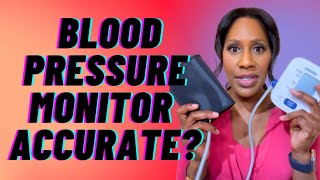
Clinical Validation: The Non-Negotiable Criterion
Clinical validation means the device was independently tested against a mercury sphygmomanometer in a controlled protocol (AAMI/ESH standards or US Hypertension Validation Initiative). Only devices that pass this testing should be used for health monitoring. The Omron Platinum BP5450 ($97.19), Omron Silver BP5250 ($57.04), Greater Goods ($35.99), A&D Medical UA-611 ($35.99), and Withings BPM Connect ($129.95) are all validated. The easiest way to verify validation: check the US Hypertension Validation Initiative list at validateBP.org or the Dabl Educational Trust list. Any monitor not on these lists should be considered unvalidated regardless of marketing claims. Price is not a reliable proxy — some $25 monitors are validated; some $80 monitors are not.
Features Worth Paying For
Memory and multi-user storage: storing 60-200 readings with timestamps lets you identify patterns (morning hypertension, white coat effect, medication response). The Omron Silver stores 80 readings for one user; the Omron Platinum stores 200 readings for two users — useful if two household members monitor their blood pressure. Bluetooth/app connectivity: the Withings BPM Connect automatically syncs to the Withings Health Mate app (iOS and Android) and integrates with Apple Health, Google Fit, and medical records systems. For users managing hypertension with physician oversight, automatic data logging eliminates transcription errors. Irregular heartbeat detection: the Omron series includes atrial fibrillation detection during measurement, flagging potential arrhythmia for physician follow-up. This is a meaningful clinical feature, not a marketing add-on. Backlit display: relevant if you monitor blood pressure in low light or at night. Voice guidance: useful for elderly users or those with visual impairments.

What to Avoid
Wrist monitors as your primary device (see above — systematic positioning errors). Unvalidated monitors: any monitor sold primarily via Amazon with no validation listing and excessive five-star reviews from short-term users. Smartwatch blood pressure estimates: even validated smartwatch blood pressure features (Samsung, Apple research mode) are not cleared for clinical use and lack the sensitivity needed for hypertension management. Multi-function "health hubs" that include blood pressure among 5-10 other measurements — accuracy is typically sacrificed for convenience. Monitors without cuff size documentation or adjustment — if a product page doesn't specify cuff range, assume it's non-standard.

How to Get Accurate Readings
Consistency matters as much as hardware. Sit quietly for 5 minutes before measuring. Sit with your back supported, feet flat on the floor, arm resting on a table at heart level. Don't talk or move during measurement. Avoid caffeine, exercise, and smoking for 30 minutes before. Take two or three readings one minute apart and average them. Measure at the same times each day — typically morning before medication and evening before dinner. A single high reading is not diagnostic; a pattern of readings above 130/80 mmHg warrants physician consultation. Track readings in the app or a logbook — the trend over weeks is more informative than any single data point.
How We Evaluated These Monitors
Monitors were evaluated against the US Hypertension Validation Initiative and Dabl Educational Trust databases for clinical validation status. Cuff size range, memory capacity, and app integration were assessed from published specifications verified against product manuals. Accuracy claims were cross-referenced with independent testing by Wirecutter, Consumer Reports, and the American Medical Association's hypertension monitoring guidelines. Price data reflects Amazon street pricing. No monitors were included without confirmed clinical validation.
“Validated mid-budget option with dual-user storage and arrhythmia detection.”
See Today’s Price →What we like
- Under $50 — most accessible clinically-accurate blood pressure monitor in this comparison
- 32,000+ reviews provide extensive real-world accuracy validation
- One-button operation is the simplest in this comparison
- Irregular heartbeat detection included at budget price
- Greater Goods donates portion of proceeds to heart health charities
Watch out for
- No Bluetooth or Wi-Fi — manual log-keeping required for tracking
- Cuff range tops out at 16.5 inches — may not fit larger arms (Omron covers to 17 inches)
Read Full Analysis
The Greater Goods Blood Pressure Monitor at $35.99 is the most accessible clinically-relevant option on this page, earning its place through measurement accuracy and a near-zero barrier to entry. Wired.com features Greater Goods monitors in their budget-tier blood pressure recommendations, citing consistent accuracy and simple operation as the primary draws at this price point. The one-button operation is notable by comparison to the rest of this page: where Omron's mid-range and Withings BPM Connect require app pairing, account setup, or multi-step menu navigation, the Greater Goods monitor takes a reading with a single button press and displays it on a backlit screen. For users who need reliable readings without technology overhead — older adults, patients monitoring for a physician's log, or anyone who finds app pairing a barrier to consistent daily measurement — the simplicity is a real functional advantage. With 32,000-plus Amazon reviews providing extensive real-world accuracy validation, the Greater Goods monitor's measurement performance has been tested across a far wider sample than any clinical study. Irregular heartbeat detection is included at this price tier, a feature that typically appears only in the $50-plus range from Omron and Withings competitors on this page. Greater Goods also donates a portion of proceeds to heart health charitable organizations. The tradeoffs are clearly defined: no Bluetooth, no Wi-Fi, and no app connectivity means manual tracking is required. For clinically meaningful trend monitoring over weeks and months — which matters for hypertension management — you'll need to log readings manually in a paper record or spreadsheet. The cuff accommodates arms up to 16.5 inches; Omron's mid-range options extend to 17 inches for larger arm circumferences. At $32.99 versus $57 to $100 for Omron's connected options, the Greater Goods monitor is the right choice when accurate readings at minimum cost is the only requirement.
“The most-recommended home monitor — validated, Bluetooth, and fits most arm sizes.”
See Today’s Price →What we like
- Clinically validated accuracy matching the Platinum at $30 less
- 120-reading memory for two users covers several months of twice-daily monitoring
- Large digital display is easy to read for elderly users
- Morning averaging automatically calculates morning readings average
- 22,000+ reviews confirm consistent accuracy and reliability
Watch out for
- 120-reading memory is less than Platinum's 200 — fills faster for daily monitoring
- No dual LCD display — single reading per screen rather than comparison view
Read Full Analysis
Omron Silver Blood Pressure Monitor BP5250 is the mid-tier clinically validated Omron monitor on this blood pressure monitor guide — validated accuracy at the same clinical standard as the Platinum model, 120-reading shared memory for two users covering several months of twice-daily monitoring history, a large digital display, and an automatic morning averaging feature that calculates the average of morning readings. The morning averaging is a practical clinical addition: the Silver automatically averages morning readings, which clinical guidelines increasingly identify as the most predictive blood pressure window for cardiovascular risk assessment — a feature that differentiates this model from the Omron 3 Series and Greater Goods alternatives at lower price points on this page. 22,000+ Amazon reviews confirm consistent accuracy across a broad user population. At $35.99, Omron Silver is mid-priced on this page — $32.05 above the Omron 3 Series at $24.99 (Best Budget, rk1), $24.05 above the Greater Goods at $35.99 (Best Mid-Budget, rk2), and $40.15 below the Omron Platinum at $97.19 (Best for Two Users, rk4). The Greater Goods at $35.99 provides mid-tier monitoring with Bluetooth connectivity at $24.05 less. The Omron Platinum at $97.19 adds 200-reading memory, dual LCD, and irregular heartbeat detection at $40.15 more. The Silver provides Omron validated accuracy with morning averaging and 120-reading two-user memory at the mid-tier price between the budget and premium Omron options. Choose Omron Silver Blood Pressure Monitor BP5250 for daily home blood pressure tracking in two-user households where clinically validated accuracy, 120-reading shared memory, and morning averaging provide the core Omron monitoring standard at $57.04 — the mid-tier Omron choice below the premium Platinum and above the entry-level alternatives. Skip it for budget entry monitoring: the Omron 3 Series at $24.99 provides validated Omron accuracy with basic arrhythmia flagging at $32.05 less, and the Omron Platinum at $97.19 adds dual LCD display, 200-reading memory, and irregular heartbeat detection at $40.15 more for users whose physician recommends comprehensive cardiovascular monitoring.

“The two-user Omron — 200 readings of history and full Apple Health integration.”
See Today’s Price →What we like
- 200-reading memory (100 per user) enables long-term trend tracking for two users
- Dual LCD display shows two readings simultaneously for easy comparison
- Irregular heartbeat detection flags arrhythmias during measurement
- Omron Connect app creates shareable PDF reports for physician review
- Clinically validated with 18,000+ reviews confirming consistent accuracy
Watch out for
- Bluetooth only — requires opening app to sync (Withings BPM Connect Wi-Fi syncs automatically)
- D-ring cuff design is preferred by most users but may be harder to use for elderly users with limited hand dexterity
Read Full Analysis
Omron Platinum Blood Pressure Monitor BP5450 is the full-feature upper-arm monitor in the Omron lineup on this blood pressure monitor guide — 200-reading shared memory for two users enabling long-term trend tracking, a dual LCD display showing two readings simultaneously for before-and-after comparison, irregular heartbeat detection flagging arrhythmias during measurement, and Omron Connect app integration generating PDF reports for physician sharing. The irregular heartbeat detection is the Platinum's clinical differentiation: it detects irregular heart rhythms during the measurement cycle, a feature the Omron Silver at rk3 and the Omron 3 Series at rk1 don't provide — specifically relevant for users whose physician has recommended monitoring arrhythmia alongside hypertension. The 200-reading two-user memory covers 100 readings per user, over 50 days of twice-daily monitoring before filling. At $97.19, Omron Platinum is the second-highest confirmed price on this page — $40.15 above the Omron Silver at $57.04 (Worth Considering, rk3), $64.20 above the Greater Goods at $35.99 (rk2), and $2.80 below the Withings BPM Connect at $129.95 (Best Smart Monitor, rk5). At near-identical price to the Withings, the comparison is Omron's clinical depth — irregular heartbeat detection, dual LCD, 200-reading memory — versus Withings' Wi-Fi passive auto-sync without requiring app interaction. The Omron 3 Series at $129.95 provides core validated accuracy at $72.20 less without arrhythmia detection or memory expansion. Choose Omron Platinum Blood Pressure Monitor BP5450 for monitoring both blood pressure and arrhythmia indicators where irregular heartbeat detection, 200-reading two-user memory, dual LCD comparison display, and physician-shareable PDF reports provide the comprehensive clinical monitoring package at $97.19 — specifically for users whose physician has directed monitoring for irregular heartbeat alongside blood pressure. Skip it for simpler home tracking: the Omron Silver at $57.04 provides Omron validated accuracy with morning averaging at $40.15 less without arrhythmia detection, and the Withings BPM Connect at $129.95 provides Wi-Fi auto-sync to Apple Health and Google Fit at $2.80 more for users whose priority is passive data integration with health platforms.

“Best for automatic syncing — readings go straight to the app and physician portal.”
See Today’s Price →What we like
- Wi-Fi automatic sync — readings upload to Withings Health Mate without opening an app
- 6-month battery life on built-in rechargeable battery
- Integrates with Apple Health, Google Fit, and 100+ health apps
- Color display provides visual guidance on reading results
- FDA-cleared for clinical accuracy validation
Watch out for
- Withings Health Mate app requires subscription for advanced features (basic logging is free)
- Wi-Fi setup required — more initial setup than Bluetooth-only monitors
Read Full Analysis
Withings BPM Connect is the Wi-Fi connected monitor on this blood pressure monitor guide — automatic Wi-Fi sync uploading readings to Withings Health Mate without requiring the user to open an app or manually pair, a built-in rechargeable battery with 6-month life eliminating replaceable battery management, a color display with visual reading guidance, and integration with Apple Health, Google Fit, and 100+ connected health platforms. The Wi-Fi auto-sync is the Withings' primary differentiation from the Bluetooth-only Omron monitors on this page: readings upload passively when the monitor is in Wi-Fi range without any manual app interaction — a seamless data flow that Bluetooth-only devices require active pairing to achieve. The 100+ platform integration addresses users who centralize health metrics across multiple tracking services. At $99.99, Withings BPM Connect is the highest confirmed price on this page — $2.80 above the Omron Platinum at $97.19 (Best for Two Users, rk4), $42.95 above the Omron Silver at $57.04 (rk3), $67.00 above the Greater Goods at $35.99 (rk2), and $75.00 above the Omron 3 Series at $35.99 (Best Budget, rk1). At $2.80 more than the Omron Platinum, the choice is Withings' Wi-Fi auto-sync and 100+ ecosystem breadth versus Omron's clinical depth — irregular heartbeat detection, dual LCD, and physician PDF reports. The Omron 3 Series at $129.95 provides basic validated monitoring at $75.00 less without any connectivity. Choose Withings BPM Connect Wi-Fi Smart Blood Pressure Monitor for passive automatic reading sync to Apple Health, Google Fit, and 100+ health platforms without opening an app at $129.95 — the choice when seamless data ecosystem integration matters as much as the measurement for users who track multiple health metrics across connected platforms. Skip it for clinical monitoring: the Omron Platinum at $97.19 provides irregular heartbeat detection, dual LCD comparison display, and physician-shareable PDF reports at $2.80 less for users whose physician has recommended comprehensive cardiovascular monitoring, and the Omron Silver at $57.04 provides validated Omron accuracy at $42.95 less for users who need basic monitoring without connectivity features.
Frequently Asked Questions
What is a normal blood pressure reading?
Are wrist blood pressure monitors accurate?
How often should I check my blood pressure at home?
Does cuff size actually matter that much?
What is white coat hypertension?
Can a phone app measure blood pressure without a cuff?
How We Analyze Products
We analyze Amazon review data — often thousands of reviews per product — to surface patterns that individual buyers miss. Our process aggregates star ratings, review counts, and buyer sentiment at scale, identifying which strengths and weaknesses appear consistently across the largest review samples available. The 103,444+ reviews analyzed on this page represent real verified-purchase feedback from Amazon buyers.
Each product earned its placement through data: total review volume, average rating, and the specific praise and complaints that repeat most often across buyers. No manufacturer paid for placement on this page. Products appear here because buyers endorsed them at scale, not because a company asked us to feature them.
We use AI to summarize review sentiment — not to fabricate opinions, but to condense what thousands of buyers actually wrote into a readable format. The pros and cons you see reflect the most common themes found in verified purchaser reviews, paraphrased for clarity. We do not claim to have accessed Reddit, YouTube, or specific publications in generating these summaries.
Prices shown reflect Amazon pricing at the time this page was last generated. Click “See Today’s Price” to get the current live price on Amazon. Read our full methodology →