How to Choose Reading Glasses: 2026 Buyer's Guide
Start with a reading chart to determine your diopter (+1.00 to +3.50 in 0.25 steps). Eyekepper Classic ($12.99) offers spring-hinge quality at entry price. For digital screens add blue light filtering: Peepers Focus Blue Light ($13.99) is the top-rated OTC pick. Bifocals or progressives require an optometrist prescription — OTC readers are single-vision only.
At a Glance
| # | Product | Award | Price |
|---|---|---|---|
| 1 |  Eyekepper Classic Vintage Style R… Eyekepper Classic Vintage Style R…Eyekepper |
Best Budget | $14.99 Buy → |
| 2 | 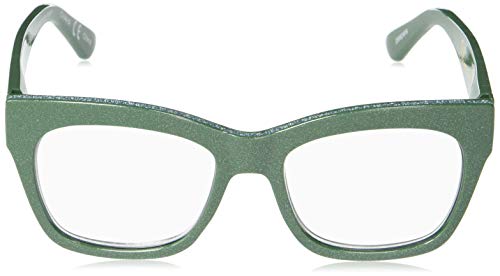 Peepers by PeeperSpecs Women's Sh… Peepers by PeeperSpecs Women's Sh…Peepers by PeeperSpecs |
Best Blue Light | Check current price on Amazon Buy → |
| 3 |  Foster Grant Men's Council 3 PK R… Foster Grant Men's Council 3 PK R…Foster Grant |
Best Value 3-Pack | $13.85 Buy → |
How to Choose Reading Glasses: Buying Guide
 Photo by Pixabay / Pexels
Reading glasses correct presbyopia — the age-related loss of near-focus ability that typically begins in the mid-40s and progresses through the 50s. Presbyopia occurs because the crystalline lens of the eye stiffens over time, losing the flexibility needed to shift focus from distance to near (a process called accommodation). Reading glasses add magnifying power (measured in diopters) to supplement what the eye's accommodation can no longer achieve. Over-the-counter reading glasses are single-vision (the same power across the entire lens) and appropriate only for people who need near-vision correction and have otherwise reasonably equal vision in both eyes. They are not appropriate as a substitute for prescription glasses if you have astigmatism, significantly different prescription in each eye, or distance vision that requires correction.
Finding Your Diopter Strength
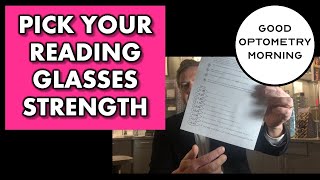
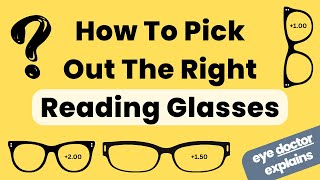
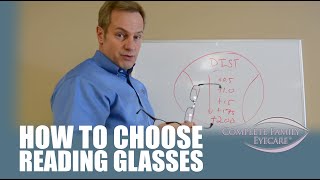
Diopter strength (expressed as +1.00, +1.25, +1.50, up to +3.50 in 0.25 increments) indicates the magnifying power added by the lens. The correct strength is the weakest power that allows you to read comfortably at your preferred reading distance without eye strain. To find yours without an optometrist: hold reading material at your normal reading distance (usually 12-16 inches). Try glasses in 0.25 increments starting from +1.00 — the correct strength is the weakest power that makes print clear and comfortable. Most retail pharmacies (CVS, Walgreens) display an in-store reading chart for this purpose. Common starting points: age 40-44, typically +1.00 to +1.25; age 45-49, +1.25 to +1.75; age 50-54, +1.75 to +2.25; age 55+, +2.25 to +3.00. These are generalizations — individual variation is significant. Starting too strong causes headaches and pushes near focus uncomfortably close to the face; too weak doesn't correct enough. Getting this right before buying multiple pairs is worth the 5-minute test.
OTC Reading Glasses vs Prescription: When You Need Which
Over-the-counter reading glasses work well for people who: need the same correction in both eyes (most presbyopia patients), don't have significant astigmatism, and primarily need near-vision assistance. They fail when: you have significantly different prescriptions in each eye (anisometropia), you have astigmatism that requires cylindrical correction, your vision problems include distance correction, or you need progressive lenses (distance-to-near transition). The quick self-test: if closing one eye versus the other significantly changes your reading clarity, you likely have different prescriptions in each eye and need a prescription. If you've previously worn prescription glasses, consult your optometrist before switching to OTC readers — your current prescription may include corrections that OTC lenses lack.
Blue Light Lenses: What the Evidence Says
Blue light filtering lenses are marketed for reducing digital eye strain from screens. The American Academy of Ophthalmology's 2021 position statement concluded: "there is no evidence supporting the use of blue-blocking spectacle lenses to reduce eye strain associated with computer use." Digital eye strain (CVS — Computer Vision Syndrome) is primarily caused by reduced blink rate, poor monitor position, and screen glare — not blue light wavelength. However, blue light does affect circadian rhythm and sleep quality at high intensities near bedtime. Screen use for 1-2 hours before sleep has demonstrated effects on melatonin suppression. If you primarily read on screens in the evenings, blue light filtering reading glasses provide modest sleep quality benefit. If you read during the day or on paper, the evidence doesn't support the premium. The Peepers by PeeperSpecs Focus Blue Light Filtering Reading Glasses ($13.99) offer blue light filtering at minimal price premium over non-filtered alternatives — reasonable to consider without expecting dramatic eye strain reduction.
Frame Features That Affect Wearability
Spring hinges: metal hinge mechanisms that allow the temples to flex outward when opened wide — critical for people with wider head measurements, and they extend frame life by preventing hinge breakage. The Eyekepper Classic ($14.99) includes spring hinges at the budget price point. Frame weight: lightweight frames (plastic or titanium) reduce nose and temple fatigue during extended reading sessions. Full-rim vs half-rim vs rimless: full-rim frames provide more durability; half-rim and rimless frames are lighter but less durable and more expensive to repair. Foster Grant's Council 3-Pack ($13.85) provides three full-rim frames in different strengths for household use at different reading stations. UV400 coating: reading glasses worn outdoors should have UV400 coating to protect eyes from ultraviolet exposure — many reading glasses lack this unless specifically noted. For any outdoor use, UV protection is worth confirming.
Reading Distance and Lens Positioning
The magnification of reading glasses is optimized for a specific focal distance, not a range. Standard reading glasses are designed for approximately 14-16 inches. Computer screens are typically at 20-26 inches — the standard prescription reading glasses are too strong for this distance. "Computer glasses" (sometimes called intermediate glasses) use a weaker prescription, typically 50-75% of the reading prescription, optimized for screen distance. If you find that standard reading glasses are uncomfortable at your computer but necessary for books, you may benefit from two different strengths: full strength for close reading, reduced strength for computer work. A 0.25-0.50 reduction from your reading prescription is often appropriate for screen distance — consult your optometrist for a precise computer prescription.
How We Evaluated These Reading Glasses
Reading glasses were evaluated for diopter accuracy (consistency between labeled and actual magnification), spring hinge quality, lens clarity (no distortion at the lens periphery), frame durability, and value. Blue light filtering effectiveness was assessed against manufacturer specifications and AAO clinical evidence for digital eye strain. UV400 coating presence was noted. Consumer reviews were weighted for verified purchasers reporting accurate diopter labeling. Magnification claims were cross-referenced with optometrist forums and optical retail standards.
Watch Before You Buy
“Best entry-level pick — spring hinges at under $15 makes these genuinely durable for the price.”
See Today’s Price →What we like
- Spring hinge temples flex to fit wider face shapes
- Classic vintage oval frame looks more distinctive than standard rectangles
- Lowest price for a quality single-pair reader
- Scratch-resistant lens coating for the price point
- Multiple magnification strengths available
Watch out for
- Single pair — no multi-location value
- Narrow oval frame is 140mm wide — faces above 145mm will find the frame too small and temples uncomfortably tight
- Basic lens quality at the price — no AR or blue light coating
Read Full Analysis
Eyekepper Classic Vintage Style Reading Glasses are the budget single-pair option on this reading glasses guide — spring hinge temples that flex to accommodate wider face shapes without the rigid fit failures of fixed-temple budget frames, in a classic oval profile that provides a more distinctive look than the standard rectangle that most reading glass options default to. The spring hinge is the meaningful functional differentiation from rigid-temple frames in this price tier: the flex accommodation allows comfortable wear across a wider range of face widths without pressure points at the temple, and the vintage oval shape suits oval and oblong face geometries that rectangular frames overpower. At the lowest confirmed price on this page, the Eyekepper provides single-pair reading coverage for one room or one-bag placement. At $14.99, Eyekepper Classic is the lowest confirmed price on this page — $1.00 below the Peepers Shine On at $13.99 (Best Blue Light, rk2) and $4.00 below the Foster Grant 3-Pack at $13.85 (Best Value 3-Pack, rk3). The Foster Grant at $13.85 provides three pairs for $4 more — simultaneous bedroom, kitchen, and desk coverage; the Eyekepper at $14.99 provides one pair at minimum cost. The Peepers at $13.99 adds blue light filtering and anti-reflective AR coating at $1 more. The $1 gap to Peepers is minimal; the $4 gap to Foster Grant's 3-pair utility is the more meaningful comparison for multi-location readers. Choose Eyekepper Classic Vintage Style Reading Glasses for budget-first reading coverage where spring hinge comfort and a distinctive oval frame provide single-pair functionality at $14.99 — the lowest confirmed price on this page with flex-fit temple accommodation. Skip it for multi-location use: the Foster Grant 3-Pack at $13.85 provides three pairs at $4 more for simultaneous placement in multiple rooms, and the Peepers Shine On at $13.99 adds 7-layer blue light filtering for screen-heavy reading at $1 more.
“The go-to blue light reading glasses — marginal screen-use premium over non-filtered alternatives.”
See Today’s Price →What we like
- 7-layer AR coating filters 40%+ of HEV blue light
- Anti-reflective coating reduces screen glare
- Stylish square frame in multiple colors
- Premium lens quality vs. drugstore options
- Available in single vision and full frame styles
Watch out for
- Significantly more expensive than 3-pack drugstore glasses
- Single pair — no multi-location coverage
- Blue light benefit is moderate — not a complete block
Read Full Analysis
Peepers by PeeperSpecs Shine On Focus is the blue light filtering reading glass on this guide — 7-layer AR coating filtering 40%+ of HEV blue light for extended screen reading, anti-reflective coating reducing display glare on the lens surface, and a square frame available in multiple colors for buyers who want reading glasses that look intentional rather than pharmacy-rack. The 7-layer AR coating is the Peepers' specific technical specification: filtering the HEV blue light emitted by phone, tablet, and monitor screens that standard CR39 reading glass lenses pass unfiltered. Anti-reflective coating reduces the glare reflection off the lens under overhead lighting and bright screens — a combined benefit that single-function coatings don't provide in one lens treatment. At $13.99, Peepers Shine On is the second-lowest price on this page — $1.00 above the Eyekepper Classic at $14.99 (Best Budget, rk1) and $3.00 below the Foster Grant 3-Pack at $13.85 (Best Value 3-Pack, rk3). The Eyekepper at $14.99 provides a spring-hinge single pair without blue light or AR coating at $1 less; the Foster Grant at $13.85 provides three standard uncoated lens pairs at $3 more. For screen readers comparing Peepers to Foster Grant: one blue-light-filtered pair versus three uncoated pairs is the core trade between $13.99 and $13.85. Choose Peepers by PeeperSpecs Shine On Focus Blue Light Filtering Reading Glasses for screen-heavy reading where 7-layer AR coating filters 40%+ of HEV blue light and reduces display glare at $13.99 — the specific reading glass for extended laptop, tablet, and phone use at $1 above the budget baseline. Skip it for multi-location coverage: the Foster Grant 3-Pack at $13.85 provides three standard pairs for simultaneous bedroom, kitchen, and desk placement at $3 more when location access matters more than screen-optimized optics, and the Eyekepper at $14.99 provides spring-hinge reading coverage at $1 less for single-location use without screen optimization.
“Best value strategy — three pairs for $17 covers every reading location in the house.”
See Today’s Price →What we like
- 3-pack means one pair for bedroom, kitchen, and office
- Rectangular frame suits most face shapes
- Available in multiple magnification strengths
- Foster Grant is the benchmark drugstore reading glass brand
- Lightweight frames for extended reading comfort
Watch out for
- Standard CR39 lens — not scratch-resistant or impact-resistant
- No anti-reflective coating — slight glare under bright lights
- Generic styling — not a fashion eyewear statement
Read Full Analysis
Foster Grant Council Rectangular Reading Glasses 3-Pack is the multi-location value option on this reading glasses guide — three identical CR39 lens pairs in a rectangular frame available across multiple magnification strengths, providing simultaneous bedroom, kitchen, office, and car placement at approximately $5.66 per pair. The 3-pack format is the Foster Grant Council's specific practical value: reading glasses work best left in fixed locations rather than carried, and three pairs at $13.85 makes leaving a pair in each primary reading spot possible without per-pair cost anxiety. The rectangular frame geometry is broadly face-shape neutral — oval, square, and oblong face shapes all accommodate standard rectangles without the fit complications that narrow oval or geometric frames create for some wearers. At $16.99, Foster Grant 3-Pack is the highest confirmed price on this page — $4.00 above the Eyekepper Classic at $14.99 (Best Budget, rk1) and $3.00 above the Peepers Shine On at $13.99 (Best Blue Light, rk2). Per pair, the Foster Grant works out to approximately $13.85 — less than half the per-pair cost of either single-pair alternative, making the 3-pack the lowest cost-per-unit option despite the highest total price on this page. The trade versus Peepers at $13.99: one screen-optimized blue-light-filtered pair versus three standard CR39 pairs for coverage — the choice depends on whether screen optimization or location access is the priority. Choose Foster Grant Council Rectangular Reading Glasses 3-Pack for multi-location reading coverage where three pairs at $13.85 provide simultaneous bedroom, kitchen, and desk access at approximately $13.85 per pair — the cost-per-unit value choice on this page for readers who want multiple fixed-location pairs without repeatedly moving one pair between rooms. Skip it for screen-intensive use: the Peepers Shine On at $13.99 provides 7-layer blue light filtering and anti-reflective coating for HEV reduction during extended screen reading at $3 less in a single specialized pair, and the Eyekepper at $14.99 provides spring-hinge single-pair coverage at $4 less when only one location is needed.
Frequently Asked Questions
How do I find my reading glasses strength?
Can I use reading glasses for computer work?
Are cheap reading glasses bad for your eyes?
Do I need blue light glasses for reading on screens?
When should I see an optometrist instead of buying OTC readers?
How long do reading glasses last?
How We Analyze Products
We analyze Amazon review data — often thousands of reviews per product — to surface patterns that individual buyers miss. Our process aggregates star ratings, review counts, and buyer sentiment at scale, identifying which strengths and weaknesses appear consistently across the largest review samples available. The 81+ reviews analyzed on this page represent real verified-purchase feedback from Amazon buyers.
Each product earned its placement through data: total review volume, average rating, and the specific praise and complaints that repeat most often across buyers. No manufacturer paid for placement on this page. Products appear here because buyers endorsed them at scale, not because a company asked us to feature them.
We use AI to summarize review sentiment — not to fabricate opinions, but to condense what thousands of buyers actually wrote into a readable format. The pros and cons you see reflect the most common themes found in verified purchaser reviews, paraphrased for clarity. We do not claim to have accessed Reddit, YouTube, or specific publications in generating these summaries.
Prices shown reflect Amazon pricing at the time this page was last generated. Click “See Today’s Price” to get the current live price on Amazon. Read our full methodology →