How to Set Up a First Aid Kit: Complete 2026 Guide
The Band-Aid Brand Travel Ready Portable First Aid Kit (80 pieces, $10.98) is the best compact kit — covers core wound care essentials in a case that fits a glove box, hiking pack, or office desk drawer without adding bulk.
At a Glance
| # | Product | Award | Price |
|---|---|---|---|
| 1 | Best Travel Kit | $9.33 Buy → |
|
| 2 | Best Budget Kit | $18.36 Buy → |
|
| 3 |  M2 BASICS Compact First Aid Kit, … M2 BASICS Compact First Aid Kit, …M2 BASICS |
Worth Considering | $14.88 Buy → |
How to Set Up a First Aid Kit Buying Guide
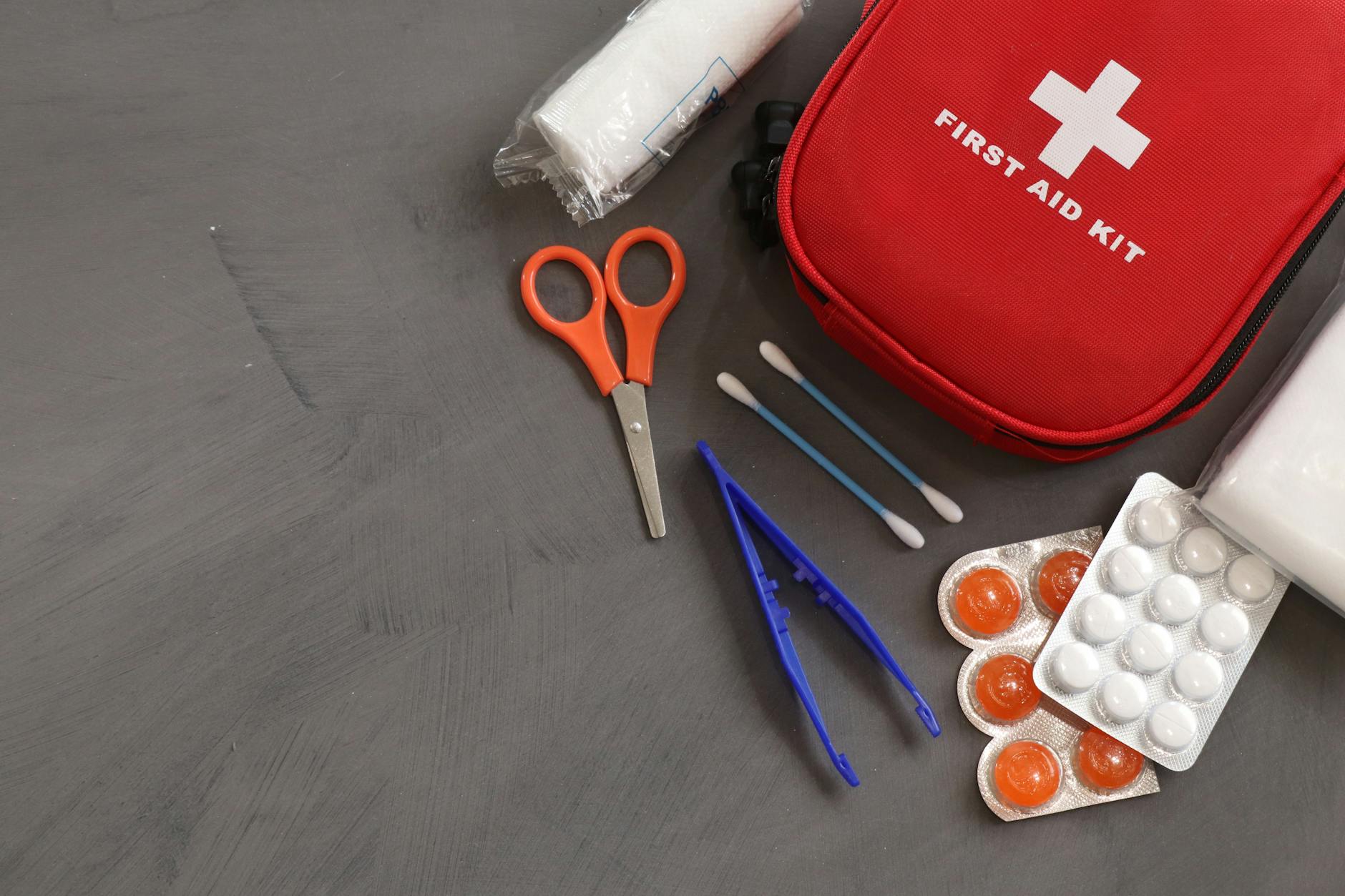 Photo by Roger Brown / Pexels
A first aid kit's value is determined not by its piece count but by whether it contains the right items in working condition when you need them. Piece counts in marketing inflate numbers by counting each bandage individually — a 200-piece kit and a 50-piece kit may have identical categories of items, just different bandage quantities. The practical question is whether the kit covers the four most common home injury types: minor cuts and abrasions, burns (thermal), sprains and strains, and acute pain. Everything else — blister care, eye wash, splinting materials — is situational.
The Four Levels of First Aid Kits
Home kits handle the full range of minor household injuries. A well-stocked home kit should cover: cuts and lacerations (bandages in multiple sizes, gauze, medical tape, antiseptic), burns (sterile gauze, burn gel or cool water preparation, medical tape), sprains (elastic bandage/ACE wrap), pain and fever (acetaminophen or ibuprofen), and eye injuries (sterile eye wash). The KeepGoing 270-Piece kit ($74.99) covers all three categories with redundant supplies — appropriate for families with children. Travel kits prioritize compact form factor and TSA compliance: the BAND-AID Brand Travel Ready Portable Kit ($10.98) with 80 pieces handles the most common travel injuries without checkpoint issues. Car kits face temperature extremes (-20 to 140°F in trunk conditions) that degrade adhesive bandages, medications, and antiseptic wipes — rotate car kit supplies every 6-12 months rather than 18. The All-Purpose Portable Compact Kit 160 Piece ($18.36) is an affordable option for glove compartments. Kids' kits add distraction and comfort elements — the Daniel Tiger Travel First Aid Kit ($41.95) includes character bandages and comfort features for pediatric use.
What You Actually Use
Based on American Red Cross injury statistics, the most frequently needed items in a home first aid kit are: adhesive bandages (assorted sizes — the 1" × 3" strip bandage handles 70% of cuts), antiseptic wipes (isopropyl alcohol pads or antiseptic solution for wound cleaning), gauze pads and medical tape (for larger abrasions), elastic bandage (ACE wrap — sprains are among the most common home injuries), tweezers (splinters, tick removal), and medical scissors. Second tier: butterfly closures for wound edge approximation, sterile eye wash (eye injuries from debris), instant cold packs (acute sprains and bruises), and a digital thermometer. Third tier: burn gel, CPR face shield, emergency mylar blanket, and a first aid manual. Medication stocking (acetaminophen, ibuprofen, antihistamine, hydrocortisone cream) is optional in pre-built kits — adding these yourself ensures you have the correct dosages for your household.

Build vs Buy
Pre-built kits save time and ensure you don't forget categories of supplies. They're cost-effective for standard coverage. Building your own kit is appropriate when you have specific needs: pediatric dosages, allergy-related additions (epinephrine auto-injector, antihistamine), or occupational hazards (shop kit for woodworking versus kitchen kit). If building your own: start with an American Red Cross recommended list or a OSHA-compliant list for workplace kits, then add personal medications. A clear plastic container with divided sections or a roll-up pouch with compartments makes supplies visible without unpacking everything. The minimum build for a household kit costs approximately $30-$50 purchasing individually at a pharmacy — comparable to an entry pre-built kit, but allows customization.
Maintenance: The Step Everyone Skips
First aid kits go bad. Adhesive bandages lose adhesion. Antiseptic wipes dry out in punctured packaging. Medications expire. The practical maintenance schedule: check every 12-18 months by reviewing expiration dates on all items and restocking depleted supplies. Replace the full kit every 3-5 years if you're not doing regular checks. Store kits away from heat and humidity — bathroom medicine cabinets (humid) and car trunks (temperature extremes) both accelerate degradation. The ideal location: a dedicated shelf or drawer in a consistent-temperature area of the home that everyone in the household knows. Keep a list of the kit's location and contents taped inside the lid. Review the kit after any use that depletes supplies.
First Aid Certification
Owning a first aid kit is one step; knowing how to use it is another. The American Red Cross offers first aid and CPR/AED certification courses (in-person and online) that take 2-3 hours and teach the skills that matter in the first minutes of an emergency. OSHA requires at least one trained first-aider per workplace; many schools and community organizations offer free training. The skills that save lives in the time before emergency services arrive — CPR, controlling severe bleeding, Heimlich maneuver, allergic reaction response — are not printed on band-aid packaging. Consider pairing your kit with a CPR training refresh every two years.
How We Evaluated These First Aid Kits
Kits were evaluated for category coverage (wound care, burn care, sprain/strain, pain management, eye care), supply redundancy (adequate quantity for multi-person use), build quality of the case or bag, price-per-supplied-category, and temperature durability information. American Red Cross recommended contents and OSHA first aid kit standards were used as baseline coverage references. Product contents were verified against manufacturer-published item lists, not just piece count marketing.
Watch Before You Buy
“The best travel kit under $15 — compact, organized, and handles the most common travel injuries.”
See Today’s Price →What we like
- Compact zip pouch
- TSA-friendly
- Covers core wound care
- Trusted brand quality
- 80 pieces
Watch out for
- No medications, scissors, or elastic bandage
- Limited quantity per category
- Travel-only scope
Read Full Analysis
BAND-AID Brand Travel Ready Portable Emergency First Aid Kit is the compact travel-format wound care option on this first aid kit guide — 80 pieces covering core wound care including adhesive bandages, gauze, antiseptic wipes, and first aid tape in a zip-close pouch sized for carry-on bags and day packs without TSA restriction. The compact zip pouch is the specific design intent: wound care essentials in a flat-pack format that stores in jersey pockets, purse compartments, and backpack side pockets where full-sized rectangular first aid cases don't fit. Band-Aid's established position in adhesive wound care provides sourcing confidence for the bandages and dressings that form the core of the 80-piece inventory. At $10.98, Band-Aid Travel Ready is the lowest confirmed price on this page — $3.90 below the M2 BASICS 150-Piece at $14.88 (rk3) and $7.38 below the Johnson & Johnson 160-Piece at $14.88 (Best Budget Kit, rk2). The Johnson & Johnson at $14.88 provides 160 pieces including scissors and tweezers for a more complete home kit; the Band-Aid at $10.98 provides 80 pieces in a travel-optimized format without cutting or extraction tools, at the lowest price on the page. Per-piece cost across the kits is roughly equivalent — the trade between this kit and the larger alternatives is compact portability versus comprehensive scope. Choose BAND-AID Brand Travel Ready Portable Emergency First Aid Kit for travel, commuting, and day-trip first aid where a TSA-compatible compact 80-piece pouch covers core wound care at $10.98 — the lowest confirmed price on this page for Band-Aid wound care components in a format that fits wherever a wallet does. Skip it for home preparedness: the Johnson & Johnson 160-Piece at $18.36 adds scissors, tweezers, and double the pieces for a more complete home or car kit at $7.38 more, and the M2 BASICS 150-Piece at $14.88 provides a larger inventory at $3.90 more when comprehensive coverage matters more than compact portability.

“A budget kit that covers more categories than travel-only options without breaking $18.36.”
See Today’s Price →What we like
- Includes scissors and tweezers
- Multiple bandage sizes
- Compact case
- Adequate for most minor injuries
Watch out for
- Generic brand with no certification
- No elastic bandage
- No medications included
Read Full Analysis
Johnson & Johnson All-Purpose Portable Compact First Aid Kit is the 160-piece complete kit on this first aid kit guide — adhesive bandages in multiple sizes, gauze pads, first aid tape, antiseptic wipes, scissors, and tweezers in a compact case covering routine home and outdoor wound care without the component gaps that smaller travel kits carry. The inclusion of scissors and tweezers is the meaningful differentiation from the 80-piece travel kit: tools for cutting tape and removing splinters or debris that the travel-format pouch omits for size. Johnson & Johnson's established medical supply background provides sourcing credibility on the bandages and wound care materials that constitute the majority of the 160-piece inventory. At $18.36, Johnson & Johnson 160-Piece is the second-highest price on this page — $7.38 above the Band-Aid Travel Ready 80-Piece at $10.98 (Best Travel Kit, rk1) and $3.48 above the M2 BASICS 150-Piece at $14.88 (rk3). The Band-Aid at $14.88 provides 80 pieces in a travel-compact zip pouch without tools at $7.38 less; the Johnson & Johnson at $18.36 provides double the pieces and cutting/extraction tools. The M2 BASICS at $14.88 provides 150 pieces at $3.48 less than the Johnson & Johnson — a generic brand alternative with comparable piece count, without J&J's established first aid recognition. Choose Johnson & Johnson All-Purpose Portable Compact First Aid Kit for home, car, and outdoor first aid where 160 pieces including scissors and tweezers provide a complete wound care inventory at $18.36 — J&J's brand credibility in first aid supplies combined with tool inclusion makes it the standard recommendation over compact travel kits for users who want more complete coverage. Skip it for travel: the Band-Aid Travel Ready 80-Piece at $10.98 provides a TSA-friendly compact pouch at $7.38 less for on-the-go use, and the M2 BASICS 150-Piece at $14.88 provides comparable piece count at $3.48 less for buyers where price is the primary criterion.
“The M2 BASICS 150-Piece Mini Emergency First Aid Kit packs a comprehensive range of bandages, antiseptics, and essentials into a compact, organized case. At under $15 it's an affordable foundation…”
See Today’s Price →What we like
- 150 pieces
- includes CPR face shield and emergency blanket
- organized compartments
- sturdy case
Watch out for
- Larger than compact options
- not ideal for small bags
Read Full Analysis
M2 BASICS Premium 150-Piece Mini Emergency First Aid Kit is the most comprehensive kit on this first aid guide — 150 wound care components organized in labeled compartments within a sturdy case, with a CPR face shield and emergency blanket included alongside standard bandages, gauze, and antiseptic supplies. The CPR face shield and emergency blanket are the M2 BASICS kit's specific differentiator from the Band-Aid and Johnson & Johnson options on this page: emergency preparedness tools for cardiac events and shock management that the other two kits don't include. Organized labeled compartments allow faster component location during an actual emergency compared to loose-packed alternatives. At $14.88, M2 BASICS 150-Piece is the mid-priced kit on this page — $3.90 above the Band-Aid Travel Ready 80-Piece at $10.98 (Best Travel Kit, rk1) and $3.48 below the Johnson & Johnson 160-Piece at $18.36 (Best Budget Kit, rk2). The Band-Aid at $10.98 provides 80 pieces in a compact travel pouch without CPR or emergency tools; the Johnson & Johnson at $18.36 provides 160 pieces with scissors and tweezers at $3.48 more. The M2 BASICS at $14.88 uniquely provides CPR face shield and emergency blanket at the mid-tier price — capabilities neither competing kit on this page includes. Choose M2 BASICS Premium 150-Piece Mini Emergency First Aid Kit for home, car, and outdoor preparedness where CPR face shield and emergency blanket inclusion extends coverage into cardiac and shock emergency response at $14.88 — the only kit on this page with emergency preparedness tools beyond wound care. Skip it for travel portability: the Band-Aid Travel Ready 80-Piece at $10.98 provides a TSA-compatible compact zip pouch at $3.90 less for in-bag carry, and the Johnson & Johnson 160-Piece at $18.36 provides more pieces with scissors and tweezers at $3.48 more for comprehensive home wound care.
Frequently Asked Questions
What must a basic first aid kit contain?
How often should I replace first aid kit supplies?
What's the difference between a 50-piece and 200-piece first aid kit?
Should I build my own kit or buy a pre-built one?
What first aid supplies should I keep in my car?
Should children have their own first aid kit?
How We Analyze Products
We analyze Amazon review data — often thousands of reviews per product — to surface patterns that individual buyers miss. Our process aggregates star ratings, review counts, and buyer sentiment at scale, identifying which strengths and weaknesses appear consistently across the largest review samples available. The 15,388+ reviews analyzed on this page represent real verified-purchase feedback from Amazon buyers.
Each product earned its placement through data: total review volume, average rating, and the specific praise and complaints that repeat most often across buyers. No manufacturer paid for placement on this page. Products appear here because buyers endorsed them at scale, not because a company asked us to feature them.
We use AI to summarize review sentiment — not to fabricate opinions, but to condense what thousands of buyers actually wrote into a readable format. The pros and cons you see reflect the most common themes found in verified purchaser reviews, paraphrased for clarity. We do not claim to have accessed Reddit, YouTube, or specific publications in generating these summaries.
Prices shown reflect Amazon pricing at the time this page was last generated. Click “See Today’s Price” to get the current live price on Amazon. Read our full methodology →