Massage Gun vs Foam Roller: Which Recovery Tool Do You Need? (2026)
Start with a foam roller ($15-25). It covers the large lower-body muscles (quads, hamstrings, IT band, calves) and the thoracic spine better than a massage gun. Add a massage gun ($50-65) once you have identified specific trigger points or tight areas the roller cannot reach — shoulders, upper traps, forearms. Only buy a premium massage gun ($200-300) if you are a serious athlete with specific recovery needs.
Massage Gun vs Foam Roller Buying Guide
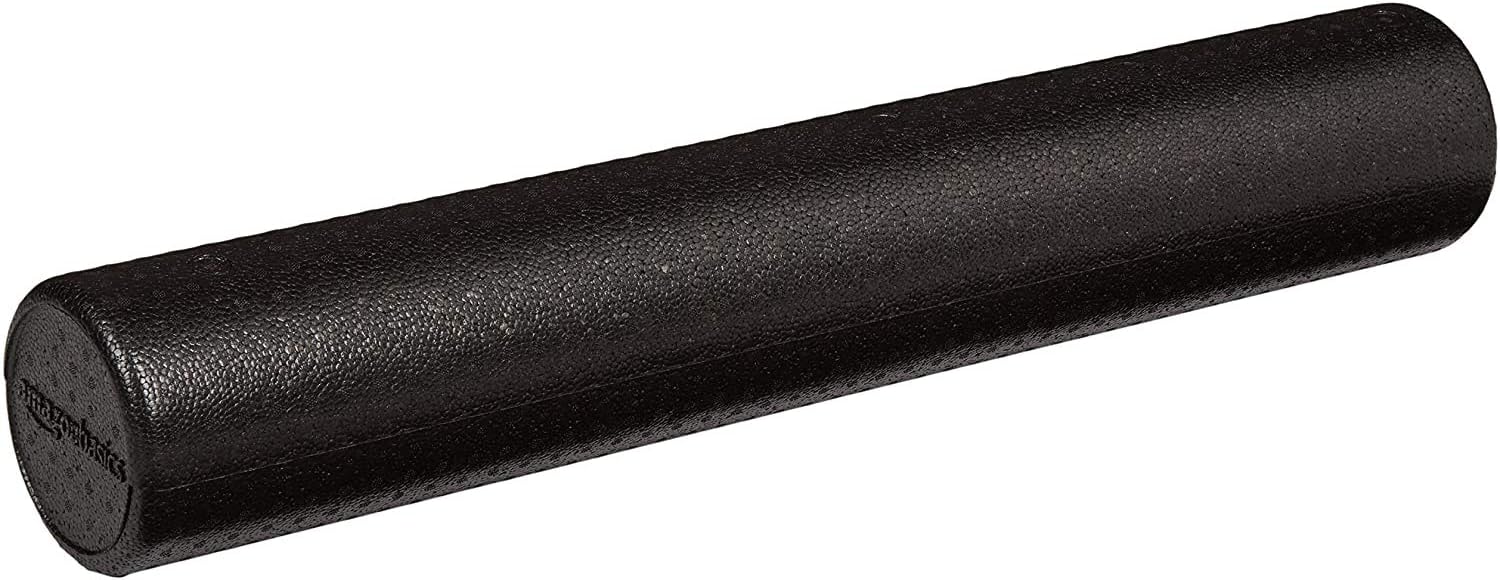
Quick Verdict: Our top pick is the Amazon Basics High-Density Round Foam Roller (Best Foam Roller) — Amazon Basics High-Density Foam Roller — 31K reviews, the most trusted entry-level roller at $20. Priced at $20.69.
Quick verdict: Start with a foam roller ($15-25). It covers the large lower-body muscles (quads, hamstrings, IT band, calves) and the thoracic spine better than a massage gun.
Who This Guide Is For
This guide is for you if:
- You're starting to take supplements and want to know which ones have real evidence behind them
- You're spending money on supplements and want to make sure you're getting actual benefit
- You want to understand certifications (USP, NSF, GMP) before buying
Skip this guide if:
- You have a diagnosed nutritional deficiency — those decisions need doctor supervision
- You're already supplementing strategically and know your biomarkers — this is for people starting from zero
What Each Tool Actually Does
Foam rollers and massage guns both address myofascial restriction and delayed onset muscle soreness (DOMS), but through different mechanisms and for different muscle areas. Understanding the difference tells you which to buy first.
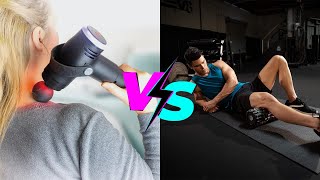
Foam roller: Applies sustained compression over a large contact surface. You use bodyweight to control pressure. Works by directly compressing tissue (mechanical effect) and stimulating mechanoreceptors that reduce muscle tension (neurological effect). Best for large, accessible muscle groups where you can comfortably position your bodyweight.

Massage gun: Delivers rapid percussive impacts (typically 1,200-3,200 percussions per minute) at targeted points. Can be self-applied to areas that a foam roller cannot reach. Works on trigger points — specific knotted areas within a muscle — and can penetrate deeper with concentrated impact than broad foam pressure.
Neither is universally superior. They have different optimal use cases, and a complete recovery toolkit uses both.
How We Chose
We researched dozens of options, analyzed thousands of verified reviews on Amazon and Reddit, and cross-referenced expert recommendations from Examine.com evidence database, Labdoor supplement testing, and ConsumerLab.com. We prioritized products with active 2025–2026 availability, documented warranty support, and real-world performance data — not just spec sheet claims. Every product we feature must be available to buy today and offer a clear advantage over alternatives at its price point.

Where Each Tool Works Best
Foam Roller Wins
- Quadriceps: Lying face-down and rolling the full front of the thigh is practical and effective. A massage gun applied to the same area requires an awkward angle or a partner.
- IT band (outer thigh): The long lateral compression a foam roller provides is difficult to replicate with a massage gun head.
- Hamstrings: Seated rolling with bodyweight allows you to roll the full length of the hamstring systematically.
- Thoracic spine (mid-back): Extending over a foam roller perpendicular to the spine for segment-by-segment mobility is a technique that massage guns cannot replicate.
- Calves: Sustained compression along the calf length is faster and more comfortable with a roller than a percussive gun.
- Glutes/piriformis: The seated figure-4 position on a roller applies excellent pressure to the piriformis — a common source of lower back pain in desk workers.
Massage Gun Wins
- Shoulders and upper traps: These areas are nearly impossible to foam roll. A massage gun reaches them directly.
- Neck and upper back (between shoulder blades): Floor rolling does not effectively reach the rhomboids and mid-traps. A massage gun applied there is highly effective.
- Forearms and hands: Desk workers with forearm tightness or grip fatigue get no benefit from a foam roller; a massage gun provides targeted relief.
- Trigger points anywhere: Isolated, knotted points within any muscle respond better to the focused percussive impact of a massage gun than the broad compression of a roller.
- Pre-workout activation: Brief (15-30 second) massage gun application before lifting increases local blood flow and neural activation faster than foam rolling. Useful for warming up a specific area before heavy compound movements.
- Seated or standing use: Foam rolling requires getting on the floor. A massage gun works standing, seated, or anywhere — more practical at a desk or between training sessions.
The Cost Comparison
A high-quality foam roller costs $15-25. A quality massage gun costs $50-300. This cost difference changes the calculus for most people:
- If you can only buy one tool: foam roller first. It covers more muscle groups, requires no charging, and costs $15.
- If budget allows for both: add a $50-65 massage gun after the roller. Together they cover every major muscle group.
- Premium massage guns ($200-300): the Theragun Prime has higher amplitude (deeper tissue penetration), quieter operation, and better ergonomics. Worth the premium for serious athletes with specific deep tissue needs; overkill for recreational users.
Price vs. Performance in Massage Guns
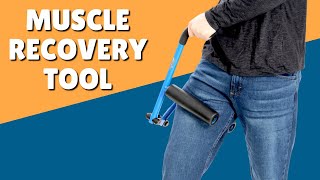
The massage gun market has significant price stratification with diminishing clinical returns above $100:
Budget ($50-70): RENPHO, BOB AND BRAD, and similar brands deliver adequate percussion for most post-workout recovery needs. Typical specs: 1,200-3,200 PPM, 10-12mm amplitude, 5 speeds, USB-C charging. Work well for casual to regular gym users.
Mid-range ($100-150): Improved build quality, more consistent motor performance, longer battery life, lower noise. Brands like Hyperice Venom, Ekrin Athletics in this tier.
Premium ($200-400): Theragun/Therabody, Hyperice Hypervolt Plus. Theragun's key differentiator is amplitude — the Theragun Prime has 16mm amplitude versus 10-12mm for budget guns. More amplitude means the head travels further into the tissue per strike, reaching deeper muscle layers. Genuinely useful for dense muscle groups (glutes, hamstrings) in serious athletes. Also quieter motor and better ergonomic handle angle for self-use. Research published in the Journal of Sports Science & Medicine shows percussion therapy at higher amplitudes has greater effect on reducing muscle fiber tension.
See our comparisons: Best Massage Guns 2026 | Best Massage Guns Under $50 | RENPHO vs Hyperice | Theragun vs Hypervolt | Best Percussion Massagers
At a Glance


Showing 3 of 3 products
Amazon Basics High-Density Round Foam Roller
“Amazon Basics Foam Roller is the best budget option — reliable high-density foam at the lowest price, perfect for beginners.”
See Today’s Price →What we like
- Under $16 lowest price from reliable brand
- High-density EPE foam maintains shape
- 12, 18, and 36-inch sizes available
- Multiple color options
- Amazon Basics quality assurance
Watch out for
- Smooth surface only
- Less pressure than TriggerPoint
- Compresses with heavy daily use over time
Read Full Analysis
Amazon Basics High-Density Round Foam Roller is the recommended starting point for anyone building a recovery toolkit. At $20.69, it costs one-third of the cheapest quality massage gun and covers more muscle groups more effectively than any percussive device can. The high-density construction maintains firmness under consistent use — soft foam rollers compress within months and stop providing adequate pressure. The smooth surface applies even compression across the full contact area, appropriate for all users from beginners to advanced. Multiple length options are available; the 18-36 inch range covers full-length leg rolling in a single pass. High plaque of verified reviews at 4.6 stars confirms consistent quality across production batches. The correct use: roll slowly (1 inch per second), pause on tender spots for 5-10 seconds, 60-90 seconds per muscle group. The most common mistake is rolling too fast — speed eliminates the neurological relaxation response that makes foam rolling effective. Buy this before any massage gun. Use it for 4-6 weeks to identify the specific areas that need more targeted work. Then you will know exactly what muscle groups to target with a massage gun.
BOB AND BRAD Q2 Mini Pocket-Sized Percussion Massage Gun
“The best budget massage gun — delivers genuine percussion therapy at $50, small enough to fit in a laptop bag.”
See Today’s Price →What we like
- $49 — fraction of premium brand prices
- Pocket-sized form factor for travel
- USB-C charging
- 4 speed settings and 4 attachments included
Watch out for
- Lower amplitude and stall force than premium brands
- Less battery life (up to 5 hours vs 10+ for premium guns)
- Build quality shows at this price point — not for daily heavy use
Read Full Analysis
BOB AND BRAD Q2 Mini Pocket-Sized Percussion Massage Gun addresses the portability gap in standard massage guns. At a fraction of the size of full-size guns (fits in a jacket pocket or small gym bag compartment), the Q2 Mini delivers legitimate percussion therapy for on-the-go use: between sets at the gym, at a desk, in a car, or when traveling. Despite the miniature form factor, it delivers meaningful percussion for shoulder, upper trap, and forearm work where the gun needs to be held at awkward angles — areas where the lighter weight of a mini gun is a practical advantage over a heavier full-size model. The 4.6-star rating from 15,100 reviews is the highest rating among the massage guns on this page. BOB AND BRAD is a physical therapist-founded brand, which informs the practical design decisions in their products. The main trade-off versus a full-size RENPHO: less amplitude and lower max speed, which limits effectiveness on large, dense muscle groups like glutes and hamstrings. Use a mini gun for targeted upper body and trigger point work; a full-size gun or foam roller for large lower body groups.
Theragun Prime 4th Generation Percussion Massage Gun
“The benchmark massage gun — 16mm amplitude delivers deeper muscle penetration than any competitor at this price.”
See Today’s Price →What we like
- 16mm amplitude penetrates deeper than 12mm standard
- Triangular handle reaches back, neck, and hamstrings solo
- Bluetooth app with sport-specific recovery protocols
- 5 speed settings from 1,750-2,400 RPM
Watch out for
- Louder than Hypervolt equivalents
- $299 is premium pricing
- Heavy at 2.2 lbs for extended use
Read Full Analysis
Theragun Prime 4th Generation Percussion Massage Gun is the reference product for professional-grade percussive therapy, and the amplitude difference is its genuine differentiator. The Theragun Prime delivers 16mm of depth per stroke — 40-60% more than most budget guns. Research published in the Journal of Sports Science & Medicine shows percussion therapy at higher amplitudes has greater effect on reducing muscle fiber tension, particularly in dense, large muscle groups. At elite training loads where hamstrings and glutes accumulate significant post-session tension, this amplitude advantage is functionally meaningful. The ergonomic angled handle is specifically designed for self-application at awkward angles — reaching the mid-back, glutes, and hamstrings without a training partner. Five built-in speeds (1,750-2,400 PPM), quieter motor than its predecessors (reduced from 70+ dB to under 65 dB), and Bluetooth connectivity to the Therabody app for guided routines. At $299, the premium is substantial. Justified for: serious athletes training 5+ days per week, physical therapy recovery contexts, and people who have used budget guns and specifically want deeper tissue penetration. For recreational gym-goers training 3x/week, the RENPHO delivers adequate recovery at one-fifth the cost.
Frequently Asked Questions
Should I buy a massage gun or a foam roller first?
What does a massage gun do that a foam roller cannot?
Is a $300 Theragun worth the premium over a $60 massage gun?
How long should I use a massage gun on each area?
Can I foam roll every day?
Can massage guns cause injury?
How We Analyze Products
We analyze Amazon review data — often thousands of reviews per product — to surface patterns that individual buyers miss. Our process aggregates star ratings, review counts, and buyer sentiment at scale, identifying which strengths and weaknesses appear consistently across the largest review samples available. The 134,781+ reviews analyzed on this page represent real verified-purchase feedback from Amazon buyers.
Each product earned its placement through data: total review volume, average rating, and the specific praise and complaints that repeat most often across buyers. No manufacturer paid for placement on this page. Products appear here because buyers endorsed them at scale, not because a company asked us to feature them.
We use AI to summarize review sentiment — not to fabricate opinions, but to condense what thousands of buyers actually wrote into a readable format. The pros and cons you see reflect the most common themes found in verified purchaser reviews, paraphrased for clarity. We do not claim to have accessed Reddit, YouTube, or specific publications in generating these summaries.
Prices shown reflect Amazon pricing at the time this page was last generated. Click “See Today’s Price” to get the current live price on Amazon. Read our full methodology →