How to Choose a Protein Powder That Matches Your Goals (2026)
If you train regularly and struggle to hit 0.7-1g of protein per pound of bodyweight from food, a whey protein concentrate is the most cost-effective starting point. If you are vegan or lactose-intolerant, a pea+rice blend plant protein works equally well for most goals. If you are not training intensively, food is sufficient and powder is optional.
How to Choose a Protein Powder That Matches Your Goals (2026) Buying Guide
 Photo by www.kaboompics.com / Pexels
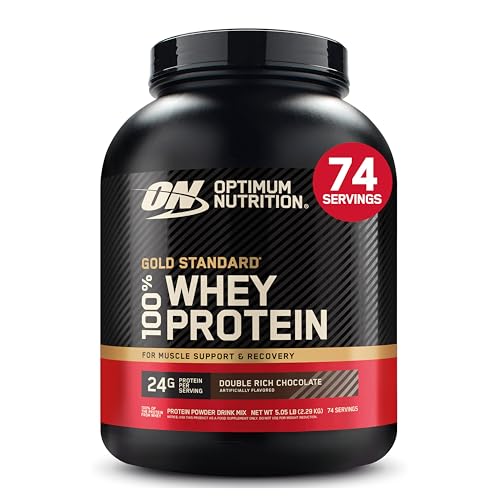
Quick Verdict: Our top pick is the Optimum Nutrition Gold Standard 100% Whey Protein Powder (Best Whey Concentrate) — ON Gold Standard is the benchmark — 24g protein per scoop, Informed Sport certified, 95K reviews. Priced at $73.25.
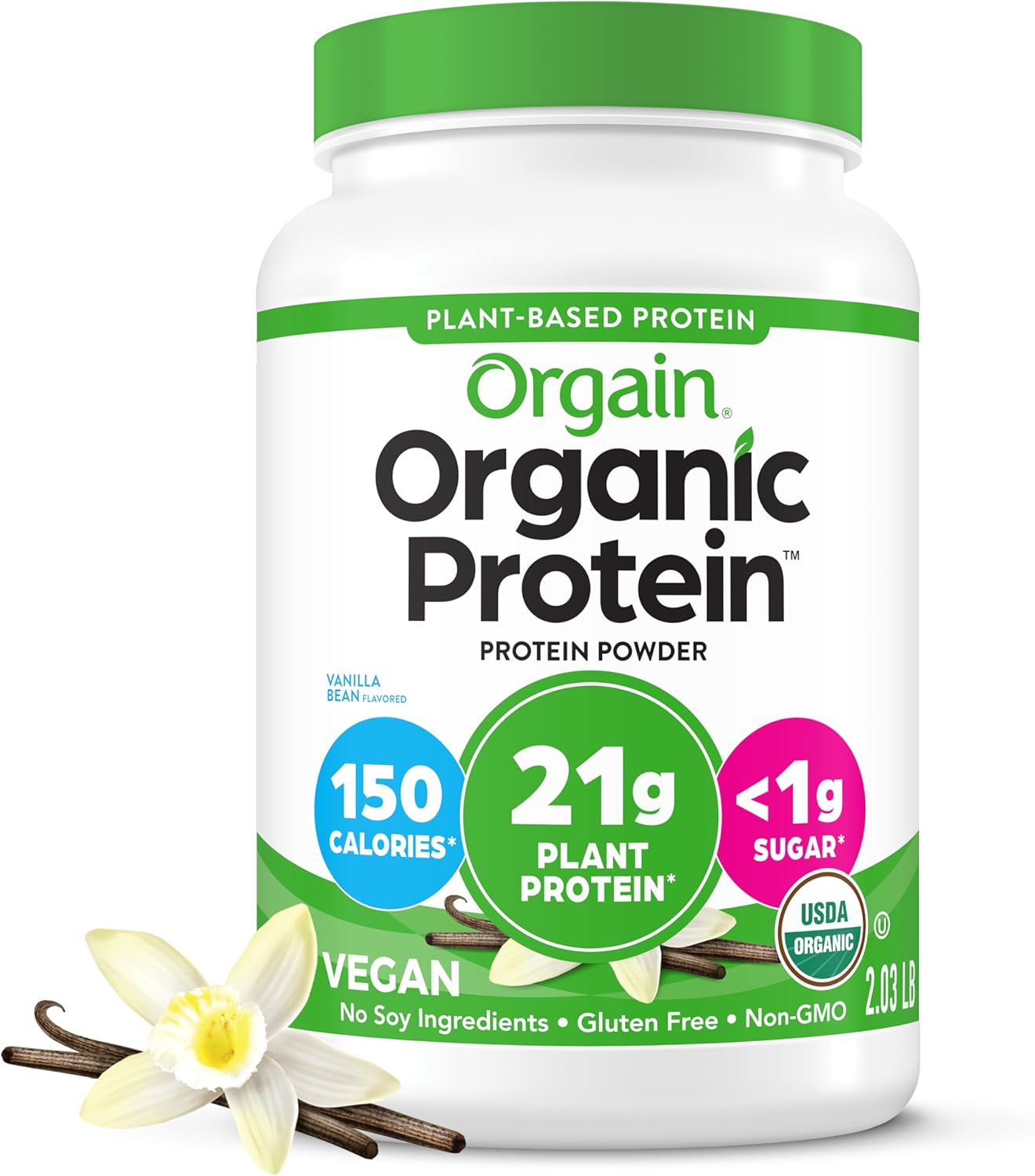
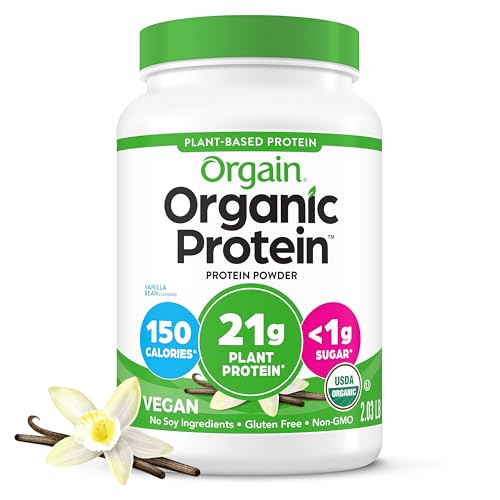
Budget Pick: The Orgain Organic Plant Based Protein Powder at $29.97 — Orgain Organic Protein uses a pea-rice-chia blend for a complete amino profile — USDA organic, no artificial anything....
Great for: Athletes and gym-goers struggling to hit daily protein targets from food alone, and post-workout recovery prioritizers

Not ideal if: You already hit 0.7-1g of protein per pound of bodyweight from food — supplementation adds calories without much benefit
Quick verdict: If you train regularly and struggle to hit 0.7-1g of protein per pound of bodyweight from food, a whey protein concentrate is the most cost-effective starting point. If you are vegan or lactose-intolerant, a pea+rice blend plant protein works equally well for most goals.
Do You Actually Need Protein Powder?
The honest starting point: most people eating regular meals with meat, eggs, dairy, or legumes are already hitting adequate protein intake for their activity level. The NIH Dietary Reference Intake for protein is 0.8g per kilogram of bodyweight for sedentary adults — that is 58g for a 160 lb person, easily achievable without supplements.

The threshold changes when you are training for muscle gain or body composition. The International Society of Sports Nutrition (ISSN) position stand on protein sets 1.4-2.0g per kg per day as optimal for people doing resistance training — roughly 100-145g for a 160 lb person. Getting there from food alone requires deliberate planning: 3-4 substantial protein-containing meals daily. For people with busy schedules, high training volume, or poor appetite post-workout, protein powder fills genuine gaps efficiently.
The honest answer: if you are sedentary or lightly active, you probably do not need it. If you train 3+ days per week and care about body composition, it is a cost-effective tool. If you are a recreational exerciser who eats reasonably, it is optional insurance.
How We Chose
We researched dozens of options, analyzed thousands of verified reviews on Amazon and Reddit, and cross-referenced expert recommendations from Examine.com evidence database, Labdoor supplement testing, and ConsumerLab.com. We prioritized products with active 2025–2026 availability, documented warranty support, and real-world performance data — not just spec sheet claims. Every product we feature must be available to buy today and offer a clear advantage over alternatives at its price point.
The Four Main Protein Types — Matched to Use Case
Whey Protein: The Default for Most People
Whey is a byproduct of cheese manufacturing, high in essential amino acids, and the most studied protein supplement in sports nutrition. It digests in 1-2 hours, making it the standard post-workout choice for maximizing the muscle protein synthesis window after training.
Within whey, there are three grades:
- Whey concentrate (WPC): 70-80% protein by weight, lower cost, retains some lactose and fat. Best for most people. ON Gold Standard is a concentrate-dominant blend.
- Whey isolate (WPI): 90%+ protein by weight, lactose nearly eliminated, higher cost. Best for lactose-sensitive users or those tracking macros tightly. Dymatize ISO100 is a pure isolate.
- Hydrolyzed whey: Pre-digested for faster absorption. Minimal advantage over isolate for most use cases at meaningfully higher cost.
Who should use whey: Anyone who tolerates dairy, trains regularly, and wants the best research-backed post-workout protein at a reasonable cost. See: Best Whey Protein Powders 2026
Who should avoid whey: Vegans, people with diagnosed dairy allergies (not just lactose intolerance — isolate often works for the latter), or those who find dairy protein causes GI distress.
Casein: For Slow Release and Satiety
Casein is the other dairy protein — it forms a gel in the stomach and digests over 5-7 hours rather than 1-2 hours. The use case is specific: pre-sleep protein to maintain muscle protein synthesis overnight, or as a meal replacement when sustained satiety matters more than post-workout speed.
Research from Medicine & Science in Sports & Exercise shows pre-sleep casein supplementation increases overnight muscle protein synthesis. The effect is modest but real for people in a calorie surplus aiming for muscle gain.
Who should use casein: Serious athletes who have already optimized their post-workout whey intake and want to address overnight recovery. People who want a thick, filling protein pudding-style shake for satiety.
Who can skip casein: Casual exercisers. The timing and slow-release benefits are only meaningful when the rest of your protein intake and training are already dialed in.
Plant Protein: Not a Compromise Anymore
Plant proteins have genuinely improved. The historical objection — incomplete amino acid profiles — is addressed by blending pea protein (high in most essential AAs, low in methionine) with rice protein (complements the profile). The result is a complete protein that research now shows produces equivalent muscle protein synthesis responses to whey in equal doses.
A 2019 study published in Sports found no significant difference in muscle gain between whey and pea protein in resistance-trained men over 12 weeks. This was a quality peer-reviewed trial, not a manufacturer-funded study.
Who should use plant protein: Vegans, people with dairy allergies, anyone who prefers plant-based nutrition, or people who simply prefer the taste and digestibility of plant protein.
Realistic trade-offs: Texture is earthier and grainier than whey. Blending with plant-based milk improves palatability significantly over water mixing. Some people find plant protein harder to digest if they have existing gut sensitivities to legumes.
See our comparisons: Best Vegan Protein Powders 2026 | ON vs Dymatize 2026 | Garden of Life vs Dymatize 2026
Collagen Peptides: A Different Tool
Collagen protein is not interchangeable with whey or plant protein for muscle building. It is low in essential amino acids and leucine — the primary driver of muscle protein synthesis. Its value is in the unique glycine-proline-hydroxyproline profile that supports connective tissue, skin, hair, and joint health.
Use collagen as an add-on to your regular protein intake, not as a replacement. Adding 10-15g to morning coffee or a smoothie is a low-effort way to supplement connective tissue support without affecting your regular protein strategy.
See: Best Collagen Supplements 2026 | Best Collagen Peptides Powder 2026
At a Glance
Showing 3 of 3 products
Optimum Nutrition Gold Standard 100% Whey Protein Powder
“Gold Standard is the benchmark whey protein — 180,000+ Amazon ratings, the best-tasting mainstream whey, and 24g protein per serving at a competitive cost-per-gram.”
See Today’s Price →What we like
- #1 best-selling whey protein on Amazon for 15+ years
- 24g protein per serving, 5.5g BCAAs
- Mixes clean — no clumping, no grit
- Available in 20+ flavors
Watch out for
- Whey concentrate blend (not isolate-only)
- Price has risen — now $73 for 5 lbs
Read Full Analysis
Optimum Nutrition Gold Standard 100% Whey is the reference product in the protein powder category — if a protein powder is being compared to something, it is usually compared to this. Each serving delivers 24g protein from a blend of whey isolate, concentrate, and peptides, with 5.5g naturally occurring BCAAs and 4g glutamine. Informed Sport certified means every batch is independently tested for banned substances and label accuracy. Third-party testing is the most important quality signal in the supplement market, and ON delivers it at a commodity price point. At approximately $1.25-1.50 per serving for larger bag sizes, this is the best cost-per-gram value among certified whey proteins. Flavor range is extensive and consistently well-reviewed — Double Rich Chocolate and Extreme Milk Chocolate are perennial top-sellers. Mixability is excellent: dissolves in 30 seconds in a shaker with water, no clumping. The primary protein source is whey concentrate, which means people with significant lactose sensitivity may prefer a pure isolate. For the majority of users who tolerate dairy, this remains the standard recommendation across sports nutrition communities and expert review sites.
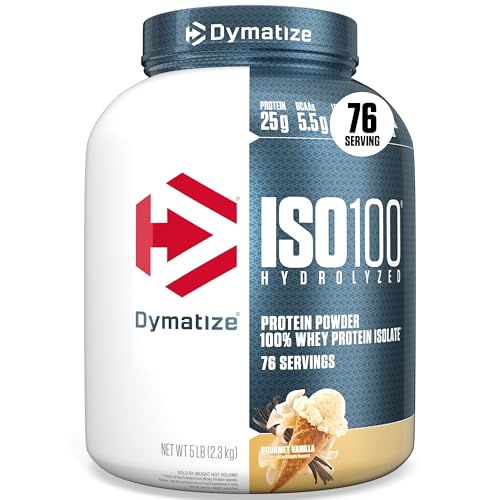
Dymatize ISO100 Hydrolyzed Whey Protein Isolate Gourmet Vanilla 5 lbs
“Best protein powder for weight loss macros. 25g hydrolyzed isolate at 110 calories is the gold standard macro profile for calorie-controlled cutting phases.”
See Today’s Price →What we like
- 25g hydrolyzed whey isolate per serving
- Under 110 calories, under 1g fat, under 1g sugar
- Fastest digesting protein form available
- NSF Certified for Sport available
Watch out for
- Higher price at $0.86/serving
- Not dairy-free
- Thin texture compared to concentrate blends
Read Full Analysis
Dymatize ISO100 Hydrolyzed Whey Protein Isolate is the correct choice when purity and fast absorption are the priority over cost. The 100% hydrolyzed whey isolate formulation means it has been pre-digested into smaller peptides for maximum absorption speed, nearly zero fat (0.5g), minimal carbohydrates (2g), and lactose virtually eliminated. Each serving delivers 25g of the cleanest available whey protein. The hydrolysis process also improves solubility — ISO100 is remarkably easy to mix, dissolving instantly even in minimal water. Flavor quality is excellent; the licensed Fruity Pebbles and Fudge Brownie variants are genuinely good. Informed Sport certified. The trade-off is direct: ISO100 costs significantly more per serving than concentrate products like ON Gold Standard. The premium is justified for people with lactose sensitivity that concentrate aggravates, serious athletes tracking macros precisely, or anyone who simply wants the cleanest possible protein profile. For casual gym-goers, the concentrate-to-isolate upgrade does not produce meaningfully different results at the added cost.
Orgain Organic Plant Based Protein Powder
“The most approachable plant protein for weight loss — gentle flavor, clean ingredients, and widely available in stores for easy replenishment.”
See Today’s Price →What we like
- 21g protein from pea, brown rice, and chia
- Certified organic and non-GMO
- Mild vanilla flavor works in water
- Reasonable price point for organic protein
Watch out for
- Lower protein per serving vs whey isolates
- Slightly sweet from natural sweeteners
Read Full Analysis
Orgain Organic Protein Plant Based Protein Powder delivers 21g protein per serving from a certified-organic blend of pea protein, brown rice protein, and chia seeds — a combination that produces a complete amino acid profile (all 9 essential amino acids). This directly addresses the historical weakness of plant proteins: incomplete EAA profiles. The ingredient list is clean: USDA organic certified, non-GMO verified, no artificial colors, flavors, or sweeteners. Each serving also includes 5g dietary fiber, which slows digestion and adds gut health benefit beyond the protein. The honest texture note: plant proteins are earthier and grainier than whey by nature. The experience improves significantly when blended with almond milk rather than water. Creamy Chocolate Fudge is the most popular flavor and does the best job masking the earthy base. At approximately $1.60-2.00 per serving depending on size, it is competitively priced for a certified-organic product. Over 60,000 verified reviews at 4.5 stars confirm broad satisfaction. The right choice for vegans, dairy-avoiders, and anyone who simply prefers plant-based nutrition — not a compromise, a different tool.
Frequently Asked Questions
How much protein do I actually need per day?
Is plant protein as effective as whey for building muscle?
What is the difference between whey concentrate and whey isolate?
Does protein timing matter — do I need to drink it right after working out?
How do I know if a protein powder is third-party tested?
Is collagen protein good for building muscle?
Why does plant protein powder taste different from whey?
How We Analyze Products
We analyze Amazon review data — often thousands of reviews per product — to surface patterns that individual buyers miss. Our process aggregates star ratings, review counts, and buyer sentiment at scale, identifying which strengths and weaknesses appear consistently across the largest review samples available. The 177,077+ reviews analyzed on this page represent real verified-purchase feedback from Amazon buyers.
Each product earned its placement through data: total review volume, average rating, and the specific praise and complaints that repeat most often across buyers. No manufacturer paid for placement on this page. Products appear here because buyers endorsed them at scale, not because a company asked us to feature them.
We use AI to summarize review sentiment — not to fabricate opinions, but to condense what thousands of buyers actually wrote into a readable format. The pros and cons you see reflect the most common themes found in verified purchaser reviews, paraphrased for clarity. We do not claim to have accessed Reddit, YouTube, or specific publications in generating these summaries.
Prices shown reflect Amazon pricing at the time this page was last generated. Click “See Today’s Price” to get the current live price on Amazon. Read our full methodology →