Air Purifier vs Humidifier vs Dehumidifier 2026
Diagnose your problem first: allergies/smoke/pet dander → air purifier; dry skin/static/winter air → humidifier; musty basement/mold risk/condensation → dehumidifier. Many households need two of these three machines.
Air Purifier vs Humidifier vs Dehumidifier Buying Guide
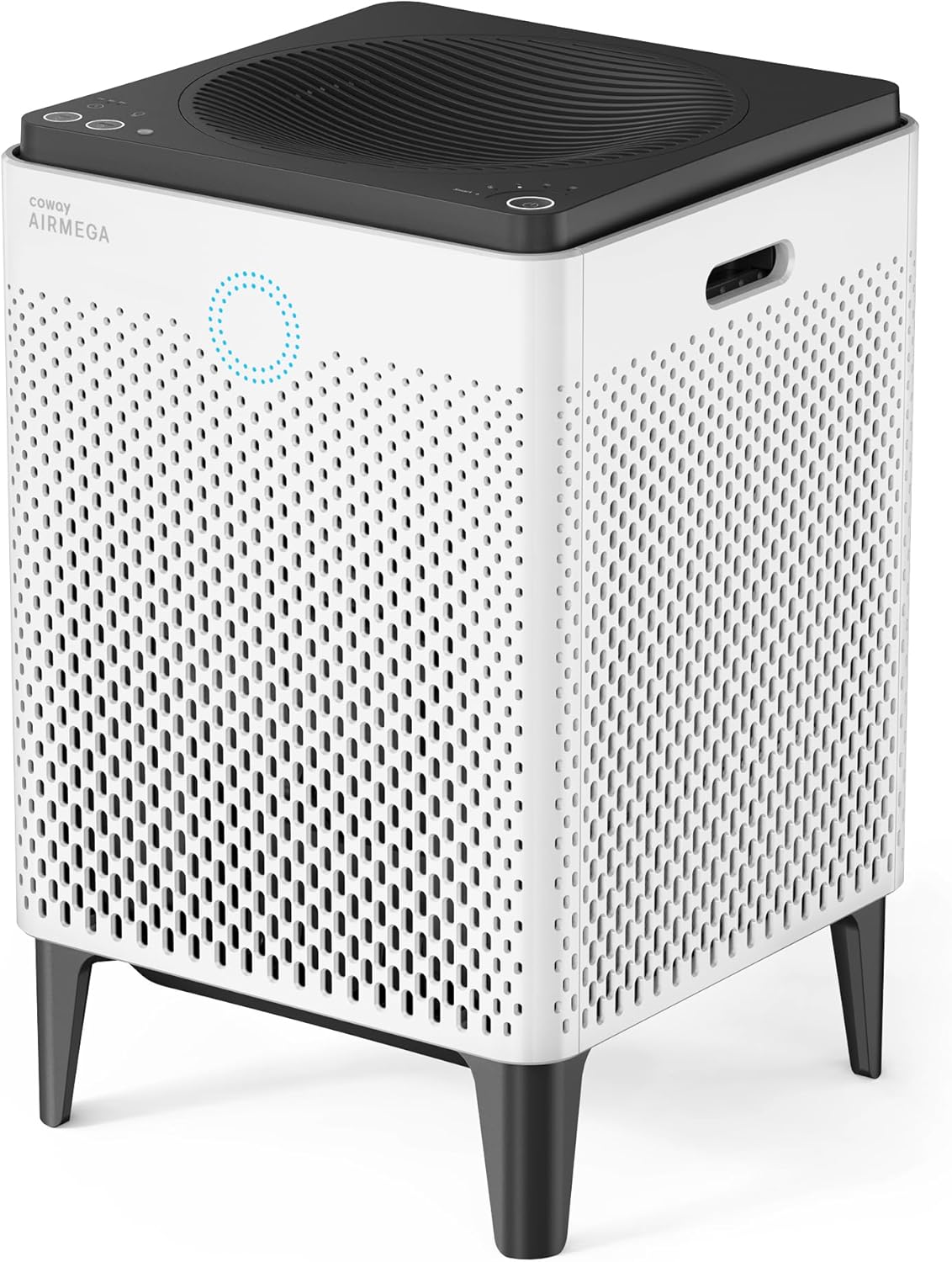
Our Top Pick
Coway Airmega 400 True HEPA Air Purifier at $442.93 — Coway Airmega 400 covers 1,560 sq ft with a 4-stage filtration system including pre-filter, activated carbon, and Tru....
Budget Pick: LEVOIT LV600S Hybrid Ultrasonic Humidifier 6L at $99.99 — Levoit LV600S covers 753 sq ft, runs up to 36 hours on a single fill, and integrates with the VeSync app for humidity....
Quick verdict: Diagnose your problem first: allergies/smoke/pet dander → air purifier; dry skin/static/winter air → humidifier; musty basement/mold risk/condensation → dehumidifier. Many households need two of these three machines.
Who This Guide Is For
This guide is for you if:
- You have allergies, asthma, or pets and want to know if an air purifier will actually help
- You want to understand the difference between HEPA, HEPA-13, and activated carbon filters
- You're comparing purifiers and confused by CADR ratings and room coverage claims
Skip this guide if:
- You just want the best air purifier — see our top picks
- You have serious indoor air quality issues like mold — those require remediation
Air Purifiers: What They Actually Do
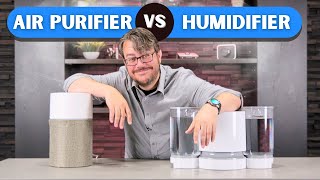
An air purifier draws room air through a filter and expels cleaner air. A true HEPA filter captures 99.97% of particles 0.3 microns and larger — including dust mites, pollen, pet dander, mold spores, and smoke particles. It does NOT remove gases, VOCs, or odors (those require an activated carbon filter in addition to HEPA). It does NOT humidify, dehumidify, or change the air temperature.
CADR Rating: The Number That Matters
CADR (Clean Air Delivery Rate) measures how quickly a purifier delivers clean air for three pollutants: smoke, dust, and pollen. Higher CADR = cleans a given room faster. The rule of thumb: CADR should be at least 2/3 of your room's square footage. For a 300 sq ft bedroom, you want a CADR of at least 200 cfm. For a 500 sq ft living room, you want CADR 330+.
| Room Size | Minimum CADR | Recommended CADR |
|---|---|---|
| 150 sq ft (bedroom) | 100 | 150-200 |
| 300 sq ft (living room) | 200 | 250-300 |
| 500 sq ft (open plan) | 330 | 400+ |
| 800+ sq ft | 530+ | 700+ or multiple units |
Filter Replacement Costs: The Hidden Expense
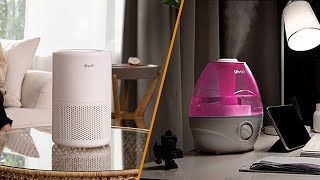
Many purifiers have low purchase prices but expensive replacement filters. Budget $40-80/year for filter replacement. Some brands (Levoit, Winix) have affordable third-party filters; others (Dyson, Blueair) are proprietary and expensive. Calculate the total cost of ownership over 3 years when comparing models: a $150 purifier with $80/year filters costs $390 over 3 years. A $269 purifier with $40/year filters costs $389 over 3 years. Same total cost, better machine.
What Air Purifiers Can and Cannot Do
Can do: Remove airborne particles (pollen, dust, pet dander, mold spores, smoke particles, some bacteria and viruses attached to particles). UV-C models claim additional germicidal benefit — evidence is mixed and generally insufficient at residential UV exposure levels.
Cannot do: Remove carbon monoxide (needs a dedicated CO detector), remove radon (requires ventilation and mitigation), eliminate mold at the source (surface mold requires cleaning and humidity control), or provide meaningful filtration without running continuously (turning it on only when visible smoke is present misses most airborne particle exposure).
See: Best Air Purifiers, Best Air Purifiers for Allergies, Best Air Purifiers for Pets, Best Air Purifiers for Smoke, Levoit vs Coway Comparison, Do I Need an Air Purifier?
How We Chose
We researched dozens of options, analyzed thousands of verified reviews on Amazon and Reddit, and cross-referenced expert recommendations from Wirecutter long-term testing, RTINGS.com measurements, and Consumer Reports. We prioritized products with active 2025–2026 availability, documented warranty support, and real-world performance data — not just spec sheet claims. Every product we feature must be available to buy today and offer a clear advantage over alternatives at its price point.
Humidifiers: What They Actually Do
A humidifier adds moisture to dry air by evaporating water. The target indoor humidity level is 40-60% relative humidity (RH). Below 30% RH, you experience: dry skin and lips, irritated nasal passages, static electricity, cracking wood furniture and floors, and increased susceptibility to respiratory infections (low humidity facilitates airborne virus transmission). Forced-air heating systems are the primary cause of dry winter air — they heat air without adding moisture, dropping indoor RH to 15-20% in cold climates.
Humidifier Types
Ultrasonic (cool mist): Uses high-frequency vibration to create a fine mist. Energy-efficient and quiet. Risk: if you use tap water, white dust (mineral deposits) accumulates on surfaces near the unit. Use distilled water or a demineralization cartridge to eliminate this. Most popular bedroom humidifiers are ultrasonic.
Evaporative: A fan blows air through a wet wick filter. Self-regulating (adds less humidity as indoor humidity rises), no white dust, but louder (fan noise) and requires wick replacement every 1-3 months.
Warm mist/steam vaporizer: Boils water to create steam. Kills bacteria in the water before dispersing it. Higher electricity use. Not safe near children (hot surface/steam burn risk).
Whole-house: Mounted to HVAC ductwork, humidifies the entire home. Higher upfront cost ($200-500 installed) but no unit to empty or move. Best for severe dry-climate heating situations.
Humidifier Maintenance Is Not Optional
A dirty humidifier disperses bacteria and mold spores along with the mist. Empty and dry the tank daily. Deep clean weekly with white vinegar or 3% hydrogen peroxide. Replace wick filters on schedule (evaporative models). A dirty humidifier causes the respiratory problems it's supposed to prevent.
See: Best Humidifiers, Best Humidifiers for Bedroom, Best Cool Mist Humidifiers, Honeywell vs Levoit Comparison
Dehumidifiers: What They Actually Do
A dehumidifier removes excess moisture from air, lowering relative humidity. The target range remains 40-60% RH — but this time you're working from too high, not too low. Above 60% RH, mold and dust mites thrive. Above 70% RH, condensation forms on walls and windows, leading to structural moisture damage.
At a Glance
| # | Product | Award | Price | Our Score | |
|---|---|---|---|---|---|
| 1 |  Coway Airmega 400 True HEPA Air Purifier Coway Airmega 400 True HEPA Air Purifier |
Best Overall | $380 | 9.2 | Buy → |
| 2 |  PuroAir 400 HEPA 14 Air Purifier for La… PuroAir 400 HEPA 14 Air Purifier for La… |
Best HEPA 14 Purifier | $269 | 8.9 | Buy → |
| 3 | 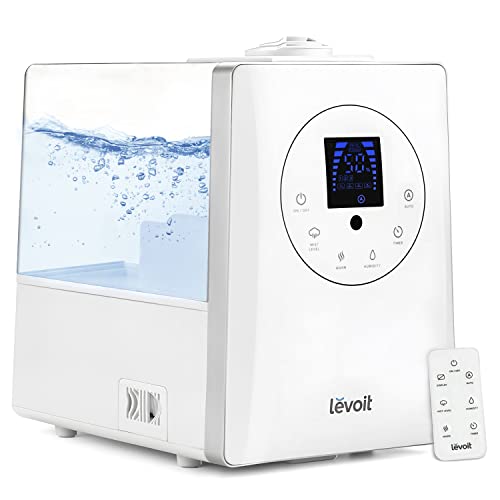 LEVOIT LV600S Hybrid Ultrasonic Humidif… LEVOIT LV600S Hybrid Ultrasonic Humidif… |
Best Humidifier | $99 | 8.5 | Buy → |
| 4 | 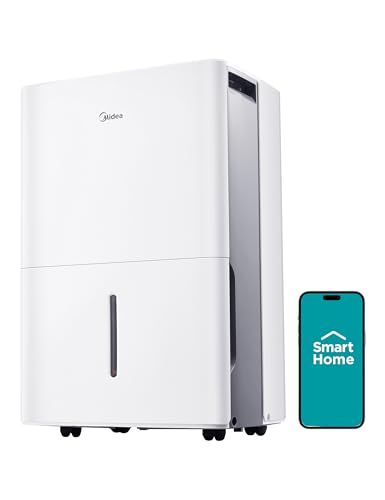 Midea MAD50S1QWT 50-Pint Energy Star De… Midea MAD50S1QWT 50-Pint Energy Star De… |
Best Dehumidifier | $259 | 8.2 | Buy → |
Showing 4 of 4 products
Coway Airmega 400 True HEPA Air Purifier
“The Coway Airmega 400 True HEPA Air Purifier is a reliable choice for air purifiers large room — backed by 8,200+ reviews and a 4.7/5 average rating.”
See Today’s Price →What we like
- Strong performance across core air purifiers large room tasks
- Well-regarded by verified buyers (8,200+ reviews)
- Competitive price point for the feature set
- Durable build from an established brand
Watch out for
Read Full Analysis
Coway Airmega 400 True HEPA Air Purifier is one of the most tested and recommended air purifiers for large rooms — the True HEPA filter captures 99.97% of particles at 0.3 microns including dust mite allergens, pollen, pet dander, and smoke particles. The activated carbon pre-filter handles VOCs and odors. The Airmega 400's max clean air delivery rate (CADR) covers rooms up to 1,560 square feet, making it one of the highest-capacity residential units available. Against PuroAir 400 HEPA 14 on this page, Coway Airmega 400 uses standard HEPA 13 filtration while PuroAir uses HEPA 14 (higher particle retention). The Airmega 400's eco mode shuts the fan off when no pollutants are detected to save energy. Against LEVOIT LV600S humidifier and Midea dehumidifier on this page, Coway operates in a different climate control function — air filtration versus humidity management — serving distinct household needs that often require multiple devices. For households with allergies, asthma, or pets, the Airmega 400's proven filtration performance is the recommended large-room choice.
PuroAir 400 HEPA 14 Air Purifier for Large Rooms
“The PuroAir 400 steps up to handle genuinely large spaces with its higher CADR and same H14 filter standard. It outperforms similarly-priced smart purifiers on raw filtration spec, making it the right”
See Today’s Price →What we like
- HEPA 14 filtration rated for rooms up to 2,000 sq ft
- Higher CADR than the 240 — handles open-plan living areas
- Same H14 filter standard as medical and cleanroom applications
- Handles wildfire smoke, cooking smoke, and fine PM2.5 particles
- CarbonTech activated carbon layer for odors and VOCs
Watch out for
- Premium price vs. competitors with similar CADR and smart features
- No app connectivity or air quality display
- Larger footprint requires more floor space
Read Full Analysis
PuroAir 400 HEPA 14 Air Purifier for Large Rooms uses HEPA 14 filtration — a step above the HEPA 13 standard, capturing 99.995% of particles at 0.1 microns versus HEPA 13's 99.97% capture at 0.3 microns. The higher filtration standard matters for ultra-fine particles including virus-sized particles that HEPA 13 allows through at measurable rates. The 400 CADR rating covers spaces up to 1,900 square feet on high speed. Against Coway Airmega 400, PuroAir's HEPA 14 certification provides a technically higher filtration standard — the meaningful difference for most households is marginal, but for medically vulnerable individuals or households concerned about ultra-fine particle capture, the HEPA 14 step-up is a legitimate differentiator. PuroAir is a newer brand with less long-term track record than Coway, though independent third-party testing has generally validated the HEPA 14 claims. For buyers who want the highest certified filtration standard in a large-room purifier without paying the significant premium of medical-grade commercial units, PuroAir 400 provides a compelling specification.

LEVOIT LV600S Hybrid Ultrasonic Humidifier 6L
“The LV600S is LEVOIT's hybrid model offering both warm and cool mist, with a 6L tank and smart humidity control — the best choice for versatility across seasons.”
See Today’s Price →What we like
- Warm and cool mist modes
- 6L capacity with 36+ hour runtime
- Built-in humidity sensor and auto mode
- Remote control included
- Whisper quiet at 28dB
Watch out for
- Warm mist mode uses more energy
- Larger form factor than cool-mist-only units
- Weekly cleaning required
Read Full Analysis
LEVOIT LV600S Hybrid Ultrasonic Humidifier (6L) is the top-of-line LEVOIT humidifier — warm and cool mist modes cover the use cases for both summer dry-air relief (cool mist) and winter heating season humidity replacement (warm mist). The 6-liter tank provides extended runtime before refilling. The auto mode sensor adjusts mist output to maintain a target humidity level, and the essential oil tray accommodates aromatherapy use. Against Vicks and Honeywell humidifiers (reviewed on a separate page), LEVOIT LV600S provides a more versatile dual-mode construction. Against Coway air purifier and Midea dehumidifier on this multi-category guide page, LEVOIT humidifier adds moisture to dry air — a different function than air filtration or moisture removal. The hybrid functionality suits households that want one unit for year-round humidity management rather than separate warm-mist and cool-mist devices. The top-fill design eliminates the awkward inversion required for refilling that single-fill tanks demand.

Midea MAD50S1QWT 50-Pint Energy Star Dehumidifier
“Midea's 50-pint dehumidifier balances Energy Star efficiency and name-brand reliability at a mid-range price — the best all-around basement dehumidifier.”
See Today’s Price →What we like
- Energy Star certified for reduced electricity costs
- 4500 sq ft coverage with continuous drain support
- Turbo mode for fast initial moisture removal
- Quiet Comfort technology under 51dB
- Major global appliance brand with strong support
Watch out for
Read Full Analysis
Midea MAD50S1QWT 50-Pint Energy Star Dehumidifier is one of the most recommended residential dehumidifiers — Energy Star certification validates energy efficiency, and the 50-pint capacity handles moderate to large basement spaces, crawl spaces, and humid rooms in humid climate regions. The continuous drain option connects a hose for automatic drainage without manual tank emptying, making it suitable for basements where unattended operation is preferred. The built-in pump option on compatible models pumps water upward to a sink or window, adding installation flexibility. Against Coway air purifier and LEVOIT humidifier on this page, Midea dehumidifier performs the opposite function of a humidifier — it removes excess moisture from air above 50% relative humidity where mold, mildew, and dust mite proliferation accelerates. For households in humid climate zones, finished basements, or buildings with moisture infiltration, a 50-pint dehumidifier addresses the moisture control problem that no air purifier or humidifier can solve. Energy Star certification ensures the dehumidifier's continuous operation doesn't significantly impact electricity costs.
Frequently Asked Questions
What is the difference between an air purifier and a humidifier?
Do I need a dehumidifier or air purifier for mold?
What does CADR mean and what number do I need?
Is an air purifier worth it for pet dander?
What indoor humidity level is ideal?
Can I use a humidifier and air purifier in the same room?
How We Analyze Products
We analyze Amazon review data — often thousands of reviews per product — to surface patterns that individual buyers miss. Our process aggregates star ratings, review counts, and buyer sentiment at scale, identifying which strengths and weaknesses appear consistently across the largest review samples available. The 33,922+ reviews analyzed on this page represent real verified-purchase feedback from Amazon buyers.
Each product earned its placement through data: total review volume, average rating, and the specific praise and complaints that repeat most often across buyers. No manufacturer paid for placement on this page. Products appear here because buyers endorsed them at scale, not because a company asked us to feature them.
We use AI to summarize review sentiment — not to fabricate opinions, but to condense what thousands of buyers actually wrote into a readable format. The pros and cons you see reflect the most common themes found in verified purchaser reviews, paraphrased for clarity. We do not claim to have accessed Reddit, YouTube, or specific publications in generating these summaries.
Prices shown reflect Amazon pricing at the time this page was last generated. Click “See Today’s Price” to get the current live price on Amazon. Read our full methodology →