Best Air Purifiers for Allergies (2026)

The Winix 5500-2 is the best air purifier for allergies for most homes — True HEPA filtration, a CADR of 360 covering rooms up to 360 square feet, a washable carbon pre-filter (reduces ongoing costs), and real-time air quality monitoring. For smaller bedrooms (under 220 sq ft), the Coway AP-1512HH provides equivalent HEPA performance at a lower price. For large open-plan spaces, the Levoit Core 300S-P with app monitoring or Dyson TP07 are the better fits.
See Today’s Price →At a Glance
| # | Product | Award | Price | Our Score | |
|---|---|---|---|---|---|
| 1 | 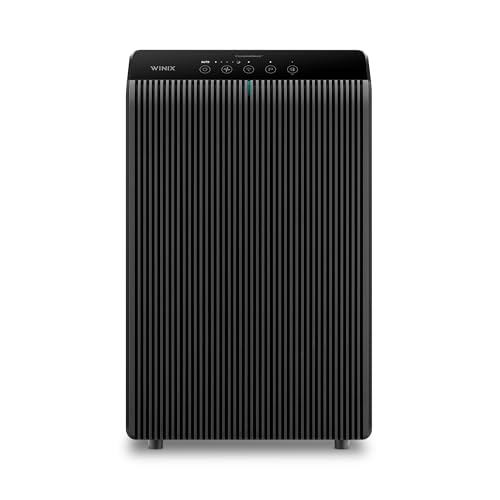 Winix 5510 Air Purifier with True HEPA … Winix 5510 Air Purifier with True HEPA … |
Best Overall | $135 | 9.2 | Buy → |
| 2 | 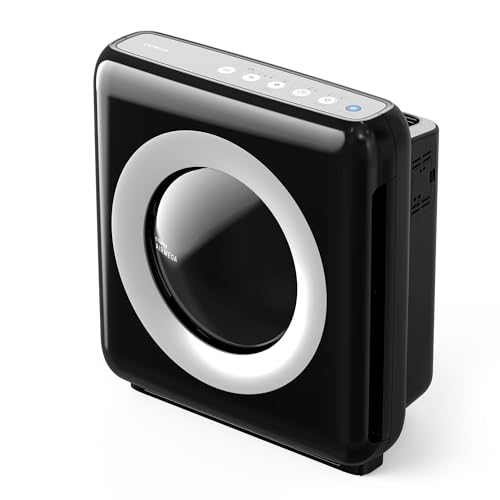 Coway AP-1512HH Mighty Air Purifier wit… Coway AP-1512HH Mighty Air Purifier wit… |
Also Excellent | $153 | 8.9 | Buy → |
| 3 | 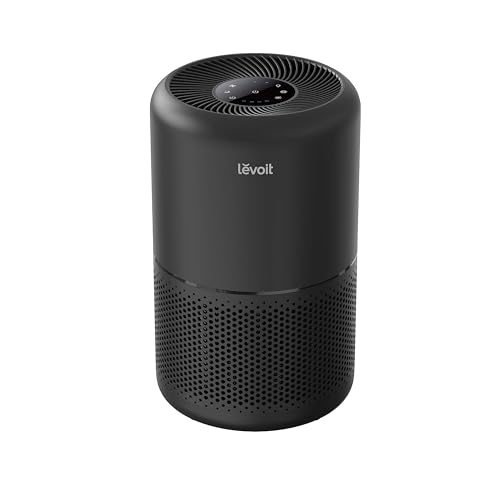 Levoit Core 300-P Air Purifier (Pet All… Levoit Core 300-P Air Purifier (Pet All… |
Budget Pick | $103 | 8.5 | Buy → |
| 4 | 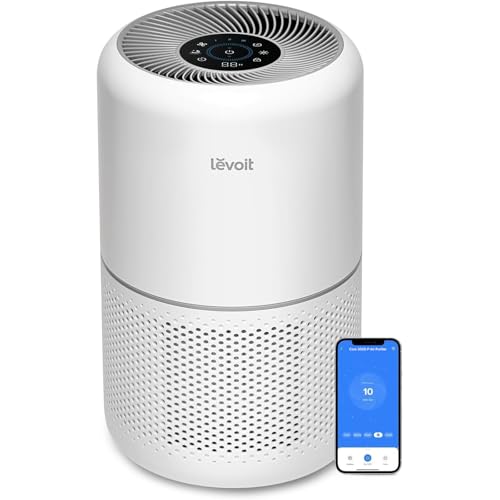 Levoit Core 300S-P Smart WiFi Air Purifier Levoit Core 300S-P Smart WiFi Air Purifier |
Worth Considering | $149 | 8.2 | Buy → |
| 5 | 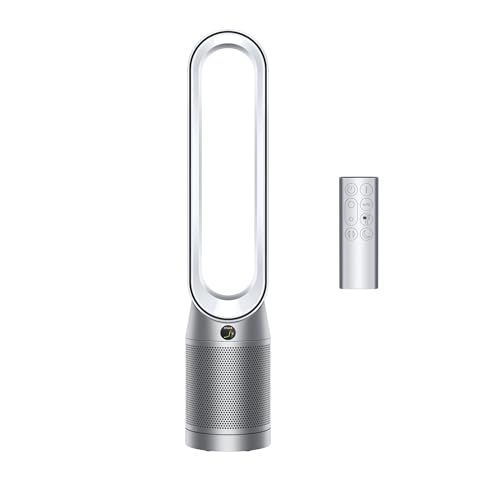 Dyson Purifier Cool TP07 Smart Air Puri… Dyson Purifier Cool TP07 Smart Air Puri… |
$649 | 7.8 | Buy → |
Showing 5 of 5 products
Winix 5510 Air Purifier with True HEPA and PlasmaWave
“Best for allergy sufferers and pet owners who want a multi-stage air purifier from a trusted brand — just be aware of the PlasmaWave setting if you're ozone-sensitive.”
See Today’s Price →What we like
Watch out for
Read Full Analysis
The Winix 5500-2 earns its top-pick status through reliable execution of the fundamentals: a True HEPA filter with CADR ratings independently verified by AHAM (Association of Home Appliance Manufacturers), paired with real-time particle sensing that actually adjusts fan speed in response to detected particles. The auto mode behavior is visible through the 4-color air quality indicator — allergy sufferers report genuine reassurance watching it shift from red to green after 20-30 minutes in a closed bedroom. The washable AOC (Advanced Odor Control) carbon pre-filter is the sleeper feature for long-term cost: most air purifiers require replacing both the HEPA and carbon layers, at $30-60 for filter sets. The Winix's carbon layer is designed to be vacuumed and rinsed, lasting the life of the unit — only the HEPA replacement ($30-40/year) is an ongoing expense. Over 5 years, this saves $100-150 versus disposable carbon-filter competitors. PlasmaWave operates by generating hydroxyl radicals that attach to airborne particles, viruses, and bacteria, breaking down molecular bonds at the cellular level. The system is CARB-certified for minimal ozone output. For allergy patients who also want a measure of viral/bacterial air cleaning — particularly relevant in households with young children or immunocompromised members — PlasmaWave adds value beyond HEPA alone.

Coway AP-1512HH Mighty Air Purifier with True HEPA
“The Coway AP-1512HH delivers essentially equivalent HEPA filtration performance to the Winix 5500-2 at $70 less. Its 24.4 dB sleep mode is the quietest in this comparison, making it the best allergy p”
See Today’s Price →What we like
- CADR of 240-246 equivalent to the Winix 5500-2 at $70 less
- Eco mode shuts the fan off when air quality is clean — saves energy with no loss in effectiveness
- 24.4 dB sleep mode is the quietest in this comparison
- 54,000+ reviews represent the largest verified user base of any purifier in this class
- Compact footprint fits on a nightstand in small bedrooms
Watch out for
- No washable pre-filter — annual carbon filter replacement adds $20-30/year to total cost
- No app connectivity or smart home integration
- 360 sq ft coverage matches the Winix but the smaller physical unit may have limitations in larger rooms
Read Full Analysis
The Coway AP-1512HH's dominance in the 'best air purifier' recommendation landscape — appearing at the top of virtually every major comparison — is earned through consistent delivery of high-CADR True HEPA filtration at a competitive price. Independent AHAM testing confirms CADR ratings of 240-246 across all three pollutant categories, placing it among the most effective purifiers in the 150-300 sq ft allergy use case. The eco mode is more useful than it appears on spec sheets: when the particle sensor detects clean air for a sustained period, the fan shuts off completely. This extends HEPA filter life (the filter only loads when the fan runs), reduces energy consumption, and importantly, reduces cumulative noise exposure in bedrooms during low-particle periods (overnight with windows closed). When particles are detected, the fan restarts automatically — providing protection when needed without running unnecessarily. The Coway's main relative weakness versus the Winix 5500-2 is the disposable carbon pre-filter. Coway sells replacement filter sets (HEPA + carbon) at $30-40 per set, with the carbon layer recommended for replacement every 6 months — adding $20-30 in carbon-specific costs annually. Over five years of use, this creates roughly $100-150 in additional total cost versus the Winix's washable carbon layer. For budget-focused buyers, this partially offsets the upfront savings.

Levoit Core 300-P Air Purifier (Pet Allergy Version)
“The Levoit Core 300-P is the right purifier for small bedrooms (under 220 sq ft) with pet allergies specifically — the pet-tuned HEPA filter captures pet dander and neutralizes pet odors effectively a”
See Today’s Price →What we like
- Pet allergy-specific filter formulation optimized for pet dander and odor capture
- Compact 8.7-inch footprint fits on desks and nightstands — highly portable between rooms
- At $99.99, accessible price for adding a second unit to a secondary bedroom
- 24 dB sleep mode comparable to the Coway for bedroom use
- Interchangeable filter options (pet, toxin absorber, smoke) allow customizing to your allergy type
Watch out for
- 219 sq ft coverage is the smallest in this comparison — limited to small rooms
- CADR of 139-145 is the lowest in the comparison — cannot adequately filter medium-large rooms
- No air quality sensor or auto mode — manual speed selection only
- Filter replacement cost ($18-25 every 6-8 months) adds up relative to the unit price
Read Full Analysis
Levoit's Core 300-P differentiates itself from standard HEPA purifiers through its filter system: rather than a generic HEPA layer, it offers interchangeable filter variants — Pet Allergy, Toxin Absorber, and Smoke Remover — each optimized for specific particle and odor profiles. The Pet Allergy filter uses a HEPA layer with an enhanced activated carbon component tuned for the specific odor compounds in pet dander, fur, and litter, rather than generic VOC adsorption. The practical advantage is customization: a household with a dog and a cat can run the pet-specific filter, while a household with paint VOC concerns would select the Toxin Absorber. This interchangeability makes the Core 300 a flexible platform rather than a fixed-spec appliance. The physical unit is also the smallest in this comparison — the 8.7-inch diameter allows placement on a nightstand, desk, or bookshelf without consuming floor space. The significant limitation is coverage. At CADR 139-145, the Core 300-P achieves 5 ACH only in rooms up to approximately 165 square feet — despite Levoit's manufacturer claim of 219 square feet (calculated at 2 ACH). For allergy relief, use the 165 sq ft effective coverage figure as your planning number. For rooms above this size, consider the Winix 5500-2 or Coway AP-1512HH as the primary unit.

Levoit Core 300S-P Smart WiFi Air Purifier
“The Levoit Core 300S-P is the Core 300-P with Wi-Fi and a PM2.5 sensor added for $40 more. The app-based air quality tracking and auto mode are useful for allergy sufferers who want data on when aller”
See Today’s Price →What we like
- Wi-Fi connectivity allows scheduling, remote control, and air quality history tracking via VeSync app
- PM2.5 real-time sensor with app data logging helps identify allergy triggers by time of day
- Auto mode responds to sensor readings without manual intervention
- Alexa and Google Home integration for voice control
- Same compact form factor as Core 300-P with smart features added
Watch out for
Read Full Analysis
The Core 300S-P adds three meaningful capabilities to the Core 300-P: Wi-Fi connectivity via the VeSync app, a PM2.5 (fine particle) sensor with historical data logging, and an auto mode that adjusts fan speed based on real-time sensor readings. For allergy sufferers who want to understand their indoor air quality patterns — when pollen levels peak inside (correlated with window-opening behavior), when pet dander spikes after cat activity — the PM2.5 historical tracking provides actionable data. The VeSync app stores PM2.5 readings over time, allowing comparison of air quality across days and hours. In practice, allergy patients report using this data to close windows during high outdoor pollen hours (often morning and evening for tree pollen) and to understand how long after vacuuming or changing bedding the indoor PM2.5 returns to baseline. This kind of behavioral feedback has clinical support for reducing allergen exposure in motivated patients. The core filtration performance — CADR 139-145, HEPASmart filter — is identical to the Core 300-P. The $40 premium buys smart connectivity, not filtration capacity. For buyers whose primary goal is raw filtration in a larger room, spend that $40 toward the Winix 5500-2 instead.
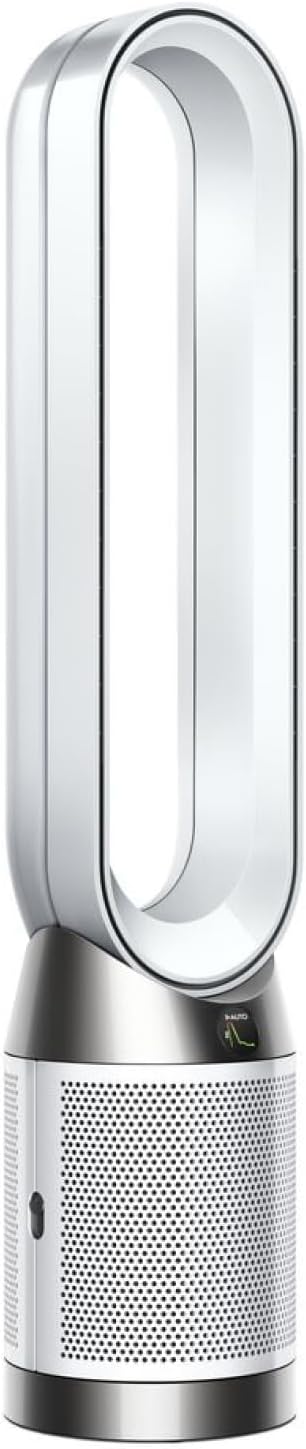
Dyson Purifier Cool TP07 Smart Air Purifier and Fan
“The Dyson TP07's HEPA allergy filtration performance is excellent but not meaningfully superior to the Winix or Coway at HEPA level — the premium pays for the fan, display, and Dyson's sealed system d”
See Today’s Price →What we like
- HEPA H13 sealed system ensures zero air bypass — all room air passes through filtration
- Dual function as purifier + fan eliminates the need for a separate appliance in warm climates
- Displays PM2.5, PM10, VOC, and NO2 in real time — most comprehensive monitoring in this comparison
- 350° oscillation projects purified air across the room efficiently
- Night mode dims display and caps fan speed for unobtrusive bedroom operation
Watch out for
- At $549.99, the most expensive option — 2.5-4x the price of equivalent HEPA filtration
- Proprietary Dyson filter cartridges cost $60-100 annually to replace
- Fan function adds noise at higher speeds — not optimized for quiet-only purification
- The premium is primarily for the fan and display features — core HEPA allergy performance equivalent to $149 competitors
Read Full Analysis
Dyson's Purifier Cool series distinguishes itself from conventional box purifiers through its Jet Focus airflow engineering — the bladeless fan design that amplifies air flow through a precise venturi mechanism, projecting purified air with controlled directionality rather than diffusing it omnidirectionally. This matters for allergy applications: targeted airflow toward the breathing zone (bed, desk, couch) maximizes the purifier's effective coverage in the spaces where you actually are. The HEPA H13 sealed system deserves specific mention: most air purifiers have some degree of air bypass — a small fraction of air travels around rather than through the filter. Dyson's sealed construction ensures 100% of processed air passes through the HEPA layer, and they certify the entire system (not just the filter) to H13 standards. This is the most rigorous filtration standard in the comparison. The real-time display showing four pollutant types simultaneously — PM2.5 (fine particles including pollen and dander), PM10 (larger particles), VOC (volatile organic compounds), and NO2 (nitrogen dioxide from gas appliances and traffic) — is the most comprehensive in-unit monitoring available at the consumer level. For allergy patients who also have chemical sensitivities or asthma triggered by VOC sources (paint, cleaning products, cooking) the NO2 and VOC readings add clinical value. At $550, the Dyson TP07 is the right choice for buyers who specifically value the fan function and comprehensive monitoring — not for buyers who primarily want the most allergy-HEPA-per-dollar.
Air Purifiers for Allergies (2026) Buying Guide
 Photo by Andrea Piacquadio / Pexels
Our Top Pick
Coway AP-1512HH Mighty Air Purifier with True HEPA at $153.99 — The HEPA workhorse with 54,000+ reviews and CADR equivalent to products at $70 more.
Budget Pick: Levoit Core 300-P Air Purifier at $103.49 — Best for small rooms and pet dander specifically.
Great for: Allergy and asthma sufferers, pet owners dealing with dander, wildfire smoke areas, and anyone in a high-pollen region
Not ideal if: Your space is well-ventilated and you have no respiratory sensitivities — benefits are minimal in clean-air environments
True HEPA vs. HEPA-Type: Why It Matters for Allergies
The distinction between 'True HEPA' and 'HEPA-type' is regulatory: True HEPA filters must capture 99.97% of particles at 0.3 microns (the MPPS — most penetrating particle size — which is the hardest size to filter). HEPA-type filters capture around 85-99% at 0.3 microns — seemingly close, but missing 1-15% of the most difficult particles means missing a meaningful fraction of fine allergens including mold spores and the fecal particles of dust mites. For allergy relief, True HEPA is the minimum viable standard.
CADR and Room Sizing: How to Match a Purifier to Your Room

CADR (Clean Air Delivery Rate) measures the volume of filtered air produced per minute, rated for three pollutants: smoke (finest particles), dust, and pollen. The AHAM standard recommends a CADR at least two-thirds your room's square footage for 4-5 air changes per hour. A 300 sq ft bedroom needs a CADR of at least 200. Don't rely on manufacturer square footage claims — they're often calculated at 2 ACH, which is insufficient for allergy relief. Use the two-thirds rule as a minimum, and for severe allergy sufferers, consider upsizing to provide 6+ ACH in bedrooms.
Filter Replacement Cost: The True Total Cost of Ownership
The sticker price of an air purifier understates its true cost. HEPA filters require replacement every 6-12 months depending on usage and air quality. At $25-$60 per filter set and $10-$30 for carbon pre-filters, annual filter costs range from $35 to $90 for most models. A $100 purifier with $90/year in filters costs $450 over 5 years. A $200 purifier with a washable pre-filter (Winix 5500-2) at $50/year replacement costs $450 over 5 years. Factor filter costs into your comparison.
Activated Carbon Filtration: Does It Help Allergies

Activated carbon filters adsorb VOCs (volatile organic compounds), cooking odors, smoke compounds, and gases — these are not allergens per se, but they can exacerbate respiratory symptoms in allergy sufferers with chemical sensitivities. For pure pollen/dust mite/dander allergies without chemical sensitivities, the HEPA layer does the primary work and carbon adds marginal allergy benefit. For allergy + asthma patients or those with multiple chemical sensitivities, a purifier with a substantial carbon filter (like the Winix's washable AOC carbon filter) provides additional respiratory benefit beyond HEPA alone.
Related Guides
Frequently Asked Questions
Do air purifiers actually help with allergy symptoms?
Where should I place an air purifier for best allergy results?
How often should I replace my air purifier filter?
What is PlasmaWave technology in the Winix 5500-2, and is it safe?
Is the Dyson TP07 worth the premium for allergy sufferers?
How We Analyze Products
We analyze Amazon review data — often thousands of reviews per product — to surface patterns that individual buyers miss. Our process aggregates star ratings, review counts, and buyer sentiment at scale, identifying which strengths and weaknesses appear consistently across the largest review samples available. The 135,058+ reviews analyzed on this page represent real verified-purchase feedback from Amazon buyers.
Each product earned its placement through data: total review volume, average rating, and the specific praise and complaints that repeat most often across buyers. No manufacturer paid for placement on this page. Products appear here because buyers endorsed them at scale, not because a company asked us to feature them.
We use AI to summarize review sentiment — not to fabricate opinions, but to condense what thousands of buyers actually wrote into a readable format. The pros and cons you see reflect the most common themes found in verified purchaser reviews, paraphrased for clarity. We do not claim to have accessed Reddit, YouTube, or specific publications in generating these summaries.
Prices shown reflect Amazon pricing at the time this page was last generated. Click “See Today’s Price” to get the current live price on Amazon. Read our full methodology →