Best Drawer Organizers Under $20 (2026)
The Extra Large Expandable Silverware Drawer Organizer (id 10191, $6.99) is the best drawer organizer under $20. BPA-free, expandable from 13 to 21 inches, and the deep compartments keep utensils from sliding into each other.
Drawer Organizers Under $20 (2026) Buying Guide
 Photo by Castorly Stock / Pexels
Drawer organizers seem like a simple purchase until the tray doesn't fit, slides around, or collapses under the weight of kitchen tools. Under $20, you have access to genuinely good expandable tray organizers for kitchens, modular clear bin sets for offices and bathrooms, and bamboo divider sets for everything in between. The key decision upfront: do you need expandability (kitchen drawer widths vary), modularity (custom compartment layouts for bathroom and office drawers), or aesthetics (bamboo looks premium; clear plastic shows you what's inside at a glance).
Expandable Tray Organizers vs Modular Bin Systems
Expandable organizers use a telescoping mechanism to extend their width to fit different drawer sizes. Most expand from 8-9 inches to 11-13 inches, covering most standard kitchen drawer widths. The advantage: one expandable tray organizer can fit multiple drawers, and you can reuse it if you move. The tradeoff: the expansion mechanism creates a gap in the middle of the tray that collects crumbs and debris and is harder to clean than a fixed-width organizer.
Modular bin systems use separate individual containers you configure freely within a drawer. Each bin sits independently — you add, remove, or rearrange compartments as storage needs change. These are ideal for bathroom vanity drawers, office supply drawers (where you want specific compartment sizes for pens, clips, sticky notes), and any drawer where you want complete layout control. The tradeoff: individual bins shift unless the drawer is completely full or you use a non-slip liner underneath.
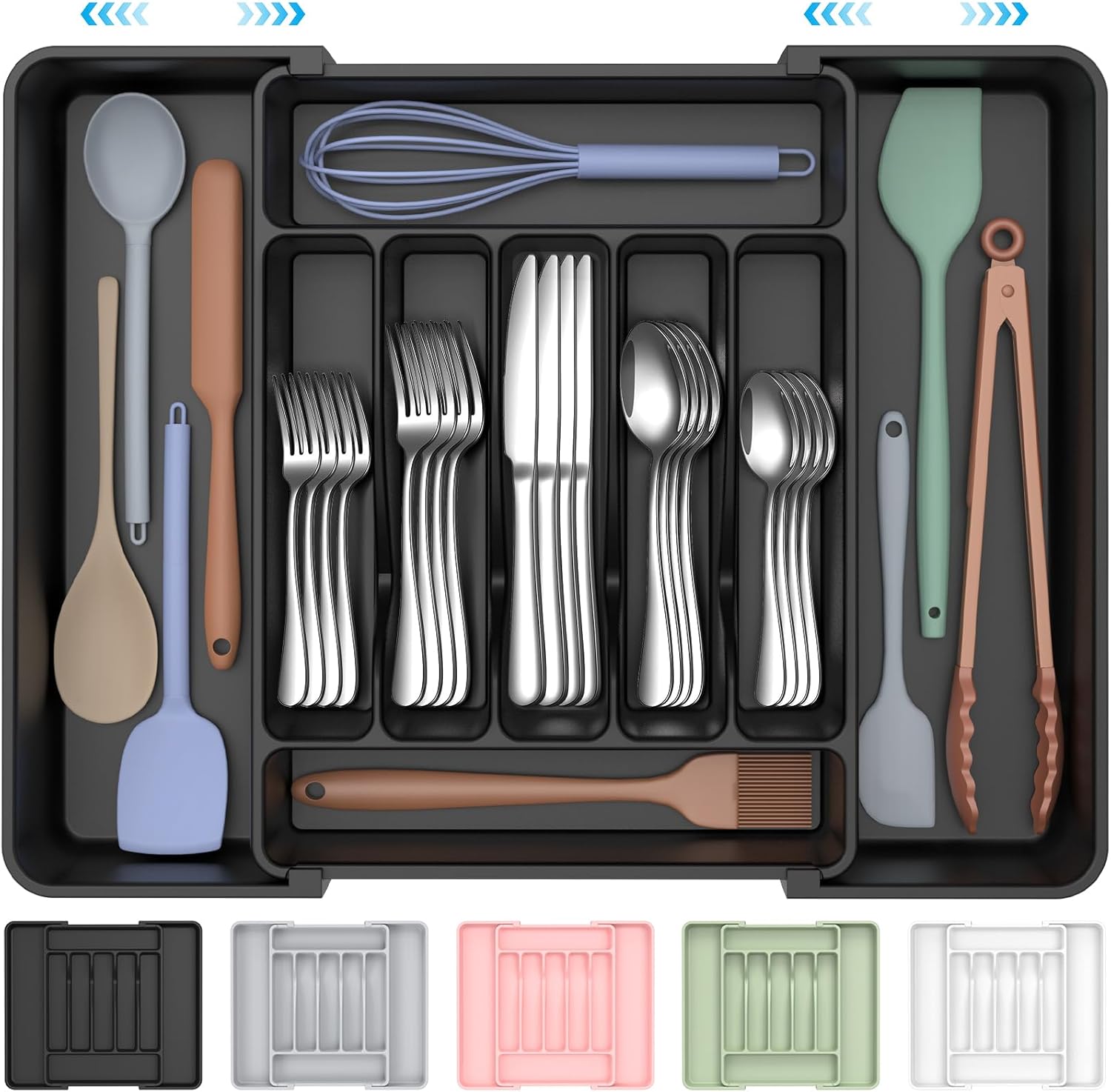
For kitchen utensil and silverware drawers, an expandable tray with defined compartments (knife slots, fork sections, spoon sections) is more practical than loose modular bins — kitchen tools have standardized forms that fit well in purpose-designed compartments. For everything else (bathroom drawers, office drawers, junk drawers), modular bins give more useful flexibility.
Measuring Your Drawer Before Buying
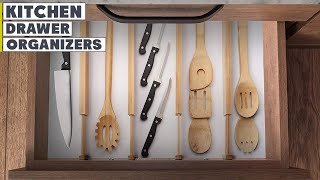
Measure the interior of the drawer, not the exterior face. Interior dimensions are typically 1-3 inches smaller than the front face on each side. Measure width, depth (front to back), and height (floor to underside of the drawer lip above). Height is the most commonly overlooked measurement — some modular bin systems are 3+ inches tall and won't fit under overhanging drawer lip features on certain cabinet styles.
For expandable organizers, confirm the organizer's expansion range covers your interior drawer width. Most standard kitchen drawers are 10-18 inches wide (interior). Bathroom and office drawers tend to be narrower (8-14 inches). Buy an organizer that expands to within 1/4 inch of your drawer's interior width — this friction against the drawer walls prevents sliding, which is the main functional complaint about organizers that are undersized for the drawer.

Depth matters for longer drawers. A 14-inch deep drawer with an 11-inch organizer leaves 3 inches of unorganized space at the back — an invitation for small items to fall behind and disappear. Either buy an organizer that fills the full drawer depth or use a second row of shorter bins at the back to fill the remaining space completely.
Material Choices: Bamboo, Plastic, and Fabric
Bamboo organizers look premium, are naturally antimicrobial, and hold up well over time. Bamboo is the right choice for dresser drawers, bathroom vanities, and anywhere the organizer is visible when the drawer is open. Tradeoffs: bamboo is heavier than plastic, more expensive for equivalent capacity, and should be dried thoroughly after cleaning — leaving bamboo wet leads to mold in the wood grain.
Clear plastic organizers prioritize visibility and low maintenance. You can see at a glance what's in each bin without lifting items, and plastic wipes clean with a damp cloth in seconds. Clear bins are the practical choice for office supply drawers, junk drawers, and applications where identification speed matters more than aesthetics. Most clear plastic bin systems can nest or stack during storage when not in use.

Fabric drawer organizers (non-woven or felt inserts) are designed for clothing drawers. The soft interior prevents snags on delicate fabrics, and the lightweight construction doesn't add meaningful weight to dresser drawers. Fabric organizers compress when empty, making them easy to remove for drawer cleaning. For clothing storage specifically, fabric is the right material; for kitchen and office use, bamboo or plastic performs better.
Keeping Drawers Organized Long-Term
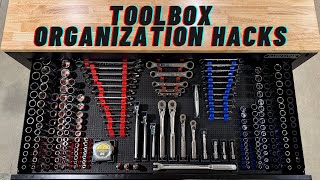
Drawer organization fails when items accumulate in the wrong compartments between uses or when new items are added without a designated home. The fix: every item needs a specific compartment it always returns to. Avoid "miscellaneous" compartments — they fill fastest. A quarterly 10-minute drawer audit (remove everything, wipe the organizer, return only what belongs, relocate the rest) maintains organization without becoming a chore.
For kitchen drawers, the organizing principle is function proximity: items used near the oven get a drawer near the oven; prep tools go in the drawer nearest the prep surface. Organizing by aesthetics produces an attractive drawer but a less functional kitchen. For office and bathroom drawers, daily-use items go in the front compartment; occasional-use items go in the back. The goal is never moving items out of the way to reach what you actually need.
If you're also considering drawer Organizers 2026: Bamboo, Plastic & Expandable, see our Best Drawer Organizers 2026: Bamboo, Plastic & Expandable. If you're also considering drawer Organizer Sets 2026: Kitchen, Desk & Bamboo, see our Best Drawer Organizer Sets 2026: Kitchen, Desk & Bamboo. If you're also considering under Sink Organizer, see our Best Under Sink Organizer (2026).
Watch Before You Buy
At a Glance
| # | Product | Award | Price | Our Score | |
|---|---|---|---|---|---|
| 1 |  Extra Large Expandable Silverware Drawe… Extra Large Expandable Silverware Drawe… |
Best Overall | $6 | 9.2 | Buy → |
| 2 | 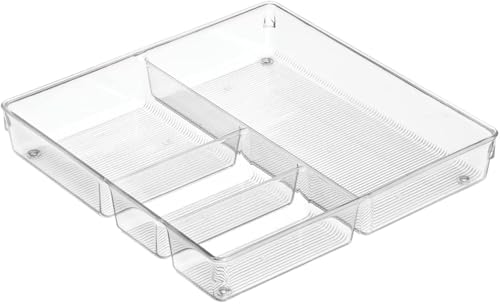 InterDesign Linus Plastic Drawer Organi… InterDesign Linus Plastic Drawer Organi… |
Budget Set | $22 | 8.9 | Buy → |
| 3 |  Bamboo Drawer Organizer Set 5-Piece Woo… Bamboo Drawer Organizer Set 5-Piece Woo… |
Bamboo Set | $19 | 8.5 | Buy → |
| 4 |  Clear Drawer Organizer Tray 6-Pack Large Clear Drawer Organizer Tray 6-Pack Large |
Clear Modular | $19 | 8.2 | Buy → |
Showing 4 of 4 products
Extra Large Expandable Silverware Drawer Organizer BPA-Free Black
“An extra-large expandable silverware organizer for kitchens with generous drawer space. Best for households with large flatware sets who need one organizer that covers the full drawer.”
See Today’s Price →
InterDesign Linus Plastic Drawer Organizers Set of 8
“InterDesign's 8-piece modular set is completely customizable — arrange 8 different-sized compartments in any configuration for your specific drawer layout. Clear plastic shows contents at a glance, di”
See Today’s Price →What we like
- 8-piece modular — arrange freely
- Clear plastic — see contents
- Dishwasher safe
- Multiple sizes in set
Watch out for
- Plastic less premium than bamboo
- May slide if drawer liner not used
Bamboo Drawer Organizer Set 5-Piece Wood Storage Divider Trays
“A natural bamboo drawer organizer that keeps utensils and supplies neatly separated. The eco-friendly material looks premium over cheap plastic alternatives and holds its shape through daily use.”
See Today’s Price →
Clear Drawer Organizer Tray 6-Pack Large
“A 6-pack of large clear organizer trays for junk drawers or office storage. The clear sides let you see contents at a glance — simple, stackable, and functional.”
See Today’s Price →Frequently Asked Questions
How do I measure my drawer for an organizer?
Are expandable organizers better than fixed-size?
How do I keep the organizer from sliding around?
Can I use kitchen drawer organizers in other drawers?
How often should I declutter organized drawers?
How We Analyze Products
We analyze Amazon review data — often thousands of reviews per product — to surface patterns that individual buyers miss. Our process aggregates star ratings, review counts, and buyer sentiment at scale, identifying which strengths and weaknesses appear consistently across the largest review samples available. The 6,589+ reviews analyzed on this page represent real verified-purchase feedback from Amazon buyers.
Each product earned its placement through data: total review volume, average rating, and the specific praise and complaints that repeat most often across buyers. No manufacturer paid for placement on this page. Products appear here because buyers endorsed them at scale, not because a company asked us to feature them.
We use AI to summarize review sentiment — not to fabricate opinions, but to condense what thousands of buyers actually wrote into a readable format. The pros and cons you see reflect the most common themes found in verified purchaser reviews, paraphrased for clarity. We do not claim to have accessed Reddit, YouTube, or specific publications in generating these summaries.
Prices shown reflect Amazon pricing at the time this page was last generated. Click “See Today’s Price” to get the current live price on Amazon. Read our full methodology →