Best LED Strip Lights for Bedrooms in 2026
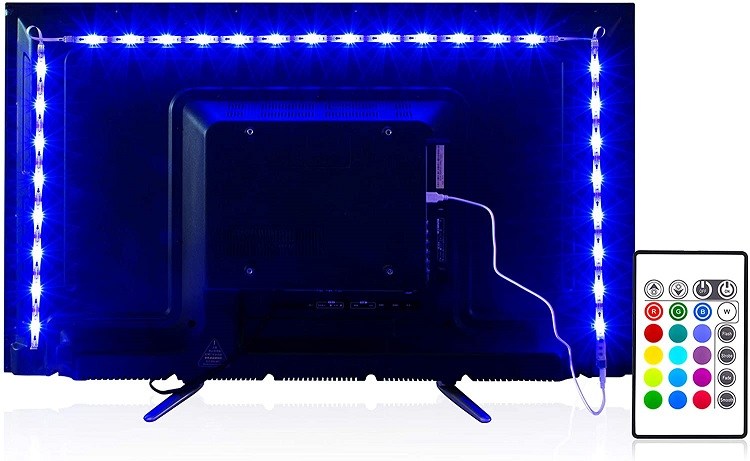
The PANGTON VILLA LED Strip is the best value for most bedrooms — clean warm-white output, strong adhesive backing, and simple installation without an app or hub requirement. For smart home integration, TREATLIFE offers the best Alexa and Google Home compatibility at a mid-range price.
See Today’s Price →At a Glance
| # | Product | Award | Price | Our Score | |
|---|---|---|---|---|---|
| 1 | Best Overall | Check Price | 9.1 | Buy → | |
| 2 | Best Smart Strip | Check Price | 8.9 | Buy → | |
| 3 | Best for TV Backlighting | Check Price | 8.6 | Buy → |


LED Strip Lights for Bedrooms Buying Guide
LED strip lights transform a bedroom from functional to atmospheric — they work as bias lighting behind a TV, as indirect accent lighting along a headboard, or as under-bed ambient lighting that makes 3am trips easier on the eyes. The right strip depends on whether you want simple on/off lighting, color-changing effects, or smart home integration.
How We Selected These LED Strip Lights
We compared LED strip lights across light output (lumens per meter), color rendering index (CRI), chip density, color accuracy, smart home compatibility, adhesive backing quality, and price. Picks were cross-referenced with reviews from The Wirecutter and smart home communities on Reddit, with products selected for reliable performance in real bedroom installations.
Color Temperature vs. Color-Changing: What You Actually Need
Single-color strips (warm white 2700K-3000K) are the right choice for bedroom ambient lighting and bias lighting — warm white creates a relaxing atmosphere and doesn't interfere with melatonin production the way cool white or blue-heavy RGB does. Color-changing RGB or RGBW strips are better if you want the flexibility to switch between functional lighting and mood/gaming ambiance. RGBW adds a dedicated white channel to RGB, producing cleaner whites than mixing RGB — worth it if you want good white light in addition to color effects.
Smart vs. Non-Smart: The Integration Question
Non-smart strips connect to a simple controller with a remote — cheaper, simpler, reliable. Smart strips (Wi-Fi or Zigbee) integrate with Alexa, Google Home, or Apple HomeKit, enabling voice control, app control, and automation routines. For a bedroom, smart strips add genuine value: you can have them fade in at a programmed time as a gentle wake-up, or auto-dim at 10pm. Philips Hue uses Zigbee (requires a Hub) for the most reliable smart home integration; TREATLIFE and Govee use Wi-Fi, which is simpler to set up but more dependent on your router signal strength.
Installation: Where Strips Fail
Adhesive backing quality determines whether a strip stays up for years or falls after weeks. 3M adhesive backing is the standard worth trusting; budget strips use cheaper adhesive that fails with heat or on textured surfaces. For behind a headboard or under a bed frame, the strip needs to bend around corners — look for high chip density (60+ LEDs per meter) which allows tighter bends without dark spots. Surface prep is critical: clean the surface with isopropyl alcohol before applying, and allow 24 hours for the adhesive to cure fully before turning the strip on.
CRI and Light Quality
CRI (Color Rendering Index) measures how accurately a light source renders colors — important if your bedroom strip is used for reading or as primary lighting, not just ambiance. CRI 80+ is adequate; CRI 90+ renders skin tones and fabrics accurately. Budget strips rarely publish CRI values. Philips Hue strips test at CRI 80+; TREATLIFE and Govee do not publish CRI — they're better suited to accent/mood lighting than task lighting.
Length and Power Supply
A standard bedroom perimeter requires 10-16 feet (3-5 meters). Most strips come in 16.4-foot (5-meter) rolls — enough for one full perimeter pass under a queen bed or along a headboard. Running more than 16 feet on a single power supply causes voltage drop: the far end becomes dimmer. For longer runs, inject power at multiple points or use strips rated for parallel power injection.
How We Analyze Products
We analyze Amazon review data — often thousands of reviews per product — to surface patterns that individual buyers miss. Our process aggregates star ratings, review counts, and buyer sentiment at scale, identifying which strengths and weaknesses appear consistently across the largest review samples available.
Each product earned its placement through data: total review volume, average rating, and the specific praise and complaints that repeat most often across buyers. No manufacturer paid for placement on this page. Products appear here because buyers endorsed them at scale, not because a company asked us to feature them.
We use AI to summarize review sentiment — not to fabricate opinions, but to condense what thousands of buyers actually wrote into a readable format. The pros and cons you see reflect the most common themes found in verified purchaser reviews, paraphrased for clarity. We do not claim to have accessed Reddit, YouTube, or specific publications in generating these summaries.
Prices shown reflect Amazon pricing at the time this page was last generated. Click “See Today’s Price” to get the current live price on Amazon. Read our full methodology →