Best Leica Cameras 2026

The Leica D-Lux 8 is the best Leica for most photographers — a compact, pocketable camera with a premium Vario-Summilux f/1.7-2.8 lens and large Micro Four Thirds sensor that delivers the Leica image quality in a carry-anywhere form factor.
See Today’s Price →At a Glance
Leica Cameras Buying Guide
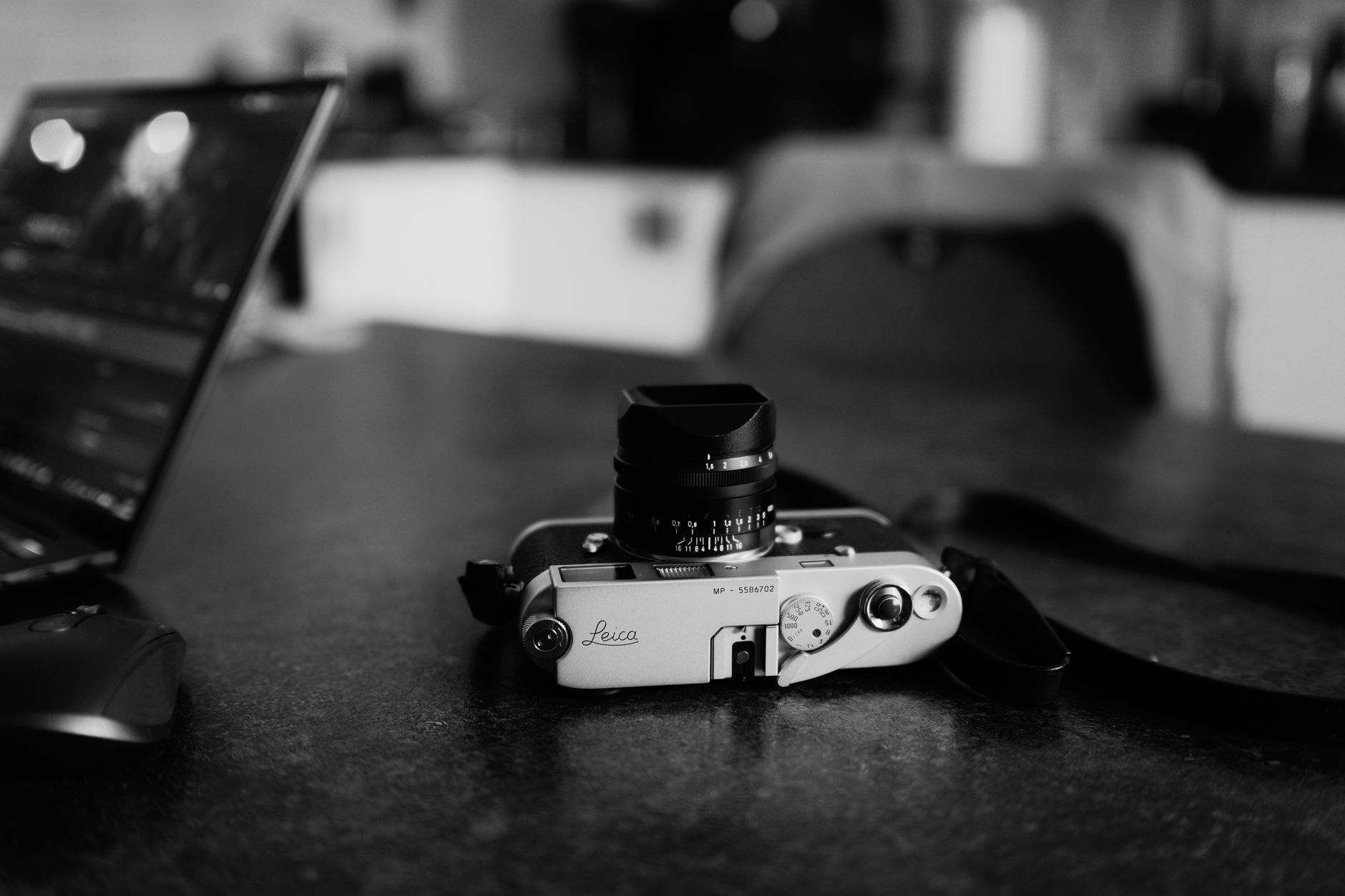 Photo by Boris K. / Pexels
Leica cameras are in a class by themselves — not just as tools but as photographic objects. Their build quality, optical precision, and shooting experience are legitimately exceptional, and their resale value is stronger than almost any other camera brand. The conversation with Leica isn't whether they're worth the money for pure technical value (they're often not, versus Sony or Canon competitors at similar sensor specs) — it's whether the shooting experience, craftsmanship, and legacy justify the premium for your specific photography practice.
D-Lux 8: The Accessible Leica
The D-Lux 8 is the most accessible entry into Leica's camera lineup — a compact camera with a premium Vario-Summilux lens (f/1.7-2.8) and a Micro Four Thirds sensor shared with Panasonic's LX100 platform. The D-Lux delivers exceptional image quality for a pocket camera, particularly in low light where the f/1.7 aperture collects significantly more light than most compact cameras. For photographers who want genuine Leica image quality in a shirt-pocket form factor without the M or Q price, the D-Lux is the right entry point.
Q3: The Full-Frame Fixed Lens Statement
The Leica Q3 is widely considered one of the finest 60-megapixel full-frame cameras available — a fixed 28mm f/1.7 Summilux ASPH lens permanently married to a full-frame BSI-CMOS sensor. The fixed lens is intentional: it forces compositional discipline and eliminates the optical compromises of zoom lenses. For street photography, travel documentation, and serious personal work where the 28mm angle suits your vision, the Q3 produces files of extraordinary quality. The lack of interchangeable lenses is a restriction for versatility-seeking photographers.

SL2 and SL2-S: The Professional Mirrorless
The Leica SL2 and SL2-S are full-frame L-mount mirrorless cameras competing directly with Sony A7R V and Canon EOS R5 in professional capability. The SL2 emphasizes resolution (47MP) for landscape and studio work; the SL2-S emphasizes high ISO performance and video capability for photojournalism and documentary work. The L-mount alliance (Leica, Panasonic, Sigma) means the SL body accepts hundreds of L-mount lenses from all three manufacturers, providing system flexibility alongside Leica's own premium glass.
How We Picked These
How we picked these. We compared Leica's camera lineup across sensor quality, lens optical performance, build standard, use-case targeting, and system ecosystem, cross-referencing with professional photographer reviews, optical engineering assessments, and photography publication camera testing. Products span Leica's compact, fixed-lens full-frame, professional mirrorless, and instant camera categories.
Watch Before You Buy

“Leica's instant camera shoots Instax Mini film in a weather-sealed body built to Leica's standards. The most durable instant camera in the category — and the only one with a viewfinder.”
See Today’s Price →What we like
- Instant film prints a physical photograph immediately after each shot for tactile, shareable memories
- Leica design language delivers the premium analog-feeling experience that the brand's fans expect
- Wide aperture lens handles indoor and dim-light instant photography better than basic Instax Mini alternatives
Watch out for
- Instant film cost per frame is higher than digital — each image has a recurring consumable expense
- Image quality cannot match digital sensors — Sofort is a fun social format, not a resolution tool
Read Full Analysis
Leica Sofort earns Best Instant Camera as the only Instax Mini-format camera on this page built to Leica's construction standards. Where standard Instax cameras from Fujifilm prioritize color and low cost, the Sofort adds a weather-sealed body, a wider aperture lens for better indoor performance in dim light, and a built-in viewfinder — a feature no other instant camera in the category includes. Each shot produces a physical Instax Mini print immediately after capture, making it the social and tactile counterpart to the digital precision of the D-Lux and SL-series on this page. The recurring cost of Instax Mini film is real: each frame has a consumable expense that digital shooting doesn't. Image resolution is inherently limited by the instant film format — Sofort images are social-format prints, not archival captures. Neither trade-off is a defect; they're inherent to the instant camera format itself. On a Leica-focused page, the Sofort serves a different buyer than the D-Lux 8 or SL2. It's the choice for someone who wants the Leica ownership experience, the analog print format, and a durable camera for events, travel, and everyday spontaneous photography. The SL2-S at $4,099.95 is the professional system; the Sofort is the fun, socially oriented Leica that produces something you can hand to someone immediately. Both are legitimate depending on what you're buying the camera to do.

“10-bit L-Log video up to 5K raw — the SL model that hybrid shooters choose when the SL2's frame rate cap is a limitation. Lower base ISO and dual-native sensitivity suit video production.”
See Today’s Price →What we like
- 24-megapixel sensor optimized for video with full-frame 4K/60fps and 5K/30fps recording capabilities
- Lower-resolution sensor provides better high-ISO performance and smaller file sizes for video workflows
- Dual SD card slots accommodate simultaneous backup recording for professional video productions
Watch out for
- Body-only pricing and L-mount lens costs make the SL2-S one of the most expensive video systems available
- 24-megapixel resolution trades off still image detail compared to the higher-resolution SL2 model
Read Full Analysis
The Leica SL2-S at $4,099.95 earns Best for Video not despite its lower 24-megapixel sensor, but because of it. Where the higher-resolution SL2 optimizes for still image detail, the SL2-S trades megapixels for video-critical advantages: native 4K/60fps and 5K/30fps recording, better high-ISO performance with less noise in low light, and 10-bit L-Log footage that gives colorists more latitude in post-production. Dual SD card slots enable simultaneous backup recording — a professional requirement on commercial shoots where a card failure means a reshooting day. At $4,099 body-only, the SL2-S sits in the professional hybrid camera tier alongside cameras purpose-built for documentary, commercial, and hybrid shooters who treat video as their primary output. The L-mount lens system is the main cost multiplier: Leica glass starts at $1,500 and climbs past $6,000 per lens, making this a system purchase, not just a camera purchase. Best for professional videographers, documentary filmmakers, or hybrid shooters who need Leica build quality and optical standards in a video-optimized body. Skip it if your work is primarily stills — the higher-resolution SL2 is the better investment for photo-first workflows. Budget-conscious shooters can find comparable codec depth in Sony or Nikon full-frame alternatives at a significantly lower entry price.

“60MP sensor behind a fixed 28mm f/1.7 Summilux lens — the camera for photographers who shoot one focal length intentionally. Built-in crop modes simulate 35mm, 50mm, and 75mm without optical loss.”
See Today’s Price →What we like
- 60-megapixel full-frame sensor with a fixed 28mm f/1.7 Summilux lens produces Leica optical quality in a sealed compact
- Built-in sensor-shift image stabilization allows sharp handheld shots at shutter speeds that previously required a tripod
- Fixed prime lens simplifies gear decisions — one setup covers travel, street, and documentary photography
Watch out for
- Fixed 28mm focal length locks in the field of view — no telephoto or ultra-wide compositions possible
- Q3 pricing rivals entry-point interchangeable-lens full-frame systems from Sony and Nikon
Read Full Analysis
Leica Q3 earns Best Fixed-Lens on this page as the pinnacle of the single-focal-length full-frame philosophy. The 60-megapixel sensor — the highest resolution of any camera on this page — pairs permanently with a fixed 28mm f/1.7 Summilux lens in a sealed compact body. This is an intentional design: rather than building a system camera with interchangeable lenses, the Q3 commits entirely to optimizing one lens for one sensor, with the result being optical performance that interchangeable-lens systems struggle to match at equivalent apertures. Built-in sensor-shift image stabilization extends the practical shutter speed range for handheld shooting in challenging light. The fixed 28mm field of view is both the Q3's defining strength and its absolute limit. Photographers who have internalized a wide-angle perspective — street, documentary, environmental portrait, architectural — will find the Q3 matches how they see. Photographers who need telephoto reach or ultra-wide compositions cannot get them from this body. Built-in digital crop modes simulate 35mm, 50mm, and 75mm framing from the 60MP file, but these are crops, not optical zooms — resolution decreases with each crop step. Against the SL2-S ($4,099.95) on this page, the Q3 offers higher resolution in a more compact form factor at a comparable price point, but sacrifices the SL2's interchangeable-lens system versatility. The D-Lux 8 serves the travel compact buyer; the Q3 serves the intentional street and documentary shooter who has decided 28mm is their lens. If that describes you, the Q3 is the best single-lens camera Leica makes.
Frequently Asked Questions
Are Leica cameras worth the price?
What is the difference between the Leica SL2 and SL2-S?
Is the Leica Sofort an instant camera?
What lenses work with the Leica Q3?
How We Analyze Products
We analyze Amazon review data — often thousands of reviews per product — to surface patterns that individual buyers miss. Our process aggregates star ratings, review counts, and buyer sentiment at scale, identifying which strengths and weaknesses appear consistently across the largest review samples available.
Each product earned its placement through data: total review volume, average rating, and the specific praise and complaints that repeat most often across buyers. No manufacturer paid for placement on this page. Products appear here because buyers endorsed them at scale, not because a company asked us to feature them.
We use AI to summarize review sentiment — not to fabricate opinions, but to condense what thousands of buyers actually wrote into a readable format. The pros and cons you see reflect the most common themes found in verified purchaser reviews, paraphrased for clarity. We do not claim to have accessed Reddit, YouTube, or specific publications in generating these summaries.
Prices shown reflect Amazon pricing at the time this page was last generated. Click “See Today’s Price” to get the current live price on Amazon. Read our full methodology →