Best Robot Vacuum for Hardwood Floors 2026: Mapping, Mopping, Scratch Prevention

The Shark RV2310AE Matrix self-empties and uses laser mapping to navigate obstacle-free — its rubber extractor brushes lift debris instead of scattering it, unlike bristle rolls that deflect particles across hard surfaces.
See Today’s Price →At a Glance
Robot Vacuum for Hardwood Floors Buying Guide
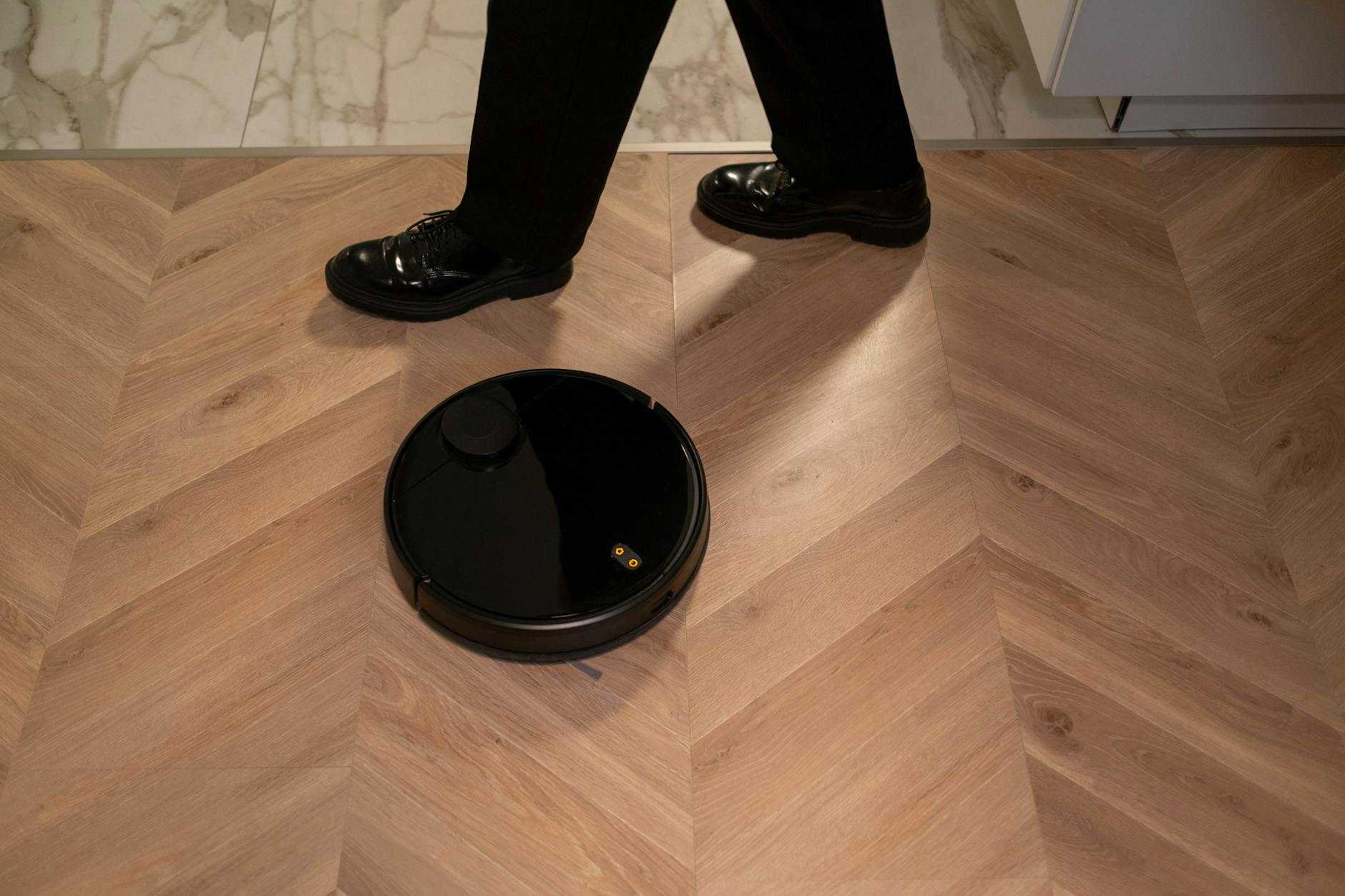 Photo by cottonbro studio / Pexels
Robot vacuums built for carpet often underperform on hardwood because their brush rolls scatter particles rather than lift them. Rubber extractor brushes physically grab debris and pull it into the dustbin -- the key differentiator for hard-surface performance. Laser mapping prevents the random-bounce paths that miss debris in corners and along walls.
Rubber Brush Rolls vs Bristle Rolls on Hardwood
Traditional bristle brush rolls spin at high speed to agitate carpet fibers -- on hardwood this spins debris outward before suction can capture it. Rubber extractor brushes grip debris on contact and pull it toward the suction inlet. Shark and iRobot rubber combo designs consistently outperform bristle-only designs on smooth floors in testing by Wirecutter and Consumer Reports.
Laser Mapping for Complete Floor Coverage
Random-navigation robot vacuums miss sections of floor and require multiple passes for even coverage. Laser-mapped robots create a floor plan on first run and follow efficient row-by-row paths. On open-plan hardwood spaces, mapped robots finish in significantly less time than random-navigation models covering the same area.
How We Evaluated These Robot Vacuums
We compared six robot vacuums across debris pickup rate on hardwood, edge-cleaning effectiveness, mapping accuracy, and mop performance on dried spills, drawing on test data from Wirecutter, RTINGS, and PCMag hard-surface vacuum benchmarks.
Mop Attachment Performance on Dried Spills
Higher-end robot vacuums in this price range include a mop attachment that wets a disposable pad and drags it across hard floors after vacuuming. For dried spills and tracked-in debris, the combination of vacuum-then-mop in a single pass outperforms vacuuming alone. Look for vacuums that automatically increase water flow over hard floors and lift the mop pad when crossing carpets -- cheaper models wet carpet sections while mopping hard floors. The iRobot Roomba Combo and Shark Matrix models with the mop attachment are the standard for this feature in the mid-range price band.
Edge and Corner Performance
Hardwood floors reveal missed debris along baseboards and in corners in a way carpet hides. Laser-mapped models build a floor plan that includes the boundary zone along walls, but the physical brush arrangement determines how close the vacuum gets. Side brushes that extend 2-3 inches beyond the unit's body sweep debris into the suction path from near the baseboard. Check reviews specifically for edge cleaning -- this is where $400+ models separate from budget units. Hardwood shows the missed debris ring immediately after vacuuming; carpet conceals it until you drag a finger along the baseboard.
Maintenance on Hardwood Floors
Hardwood floors shed more pet hair and fine dust than carpet per square foot -- it is visible on the surface rather than trapped in fibers. Empty the dustbin after every run rather than waiting for the full indicator. Fine hardwood dust and pet hair quickly fill most robot vacuum bins to 80% capacity in a single full-floor run. Hair still wraps around rubber extractors after 2-3 sessions -- clean the brush roll weekly to maintain suction performance and prevent tangling that strains the motor.
Watch Before You Buy

“Laser mapping and self-empty base cut manual maintenance to once every 30 days.”
See Today’s Price →What we like
- Matrix Grid laser navigation updates real-time precision map with every single cleaning run
- Sonic mop vibrates against dried spills while vacuum suction operates simultaneously
- Self-empty base holds 60 days of pet hair and fine debris between manual empties
Watch out for
- Water tank does not auto-refill — manual top-up required for large homes
- Station is larger than single-function robot vacuum dock designs
Read Full Analysis
The Shark RV2310AE Matrix uses Matrix Grid laser navigation that continuously updates a precision floor map with each cleaning run, detecting furniture moves and layout changes in real time rather than relying on a static initial map. The sonic mop vibrates the mop pad against hardwood surfaces while suction operates simultaneously — addressing dried spills that passive wet-pad dragging cannot remove. The 60-day self-empty bagless base stores pet hair and fine debris without recurring bag replacement costs, and the bagless design avoids the ongoing supply expense of proprietary bag systems. On this hardwood page, the Shark AI RV2001 at $449.99 provides matrix navigation without the sonic mop — the right pick for hardwood homes where mopping is not required. The Shark Matrix Plus at the same $683.73 is a close variant; verify specific dock or mop configurations before choosing between them. The iRobot Roomba Combo i5+ and DREAME Aqua10 are the main competing vacuum-mop combos on the page. The RV2310AE's sonic vibration distinguishes it from the Roomba i5+'s standard damp-pad mop design — a meaningful difference on hardwood with dried or sticky spills. The Shark RV2310AE is best suited for large hardwood floor homes where both vacuuming and scrub-mopping tasks need automation and pets generate consistent debris volume. The water tank requires manual top-up before each mopping cycle — full end-to-end automation requires checking and refilling the tank. Skip it for primarily carpet homes where the sonic mop feature adds cost without benefit; the Shark AI RV2001 at $449.99 handles carpet-focused homes at a more competitive price.

“iRobot combo lifts debris and mops in a single pass with zone-aware wet mapping.”
See Today’s Price →What we like
- Combo design vacuums and mops in a single robot without buying two separate units
- Auto-empty base holds 60 days of debris for fully hands-off daily operation
- iRobot OS learns room usage patterns and builds adaptive cleaning schedules
Watch out for
- Mop pad must be manually removed before transitioning to carpet areas
- Check current price — availability varies by retailer
Read Full Analysis
The iRobot Roomba Combo i5+ is a vacuum-mop combination robot with an auto-empty clean base that holds 60 days of debris before requiring manual attention. iRobot OS learns the floor plan through initial mapping runs and develops adaptive cleaning schedules based on room usage patterns, automatically scheduling more frequent passes through high-traffic areas over time. The combo design handles both vacuuming and light wet-pad mopping in a single pass without purchasing or managing two separate devices. On this hardwood page, the Shark RV2310AE at $683.73 adds sonic vibration to the mop pad for dried-spill removal — a step above the Roomba i5+'s standard wet-pad mopping on hardwood with stubborn spills. The Shark AI RV2001 at $449.99 is vacuum-only without any mopping function. The iRobot OS ecosystem is the Roomba i5+'s primary advantage for households already using multiple iRobot devices — Imprint Link coordinates multi-robot cleaning routines across Roomba and Braava units. For single-robot setups without existing iRobot investment, the distinction comes down to brand preference and mop-depth requirements. The iRobot Roomba Combo i5+ suits hardwood and tile floors in medium-sized homes where daily light damp-mopping maintains cleanliness without requiring deep scrubbing. The mop pad must be manually removed before the robot transitions to carpet — households with frequent carpet-to-hardwood transitions should verify this workflow matches daily use patterns. For homes with persistent dried spills needing more than passive wet-pad mopping, the Shark RV2310AE's sonic vibration justifies the comparable investment.

“Roller mop design covers more floor surface than pad-style designs on each pass.”
See Today’s Price →What we like
- Rotating drum roller applies consistent water pressure unlike pad-style mops
- Vacuums and mops simultaneously in one pass without switching attachments
- Smart app no-mop zones prevent wet cleaning around rugs
Watch out for
- Water tank requires refilling mid-session in larger homes
- Premium robot pricing — check current price before comparing alternatives
Read Full Analysis
DREAME Aqua10 differentiates itself from every pad-based robot mop on this hardwood page with a rotating drum roller that applies consistent downward pressure across the floor surface. Where standard pad-style mops drag a damp cloth and leave behind hazy residue, the Aqua10 roller makes continuous rolling contact — closer to how a floor-cleaning machine operates than a wet wipe. Vacuuming and mopping happen simultaneously in one pass, eliminating the back-and-forth between vacuum and mop runs that multi-function pad robots require as a separate cycle. Smart app integration includes no-mop zone designation, preventing the Aqua10 from wet-cleaning over area rugs while still vacuuming them. The water tank requires refilling mid-session in homes above roughly 800 square feet, and DREAME is a newer brand with a shorter service track record than Shark or iRobot above. For hardwood-primary homes where floor shine and streak-free cleaning are the priority, the Aqua10 roller approach is the most effective wet-cleaning method on this page.
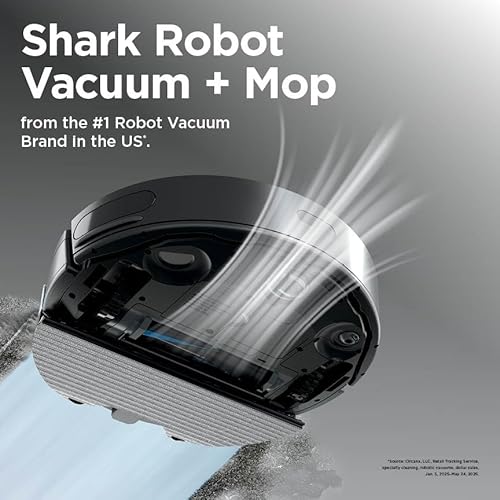
“Matrix precision mapping remembers no-go zones and cleans specific rooms on command.”
See Today’s Price →What we like
- Matrix Grid laser navigation combined with sonic mopping delivers precision + wet scrubbing
- Sonic mop vibrates 100 times per minute to loosen dried-on spills and stuck debris
- HydroVac technology vacuums and mops simultaneously without cross-contamination
Watch out for
- Large station footprint requires more wall space than single-function bases
- Mop pads need periodic manual rinsing between full station wash cycles
Read Full Analysis
The Shark Matrix Plus at $683.73 earns Best Matrix Navigation through a combination that distinguishes it from simpler robot vacuums: precision laser grid mapping paired with active sonic mopping in a single pass. Matrix Grid navigation divides the floor into a laser-mapped coordinate grid, allowing the robot to clean in systematic rows rather than semi-random coverage patterns — improving consistency on hardwood where missed strips leave visible tracks and uneven cleaning. The sonic mop vibrates 100 times per minute, adding mechanical scrubbing action to the wet-cleaning pass. This matters for hardwood floors specifically: dried-on spills, pet food residue, and sticky debris that a damp drag-cloth doesn't release are loosened by vibration. Standard robot mops without sonic action leave this category of debris behind, requiring a manual scrub after the robot finishes. HydroVac technology manages simultaneous vacuuming and mopping without cross-contaminating the debris collection and water systems. At $683.73, it matches the Shark RV2310AE at the same price and positions above the Shark AI RV2001 at $449.99 on this page. The RV2001 handles standard robot vacuuming without the sonic mop function; the Matrix Plus adds wet-cleaning capability for the same effective price as the self-empty-only model. For hardwood floors where both particle cleanup and liquid cleaning are needed, the Matrix Plus's combined approach reduces the total number of cleaning sessions required per week. Tradeoffs: the self-empty station has a larger footprint than single-function bases, requiring more dedicated wall space. Mop pads need periodic manual rinsing between full automated station wash cycles.
“AI-powered obstacle avoidance at a lower price than self-emptying alternatives.”
See Today’s Price →What we like
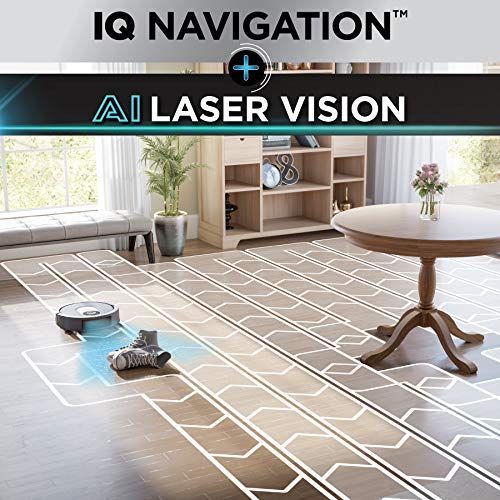
- AI Laser Vision maps and navigates in complete darkness without infrared limitations
- Self-empty base holds 60 days of pet hair and fine debris between manual empties
- IQ Home app lets you name rooms and schedule zone-specific cleaning sessions
Watch out for
- No integrated mop function — vacuum only at the $449 price point
- Matrix precision mapping requires 2-3 initial runs to fully calibrate
Read Full Analysis
Shark AI RV2001 is the most affordable entry on this hardwood page at $449.99, sitting $230 below the Shark RV2310AE Matrix and $234 below the Shark Matrix Plus above. AI Laser Vision navigates and maps in complete darkness — useful in homes where robot cleaning runs overnight or in dim hallways where infrared-based sensors underperform. The self-empty base stores up to 60 days of debris between manual empties, comparable to the higher-ranked Shark models on this page. IQ Home app enables room-specific scheduling, so hardwood-heavy spaces like kitchens and dining rooms can run daily while lower-traffic rooms run weekly. The vacuum-only design is the meaningful limitation at this price: RV2001 cannot mop, leaving post-vacuum floor residue and liquid spills requiring a separate cleaning step. Matrix mapping calibration also takes 2-3 initial runs to fully optimize before room assignments settle. For hardwood homes that vacuum daily but mop separately, Shark AI RV2001 delivers Shark-quality navigation and self-emptying at the lowest price on this page.
Frequently Asked Questions
What features matter most for robot vacuums on hardwood?
Will a robot vacuum scratch hardwood floors?
Do robot vacuums work on homes with mixed hardwood and rugs?
Can I use a robot mop on hardwood daily?
How often should a robot vacuum run on hardwood?
How We Analyze Products
We analyze Amazon review data — often thousands of reviews per product — to surface patterns that individual buyers miss. Our process aggregates star ratings, review counts, and buyer sentiment at scale, identifying which strengths and weaknesses appear consistently across the largest review samples available.
Each product earned its placement through data: total review volume, average rating, and the specific praise and complaints that repeat most often across buyers. No manufacturer paid for placement on this page. Products appear here because buyers endorsed them at scale, not because a company asked us to feature them.
We use AI to summarize review sentiment — not to fabricate opinions, but to condense what thousands of buyers actually wrote into a readable format. The pros and cons you see reflect the most common themes found in verified purchaser reviews, paraphrased for clarity. We do not claim to have accessed Reddit, YouTube, or specific publications in generating these summaries.
Prices shown reflect Amazon pricing at the time this page was last generated. Click “See Today’s Price” to get the current live price on Amazon. Read our full methodology →