Best Sewing Machine for Embroidery (2026)

The SINGER Quantum Stylist 9960 ($549.99) is the top pick for embroidery-style sewing -- 600 stitches, 5 monogramming alphabets, and programmable sequences that no basic machine can match.
See Today’s Price →At a Glance
Showing 3 of 3 products
SINGER Quantum Stylist 9960
“The SINGER Quantum Stylist 9960 is the most capable machine for decorative and embroidery-style sewing without a dedicated embroidery machine. Its 600 built-in stitches, 5 monogramming fonts, mirror i”
See Today’s Price →What we like
- 600 built-in stitches — the most extensive decorative library in this class
- 5 built-in alphabets for monogramming and personalization
- Mirror imaging and stitch elongation — customize any built-in stitch
- 13 presser feet including open-toe embroidery foot
- Programmable stitch sequences — save custom decorative combinations
- Knee lifter for hands-free foot control during delicate work
Watch out for
- $549.99 — highest price on this list
- 600 stitches has a significant learning curve for discovery
- Does not load external embroidery design files
SINGER Heavy Duty 4452
“The SINGER Heavy Duty 4452 is the right pick when your decorative sewing happens on heavy fabric. Denim jackets, canvas bags, and faux leather items require a machine that can run dense satin stitches”
See Today’s Price →What we like
- High-piercing-power motor handles dense decorative stitching on thick fabrics
- 32 built-in stitches including key decorative options
- Stainless steel bedplate for smooth fabric flow
- Metal interior frame prevents flexing during sustained embroidery work
- 1-step automatic buttonhole with 6 styles
Watch out for
- 32 stitches — significantly fewer decorative options than Quantum Stylist
- No monogramming alphabet fonts
- No LCD display — dial selection
SINGER M3500
“The SINGER M3500 is the best pick for beginners who want SINGER brand quality with electronic stitch selection. At $199.99, it bridges the gap between the mechanical Simple 3337 ($179.99) and the full”
See Today’s Price →What we like
- 23 built-in stitches with simple electronic selection
- LED workspace lighting — brighter and longer-lasting than incandescent
- SINGER's reliable motor in a computerized body
- Automatic needle threader
- Extension table included for wider work area
Watch out for
- 23 stitches — fewer options than Brother CS6000i at similar price
- No automatic tension (user-set like mechanical)
- Lighter machine than the SINGER Simple 3337
Sewing Machine for Embroidery (2026) Buying Guide
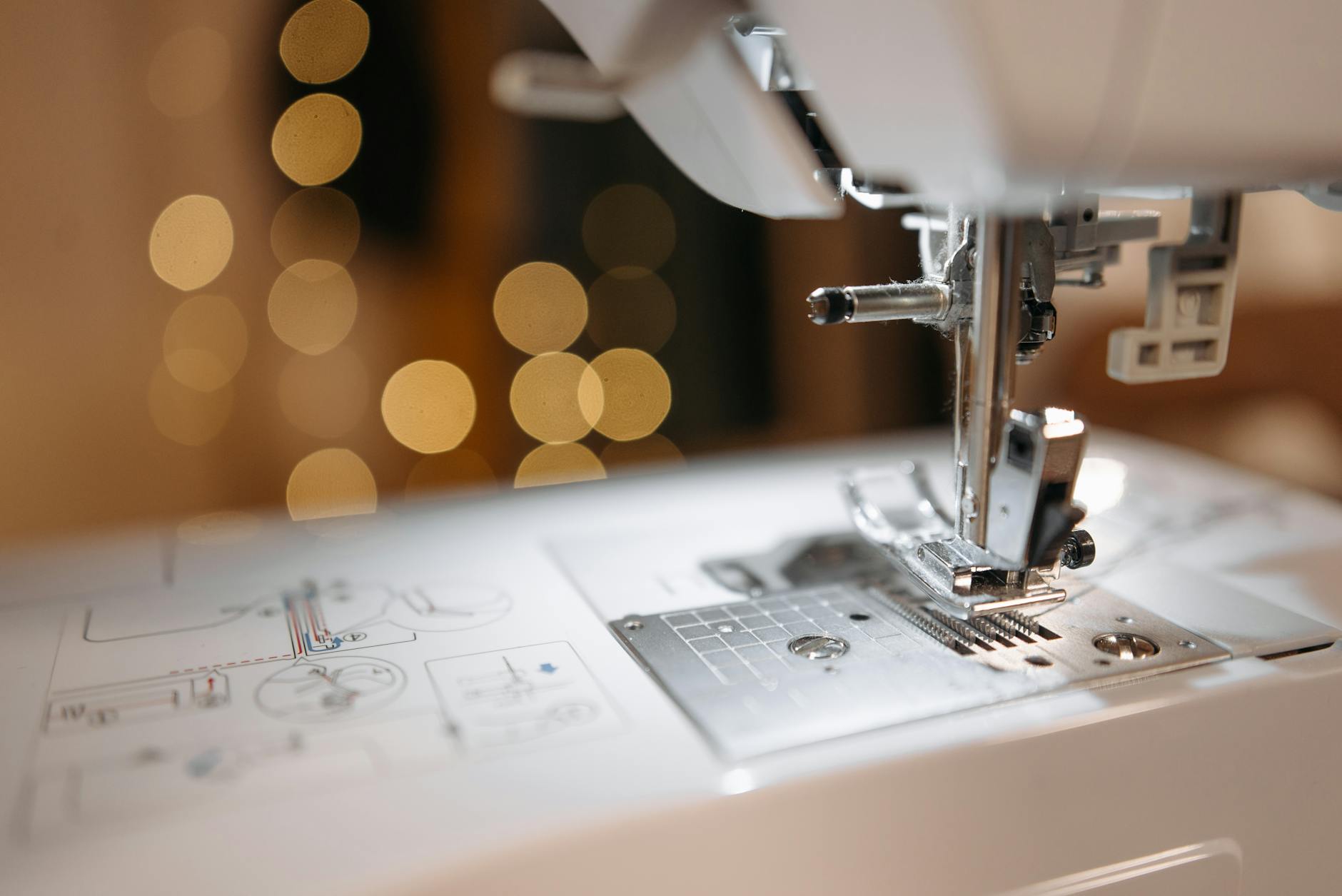 Photo by Pavel Danilyuk / Pexels
There are two different types of "embroidery machine." A dedicated embroidery machine loads external design files (.PES, .DST) from a computer and stitches complex logos and pictures automatically -- these start at $500 and require embroidery software. A "sewing machine good for embroidery" uses built-in decorative stitches, alphabets, and manual embroidery feet to achieve embroidery-style results. This page covers the second type.
Best for Built-In Embroidery: SINGER Quantum Stylist 9960
600 built-in decorative stitches, 5 alphabets (uppercase, lowercase, script, decorative), and mirror imaging give the 9960 the broadest creative range of any non-dedicated embroidery machine at this price. The programmable stitch sequences let you save multi-stitch combinations for repeating embroidery patterns. 13 presser feet include the open-toe embroidery foot needed for precise decorative work. The knee lifter frees both hands during delicate monogramming. At $549.99, it is the most capable machine for sewists who want embroidery-style results without an embroidery machine.
Best for Embroidery on Heavy Fabric: SINGER Heavy Duty 4452

When decorative sewing needs to happen on thick material -- denim, canvas, faux leather -- the 4452 is the better choice over the 9960. Its high-piercing motor prevents the thread breaks and skipped stitches that ruin dense satin stitches on thick fabric. The stainless steel bedplate keeps fabric moving smoothly during decorative runs. 32 stitches covers the key decorative options without the full 600-stitch library -- adequate for most embellishment work on heavy material at $249.99.
Best Entry-Level for Decorative Sewing: SINGER M3500
The M3500 is the right starting machine for sewists exploring decorative stitching for the first time. 23 built-in stitches include basic decorative options -- scrollwork, satin stitch variations, and simple geometric patterns. LED lighting is important for decorative work where you need to see needle placement precisely. At $199.99, it is the lowest-cost way to try decorative sewing before committing to the Quantum Stylist's broader library.
When You Need a Dedicated Embroidery Machine Instead
If you want to stitch photographs, company logos, or complex multi-color designs that you download from embroidery design websites, you need a dedicated embroidery machine. The machines on this page use only built-in stitches -- they cannot execute external design files. A dedicated embroidery machine starts at $500-600 and requires embroidery software. The Quantum Stylist 9960 covers everything between basic sewing and a full embroidery machine setup.
Stabilizers and Hoops
Even without a dedicated embroidery machine, professional-quality embroidery results on a sewing machine require stabilizer (cut-away or tear-away, depending on fabric weight) and a free-motion embroidery foot. The SINGER Quantum Stylist 9960 includes the open-toe embroidery foot in its 13-foot kit. Stabilizer is sold separately at any fabric store for $8-15 per package.
Related Guides
Frequently Asked Questions
What is the difference between a sewing machine and an embroidery machine?
What embroidery formats do machines support?
What hoop size do I need for embroidery?
What stabilizer do I use for machine embroidery?
How do I transfer an embroidery design to my machine?
How We Analyze Products
We analyze Amazon review data — often thousands of reviews per product — to surface patterns that individual buyers miss. Our process aggregates star ratings, review counts, and buyer sentiment at scale, identifying which strengths and weaknesses appear consistently across the largest review samples available. The 62,000+ reviews analyzed on this page represent real verified-purchase feedback from Amazon buyers.
Each product earned its placement through data: total review volume, average rating, and the specific praise and complaints that repeat most often across buyers. No manufacturer paid for placement on this page. Products appear here because buyers endorsed them at scale, not because a company asked us to feature them.
We use AI to summarize review sentiment — not to fabricate opinions, but to condense what thousands of buyers actually wrote into a readable format. The pros and cons you see reflect the most common themes found in verified purchaser reviews, paraphrased for clarity. We do not claim to have accessed Reddit, YouTube, or specific publications in generating these summaries.
Prices shown reflect Amazon pricing at the time this page was last generated. Click “See Today’s Price” to get the current live price on Amazon. Read our full methodology →