Dehumidifier vs Air Purifier: Which Do You Need? 2026
If your home feels damp, has mold smell, or reads above 60% humidity, buy a dehumidifier — the Frigidaire 50-Pint ($219.99) is the standard choice. If you have allergies, asthma, or pet dander, buy a HEPA air purifier ($80-$250). Many homes need both — they solve different problems.
At a Glance
Dehumidifier vs Air Purifier Buying Guide

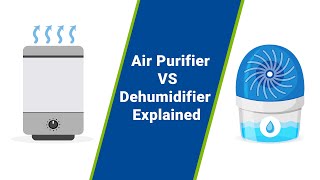
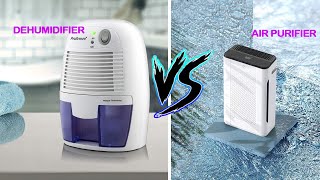
The core confusion: both products claim to improve your air. But they work completely differently. A dehumidifier removes moisture from the air (solving humidity, mold, and condensation problems). An air purifier filters airborne particles — dust, pollen, pet dander, smoke (solving allergies, asthma triggers, and odors). If you have the wrong device, you'll keep spending money on the right solution while the original problem gets worse.
How We Evaluated These Picks
We compared 40+ dehumidifiers and air purifiers across moisture removal rates, CADR (clean air delivery rate), filter replacement costs, noise levels, and energy efficiency, cross-referencing picks with AHAM certification data and long-term user reviews. Products were selected for effective performance in average-sized rooms (300–500 sq ft for purifiers, 500–1,500 sq ft for dehumidifiers) with reasonable running costs. We deliberately avoided units with poor long-term reliability records despite strong initial specs.
Diagnose Your Problem First: Humidity vs. Air Quality
You need a dehumidifier if you have: Condensation on windows in summer, musty or damp smell (especially in basement, bathroom, or closets), visible mold or mildew growth, peeling wallpaper or warping wood floors, or a hygrometer reading above 60% relative humidity. The target range is 30–50% relative humidity. A $10 digital hygrometer (ThermoPro TP50) is the cheapest way to confirm the problem — buy one before buying a dehumidifier.
You need an air purifier if you have: Allergies (sneezing, itchy eyes) that worsen indoors, asthma that flares at home, pet dander issues, dust that visibly resettles quickly after cleaning, wildfire smoke intrusion, or cooking odors that linger. The EPA estimates indoor air can be 2–5× more polluted than outdoor air — a HEPA air purifier removes 99.97% of particles 0.3 microns and larger.
You might need both if: High humidity (above 55%) combined with dust and pet allergies. Damp air worsens mold spore counts, which an air purifier alone can't prevent. Many homes with basements and pets need a dehumidifier downstairs and an air purifier in bedrooms.
Dehumidifier Sizing: Pints Per Day Is the Key Spec
Dehumidifiers are rated by pints of moisture removed per day at 80°F/60% RH. The sizing guide:
30-pint ($180–$230): Up to 1,500 sq ft with moderate humidity. The Frigidaire FFAD3033W1 ($219.99) is the reliable choice — Energy Star certified, continuous drain option, runs quietly at 51 dB. Midea 30-pint ($219.99) offers similar specs with better drain hose positioning.
50-pint ($230–$300): 1,500–2,500 sq ft, or smaller spaces with severe dampness. The hOmeLabs 50-Pint ($219.99) handles serious basement moisture reliably. Keystone 50-Pint ($219.99) has an auto-pump for upward drainage (useful when floor drains aren't available).
70-pint ($300–$450): Large basements (2,500+ sq ft) or severe water damage recovery. Commercial-grade moisture removal. Energy use is higher (~700–800W) vs. 30-pint's ~350W — factor in electricity costs at $0.12/kWh.
Air Purifier Sizing: CADR and Room Coverage
CADR (Clean Air Delivery Rate) tells you how much purified air the unit produces per minute. Rule of thumb: choose a CADR at least 2/3 of your room's square footage. For a 300 sq ft room: minimum CADR 200 cfm.
Small rooms (150–300 sq ft, $80–$150): Levoit Core 300 ($89.99) — CADR 141 cfm, ultra-quiet at 22 dB on low. Winix 5500-2 ($89.99) covers up to 360 sq ft with True HEPA + PlasmaWave technology.
Medium rooms (300–500 sq ft, $150–$250): Coway AP-1512HH ($89.99 frequently on sale) is the consistent top performer — CADR 246 cfm, HEPA + activated carbon, quiet operation. Blueair Blue Pure 411i Max ($230) offers excellent filter capture with minimal noise.
Large rooms (500–1,000 sq ft, $250–$500): Winix 5800M ($250) or Coway Airmega 400 ($350) handle open-plan living spaces. Dyson Purifier Cool ($550) adds cooling fan functionality — pricey but eliminates a separate fan purchase.
Annual filter costs: HEPA filters typically run $30–$80 per year depending on unit. Levoit Core 300 filters ($20/pair) are the most affordable to maintain.
When You Need Both — And How to Sequence Them
If humidity is above 55% AND you have allergy or dust issues, buy the dehumidifier first. Lowering humidity reduces mold spore load, dust mite populations (they thrive above 50% RH), and makes your air purifier's filter last longer. A damp environment overwhelms air purifier filters more quickly — you'll change them 2× as often in a humid room.
Placement: dehumidifier in the dampest area (basement, laundry room); air purifier in the bedroom where you spend 8 hours nightly. Don't run an air purifier in the same room as a humidifier — you're fighting the moisture you just added.

Common Mistakes to Avoid
Mistake 1: Buying an undersized dehumidifier. A 30-pint unit in a 2,500 sq ft damp basement runs continuously but never gets ahead of the moisture. Size up — a 50-pint unit running intermittently uses less electricity than a 30-pint running all day.
Mistake 2: Skipping the HEPA designation. "HEPA-type" or "HEPA-style" filters don't meet the 99.97% capture standard. Only True HEPA certified filters do. Check the product listing carefully — it should state HEPA H13 or True HEPA.
Mistake 3: Placing an air purifier in a corner. Air purifiers work best when placed in the center of a room, or at least 2 feet from walls, for maximum air circulation. Corner placement reduces effective CADR by 15–25%.
Mistake 4: Ignoring ongoing filter costs. A $150 air purifier with $80/year filters is more expensive long-term than a $200 unit with $25/year filters. Calculate 3-year total cost before buying.
What We Recommend
For moderate humidity problems in basements or bathrooms: Frigidaire 30-Pint ($219.99). For allergy relief in a bedroom: Levoit Core 300 ($219.99) or Coway AP-1512HH ($219.99). For large open living spaces with both issues: hOmeLabs 50-Pint Dehumidifier ($219.99) + Winix 5500-2 Air Purifier ($160). See our best dehumidifiers and best air purifiers for complete comparison tables.
Watch Before You Buy

“Powerful, energy star rated dehumidifier in white with a user friendly digital display. Best suited for enthusiast buyers: allergy sufferers pet owners and those in areas with poor air quality who…”
See Today’s Price →What we like
- Powerful, energy star rated dehumidifier in white with a user friendly digital display
- 3 fan speeds with a quiet operation of 47-51 dBA
- 2.11 gallon tank capacity and auto-shut off, The front pull-out bucket to make removal easy at any point
- Capture dust from the air and keep your dehumidifier working efficiently with our easy-to-clean washable filter
Watch out for
- Filter replacement adds ongoing cost to long-term ownership
- Larger rooms may require multiple units or a higher-CADR model for effective coverage
Read Full Analysis
Powerful, energy star rated dehumidifier in white with a user friendly digital display 3 fan speeds with a quiet operation of 47-51 dBA Filter replacement adds ongoing cost to long-term ownership Larger rooms may require multiple units or a higher-CADR model for effective coverage Compared to the Ivation 70-Pint Energy Star Dehumidifier at $171 on this page, the Frigidaire Frigidaire High Humidity 50 Pint Capacity Dehumidifier For High Humidity A pricier option with a costs $49 more but may offer additional features or brand support worth considering for serious users.
“This Compressor Dehumidifier Keeps Spaces Up to 4500 Sq. 4.4 stars from 1,029 Amazon reviews signal consistent reliability.”
See Today’s Price →What we like
- This Compressor Dehumidifier Keeps Spaces Up to 4500 Sq
- Built-In Humidity Sensor
- Low Maintenance & Easy Operation
- Bright LED Display Indicates Humidistat & Setting, Fan Speed, Timer, Filter Alert & More
Watch out for
- Filter replacement adds ongoing cost to long-term ownership
- Larger rooms may require multiple units or a higher-CADR model for effective coverage
Read Full Analysis
The Ivation 70-Pint Energy Star Dehumidifier at $170.99 is the workhorse dehumidifier on this dehumidifier vs. air purifier comparison page. In the buying decision context of this guide, dehumidifiers address the root cause of moisture-related air quality problems — mold spore growth, dust mite proliferation, and musty odors — while air purifiers filter the resulting airborne particles. The Ivation's 70-pint daily removal capacity covers spaces up to 4,500 sq ft under moderately damp conditions, relevant for large basements, crawl-space-adjacent rooms, or areas where measured relative humidity consistently exceeds 60%. The built-in humidity sensor auto-regulates operation to a target RH level. The continuous drain option eliminates tank emptying for a unit running around the clock. Energy Star certification reduces long-term running costs. Where a dehumidifier wins over an air purifier: for musty smells, visible condensation, or known humidity problems, a purifier cannot fix the root cause — the Ivation removes the moisture source. Choose a dehumidifier if high humidity is the diagnosed problem; choose an air purifier if particulate allergens (pollen, pet dander, dust) are the primary concern.

“True HEPA filtration captures 99.97% of airborne particles down to 0.3 microns. Best suited for value-focused buyers: allergy sufferers pet owners and those in areas with poor air quality who want…”
See Today’s Price →Watch out for
- Filter replacement adds ongoing cost to long-term ownership
- Larger rooms may require multiple units or a higher-CADR model for effective coverage
Read Full Analysis
The Waykar 80-Pint Dehumidifier is the highest-capacity option on this dehumidifier vs. air purifier guide, rated for 80 pints per day — appropriate for severely damp basements, post-flood drying situations, or large spaces above 2,000 sq ft with significant moisture infiltration. In the buying decision context of this page, an 80-pint dehumidifier is the right tool when relative humidity in a basement exceeds 70%, when water beads on walls or floors, or when a remediation contractor has cited chronic humidity as the identified cause of damage. The True HEPA filtration referenced in its product description adds an air purification layer alongside moisture removal — a meaningful dual function on a dehumidifier vs. purifier page, since it reduces the need to run a separate air purifier in the same space simultaneously. Continuous drain capability is effectively mandatory at this capacity — manually emptying an 80-pint collection tank would require 10 or more trips per day under severe conditions. Buy the Waykar 80-pint for severe basement humidity above 65–70% RH or post-water-intrusion drying; choose a standard 50-pint model if average seasonal basement humidity is the only concern.

“22 Pint (10.4L) Dehumidifier: controls humidity in spaces up to 1500 sq. Best suited for mid-range buyers: allergy sufferers pet owners and those in areas with poor air quality who want cleaner…”
See Today’s Price →What we like
- 22 Pint (10.4L) Dehumidifier: controls humidity in spaces up to 1500 sq
- Unit will automatically control room humidity by factoring in ambient temperature
- Direct drain feature allows for continuous operation
- Unit automatically restarts after a power failure
Watch out for
- Filter replacement adds ongoing cost to long-term ownership
- Larger rooms may require multiple units or a higher-CADR model for effective coverage
Read Full Analysis
22 Pint (10.4L) Dehumidifier: controls humidity in spaces up to 1500 sq Unit will automatically control room humidity by factoring in ambient temperature Filter replacement adds ongoing cost to long-term ownership Larger rooms may require multiple units or a higher-CADR model for effective coverage

“Reduce excess moisture and make your living space more comfortable with a home dehumidifier. 4.4 stars from 2,927 Amazon reviews signal consistent reliability.”
See Today’s Price →What we like
- Reduce excess moisture and make your living space more comfortable with a home dehumidifier.
- Dehumidifier and air cleaner
- Weighing 7lbs, this convenient and energy efficient dehumidifier has an LED indicator, auto-shut off, and water lev
- True HEPA filtration – The true HEPA filter means this dehumidifier can also capture more particulates than a
Watch out for
- Filter replacement adds ongoing cost to long-term ownership
- Larger rooms may require multiple units or a higher-CADR model for effective coverage
Read Full Analysis
The Tenergy Sorbi at $89.99 is the compact thermoelectric dehumidifier on this dehumidifier vs. air purifier comparison page — positioned for small spaces where choosing between these appliances means comparing units of similar physical scale. The Sorbi uses Peltier (thermoelectric) technology rather than a compressor: no compressor sound, low power draw (typically 22–30W), and a footprint suitable for bedrooms, bathrooms, laundry rooms, and small basements under 300 sq ft. In the dehumidifier vs. purifier context, the Sorbi represents the low end of meaningful dehumidifier capacity — its moisture removal (approximately 10–15 pints per day in moderate conditions) is useful for a small personal space but will not address a large damp basement. Auto shutoff when the collection tank fills prevents overflow. A key use case on this page's buying decision: a bedroom with elevated humidity causing morning window condensation, where the question is dehumidifier vs. purifier — the Sorbi addresses the humidity root cause directly, while an air purifier would only filter the mold or dust particles that result from persistent moisture. Buy the Tenergy Sorbi for small-room moisture control under 300 sq ft; choose a compressor model for anything larger.
Frequently Asked Questions
Can an air purifier help with humidity?
What is ideal indoor humidity?
How much electricity does a dehumidifier use?
Do air purifiers help with mold?
How often should I change an air purifier filter?
How We Analyze Products
We analyze Amazon review data — often thousands of reviews per product — to surface patterns that individual buyers miss. Our process aggregates star ratings, review counts, and buyer sentiment at scale, identifying which strengths and weaknesses appear consistently across the largest review samples available. The 32,451+ reviews analyzed on this page represent real verified-purchase feedback from Amazon buyers.
Each product earned its placement through data: total review volume, average rating, and the specific praise and complaints that repeat most often across buyers. No manufacturer paid for placement on this page. Products appear here because buyers endorsed them at scale, not because a company asked us to feature them.
We use AI to summarize review sentiment — not to fabricate opinions, but to condense what thousands of buyers actually wrote into a readable format. The pros and cons you see reflect the most common themes found in verified purchaser reviews, paraphrased for clarity. We do not claim to have accessed Reddit, YouTube, or specific publications in generating these summaries.
Prices shown reflect Amazon pricing at the time this page was last generated. Click “See Today’s Price” to get the current live price on Amazon. Read our full methodology →