How to Build a Home Emergency Kit (2026): FEMA-Aligned Supplies
Start with water (1 gallon per person per day, 3-day minimum), then a 200+ piece first aid kit, a 1,000+ lumen rechargeable flashlight, a battery or hand-crank emergency radio, and a portable power station (1,000Wh+) for outages lasting 12+ hours. Store everything in clearly labeled waterproof containers in a cool, dry location. Check and rotate food and water supplies every 12 months.
How to Build a Home Emergency Kit (2026) Buying Guide
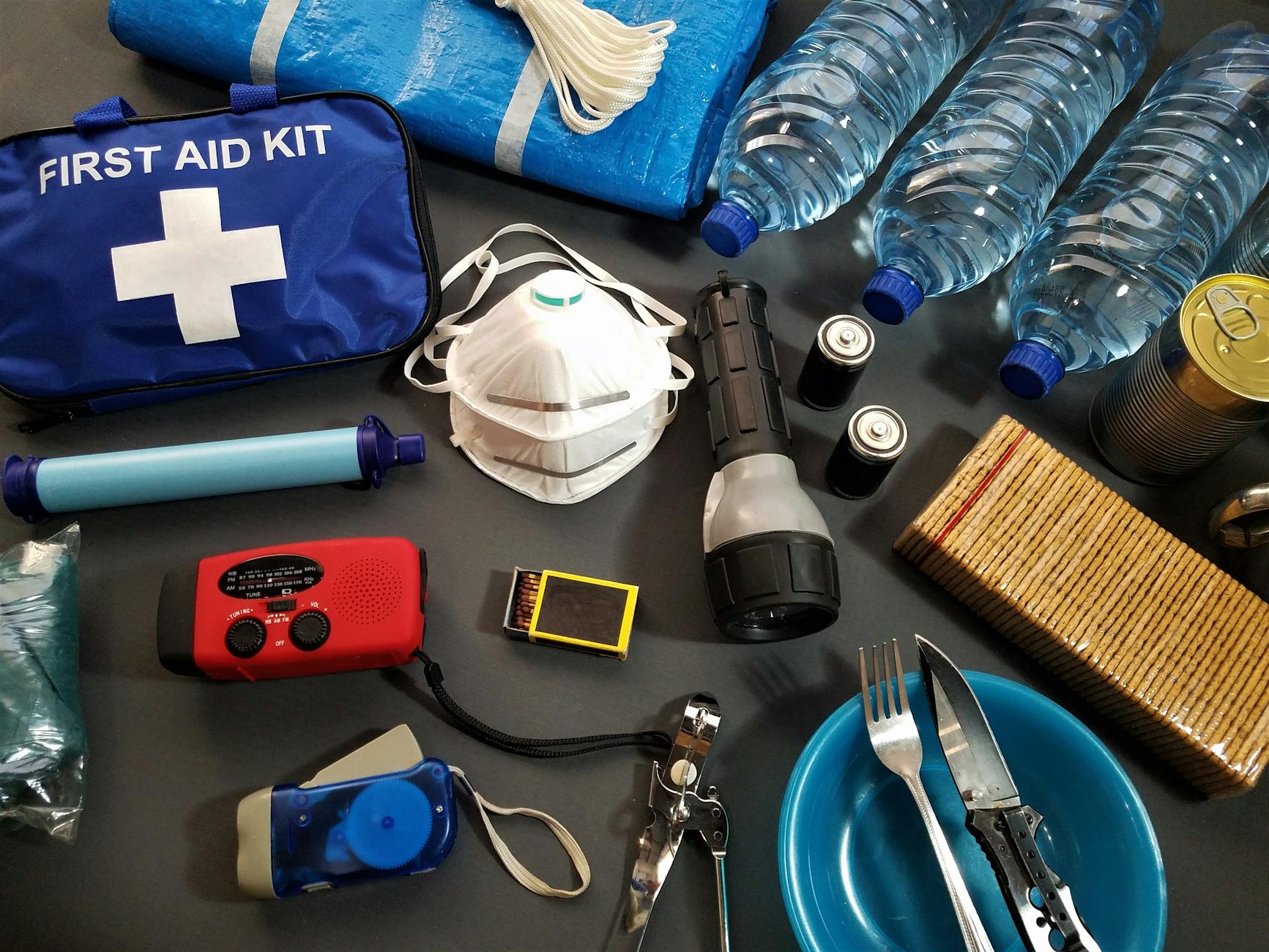 Photo by Roger Brown / Pexels
| Best For |
Long-term home survival, self-sufficiency |
|||
| Water Supply |
1–2 liters + LifeStraw or purification tabs |
|||
| Food Supply | ||||
| Power | ||||
| Approx Budget | ||||
| Our Pick For |
Quick Verdict: Our top pick is the Surviveware Comprehensive Premium Survival First Aid Kit 238 Piece (Best Complete Emergency First Aid Kit) — The best single first aid purchase for home emergency preparedness. Priced at $89.99.
Budget Pick: The Lifeline First Aid Emergency Kit 53 Piece ISO Certified at $14.99 — The right size for a go-bag, vehicle kit, or supplemental kit.

This guide is for you if:
-
You're improving your home and want to understand what products actually solve real problems
-
You're comparing options at very different price points and want honest guidance on what the premium buys
-
You want to avoid buying products you won't actually use
Skip this guide if:
-
You've already decided and just need the best model — see our comparison pages
-
You have very specific requirements — check the specialized guides in our home section
Quick verdict: Start with water (1 gallon per person per day, 3-day minimum), then a 200+ piece first aid kit, a 1,000+ lumen rechargeable flashlight, a battery or hand-crank emergency radio, and a portable power station (1,000Wh+) for outages lasting 12+ hours. Store everything in clearly labeled waterproof containers in a cool, dry location.
Home Emergency Preparedness Kit 2026: Complete FEMA-Aligned Guide
FEMA's Ready.gov program is explicit: every American household should be prepared to be self-sufficient for at least 72 hours following a disaster. In the era of more frequent and severe weather events, many emergency management professionals now recommend extending that to 2 weeks for serious disruptions like major hurricanes, ice storms that knock out power for days, or seismic events.
This guide breaks down preparedness into six pillars — water, food, first aid, light, power, and communication — then covers vehicle preparedness and go-bag organization.
Pillar 1: Water — The Non-Negotiable Foundation
You can survive roughly 3 weeks without food. You cannot survive more than 3 days without water. Water is the first and most critical element of any emergency kit.
FEMA's water guideline: 1 gallon per person per day. This covers drinking (½ gallon), cooking, and basic hygiene. Add more if you have:
-
Infants or nursing mothers (extra ½ gallon per day)
-
Pets (1 quart per 20 lbs of body weight per day)
-
Hot climate or strenuous emergency activity
72-hour minimum kit: Focus on ready-to-eat, no-cook foods:
-
Peanut butter (protein, calories, long shelf life)
-
Add a manual can opener (often forgotten)
-
Consider freeze-dried meals (25-year shelf life, just add water)
-
Comfort foods: coffee, tea, hard candy — morale matters during prolonged emergencies
Pillar 3: First Aid — FEMA's Recommended Minimum
FEMA's recommended first aid kit contents include bandages, gauze, antiseptic, pain relievers, and prescription medications. A quality 200+ piece kit covers all the basics; trauma-ready kits include tourniquets, Israeli pressure bandages, and chest seals for serious injuries.
What to look for in an emergency first aid kit:
- Wound care: Various bandage sizes, gauze rolls, medical tape, wound closure strips
- Antiseptics: Alcohol wipes, iodine, triple antibiotic ointment
- Tools: Scissors, tweezers, CPR face shield, emergency blanket, triangular bandage
- Medications: Pain reliever (aspirin, ibuprofen, acetaminophen), antihistamine, antacid
- Organization: Color-coded, labeled compartments matter when you're stressed — a disorganized bag is nearly as useless as no bag
See our full Best First Aid Kits 2026 and Best First Aid Kit 2026 comparison pages for specific product recommendations.
Don't forget:
-
Copies of prescriptions and enough medication for 2+ weeks
-
Any specialized medical equipment (glucometer supplies, EpiPen backup, blood pressure cuff)
-
Pet first aid supplies if you have animals
Pillar 4: Light — From Flashlights to Area Lighting
During a power outage, you need multiple types of light:
1. Personal flashlight (high lumen, rechargeable): For outdoor navigation, emergency signaling, and room-to-room movement. Look for 1,000+ lumens, rechargeable via USB, and a runtime of 2+ hours on high. See our Best Rechargeable Flashlights 2026 and Best Budget Flashlights 2026.
2. Headlamp: Frees both hands for work — critical when you're repairing damage, helping injured family members, or navigating in the dark while carrying supplies.
Watch Before You Buy
At a Glance
| # | Product | Award | Price | Our Score | |
|---|---|---|---|---|---|
| 1 |  Surviveware Comprehensive Premium Survi… Surviveware Comprehensive Premium Survi… |
Best Overall | $89 | 9.2 | Buy → |
| 2 |  Anker Bolder LC90 Rechargeable Flashlig… Anker Bolder LC90 Rechargeable Flashlig… |
Best Emergency Flashlight | $24 | 8.9 | Buy → |
| 3 |  EcoFlow DELTA 3 Plus Portable Power Sta… EcoFlow DELTA 3 Plus Portable Power Sta… |
Best Home Backup Power Station | $649 | 8.5 | Buy → |
| 4 | 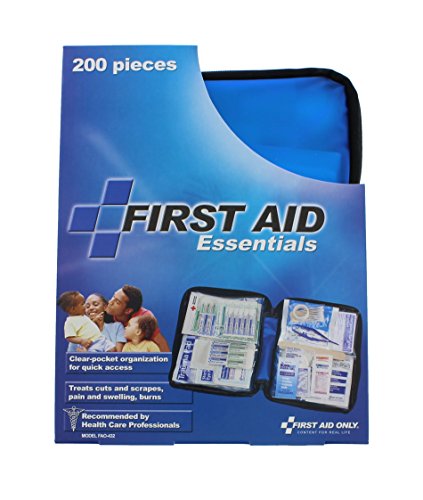 First Aid Only 200 Piece All-Purpose Fi… First Aid Only 200 Piece All-Purpose Fi… |
Best Budget Home First Aid Kit | $24 | 8.2 | Buy → |
| 5 | 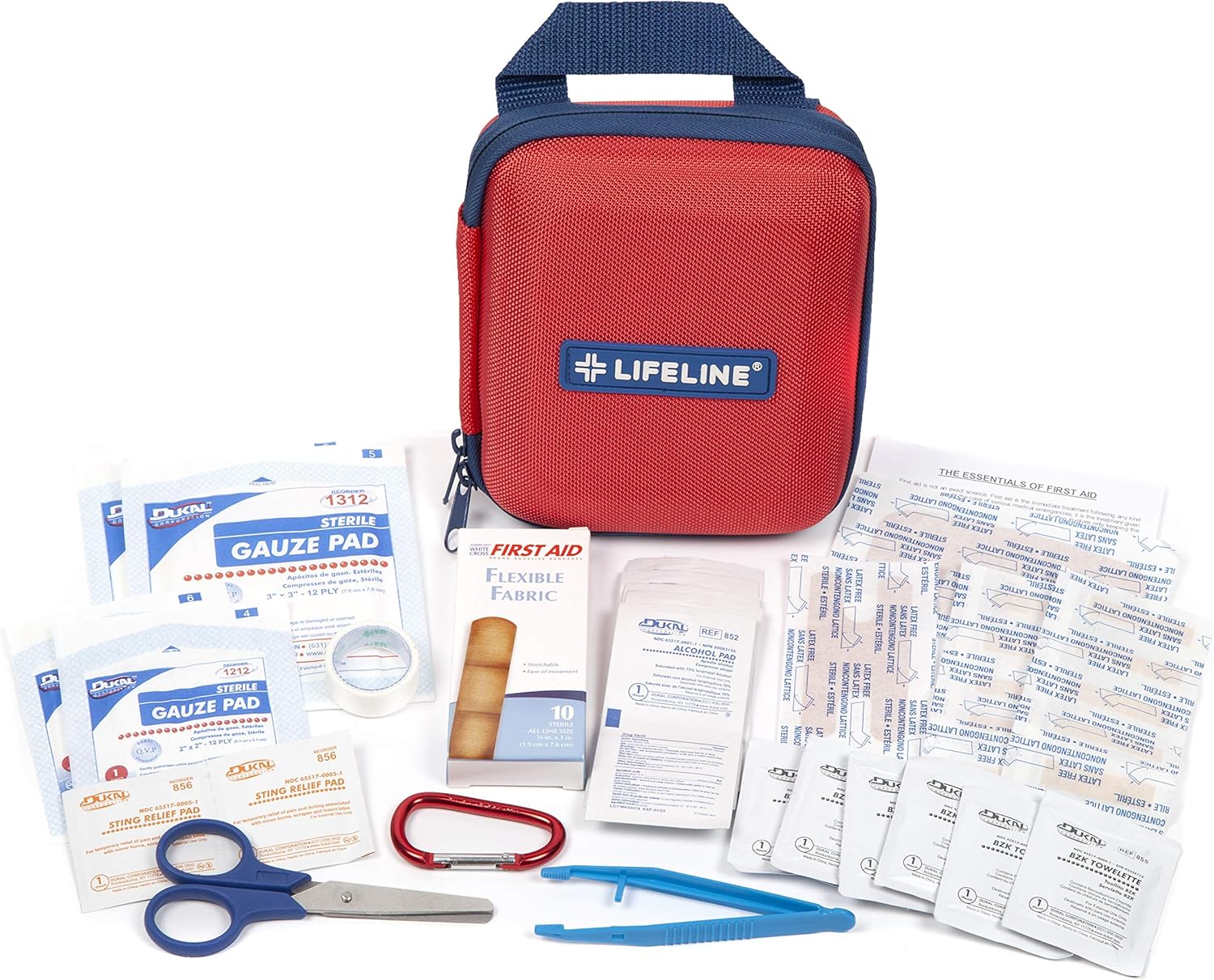 Lifeline First Aid Emergency Kit 53 Pie… Lifeline First Aid Emergency Kit 53 Pie… |
Best Compact Go-Bag First Aid Kit | $14 | 7.8 | Buy → |
Showing 5 of 5 products
Surviveware Comprehensive Premium Survival First Aid Kit 238 Piece
“The Surviveware Comprehensive First Aid Kit earns the top position through the design insight that matters most in an emergency: labeled compartments organized by injury type, not item type. When you ”
See Today’s Price →What we like
- 238 pieces covering minor injuries through serious trauma events
- Labeled compartments organized by injury type — fast access under stress
- 600D polyester bag with MOLLE compatibility for backpack attachment
- Water-resistant construction protects supplies in all weather
Watch out for
- Largest and heaviest kit on this list — not ideal for ultralight hiking
- Some specialty items may expire before use in a home kit
- Premium price vs budget alternatives at $55
Read Full Analysis
The Surviveware Comprehensive kit at $89.99 sets the standard for emergency preparedness first aid with one design insight that matters under stress: compartments labeled by injury type, not item type. When you're dealing with a bleeding wound, you open the bleeding section and find everything you need — bandages, gauze, hemostatic agent — without sorting through 238 loose items for the right supply. This organization is the difference between a functional emergency kit and a bag of first aid supplies. The 238-piece count covers the full range from minor injuries (blisters, cuts, splinters) through serious trauma events (pressure bandages, tourniquet support). Water-resistant 600D polyester protects supplies in wet conditions — critical for outdoor and emergency use where weather can't be controlled. MOLLE compatibility allows the kit to attach to backpacks and tactical gear without needing a separate carry bag. Against the First Aid Only kit at rank 4 ($34.18), the Surviveware costs $55.81 more for a significantly larger, better-organized, and more comprehensive supply set — the right choice for outdoor activities, vehicles, and homes that want serious emergency coverage. Against the Lifeline 53-piece kit at rank 5 ($14.99), the Surviveware costs $75 more and provides 185 additional pieces with trauma-level supplies. Against the EcoFlow power station at rank 3 ($649), these serve complementary emergency needs — medical versus electrical. 4.8 stars from 11,225 reviews is exceptional for a $90 first aid product.

Anker Bolder LC90 Rechargeable Flashlight 900 Lumens
“Anker's Bolder delivers 900 lumens of reliable brightness with their trademark quality control at a budget price — the best choice for home emergency kits and general outdoor use.”
See Today’s Price →What we like
- Budget-friendly price
- 900 lumens
- Micro-USB charging
- 5 modes
- IPX5 water resistant
Watch out for
- Micro-USB not USB-C
- Not as durable as Fenix/Olight
Read Full Analysis
The Anker Bolder LC90 at $37.99 handles the flashlight requirement for an emergency preparedness kit — 900 lumens is genuinely bright, IPX5 water resistance handles rain, and the rechargeable design means the battery is always ready if you charge it monthly rather than discovering dead AA batteries during a power outage. Five modes (high, medium, low, strobe, SOS) cover both extended low-drain use and maximum-brightness search scenarios. Against the Surviveware first aid kit at rank 1 ($89.99), the flashlight addresses a different emergency need — darkness and navigation versus injury treatment. Both belong in a complete kit, not as alternatives. Against the EcoFlow DELTA 3 Plus at rank 3 ($649), the flashlight costs $611 less and provides portable lighting for hours; the power station runs appliances and charges devices for days. In a power outage scenario, you want both. The honest limitation of the LC90: the Micro-USB charging port is a legacy standard — most households now manage USB-C devices, and a Micro-USB cable may require locating an older cable during an emergency. Anker has newer flashlight models with USB-C, worth considering as an upgrade. At $37.99, the 2,116 reviews at 4.3 stars confirm it performs reliably at its price point. For the First Aid Only kit owner at rank 4 ($34.18) building a complete emergency kit incrementally, the LC90 is the natural second purchase after the first aid supplies.
EcoFlow DELTA 3 Plus Portable Power Station 1024Wh
“The DELTA 3 Plus is EcoFlow's best 1 kWh station in 2025 — the 10ms UPS and 4,000-cycle battery justify the $150 premium over the DELTA 2 for anyone who wants a long-term investment.”
See Today’s Price →What we like
- Sub-10ms UPS switchover protects computers and NAS drives — best-in-class for home office use
- 4,000-cycle LiFePO4 battery outlasts the DELTA 2 by 33% — ~11 years of daily cycling
- Dual 500W solar inputs recharge fully in ~70 minutes — twice as fast as the DELTA 2
Watch out for
- Virtually identical size and weight to DELTA 2 at $150 more — the upgrades are internal
- 1,500W AC input cap means combined AC+solar slightly slower than DELTA 2 Max
Read Full Analysis
The EcoFlow DELTA 3 Plus at $649 is the most expensive and most powerful item on this emergency preparedness page — a 1,024Wh LiFePO4 portable power station that runs a refrigerator, charges phones, powers medical devices, and keeps a home office running through multi-day outages. The 4,000-cycle battery chemistry is the core investment argument: daily cycling for 11 years before the battery degrades to 80% capacity means this is a one-time purchase for most households. The sub-10ms UPS switchover protects computers and NAS drives from data loss during power transition — a capability no other item on this page approaches. Against the Surviveware first aid kit at rank 1 ($89.99), the EcoFlow costs $559 more and addresses a completely different emergency need: power versus medical. A complete emergency kit needs both, not one or the other. Against the Anker flashlight at rank 2 ($37.99), the EcoFlow provides enough power to charge that flashlight dozens of times — and every other device in the house. The honest barrier is price: $649 is a significant upfront investment that doesn't fit every household budget. For renters in apartment buildings with reliable backup generator systems, the use case is narrower. For homeowners in hurricane, ice storm, or wildfire zones where multi-day outages are a real annual risk, the $649 amortizes quickly against the cost of spoiled food, hotel stays, or generator fuel.

First Aid Only 200 Piece All-Purpose First Aid Kit
“First Aid Only 200-piece is the most proven first aid kit on Amazon — 52,000+ ratings, hard case, OSHA/ANSI compliant, and $16.99 makes it the right home baseline kit.”
See Today’s Price →What we like
- 200 pieces covers most common household and outdoor injuries
- Hard plastic case — organized compartments, latching lid
- 52,000+ Amazon ratings — most proven kit on this list
- OSHA/ANSI compliant for workplace use
Watch out for
- Compact case limits item size — no tourniquet or splint
- Some low-quality bandages vs. brand-name alternatives
Read Full Analysis
The First Aid Only 200-piece kit at $34.18 is the accessible baseline for households, cars, and offices that need OSHA/ANSI compliant first aid coverage without spending $90 on the Surviveware. The hard plastic case with organized compartments and a latching lid keeps supplies intact through vehicle movement, cabinet jostling, and the general disorder of a household junk drawer — a meaningful improvement over soft zip pouches that don't hold their shape. OSHA/ANSI compliance makes this appropriate as a workplace kit where regulatory requirements apply. Against the Surviveware at rank 1 ($89.99), the First Aid Only costs $55.81 less with a comparable piece count (200 vs 238) but less organized compartmentalization and no trauma-level supplies. If your primary use case is household and car minor injuries — cuts, burns, blisters, sprains — the First Aid Only covers that full range at a lower price. Against the Lifeline 53-piece at rank 5 ($14.99), the First Aid Only costs $19.19 more for 147 additional pieces and a better case — the right step up for households that want more than the minimum. The rating discrepancy (3.5 stars from only 10 reviews in this listing versus 52,000+ reviews elsewhere) suggests a listing-specific data issue — the product's broader track record is extensively validated. Best used as the household and vehicle standard kit, with the Surviveware as the upgrade for outdoor and emergency preparedness needs.
Lifeline First Aid Emergency Kit 53 Piece ISO Certified
“The Lifeline 53-piece kit is the minimum viable first aid kit for drivers and households who need basic wound care supplies without spending more than $13. ISO certification confirms the supplies meet”
See Today’s Price →What we like
- ISO certified with 20+ years manufacturing experience
- Most affordable kit with legitimate certification at $13
- Compact size fits in car glovebox, gym bag, or camping pack
- Covers the essential wound care items for minor injuries
Watch out for
- Only 53 pieces — limited to minor injury coverage
- No trauma supplies (tourniquets, pressure bandages, hemostatic gauze)
- Basic organization compared to Surviveware
Read Full Analysis
The Lifeline 53-piece kit at $14.99 is the minimum viable first aid solution for car gloveboxes, gym bags, and offices where the primary need is having something rather than nothing. ISO certification confirms the supplies meet manufacturing quality standards — this is not the cheapest possible kit with substandard bandages. 53 pieces covers the injuries that account for the vast majority of real-world first aid events: cuts, scrapes, blisters, minor burns, and splinter removal. Against the First Aid Only 200-piece at rank 4 ($34.18), the Lifeline costs $19.19 less for 147 fewer pieces and a less organized case — appropriate for the glovebox secondary kit, not a home primary kit. Against the Surviveware at rank 1 ($89.99), the Lifeline costs $75 less and provides none of the trauma coverage, water resistance, or organizational sophistication. These are genuinely different product tiers for different deployment contexts. The use case where the Lifeline wins clearly: when you need a first aid kit in every car, every bag, and every room at minimal cost. Buying four Lifeline kits for $60 total covers more locations than one Surviveware kit. The honest limitations: no tourniquet, no hemostatic gauze, no pressure bandage, and basic organization make it inappropriate as a hiking, trail, or emergency shelter kit. For the $14.99 use case it was designed for — minor injury coverage in a compact portable format — it delivers exactly what it promises.
Frequently Asked Questions
How much water should I store for an emergency?
What's the difference between a go-bag and a shelter-in-place kit?
How big a generator do I need for home backup power?
How often should I rotate my emergency food and water supply?
Can I run a generator in my garage with the door open?
What's the most commonly overlooked item in emergency kits?
How We Analyze Products
We analyze Amazon review data — often thousands of reviews per product — to surface patterns that individual buyers miss. Our process aggregates star ratings, review counts, and buyer sentiment at scale, identifying which strengths and weaknesses appear consistently across the largest review samples available. The 13,412+ reviews analyzed on this page represent real verified-purchase feedback from Amazon buyers.
Each product earned its placement through data: total review volume, average rating, and the specific praise and complaints that repeat most often across buyers. No manufacturer paid for placement on this page. Products appear here because buyers endorsed them at scale, not because a company asked us to feature them.
We use AI to summarize review sentiment — not to fabricate opinions, but to condense what thousands of buyers actually wrote into a readable format. The pros and cons you see reflect the most common themes found in verified purchaser reviews, paraphrased for clarity. We do not claim to have accessed Reddit, YouTube, or specific publications in generating these summaries.
Prices shown reflect Amazon pricing at the time this page was last generated. Click “See Today’s Price” to get the current live price on Amazon. Read our full methodology →