Home Storage Solutions Guide: Closets, Garage, Kitchen, Bathroom (2026)
The HomePop Leatherette Tufted Square Storage Ottoman at $47.24 is the best dual-purpose storage pick — hidden interior stores blankets and remotes while the tufted surface doubles as a coffee table or extra seating. For closet storage: slim velvet hangers ($18/50-pack) double hanging capacity; clear stackable bins ($3–6 each) beat opaque boxes.
At a Glance
| # | Product | Award | Price |
|---|---|---|---|
| 1 | Our Top Pick | $47.24 Buy → |
|
| 2 | Best Cube | $23.99 Buy → |
|
| 3 | Best for Apartments | $162.99 Buy → |
|
| 4 |  Almanor Goods Bed Risers Furnitur… Almanor Goods Bed Risers Furnitur…Almanor Goods |
Best Bed Lifter | $39.99 Buy → |
| 5 | Best Collapsible Storage | Check current price on Amazon Buy → |
Home Storage Solutions Guide Buying Guide
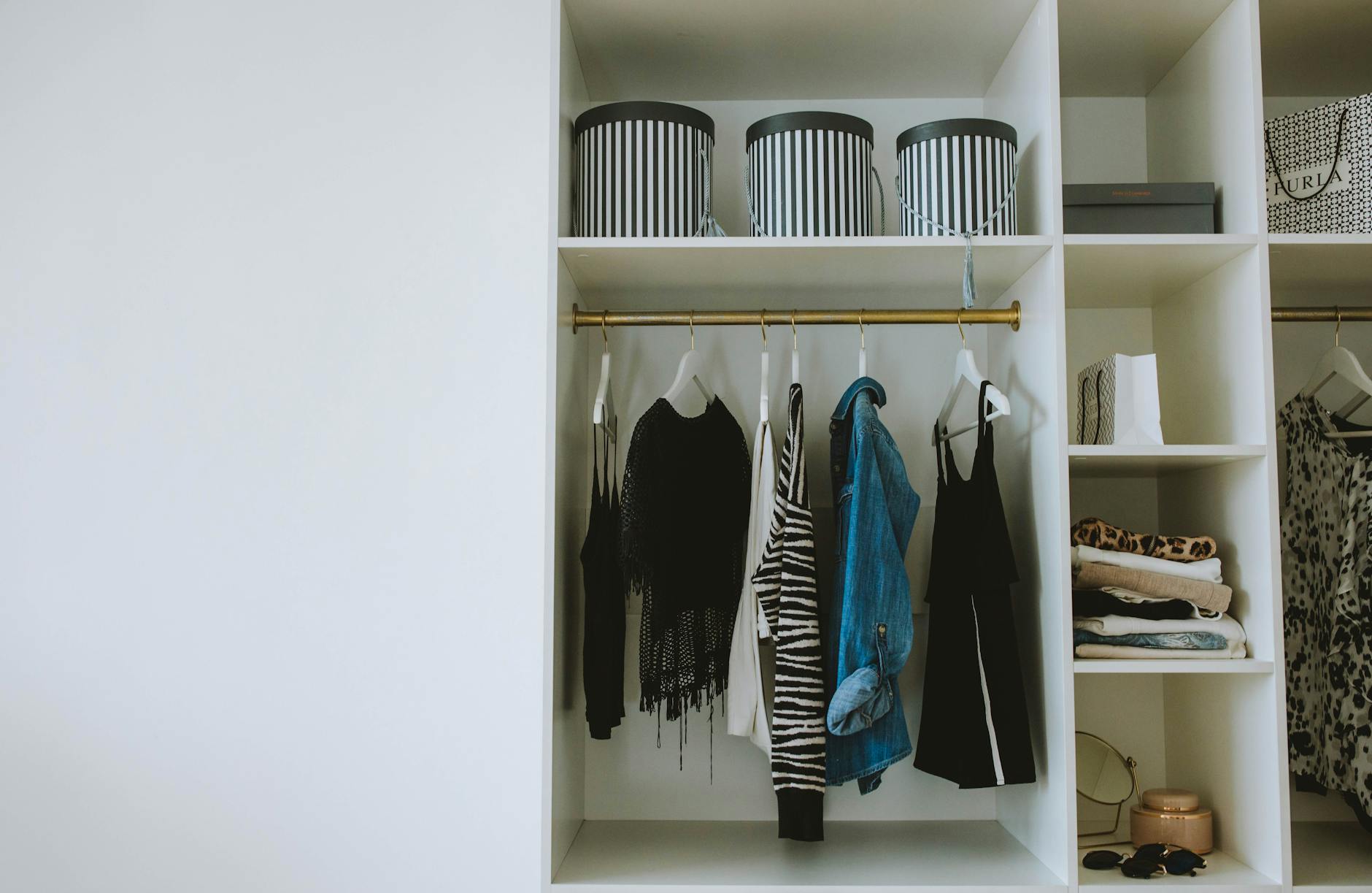 Photo by Anastasia Shuraeva / Pexels
Most clutter problems are storage problems — wrong containers, wrong location, or storage systems bought without measuring first. This guide covers the decisions that make storage actually work: zones, container types, what to spend at each level, and what to avoid.
The Storage Hierarchy: Zones Before Containers
The most common storage mistake is buying containers before deciding what goes where. Zone planning first:
Primary zone (under 2 feet): Items used daily. Should be accessible at hand height without bending or reaching. No containers — use open shelves or drawers. Examples: keys, wallet, daily medications, current project materials.
Secondary zone (2–6 feet, eye level to reach): Weekly-use items. Open shelves, labeled bins, or clear containers work well. Items should be visible without searching. Examples: kitchen staples, office supplies, seasonal clothing in current use.
Tertiary zone (floor level or above 6 feet): Occasional-use items. Deep storage bins, labeled boxes, or baskets acceptable since you'll retrieve intentionally. Examples: seasonal decorations, archived documents, spare bedding, tools used less than monthly.
Off-site or long-term storage: Annual-use items (holiday decorations, tax archives, memorabilia). Heavy plastic totes with lids, vacuum bags for textiles, archive-quality boxes for documents. Labeled by category and year.
This framework applied to a cluttered home often reveals that the problem isn't too much stuff — it's primary-zone items living in tertiary locations (can't find them) or secondary items blocking primary access.
Container Types: What Works for Each Application
Clear stackable bins ($5–$30 each): The most versatile storage unit. Iris USA and Sterilite are the value leaders; The Container Store and Simplehuman are premium. Key spec: lid type. Snap-on lids stack cleanly and stay put. Latching lids create an airtight seal (useful for seasonal items, pest prevention). Open bins without lids for daily-access primary zones.
Fabric storage bins ($8–$25): Work well on shelves where aesthetics matter (living room, bedroom). Not appropriate for basements, garages, or anywhere with moisture. Cotton canvas vs polyester: canvas is sturdier but not water-resistant. Collapsed when empty — easy to store when not in use.
Wire shelving and metro racks ($30–$150): The highest density open storage per dollar. A single 18"x48"x72" wire shelving unit ($60–$90) stores more than most built-in cabinets at the same footprint. Weight-rated to 200–400 lbs per shelf. Best for garages, pantries, basements, and utility areas. Shelf liners ($10–$15) prevent small items from falling through the wire grid.
Pegboards ($25–$80): Wall-mounted tool organization. 3–4x more storage density per wall square foot than shelves for irregularly shaped items (tools, craft supplies, kitchen utensils). Pegboard hooks ($10–$20 for a variety pack) allow rearranging without new hardware. Painted pegboard looks acceptable in living spaces; raw pegboard is fine for garages and craft rooms.
Over-door organizers ($15–$50): Exploit dead space without drilling. Work on pantry doors (spices, snacks), bathroom doors (toiletries, cleaning supplies), and closet doors (shoes, accessories). Weight limit: most handle 20–50 lbs depending on door type and mounting method.


Closet Organization: The High-Return Investment
A disorganized closet is one of the highest daily-friction problems in most homes — every morning search is wasted time. The investment range:
Under $100: Slim velvet hangers ($15–$20 for 50) reduce closet rod space usage by 50% vs plastic hangers. An additional closet rod ($15–$25) doubles hanging capacity in high spaces. Shelf dividers ($10–$15) separate folded stacks. These three changes often resolve a crowded closet without reorganizing anything else.
$100–$300: Modular closet organizer systems (IKEA PAX is the benchmark at $100–$250 per bay) — customizable shelves, drawers, and hanging rods. Install takes 2–4 hours. Covers the floor-to-ceiling space that most wire shelving systems don't reach.
$300–$800: Custom-design modular systems (California Closets, ClosetMaid ShelfTrack) — professional design, adjustable track-mounted shelving, higher-finish options. Installation included in premium versions.
The rule: Measure your closet dimensions (width, depth, height) before buying any system. Most modular systems have standardized widths — verify compatibility with your space before purchasing.
Garage Storage: Maximum Density on a Budget
Garages have the most storage potential of any room and the worst typical utilization. The most impactful upgrades:
Overhead ceiling storage ($80–$250): Ceiling-mounted platform storage racks (Fleximounts, Racor) use the dead space above the car for seasonal items. Typically holds 250–600 lbs on adjustable height platforms. Install on ceiling joists — find them before drilling. 4'x8' platform creates 32 sq ft of storage at head height. $100–$150 for a basic unit, $200–$250 for motorized lift models.
Wall-mounted slatwall or track system ($100–$300): Vertical wall organization using adjustable hooks, bins, and shelves on a horizontal track system. More flexible than pegboard for heavier items (bikes, ladders, garden tools). LocBoard and Fleximounts Slat Wall are the value leaders.
Heavy-duty shelving units ($50–$150): Steel wire or resin shelving rated to 1,000+ lbs total. A single 5-shelf unit at $60–$90 creates more storage than most homeowners need. Measure garage ceiling height — most 72-inch units need 76+ inches clearance.
Sports equipment racks ($25–$80): Specific racks for bikes ($25–$60 floor or wall-mounted), ball racks ($15–$30), and ski/board racks ($40–$80). More efficient than generic shelving for items with irregular shapes.
Tool chest vs wall-mounted tool storage: Rolling tool chests ($150–$800) keep tools organized and portable. Wall-mounted magnetic strips or pegboards are more accessible for frequently used hand tools. The benchmark: a $60 wall-mounted pegboard system plus a $150 rolling cart handles most home garages effectively.

Bathroom and Kitchen Storage: Room-Specific Solutions
Under-sink organization: The least-utilized cabinet in most homes. A 2-tier expandable shelf ($15–$25) doubles the vertical storage. Pull-out organizers ($20–$40) make corner and deep-cabinet items accessible. Essential for bathrooms and kitchen sink cabinets.
Door-mounted spice racks: Cabinet doors in the kitchen can hold up to 20–30 spice jars on door-mounted racks ($15–$30). This frees an entire cabinet shelf for non-spice storage.
Lazy Susans ($8–$25): Rotating trays for corner cabinets where items get pushed to the back. The most-underutilized kitchen organizer. A 12-inch lazy Susan in a corner cabinet makes 100% of the cabinet space accessible.
Medicine cabinet alternatives: Wall-mounted bathroom cabinets with mirrors ($40–$150) add storage without floor footprint. For small bathrooms, the space behind a wall mirror is the most frequently overlooked storage location.
Watch Before You Buy

“Tufted leatherette storage ottoman at $47.24 that functions as footrest, coffee table, or extra seat while hiding blankets and remotes inside — the HomePop for living rooms where visible storage…”
See Today’s Price →What we like
- Faux leather with classic button-tufting adds living room furniture presence beyond just storage
- Lift-top lid keeps remote controls, magazines, and throws neatly hidden
- At $63, HomePop ottoman delivers padded seating and storage well below comparable upholstered furniture
- Square shape works as a coffee table substitute in smaller living rooms
Watch out for
- Polyurethane faux leather can crack along seam lines after 2-3 years of heavy use
- Limited interior depth — not suited for storing bulkier items like blankets or board games
Read Full Analysis
The HomePop Leatherette Tufted Storage Ottoman earns its top pick placement on this storage solutions page by doing something the other options here can't: function as room furniture while hiding storage inside. The faux leather button-tufted exterior reads as a living room piece — it doubles as a coffee table, footrest, or extra seat depending on placement, which means storage isn't visibly what the piece is doing even though it's the hidden function. For living rooms where visible bins or boxes would break the design aesthetic, HomePop's ottoman is the right solution. At $47.24, it delivers upholstered seating and hidden storage well below comparable furniture price points. The lift-top lid keeps remotes, magazines, throws, and small items concealed without requiring you to clear the top surface first — lift from a corner, retrieve or deposit, close. The square footprint works as a coffee table substitute in smaller living rooms where a full coffee table would consume too much floor space. The practical limitations are typical of faux leather: polyurethane can crack along seam lines after 2–3 years of heavy use at corners and edges. Interior depth is also limited — bulky items like full comforters or large board game boxes may not fit. For flat items (throw blankets, remotes, books, electronics), HomePop's interior volume is well-suited. For deeper storage needs, the GARVEE 33" Velvet Lift-Top Ottoman ($47.24, also on this page) offers substantially more interior space at a higher price.

“Compact cube ottoman at $23.99 serves as footrest, extra seat, or coffee table while storing small items inside — the Songmics for bedrooms and small apartments where a larger ottoman would dominate…”
See Today’s Price →What we like
- Folds flat in seconds and stores under a bed or in a closet when not needed
- 11-gallon / 43L interior stores toys, linens, pet supplies, and seasonal items
- At $21, SONGMICS cube is the most affordable ottoman storage option on the page
- Doubles as a footrest, step stool, and coffee table surface beyond just storage
Watch out for
- Soft sides don't support standing on the cube — use the step-stool function cautiously
- Fabric exterior absorbs spills and odors more readily than vinyl or leatherette alternatives
Read Full Analysis
The Songmics Storage Ottoman Cube is the flexible, space-efficient pick on this page — at $23.99 with 11 gallons (43 liters) of interior storage, it's the most affordable ottoman option here and the one designed to move easily through a home rather than serve as fixed furniture. The foldable construction stores flat under a bed or in a closet when not in use, making it right for smaller apartments or rooms where furniture earns its place by serving multiple roles on demand. The interior capacity handles real storage: toys in a child's room, spare linens in a guest bedroom, pet supplies near a pet area, or seasonal items in a living space. At 43 liters, it's significantly more spacious than it appears from the outside — the cube format maximizes interior volume relative to its footprint. It doubles as a footrest, a step for children reaching shelves, and a lightweight surface for setting items down. Compared to the HomePop Leatherette Ottoman ($47.24, also on this page), Songmics trades the furniture-piece appearance for price and portability. HomePop reads as living room furniture; Songmics reads as functional storage that also happens to be soft seating. The fabric exterior absorbs spills more readily than HomePop's wipeable faux leather surface — relevant in households with children or pets where liquid contact is common. For a permanent living room placement where the piece needs to fit the room's design, HomePop is the better fit. For a moveable, versatile cube that earns its keep across multiple rooms, Songmics at $23.99 is the practical choice.

“Set of 4 folding stools with carry handles that collapse flat for storage at $162.99 — the Atlantic for apartments where extra seating is a guest-visit need rather than a daily fixture. Works out to…”
See Today’s Price →What we like
- 4-pack provides extra seating for guests that folds away to nothing when not in use
- Handle on each stool allows hanging on a hook or pegging on a wall for true out-of-the-way storage
- Plastic leg caps prevent floor scratching when set up on hardwood or tile
- Lightweight construction makes repositioning from room to room effortless
Watch out for
- $163 for a 4-pack is significantly higher than basic folding stools from other brands
- Plastic construction limits the weight capacity compared to metal-frame folding stools
Read Full Analysis
The Atlantic 4 Pack Folding Stools solve a specific apartment problem: extra seating that doesn't consume floor space when guests aren't present. At $162.99 for a 4-pack ($162.99 per stool), they compare favorably to individual folding chair alternatives that typically run $60–80 each. For a studio or 1-bedroom apartment where hosting 4+ guests is a periodic event rather than a daily reality, keeping stools in a closet and pulling them out as needed is more practical than dedicating permanent floor space to extra chairs. The carry handles on each stool are the distinctive feature: they let you hang stools on wall hooks or closet rods when not in use, taking the storage from "stacked in a corner" to "organized on a wall." The handles also make repositioning effortless when moving from closet to living space and back. Plastic leg caps prevent floor scratching on hardwood or tile, which matters in apartment lease situations where floor damage has financial consequences. Two practical limitations: the $163 total positions this above basic folding options at lower price points, and the plastic frame construction limits weight capacity compared to metal-frame alternatives. Verify the stated weight capacity against your household's needs before purchasing. The lightweight build makes repositioning easy but means the stools feel less substantial than metal or solid wood alternatives. For apartments where closet storage of extra seating is the primary constraint, Atlantic's handle-equipped design addresses the specific problem at reasonable per-unit cost.
“”
See Today’s Price →What we like
- 3.5-inch lift is taller than most competing bed risers, creating meaningful under-bed storage depth
- Solid wood construction handles mattress, bed frame, and occupant weight without cracking
- No assembly required — simply slide under existing bed legs and done
- Works under dressers, bookshelves, and sofas beyond just bed frames
Watch out for
- Fixed 3.5-inch height — no height adjustment for users wanting less lift
- Solid wood risers are heavier than plastic alternatives — slightly harder to reposition
Read Full Analysis
The Almanor Goods 3.5" Platform Bed Lifters create meaningful under-bed storage where there was very little before. At 3.5 inches — taller than most competing bed risers — the lift creates enough clearance to slide standard storage bins, shoe organizers, and flat-profile under-bed bags under the frame rather than just adding the minimal gap that 2-inch risers provide. This converts dead space beneath a bed into the most accessible storage in a bedroom without requiring new furniture. No assembly required: place the risers under existing bed legs and the frame rests on them immediately. Solid wood construction handles the combined weight of mattress, bed frame, box spring, and occupants without the cracking or compression that plastic risers develop under sustained load. The risers work beyond bed frames — they're functional under dressers, bookshelves, and sofas for general furniture elevation wherever clearance storage is useful. The fixed 3.5-inch height is the one constraint: no adjustment for users who want less lift or need to match a specific clearance dimension. Solid wood is also heavier than plastic alternatives, making the risers slightly harder to reposition when moving furniture around a room. For the typical use case — add 3.5 inches of permanent under-bed storage clearance in a bedroom — neither limitation is a practical concern. At $39.99, Almanor's solid wood construction and above-average lift height make it the best-specified option for buyers who want genuine under-bed storage depth rather than minimal clearance.

“Sorbus collapsible ottoman packs flat when not needed — perfect for seasonal storage or apartment living where flexible space management matters.”
See Today’s Price →What we like
- Collapsible flat design stores in a hall closet without taking up dedicated floor space
- Available in 7 color options to match various bedroom and living room palettes
- Padded lid doubles as extra seating when the ottoman is positioned near a chair or sofa
- Lightweight construction moves easily from room to room as storage needs shift
Watch out for
- Soft collapsible frame provides less structural rigidity than solid-wood-frame alternatives
- Interior storage volume varies by size selected — verify dimensions before purchasing
Frequently Asked Questions
What is the best way to organize a small closet?
What storage containers last the longest?
How do I maximize garage storage space?
What is the best storage system for under the bed?
How do I organize a pantry on a budget?
How We Analyze Products
We analyze Amazon review data — often thousands of reviews per product — to surface patterns that individual buyers miss. Our process aggregates star ratings, review counts, and buyer sentiment at scale, identifying which strengths and weaknesses appear consistently across the largest review samples available. The 10,220+ reviews analyzed on this page represent real verified-purchase feedback from Amazon buyers.
Each product earned its placement through data: total review volume, average rating, and the specific praise and complaints that repeat most often across buyers. No manufacturer paid for placement on this page. Products appear here because buyers endorsed them at scale, not because a company asked us to feature them.
We use AI to summarize review sentiment — not to fabricate opinions, but to condense what thousands of buyers actually wrote into a readable format. The pros and cons you see reflect the most common themes found in verified purchaser reviews, paraphrased for clarity. We do not claim to have accessed Reddit, YouTube, or specific publications in generating these summaries.
Prices shown reflect Amazon pricing at the time this page was last generated. Click “See Today’s Price” to get the current live price on Amazon. Read our full methodology →