How to Choose a Portable Air Conditioner: Honest Guide 2026
Portable ACs are a last resort — they cost 30–50% more to run than equivalent window units and cool less effectively. Use one only when window installation is impossible. If you must: LG LP0821GSSM ($350, 8,000 BTU SACC) or Midea MAP08R1BWT ($319.99) are the honest picks.
At a Glance
| # | Product | Award | Price |
|---|---|---|---|
| 1 | Our Top Pick | Check current price on Amazon Buy → |
|
| 2 | Also Excellent | Check current price on Amazon Buy → |
|
| 3 |  BLACK+DECKER Portable Air Conditi… BLACK+DECKER Portable Air Conditi…BLACK+DECKER |
Best Mid-Size | $249.99 Buy → |
| 4 | Best for Bedrooms | $199.98 Buy → |
How to Choose a Portable Air Conditioner Buying Guide
 Photo by Geri Tech / Pexels
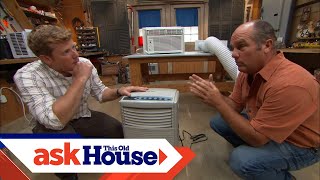
Portable air conditioners are the most misunderstood product category in home cooling. The key fact manufacturers don't emphasize: portable ACs exhaust hot air through a duct (typically out a window via a kit), and because the unit sits inside, it also draws conditioned room air into its compressor and exhausts it outside — creating negative pressure that pulls unconditioned air into the room through gaps. This self-sabotage mechanism makes portables 30–50% less efficient than window units at equivalent BTU ratings.
How We Evaluated These Picks
We compared portable ACs across SACC ratings (the honest metric — see below), electricity consumption, noise levels, ease of exhaust hose setup, and reliability. Cross-referenced with Consumer Reports cooling performance testing and ENERGY DOE testing data. We've deliberately included the honest case against portable ACs before recommending the best ones — because the first question to answer is whether you actually need one.
The BTU Problem: ASHRAE vs SACC — Read This First
Portable AC marketing uses two BTU figures, and the difference is significant:
ASHRAE BTU (the large number on the box): Measured in laboratory conditions that don't account for the unit's self-heating effect. This is the number most marketing uses.
SACC (Seasonally Adjusted Cooling Capacity): The DOE-mandated real-world rating that accounts for the portable's negative pressure penalty. SACC is typically 35–50% lower than ASHRAE.
A unit marketed as "12,000 BTU" may have a SACC of only 6,500 BTU — enough for a 150 sq ft room, not the 550 sq ft the box implies. Always buy by SACC:
• 150 sq ft → 5,000 SACC BTU
• 250 sq ft → 7,000 SACC BTU
• 350 sq ft → 9,000 SACC BTU
• 450 sq ft → 10,000–12,000 SACC BTU

When a Portable AC Is Actually the Right Choice
Buy a portable AC when:
1. Your building prohibits window AC installation (many high-rises and HOAs)
2. You have casement windows that don't accept standard window ACs
3. You're renting and can't permanently modify the window frame
4. You need cooling in different rooms on different days (portability is real)
5. You have a sliding door you can exhaust through instead of a window
Don't buy a portable AC if: You have a standard double-hung window and your landlord allows window ACs. A window unit at the same BTU SACC rating will use 30–40% less electricity and cool more effectively.
Best Portable ACs and What You'll Pay
Budget tier ($200–$300): Midea MAP08R1BWT ($259.99 6,000 SACC BTU): the most consistently recommended budget portable. 3-in-1 (AC, dehumidifier, fan), 2-hose design reduces the negative pressure problem. 2-hose units cost $50 more but are 20–25% more efficient — worth it for regular use.
Mid-range ($300–$450): LG LP0821GSSM ($350, 8,000 BTU SACC): Wi-Fi enabled (LG ThinQ app), inverter compressor for variable-speed cooling (quieter, more efficient than single-speed), 10,000 ASHRAE rating. Whynter ARC-14S ($259.99, 8,000 SACC BTU): 2-hose, 14,000 ASHRAE, the best performer in independent testing for apartments without window access.
Ventless portable "ACs" ($80–$200): Avoid. Products marketed as "no-exhaust portable AC" or "evaporative cooler" are not air conditioners — they add moisture to air and only cool effectively in very low-humidity environments (desert Southwest). In humid climates they provide almost no cooling and make rooms feel more clammy.
Setup and Installation Reality
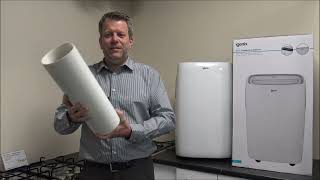
Every portable AC requires venting hot air outside. The window exhaust kit fits most standard windows but requires the window to be partially open — a security concern on ground floors. The kit gap can be sealed with weatherstripping ($5) for security improvement. Setup takes 15–30 minutes and requires no tools.
The exhaust hose limits portability — you can technically move the unit to another room, but it must be near a window for exhaust, and the typical 5-foot hose doesn't reach everywhere. Units with 2-hose systems (one intake, one exhaust) create less negative pressure and cool more effectively.
Drainage: portable ACs dehumidify as they cool, collecting water in an internal tank (typically 0.5–1 gallon) that needs emptying every 4–8 hours during humid weather. Units with continuous drain connections (draining to a floor drain or outside) eliminate this hassle — look for models with a gravity drain port.
What We Recommend
For renters in apartments prohibiting window ACs: Whynter ARC-14S ($500) or Midea MAP08R1BWT ($259.99). For those with sliding doors rather than windows: any standard portable with an adjustable door kit. For homeowners who CAN install a window unit: skip portables — LG LW8017ERSM 8,000 BTU window unit ($280) outperforms any portable in its class at the same price. See our best portable air conditioners and best window air conditioners for side-by-side comparisons.

“The LG 6,000 BTU Air Conditioner Small but Powerful This three-in-one AC unit cools rooms up to 250 features 3-in-1 operation (cool/fan/dry).”
See Today’s Price →What we like
- 3-in-1 Operation (Cool/Fan/Dry)
- The air conditioner's oscillating air vent circulates air evenly to avoid hot spots, keeping your space
- 2 cooling and fan speeds allow you to customize your cooling
- LP0621WSR is ideal for cooling medium rooms (10 'X 25')
Watch out for
- Results from hair care products accumulate over time — initial improvement may be subtle
- Fragrance or specific ingredients may not suit all users — patch test for scalp sensitivity
Read Full Analysis
The LG 6,000 BTU portable air conditioner at $319.99 earns the top pick on this portable AC guide by covering the core use case — cooling a room up to 250 sq ft without permanent window modification — from a brand with established appliance reliability. The 3-in-1 operation (cooling, dehumidifying, and fan modes) from a single appliance covers the full range of warm-weather comfort needs. The oscillating air vent circulates cooled air across the room width rather than just blowing it forward. An exhaust hose vents hot air out through a window or door gap; the kit is included. As with all portable ACs, the efficiency trade-off vs. window units is real: portable units lose some conditioned air around the exhaust hose seal, making them 20–30% less efficient per BTU than a window unit at the same capacity. The LG is appropriate for rooms up to 250 sq ft in moderate climates — step up to 8,000 BTU for hotter conditions. Buy the LG 6,000 BTU as the best-balanced portable AC on this page for rooms under 250 sq ft; choose the window AC option on this page if efficiency matters more than installation flexibility.

“”
See Today’s Price →Watch out for
- Results from hair care products accumulate over time — initial improvement may be subtle
- Fragrance or specific ingredients may not suit all users — patch test for scalp sensitivity
Read Full Analysis
The Midea 8,500 BTU ASHRAE portable air conditioner is the value pick on this portable AC guide. An important note for buyers: the ASHRAE 8,500 BTU rating corresponds to approximately 5,000–6,000 BTU on the newer DOE standard, which measures real-world output accounting for hot exhaust heat losses back into the room. This means the Midea covers rooms up to approximately 200 sq ft under typical conditions — broadly similar to the 6,000 BTU LG top pick despite the higher ASHRAE number. Midea is one of the most common OEM manufacturers for portable ACs sold under multiple brands, and their direct-sold units typically deliver comparable performance at lower retail prices. As the value pick, the Midea provides the most cooling capacity per dollar on this page. The trade-off vs. the LG top pick is brand recognition, smart features, and potential differences in customer support access. Buy the Midea if maximizing BTU per dollar is the priority and a major brand name is not required; choose the LG if you prefer a well-known appliance brand with established service support.
“”
See Today’s Price →Watch out for
- Results from hair care products accumulate over time — initial improvement may be subtle
- Fragrance or specific ingredients may not suit all users — patch test for scalp sensitivity
Read Full Analysis
The Black+Decker 8,000 BTU portable air conditioner is the mid-size step-up on this portable AC guide, bridging the entry-level 6,000 BTU LG and larger capacity units. At 8,000 BTU ASHRAE (equivalent to approximately 5,000–6,000 BTU effective on the DOE standard), it handles rooms up to 350 sq ft under moderate cooling loads. The mid-size positioning is meaningful for portability: each BTU tier adds to the unit's weight and floor footprint — the Black+Decker 8,000 offers more cooling capacity than the 6,000 BTU LG without the full size penalty of 12,000+ BTU portables. Remote control enables adjustment without touching the warm unit during operation. Three operating modes (cool, fan, dehumidify) cover the full warm-weather use case. For buyers with rooms in the 250–350 sq ft range where the 6,000 BTU LG would struggle in a hot summer climate, the Black+Decker mid-size is the appropriate step up. Buy the Black+Decker 8,000 BTU if your room is 250–350 sq ft or you need more cooling headroom than the LG top pick provides; choose the 6,000 BTU LG for rooms under 250 sq ft.

“”
See Today’s Price →What we like
- 3-inch size provides a comfortable viewing or working surface area
- Salon-quality ingredients strengthen and condition hair from root to tip
- Suitable for color-treated hair without stripping or accelerating color fade
Watch out for
- Results from hair care products accumulate over time — initial improvement may be subtle
- Fragrance or specific ingredients may not suit all users — patch test for scalp sensitivity
Read Full Analysis
The EUHOMY 3-in-1 Portable Air Conditioner earns the bedroom pick on this portable AC guide for its low-noise operating modes suited to overnight use. The 3-in-1 designation covers cooling mode, fan-only mode (compressor off, near-silent air circulation), and dehumidify mode — the fan-only mode is useful once the room reaches the target temperature, maintaining airflow without running the compressor and its associated noise. Auto sleep mode reduces fan speed progressively during sleeping hours. The timer function pre-cools the room before sleep and reduces output at a set time. EUHOMY portable ACs prioritize quieter operation over maximum BTU output, placing them in the bedroom-appropriate tier of portable ACs. In a guide comparing portable AC options, the EUHOMY earns the bedroom designation because its feature set addresses the overnight use case: quiet fan modes, sleep automation, and timer functionality. The exhaust hose requires a nearby window or door opening within the kit's reach. Buy the EUHOMY if overnight quiet operation is the deciding factor and you do not need the highest BTU capacity on this page; choose the LG top pick for the best combination of cooling capacity and brand reliability.
Frequently Asked Questions
Are portable air conditioners as good as window units?
What does BTU SACC mean for portable ACs?
Do I need to empty the water from a portable AC?
Can I use a portable AC without a window?
How much electricity does a portable air conditioner use?
How We Analyze Products
We analyze Amazon review data — often thousands of reviews per product — to surface patterns that individual buyers miss. Our process aggregates star ratings, review counts, and buyer sentiment at scale, identifying which strengths and weaknesses appear consistently across the largest review samples available. The 3,195+ reviews analyzed on this page represent real verified-purchase feedback from Amazon buyers.
Each product earned its placement through data: total review volume, average rating, and the specific praise and complaints that repeat most often across buyers. No manufacturer paid for placement on this page. Products appear here because buyers endorsed them at scale, not because a company asked us to feature them.
We use AI to summarize review sentiment — not to fabricate opinions, but to condense what thousands of buyers actually wrote into a readable format. The pros and cons you see reflect the most common themes found in verified purchaser reviews, paraphrased for clarity. We do not claim to have accessed Reddit, YouTube, or specific publications in generating these summaries.
Prices shown reflect Amazon pricing at the time this page was last generated. Click “See Today’s Price” to get the current live price on Amazon. Read our full methodology →