How to Choose a Steam Mop: 2026 Complete Buying Guide
The Bissell Powerfresh Slim is the best steam mop for most homes — heats to 212F sanitizing steam in 30 seconds, the pivot head maneuvers under furniture, and reusable washable pads eliminate disposable pad costs. Never use steam on unsealed hardwood, waxed floors, or laminate — moisture damage is irreversible.
At a Glance
| # | Product | Award | Price |
|---|---|---|---|
| 1 | Also Excellent | $179.99 Used — not a new unit Buy → |
|
| 2 | Best Premium | $159.99 Buy → |
|
| 3 | Best Combo | Check current price on Amazon Buy → |
|
| 4 | Best Compact | $109.99 Buy → |
How to Choose a Steam Mop: Buying Guide
 Photo by MART PRODUCTION / Pexels
Steam mops sound ideal — hot steam that sanitizes floors without chemicals, killing bacteria and leaving no residue. In practice, they work brilliantly on some floors and damage others permanently within a single use. Understanding floor compatibility before you buy is more important than any spec on the box. This guide covers what steam mops actually do, which floors they work on, what specs matter, and where a traditional spray mop is the smarter choice.
How Steam Mops Work (and Why Floor Type Matters So Much)
A steam mop heats water to 212°F or above, then distributes steam through a microfiber pad pressed against the floor. The combination of heat and moisture loosens stuck-on grime, and the heat alone kills most common bacteria and dust mites. The problem: that same heat and moisture can damage floors that weren't designed for it.
The issue with hardwood specifically is that wood expands when it absorbs moisture. Repeated steam application causes the grain to swell, the finish to dull and eventually crack, and boards to potentially cup or warp. Most hardwood floor manufacturers explicitly void warranties for any steam cleaning. Unsealed hardwood — where the finish has worn through or was never applied — is particularly vulnerable because moisture penetrates directly into the wood fiber.

Luxury vinyl plank (LVP) and vinyl composite tile (VCT) are heat-sensitive. LVP installed with adhesive begins to lift at sustained temperatures above 140°F; some steam mops operate at 230°F or higher at the pad surface. Wax-finished floors — common in older homes — melt the wax layer under steam heat, stripping the finish and dulling the surface.
Floor Compatibility: A Definitive Guide
Safe for steam cleaning: Ceramic tile, porcelain tile, sealed natural stone (marble, granite, travertine with intact grout and sealant). Steam is genuinely excellent on these surfaces — it penetrates grout lines without scrubbing, dissolves soap scum and mineral deposits, and sanitizes without leaving chemical residue.
Use with caution: Sealed hardwood on the lowest steam setting with quick passes (never hovering in one spot). Check your flooring manufacturer's cleaning guidelines first — if they prohibit steam, respect that even if the floor looks fine initially. Damage accumulates over time and often appears as dulling or warping months after the cleaning habit began.

Avoid completely: Unsealed hardwood, engineered hardwood, luxury vinyl plank or tile (LVP/LVT), laminate flooring (the photographic layer separates from the core when moisture penetrates the seams), wax-finished floors, linoleum with visible seams, and any floor where the adhesive or finish is already compromised.
If your home has a mix of tile, hardwood, and LVP — which is common — a steam mop for the tile areas and a spray mop for everything else may be the smarter system. Many homes with mixed flooring find the spray mop safer and more versatile overall.
Key Specs That Actually Matter
Steam temperature: The pad surface temperature determines cleaning and sanitizing efficacy. Higher-quality steam mops operate at 250°F to 300°F at the pad surface. Budget models sometimes peak at 212°F — technically "steam" but marginal for sanitization (you need sustained 212°F contact time, not just a brief touch). Look for models that specify their steam temperature, not just water tank temperature.

Heat-up time: Ranges from 15 seconds (excellent) to 5 minutes (frustrating for quick cleanups). Models that heat in under 30 seconds are significantly more practical for daily use — a mop you have to wait 5 minutes for gets used weekly at best. Bissell and Shark have the fastest heat-up times among mainstream brands.
Tank capacity: 200 to 500ml is the typical range. A 300ml tank produces about 20 to 25 minutes of continuous steam at medium output — enough for most apartments and smaller homes. For larger homes over 2,000 square feet, a larger tank (450ml+) or a detachable refillable tank reduces how often you stop to refill. Some models have continuous-fill tanks you can top off mid-session without cooling down first.
Steam levels: At minimum, look for two settings — low and high. A low setting is essential for any floor where you're cautious about heat (sealed hardwood, delicate tiles). A high setting delivers maximum sanitizing power for grout and stubborn grime. Three-level settings give more nuance. Continuous vs. triggered steam is a matter of preference; triggered steam (you press a button to emit steam) uses less water and gives you more control.
Cord length: 20 feet is the standard; 25 to 30 feet is preferable in larger rooms. A short cord (15 feet) on a steam mop turns into constant outlet-switching frustration in rooms larger than 200 square feet.
Steam Mop vs. Spray Mop: Which Should You Buy?
Steam mop advantages: No chemical cleaners needed (cost savings and fewer products under sink), kills bacteria and dust mites without any additional steps, excellent for grout cleaning, leaves less residue than cleaning solution mops on tile.
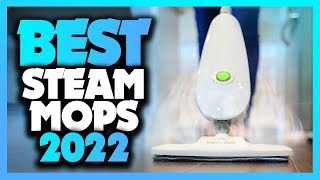
Spray mop advantages: Works safely on every floor type including hardwood and LVP, lower upfront cost ($25 to $60 vs. $80 to $150 for a quality steam mop), lighter and easier to maneuver, pad replacement is cheaper. Systems like Bona use floor-specific solutions that clean without stripping finish or leaving residue. For daily or every-other-day maintenance cleaning, a spray mop is typically more practical than a steam mop.
The honest answer for most homes: if you have tile or sealed stone floors and want true sanitization without chemicals, a steam mop is excellent. If your primary floors are hardwood, LVP, or laminate, a spray mop is safer and more versatile.
Top Brands in 2026
Bissell Steam Mops: best heat-up time in the category (15 to 20 seconds), widest mop head for coverage, good build quality at the $80 to $130 price point. Bissell PowerFresh and Steam Shot are their most-reviewed models.
Shark Steam Mops: strong steam output, washable pads, slightly longer heat-up time than Bissell. The Shark S3501 and Genius Steam Pocket series are their mainstream options at $100 to $160.
Bissell SpinWave: combines steam cleaning with spinning scrubbing pads for deeper grout cleaning — excellent for tile-heavy homes but slower and heavier than a standard steam mop.
O-Cedar ProMist Max: not a steam mop but the top spray mop recommendation for mixed-flooring homes — $22 to $30, works on all floor types, reusable microfiber pad washes in the machine.
How We Evaluate Steam Mop Recommendations
We assess steam mops on pad surface temperature, heat-up time, tank capacity, cord length, and included accessories. Most importantly, we flag models that claim "safe for all floors" — no steam mop is safe for all floors, and this claim in marketing should raise skepticism. Our recommendations match steam mops to appropriate floor types rather than suggesting a one-size-fits-all solution.
Watch Before You Buy
![The 5 Best Steam Mop of 2026 [Product Guide & Reviews]](https://img.youtube.com/vi/q0UA2BZYLw4/mqdefault.jpg)
“Slim profile steam mop that maneuvers around furniture legs and into tight corners — the Bissell Powerfresh Slim for sealed hardwood and tile where a bulkier mop head leaves uncleaned edges. Heats…”
See Today’s Price →Watch out for
- Assembly required — budget 30-60 minutes for initial setup
- Color and style options may be limited compared to premium furniture brands
“Motorized dual scrubbing brushes rotate while steaming to agitate kitchen grease and bathroom soap scum — the Shark Steam & Scrub at $159.99 for floors where a standard steam mop pass still leaves…”
See Today’s Price →Watch out for
- Premium pricing at $449 requires a meaningful budget commitment
- Assembly required — budget 30-60 minutes for initial setup
“A combined steam mop and vacuum, so pet hair is lifted and the floor is steamed in one pass.”
See Today’s Price →Watch out for
- Dustbin requires regular emptying to maintain suction performance
- Corded models limit reach; cordless models require battery management

“A steam mop with a steam-blast trigger for spots that need more than a single pass.”
See Today’s Price →Watch out for
- Cast iron and stainless require specific care to maintain performance and prevent rust or sticking
- Heavier than non-stick coated alternatives making handling challenging for some users
Frequently Asked Questions
Can I use a steam mop on hardwood floors?
What floors can't you use a steam mop on?
How often should I steam mop my floors?
Why is my steam mop not producing steam?
Do steam mops actually kill bacteria?
What's the best steam mop for tile floors?
How We Analyze Products
We analyze Amazon review data — often thousands of reviews per product — to surface patterns that individual buyers miss. Our process aggregates star ratings, review counts, and buyer sentiment at scale, identifying which strengths and weaknesses appear consistently across the largest review samples available. The 6,310+ reviews analyzed on this page represent real verified-purchase feedback from Amazon buyers.
Each product earned its placement through data: total review volume, average rating, and the specific praise and complaints that repeat most often across buyers. No manufacturer paid for placement on this page. Products appear here because buyers endorsed them at scale, not because a company asked us to feature them.
We use AI to summarize review sentiment — not to fabricate opinions, but to condense what thousands of buyers actually wrote into a readable format. The pros and cons you see reflect the most common themes found in verified purchaser reviews, paraphrased for clarity. We do not claim to have accessed Reddit, YouTube, or specific publications in generating these summaries.
Prices shown reflect Amazon pricing at the time this page was last generated. Click “See Today’s Price” to get the current live price on Amazon. Read our full methodology →