How to Choose Extension Cords: Gauge, Length, and Safety Guide (2026)
The Huanchain 25 Ft 12 AWG Outdoor Extension Cord at $25.99 is the best heavy-duty pick for power tools and outdoor equipment — 12-gauge handles 20A loads where 16-gauge cords overheat. Match gauge to load: 16 AWG for lamps, 14 AWG for appliances, 12 AWG for tools. Never use an indoor cord outdoors.
At a Glance
| # | Product | Award | Price |
|---|---|---|---|
| 1 |  HUANCHAIN 12 Gauge Heavy Duty Out… HUANCHAIN 12 Gauge Heavy Duty Out…huanchain |
Our Top Pick | $26.99 Buy → |
| 2 |  Amazon Basics 100 Foot 3-Prong Vi… Amazon Basics 100 Foot 3-Prong Vi…Amazon Basics |
Also Excellent | $42.23 Buy → |
| 3 | 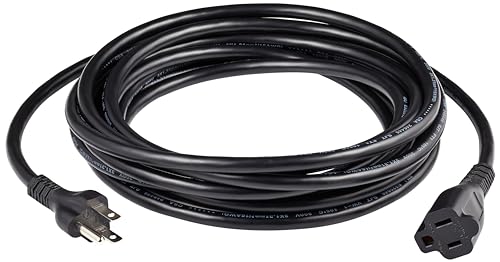 Amazon Basics Extension Cord, 20 … Amazon Basics Extension Cord, 20 …Amazon Basics |
Worth Considering | Check current price on Amazon Buy → |
How to Choose Extension Cords Buying Guide
 Photo by tom analogicus / Pexels
Extension cords kill people. Not often, but the cause is always the same: wrong gauge for the load, indoor cord used outdoors, or a cord run under a rug where heat can't escape. The right cord is a boring purchase that lasts 20 years. The wrong one is a fire hazard. Here's how to get it right.
Wire Gauge: The Single Most Important Spec
Wire gauge (AWG — American Wire Gauge) determines how much current a cord safely handles. Lower AWG number = thicker wire = more capacity. The number is usually printed on the cord's jacket.
16 AWG: Handles up to 13 amps (1,560 watts). Suitable for: lamps, phone/laptop chargers, small fans, clock radios. NOT suitable for: anything with a heating element, power tools, or appliances over 500W. Most cheap extension cords sold at dollar stores and convenience stores are 16 AWG — they're fine for phone chargers, dangerous for anything power-hungry.
14 AWG: Handles up to 15 amps (1,800 watts). Suitable for: most household appliances including toasters, coffee makers, window fans, and desktop computers. The most versatile gauge for indoor general use. A $12–$20 14-gauge cord from AmazonBasics, GE, or Southwire covers 90% of indoor needs.
12 AWG: Handles up to 20 amps (2,400 watts). Suitable for: power tools (drills, circular saws, jigsaws), space heaters, portable air conditioners, and shop vacuums. Also the correct gauge for outdoor cords with multiple outlets. Visibly thicker and heavier than 14 AWG. Prices: $15–$40 depending on length.
10 AWG: Handles up to 30 amps. Used for heavy equipment, welders, and large power tools. Not a consumer purchase — sold at electrical supply stores.
How to check: The jacket usually reads "16/3", "14/3", or "12/3" — the first number is gauge, "/3" means three conductors (hot, neutral, ground). If it only says "/2," it has no ground wire — avoid for any grounded appliance.
Length and Voltage Drop
Every foot of extension cord adds resistance, which drops voltage. For sensitive electronics and precise power tools, this matters. Practical rules:
Under 25 feet: Negligible voltage drop for most applications. Use whatever length you need.
25–50 feet: Upgrade one gauge size from what you'd normally use. If a 16-gauge would work at 10 feet, use 14-gauge at 35 feet to compensate for resistance.
50–100 feet: Upgrade two gauge sizes. A 16-gauge at 75 feet can cause motors to overheat and electronics to malfunction. Use 12-gauge for anything beyond low-wattage lamps at this distance.
Over 100 feet: Use 10-gauge or run a dedicated outlet. Long extension cord runs are not a permanent solution for any high-draw appliance.
For outdoor tools and generators, buy the shortest cord that reaches — every extra foot is wasted money and resistance. Most people buy 100-foot cords "just in case" and then wonder why their power tool runs hot.

Indoor vs. Outdoor Ratings
Indoor extension cords have thin PVC jackets rated for interior temperatures and no UV exposure. Outdoor extension cords have thicker, weather-resistant jackets (often rubber or SJTW thermoplastic) that withstand moisture, UV radiation, and temperature swings from -40°F to 140°F.
Never use an indoor cord outdoors: The insulation cracks from UV and temperature cycling, exposing live wires. The three-prong plugs corrode from moisture. This is the most common extension cord safety violation. Outdoor cords cost $15–$35 and last 10+ years outside.
Outdoor cord indoors: Fine — the heavier insulation doesn't cause problems. If you buy one outdoor cord, it works in both places.
Look for these markings: "W" in the cord designation (e.g., SJTW) means weather-resistant. "Outdoor rated" on the packaging. Most orange extension cords are outdoor-rated; most white and beige cords are indoor only.
Wet location vs. damp location: Wet location (UL Type W) cords are fully waterproof — used for landscape lighting and permanently outdoor applications. Damp location (SJTW) handles rain and moisture but not submersion. For a backyard or patio, damp location is sufficient.
Number of Outlets and Power Strips vs Extension Cords
There's an important distinction between an extension cord (runs power to a different location) and a power strip (multiplies outlets at one location). They're sold side by side but serve different purposes:
Extension cord: One outlet at the end, or up to 3. Long and thin. Designed to move power 10–50 feet. Not designed to stay permanently connected — the heat generated by continuous load degrades the cord over time.
Power strip: Multiple outlets, usually 6–12. Short or no cord. Often has surge protection. Designed for desk setups, entertainment centers, and anywhere you need many outlets in one spot.
Surge protectors: A power strip with a metal oxide varistor that absorbs voltage spikes. Essential for TVs, computers, gaming consoles, and any electronics with sensitive components. A $15–$30 surge protector from APC or Belkin pays for itself when a lightning storm or utility surge comes through. Look for joule rating (1,000+ joules) and "UL Listed" — not just "surge protection" marketing language.
What not to do: Daisy-chain extension cords (plug one into another) — this violates UL certification and creates a fire hazard. Don't run cords under rugs — heat buildup from the load has no escape and degrades insulation. Don't use a single extension cord to power multiple high-draw appliances simultaneously.

Safety Labels to Verify Before Buying
UL Listed: The gold standard for extension cord safety in the US. Means the cord was independently tested against UL 817 standard. Look for the "UL" mark on the cord jacket itself — not just the packaging, which can be faked. If the cord has no UL listing, don't buy it.
ETL Listed: Intertek's equivalent to UL. Equally valid and tested to the same standards. Common on cords from hardware stores.
OSHA requirements: For any commercial or jobsite use, cords must be UL or ETL listed AND the right gauge for the load AND inspected regularly. Damaged cords (frayed insulation, cracked plugs, warm connectors) must be removed from service immediately.
Amperage and wattage labels: The cord itself should be stamped with its amperage rating. A 15A cord cannot safely run a 20A tool. When in doubt, go heavier gauge — a 12-gauge cord runs cool on light loads but a 16-gauge cord runs hot under heavy loads.
What We Recommend
General indoor use: 14-gauge, 25-foot indoor cord from AmazonBasics or GE ($12–$18). Covers 90% of household needs. Power tools and shop: 12-gauge, 25–50-foot outdoor-rated cord, orange jacket ($20–$35). AmazonBasics, Husky, and Southwire all make reliable versions. Outdoor landscaping: 12-gauge SJTW outdoor cord ($25–$40) from Conntek or Woods Industries. Computer and electronics desk: A surge protector with 6+ outlets and 1,000+ joule rating ($20–$35 from APC or Belkin) rather than an extension cord. See our power strip guide for full surge protector recommendations, and floor mats for protecting the area where cords run.
“The Huanchain 25 Ft Heavy Duty Outdoor Extension Cord 12 AWG Yellow features 12 awg wire handles 15a loads.”
See Today’s Price →What we like
- 12 AWG wire handles 15A loads
- Waterproof and flexible in cold weather
- Lighted end shows power
- ETL listed
- 25 ft reach
Watch out for
- Heavier and thicker than indoor cords
- Yellow color is visible outdoors but not subtle indoors
Read Full Analysis
The HUANCHAIN 25 Ft Heavy Duty Outdoor Extension Cord earns its top rank through wire gauge — 12 AWG is the specification that separates a genuinely heavy-duty outdoor cord from a medium-duty cord labeled "outdoor." Wire gauge is counter-intuitive: lower numbers mean thicker wire. 12 AWG handles 15 amps continuously, which covers power tools (circular saws, drills, sanders), space heaters, and high-draw appliances. At 12 AWG, resistance losses over 25 feet are minimal, meaning the tool at the end receives close to full voltage rather than the degraded voltage that thinner cords deliver over distance. Waterproofing and cold-weather flexibility matter specifically for outdoor use. Standard cord insulation stiffens and cracks in below-freezing temperatures, making them difficult to route and potentially dangerous as insulation develops stress fractures. The HUANCHAIN's jacket maintains flexibility in cold conditions — relevant for fall and winter outdoor work where extension cords are needed precisely when temperatures drop. The lighted end indicator shows whether the outlet is live before plugging in equipment, which prevents wasted time troubleshooting why a tool isn't running. ETL listing is the safety certification that confirms the cord meets UL-equivalent safety standards under an accredited third-party testing laboratory. Compared to the Amazon Basics 100 Ft cord at rank 2 ($31.49), the HUANCHAIN is 12 AWG versus the Amazon Basics's lighter gauge, providing more current capacity at the 25-foot range for tool and appliance use. Compared to the Amazon Basics 20 Ft indoor at rank 3 ($9.72), the HUANCHAIN adds outdoor weatherproofing and heavier gauge for tool-grade loads.
“At 100 feet, this Amazon Basics outdoor extension cord is the right tool for yard work, string lights, and power tools operating far from an outlet. The heavy-duty orange jacket is weather-resistant…”
See Today’s Price →What we like
- 100 ft reach for large yards
- Orange high-visibility color
- 3-prong grounded
- UL listed
Watch out for
- Heavier to coil and store
- Not rated for heavy tools (10A max)
- May kink if stored improperly
Read Full Analysis
The Amazon Basics 100 Ft Orange Outdoor Extension Cord addresses the specific scenario where 25 feet isn't enough — a long backyard, a construction site perimeter, string lights across a full deck, or power tools at the far end of a property. At 100 feet, it's the longest cord on this page by a significant margin, and the orange high-visibility jacket is a safety consideration rather than an aesthetic choice: a bright orange cord running through a yard is visible to people walking through and reduces the trip hazard and cutting hazard (lawn mowers) that a dark-colored cord creates in outdoor environments. Three-prong grounded construction and UL listing confirm it meets standard safety certifications for outdoor use. The grounded plug protects against shock in wet outdoor conditions where fault current needs a reliable return path. For string lights, outdoor speakers, landscape lighting, and general seasonal power needs at distance, the cord delivers the reach that shorter cords cannot. The 10-amp rating is the important limitation to flag for buyers comparing against the HUANCHAIN 12 AWG at rank 1. A 10-amp cord at 100 feet is not suitable for sustained power tool use — voltage drop over 100 feet at 10 amps pushes the cord toward its capacity limit and delivers reduced voltage to the tool, which causes motor strain. For tools like circular saws and routers that draw 12-15 amps, the HUANCHAIN's 12 AWG over 25 feet is the correct cord. The Amazon Basics 100 Ft is correctly sized for lower-draw applications — lights, chargers, fans, and small appliances — at distance, where its length advantage is the relevant specification.
“The Amazon Basics 20-foot indoor extension cord is a no-frills, reliable choice for powering lamps, chargers, and small appliances around the home. Its 13-amp rating handles the vast majority of…”
See Today’s Price →What we like
- Under $10
- 3-prong grounded plug
- UL listed
- Flexible cord
Watch out for
- Single outlet limits versatility — not a power strip
- 20-foot cord creates trip hazard risk in high-traffic areas if not taped or routed along baseboards
- rated for indoor use only — no outdoor weather resistance
- gauge (16 AWG) limits safe continuous current to 13 amps — not for power tools or space heaters
Read Full Analysis
The Amazon Basics 20 Ft Indoor Extension Cord at $9.72 is the correct answer for a specific and common use case: a lamp that doesn't reach the outlet, a charger that falls short of the couch, a desk appliance behind a desk with no nearby power. At 16 AWG and 13 amps, it handles the vast majority of household electronics safely — phone chargers, monitors, lamps, fans, small appliances, and most electronics draw well under 13 amps continuously, meaning the cord operates within its rated capacity without any concern. The 3-prong grounded plug is the baseline safety feature — a grounded connection ensures fault current has a path to ground rather than going through a person, which matters even for small household electronics. UL listing confirms the cord was tested by an accredited safety laboratory against established electrical standards. The black finish blends along baseboards and behind furniture without drawing attention, which is the aesthetic consideration that makes it a better fit for living rooms and offices than a bright yellow or orange outdoor cord. The limitations are explicit and important: indoor only (no outdoor weatherproofing), 16 AWG (not suitable for power tools, space heaters above 1500W, or appliances with sustained high current draw), and single outlet (it extends power to one location, not multiple devices). For the specific use case it targets — getting a standard electronic device or household appliance to reach an outlet that's 20 feet away in an indoor environment — it handles that task reliably at $9.72. For outdoor use, use the HUANCHAIN or Amazon Basics orange cord on this page. For power tools, use only 12 or 14 AWG cords rated for the tool's amp draw.
Frequently Asked Questions
What gauge extension cord do I need for a space heater?
Can I use an indoor extension cord outside?
What does AWG mean on an extension cord?
How long of an extension cord can I use?
What is the difference between an extension cord and a power strip?
Why do extension cords get warm?
How We Analyze Products
We analyze Amazon review data — often thousands of reviews per product — to surface patterns that individual buyers miss. Our process aggregates star ratings, review counts, and buyer sentiment at scale, identifying which strengths and weaknesses appear consistently across the largest review samples available. The 97,448+ reviews analyzed on this page represent real verified-purchase feedback from Amazon buyers.
Each product earned its placement through data: total review volume, average rating, and the specific praise and complaints that repeat most often across buyers. No manufacturer paid for placement on this page. Products appear here because buyers endorsed them at scale, not because a company asked us to feature them.
We use AI to summarize review sentiment — not to fabricate opinions, but to condense what thousands of buyers actually wrote into a readable format. The pros and cons you see reflect the most common themes found in verified purchaser reviews, paraphrased for clarity. We do not claim to have accessed Reddit, YouTube, or specific publications in generating these summaries.
Prices shown reflect Amazon pricing at the time this page was last generated. Click “See Today’s Price” to get the current live price on Amazon. Read our full methodology →