Is a Robot Vacuum Worth It? The Honest Review (2026)
A robot vacuum is worth it if you have hard floors or low-pile carpet, pets, and want to reduce daily maintenance cleaning. It is NOT a replacement for a traditional vacuum. Best overall for most homes: iRobot Roomba i7 ($213) for smart mapping and pet hair. Best value with mopping: roborock Q7 ($179.99).
At a Glance
Is a Robot Vacuum Worth It? The Honest Review (2026) Buying Guide
 Photo by Andrey Matveev / Pexels
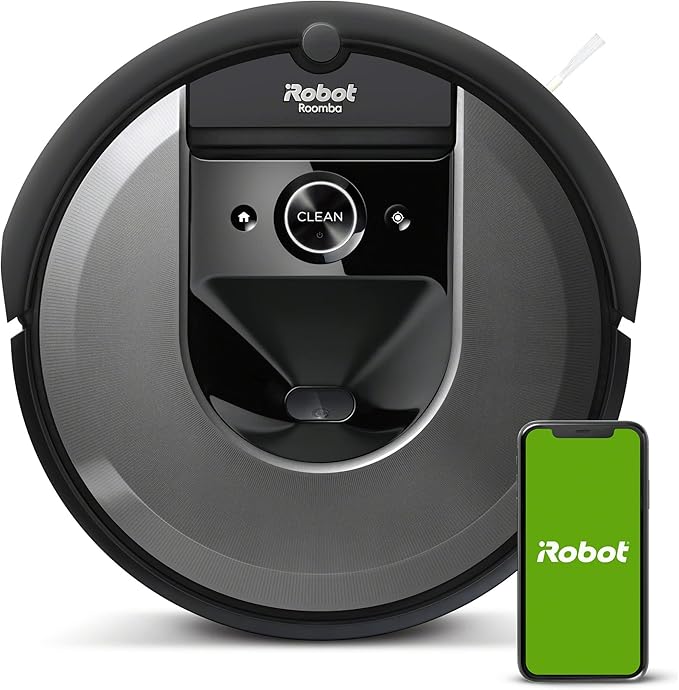
Quick Verdict: Our top pick is the iRobot Roomba i7 7150 Robot Vacuum with WiFi (Best Overall) — iRobot's flagship with Imprint Smart Mapping, rubber combo brush rolls (no hair tangles), and self-empty dock compati. Priced at $949.95.
Budget Pick: The Shark Matrix Robot Vacuum with LiDAR RV2310 at $179.99 — LiDAR mapping at a budget price.
Who This Guide Is For
This guide is for you if:
- You're buying your first robot vacuum and want to understand the $200-$1,500 price range
- You're tired of vacuuming and want to know if a robot vacuum can genuinely replace it
- You have pets and want to know which features actually matter for pet hair pickup
Skip this guide if:
- You just want the best robot vacuum — see our comparison pages
- You have a very large home or lots of stairs — robot vacuums have real limitations there
Quick verdict: A robot vacuum is worth it if you have hard floors or low-pile carpet, pets, and want to reduce daily maintenance cleaning. It is NOT a replacement for a traditional vacuum.
<Is a Robot Vacuum Actually Worth It? The Honest Breakdown

The 3-Sentence Verdict Before We Go Deeper
A robot vacuum will keep hard floors and low-pile carpet noticeably cleaner with zero effort on your part. It will not replace a full vacuum — it lacks the suction for deep carpet cleaning, stairs, or furniture upholstery. If you have hard floors or pets and value 10 minutes of cleaning you'd otherwise do every 2–3 days, a robot vacuum will earn its cost in lifestyle improvement within 3 months.What a Robot Vacuum Actually Looks Like in Your Home
Before buying, visualize this: a disc-shaped robot about 3 inches tall and 12–14 inches wide. It lives on a charging dock (about the size of a tissue box) along a wall. Every day (or on schedule), it leaves the dock, navigates your floor, and returns to charge.What you will see on first use:
The robot bumps into things it hasn't learned yet — charging cables, pet toys left on the floor, thin area rug edges. By week 2, a smart LiDAR-mapped robot has memorized your floor plan and navigates cleanly. Cheaper bump-and-go models never fully learn and remain somewhat erratic. What "robot vacuum clean" looks like: Floors are free of dust bunnies, pet hair, crumbs, and tracked-in debris. Baseboards and under-furniture areas (which humans rarely reach with traditional vacuums) stay genuinely cleaner. You will see difference particularly under the couch and around pet feeding stations. What it doesn't handle: Anything requiring vertical movement (stairs, couch cushions), thick carpet pile, wet spills (unless it has a mop function), or cord/sock obstacles it encounters for the first time.LiDAR vs Camera Navigation: The Most Important Spec
This single spec determines whether you'll love or tolerate your robot vacuum.LiDAR (Laser-based mapping):
Camera-based navigation:
Uses visual landmarks (furniture edges, baseboards) to orient. Works well in good lighting, struggles in dim rooms or rooms that look similar (identical hallways). Less expensive. Generally produces slightly less efficient cleaning patterns.Watch Before You Buy
“iRobot's flagship with Imprint Smart Mapping, rubber combo brush rolls (no hair tangles), and self-empty dock compatibility. Handles carpet and hard floors equally well.”
See Today’s Price →What we like
- Imprint Smart Mapping remembers up to 10 floor plan maps
- Wi-Fi with iRobot Home app and voice control
- Recharges and resumes cleaning for complete floor coverage
- 3-Stage Cleaning with dual multi-surface brushes
- Suggest Clean schedules based on your routine
Watch out for
- Auto-empty dock sold separately
- Less obstacle avoidance than j7+
- Lower suction than Roborock competitors at this price
- Higher price than Roborock S7 with similar features
Read Full Analysis
The Roomba i7 at $949.95 leads on one capability that no other option here matches at comparable price: Imprint Smart Mapping for up to 10 floor plans. Multi-floor homes can store a complete map for each level, allowing the robot to orient correctly as soon as it starts rather than remapping on every run. Wi-Fi with app and voice control, recharge-and-resume for complete floor coverage, and iRobot's intelligent scheduling round out the feature set. The honest context: the i7's 3.6-star rating from 6,196 reviews is notably the lowest on this page and warrants transparency — common complaints include suction performance versus Roborock competitors at the same price and the auto-empty dock being sold separately despite the premium positioning. Against the Roborock Q7 M5 at rank 2 ($229.99), the Roomba costs $63.65 more with lower suction (10,000Pa HyperForce in the Roborock versus the i7's standard suction) and no mopping capability — the Q7 M5 provides more cleaning capability per dollar. Against the Shark Matrix at rank 3 ($179.99), the Roomba costs $93.65 more for multi-floor mapping capability the Shark doesn't match. Against the Roomba 105 at rank 5 ($179.99), the i7 costs $44.64 more and adds multi-floor map storage — the 105 includes self-emptying dock already. The i7 is the right choice specifically for multi-level homes where floor plan memory meaningfully saves setup time.

“LiDAR mapping plus simultaneous vacuuming and wet mopping. Best value for mixed hard-floor homes. Auto-adjusts suction at carpet edges.”
See Today’s Price →Watch out for
- High price without the auto-empty dock of the M5+ version
- Manual emptying required after each session
- Carpet mopping requires setting no-mop zones in the app
Read Full Analysis
The Roborock Q7 M5 at $229.99 provides the strongest cleaning performance per dollar on this page — 10,000Pa HyperForce suction is the highest on this list by a significant margin, and simultaneous vacuuming and mopping covers carpet and hard floor in a single pass. LiDAR navigation produces precise room maps for scheduled zone cleaning, and the 150-minute runtime handles large homes without mid-clean recharging. Against the Roomba i7 at rank 1 ($949.95), the Roborock costs $63.65 less with substantially higher suction and mopping capability the Roomba lacks entirely — a compelling value argument for single-floor homes. The honest tradeoff: manual bin emptying after each session versus the i7's compatible auto-empty dock (sold separately). For daily schedulers who empty the bin as part of their routine, manual emptying is a 10-second task. Against the Shark Matrix at rank 3 ($179.99), the Roborock costs $30 more for mopping capability and the 10,000Pa suction premium. Against the eufy G20 at rank 4 ($169.99), the Roborock costs $50 less with higher suction and longer runtime — the eufy's 2,500Pa versus 10,000Pa difference is measurable on carpet embedded pet hair. The carpet mopping limitation is real — mopping should be restricted to hard floors via no-mop zones in the app to avoid wetting carpet. Best for mixed hard floor and carpet homes where maximum suction and simultaneous mopping are priorities.
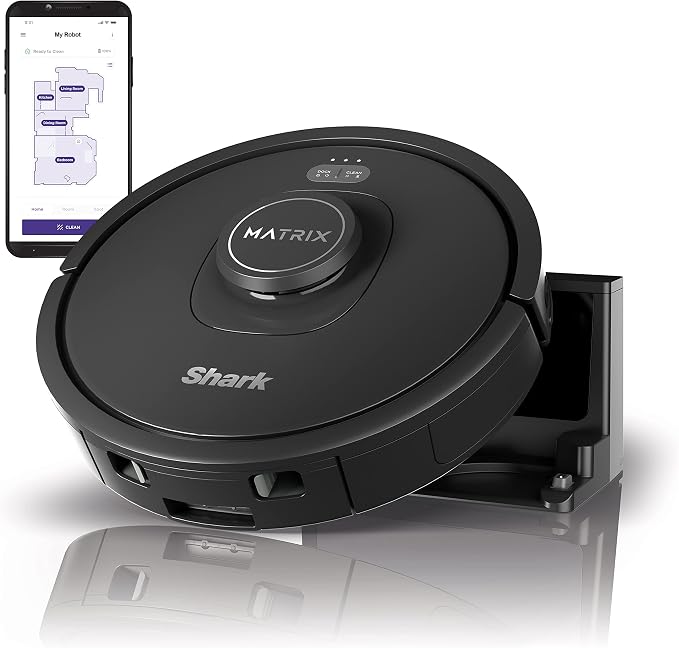
“LiDAR mapping at a budget price. Matrix cleaning pattern misses fewer spots than camera-based competitors. Excellent for large hard-floor spaces.”
See Today’s Price →What we like
- 360-degree LiDAR produces precision home mapping
- Matrix Clean systematic grid pattern ensures no missed sections
- Self-cleaning brushroll prevents hair tangles
- Under $180 for full LiDAR mapping capability
Watch out for
- No self-emptying — manual bin emptying required
- 90-minute runtime may require recharging for large homes
Read Full Analysis
The Shark Matrix RV2310 at $179.99 is the best LiDAR mapping value on this page — 360-degree LiDAR precision navigation at the lowest price in this comparison, underpriced versus the feature set it delivers. The Matrix Clean grid pattern ensures complete row-by-row coverage rather than the random-bounce navigation of cheaper robots that miss sections. The self-cleaning brushroll actively removes hair wraps rather than accumulating them, which meaningfully reduces maintenance for pet owners who otherwise must manually cut hair off the brush every few sessions. Against the Roborock Q7 M5 at rank 2 ($229.99), the Shark costs $30 less and gives up mopping capability and the 10,000Pa suction advantage — appropriate for homes with primarily hard floors and lighter carpet cleaning needs. Against the Roomba i7 at rank 1 ($949.95), the Shark costs $93.65 less without multi-floor map storage — the right choice for single-floor homes where that capability adds no value. Against the eufy G20 at rank 4 ($169.99), the Shark costs $80 less for comparable LiDAR navigation and a self-cleaning brushroll the eufy lacks. The 90-minute runtime is the genuine limitation for very large homes over 2,000 sq ft — it may require a recharge before completing a full-home clean. At $169.99 it's the lowest-priced LiDAR robot on this page, making it the obvious recommendation for buyers who want precision mapping without paying the iRobot or Roborock premium.

“Hybrid vacuum-mop with 2-in-1 function. Quiet operation, easy to set up. Best for smaller homes and apartments.”
See Today’s Price →What we like
- 2-in-1 vacuum and mop combo saves time on hard floors
- 2500Pa suction handles dust and pet hair
- Smart Dynamic Navigation for efficient coverage
- Wi-Fi with eufy app and Alexa voice control
- Works on hardwood, tile, and low-pile carpet
Watch out for
- Mopping is basic pad-only — no active scrubbing
- Small 150ml water tank limits mop run coverage
- Mapping less advanced than premium models
- Not ideal for thick carpets
Read Full Analysis
The eufy G20 Hybrid at $169.99 occupies a specific position: vacuum and mop simultaneously at a mid-range price, with Wi-Fi connectivity and voice control integration. The 2,500Pa suction is adequate for hard floors and low-pile carpet but meaningfully below the Roborock Q7 M5's 10,000Pa at rank 2 ($229.99) — that difference shows on medium-pile carpet and embedded pet hair. For homes that are primarily hard floor (hardwood, tile, laminate) with area rugs rather than wall-to-wall carpet, 2,500Pa is sufficient and the mopping pad adds genuine daily floor maintenance value. The 150ml water tank is the honest mopping limitation — it covers approximately 150 sq ft before running dry, which means large kitchens and open plans may need a refill mid-session or the mop function becomes dry-mopping by the end. Against the Shark Matrix at rank 3 ($179.99), the eufy costs $80 more for simultaneous mopping capability the Shark doesn't offer. Against the Roborock Q7 M5 at rank 2 ($229.99), the eufy costs $50 more with significantly lower suction — a difficult value argument unless you specifically prefer eufy's app and ecosystem. Against the Roomba i7 at rank 1 ($949.95), the eufy costs $13.65 less with mopping capability iRobot lacks. Best for hard-floor dominant households on moderate budgets who want the convenience of combined vacuuming and mopping in one robot without the Roborock's premium suction pricing.

“Camera-based navigation at a low price. Works best in simple floor plans with good lighting. Great first robot vacuum for small apartments.”
See Today’s Price →What we like
- Auto-empty dock
- LiDAR navigation
- 120-min runtime
- Wi-Fi app
Watch out for
- Higher price than entry-level robot vacuums
- Self-empty dock bags need periodic replacement
- LiDAR navigation requires initial mapping run to optimize routes
Read Full Analysis
The iRobot Roomba 105 at $169 includes the self-emptying dock that the Roomba i7 at rank 1 ($949.95) sells separately — at $44.64 less. For buyers who specifically want the iRobot brand with self-emptying convenience and LiDAR navigation, the 105 provides that combination at a lower total cost than the i7 plus its dock. Self-emptying matters for genuine set-and-forget use: without it, you must remember to empty the bin before it fills (typically every 1-3 runs depending on home size and debris load), which requires the same attention that defeats the purpose of a scheduled robot. The 120-minute runtime handles most single-floor homes in one session. Against the Roomba i7 at rank 1 ($949.95), the 105 costs $44.64 less with self-emptying included but without multi-floor Imprint mapping — for single-floor homes, the 105 is the better value. Against the Roborock Q7 M5 at rank 2 ($229.99), the Roomba costs $19.01 more with iRobot brand reliability and self-emptying, but significantly lower suction and no mopping. Against the Shark Matrix at rank 3 ($179.99), the Roomba costs $49.01 more for self-emptying and LiDAR in the iRobot ecosystem. The 3.7-star rating from 764 reviews is lower than ideal — a relatively small sample in iRobot terms, and worth monitoring for consistent complaint patterns. Best for: iRobot brand loyalists on single-floor homes who want self-emptying without paying the i7 premium.
Frequently Asked Questions
Can a robot vacuum replace my regular vacuum completely?
How long do robot vacuums last?
Will a robot vacuum fall down stairs?
Can I run a robot vacuum in multiple rooms?
What happens when the robot gets stuck or its battery dies in the middle of the floor?
Are robot vacuums noisy?
Do I need Wi-Fi for a robot vacuum?
How We Analyze Products
We analyze Amazon review data — often thousands of reviews per product — to surface patterns that individual buyers miss. Our process aggregates star ratings, review counts, and buyer sentiment at scale, identifying which strengths and weaknesses appear consistently across the largest review samples available. The 47,655+ reviews analyzed on this page represent real verified-purchase feedback from Amazon buyers.
Each product earned its placement through data: total review volume, average rating, and the specific praise and complaints that repeat most often across buyers. No manufacturer paid for placement on this page. Products appear here because buyers endorsed them at scale, not because a company asked us to feature them.
We use AI to summarize review sentiment — not to fabricate opinions, but to condense what thousands of buyers actually wrote into a readable format. The pros and cons you see reflect the most common themes found in verified purchaser reviews, paraphrased for clarity. We do not claim to have accessed Reddit, YouTube, or specific publications in generating these summaries.
Prices shown reflect Amazon pricing at the time this page was last generated. Click “See Today’s Price” to get the current live price on Amazon. Read our full methodology →