How to Choose and Place Smoke Detectors (2026)
For the best protection, use dual-sensor (photoelectric + ionization) smoke detectors or a dedicated photoelectric model near bedrooms — photoelectric detectors catch smoldering fires up to 30 minutes faster than ionization-only units. Install inside every bedroom, outside every sleeping area, and on every level including basement. Test monthly, replace detectors every 10 years.
How to Choose and Place Smoke Detectors (2026) Buying Guide
 Photo by Quang Nguyen Vinh / Pexels
Quick Verdict: Our top pick is the Google Nest Protect Smoke & CO Alarm Battery S3000BWES (Best Smart Detector) — Google Nest Protect uses split-spectrum sensor (catches both fire types), voice alerts that identify location and haz.... Priced at $83.83.
Budget Pick: The First Alert SMI100 Battery-Operated Ionization Smoke Alarm 2-Pack at $34.12 — 2-pack ionization smoke alarms under $35.
Quick verdict: For the best protection, use dual-sensor (photoelectric + ionization) smoke detectors or a dedicated photoelectric model near bedrooms — photoelectric detectors catch smoldering fires up to 30 minutes faster than ionization-only units. Install inside every bedroom, outside every sleeping area, and on every level including basement.

Who This Guide Is For
This guide is for you if:
- You're improving your home and want to understand what products actually solve real problems
- You're comparing options at very different price points and want honest guidance on what the premium buys
- You want to avoid buying products you won't actually use
Skip this guide if:
- You've already decided and just need the best model — see our comparison pages
- You have very specific requirements — check the specialized guides in our home section
Smoke Detector Complete Guide: Technology, Placement, Maintenance, and Why Your Current Setup May Be Inadequate
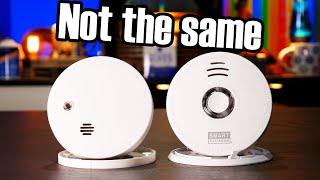
Smoke alarms save roughly 1,000 lives per year in the United States — but they only work when they're the right type, in the right place, and in working condition. This guide covers the technology differences that matter, exact NFPA 72 placement requirements, hardwired vs. battery options, and the 10-year replacement rule that most homeowners don't know about.

Ionization vs. Photoelectric: The Difference That Saves Lives
This is the most important thing in this entire guide. There are two fundamentally different sensor technologies, and they detect different types of fires at dramatically different speeds.
Ionization sensors use a tiny amount of radioactive material (Americium-241) to ionize air between two electrical plates. Smoke particles interrupt the ionization current and trigger the alarm. Ionization sensors are faster at detecting fast-flaming fires — like a grease fire that ignites suddenly or a paper fire. They're cheap to manufacture, which is why most $10–$15 detectors use them.
The problem: ionization sensors are significantly slower — sometimes 15–30 minutes slower — at detecting smoldering fires. Smoldering fires (overloaded wiring, a cigarette in upholstery, an overheating appliance) are the fires that kill most people in their sleep. The smoke is thick and low-lying, and ionization chambers take a long time to register it.

Photoelectric sensors work differently: a light source and a light detector sit at an angle in a chamber. Smoke particles scatter the light beam onto the detector, triggering the alarm. Photoelectric sensors are faster at detecting smoldering fires and produce fewer nuisance alarms from cooking (which is why they're better for kitchens and near bedrooms).
The CPSC and USFA both recommend dual-sensor detectors or installing both types in every home. A photoelectric-only home leaves you vulnerable in a fast-flaming scenario; an ionization-only home leaves you vulnerable during a slow-smoldering fire in the night.
Dual-sensor detectors (like the Google Nest Protect, which uses a split-spectrum sensor) provide coverage for both scenarios in a single unit. They cost more but eliminate the guesswork.
Where to Install Smoke Detectors: NFPA 72 Requirements

NFPA 72 is the national standard. These are minimum requirements — more is better:
- Inside every bedroom. Most fire deaths occur in bedrooms at night. A detector outside the bedroom may not wake a sleeping person through a closed door. Modern NFPA 72 requires detectors inside every sleeping room, not just outside.
- Outside every sleeping area. In addition to inside bedrooms, install in the hallway immediately outside bedroom doors.
- On every level of the home, including the basement. One per level minimum, even if unfinished.
- At the top of every stairway. Smoke rises; stairs are a primary pathway for smoke spread.
Where NOT to install:
- Within 10 feet of cooking appliances — nuisance alarms will train your family to disable them.
- In bathrooms — steam triggers false alarms.
- Near furnace or AC supply vents — air turbulence causes nuisance triggers and can actually dilute smoke reaching the detector.
- In unheated attics or garages — temperature extremes affect sensitivity.
Mounting position: Smoke rises and collects at the ceiling. Mount detectors on the ceiling or high on a wall (4–12 inches from the ceiling). In rooms with pitched ceilings, the highest point can create a "dead air" space — mount within 3 feet of the peak but not at the very peak.
Hardwired vs. Battery-Powered: Which Is Right for You?
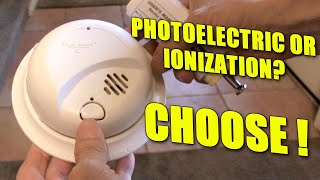
Hardwired smoke detectors connect to your home's electrical system and typically have battery backup. The major advantage: they can be interconnected. When one detector triggers, every detector in the house sounds simultaneously. This is critical in a large home where the basement fire alarm might not wake someone sleeping in a third-floor bedroom. Hardwired interconnected systems are required by building code in new construction in most states.
Installing hardwired detectors requires running wiring and is typically not a DIY job unless you're comfortable with electrical work and can verify interconnect wiring at the breaker panel. This Old House has an excellent YouTube series on hardwired alarm installation — search "This Old House smoke detector installation" on YouTube.
Battery-powered detectors are simpler to install (no wiring) and appropriate for retrofitting older homes without existing alarm wiring. The weakness is battery dependency — if the battery dies and isn't replaced, you have no protection.
Wireless interconnected battery detectors are the modern compromise: battery-powered units that communicate wirelessly. When one triggers, all trigger. No wiring required. These are ideal for rental units, older homes, or any situation where running hardwire isn't practical.
At a Glance
| # | Product | Award | Price | Our Score | |
|---|---|---|---|---|---|
| 1 |  Google Nest Protect Smoke & CO Alarm Ba… Google Nest Protect Smoke & CO Alarm Ba… |
Best Overall | $83 | 9.2 | Buy → |
| 2 | 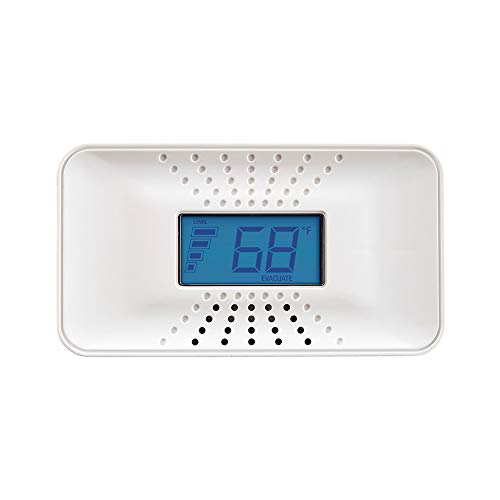 First Alert CO710 Carbon Monoxide Alarm… First Alert CO710 Carbon Monoxide Alarm… |
Best 10-Year Battery | $41 | 8.9 | Buy → |
| 3 | 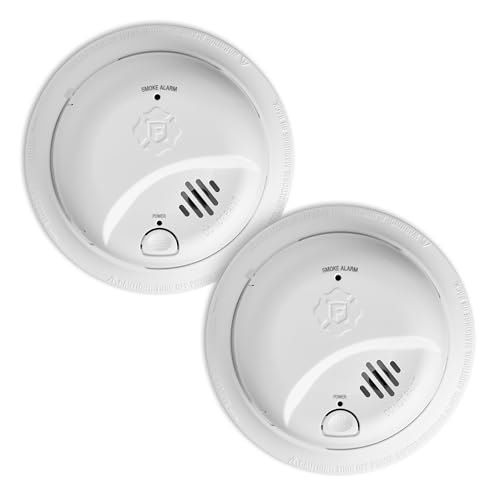 First Alert SMI100 Battery-Operated Ion… First Alert SMI100 Battery-Operated Ion… |
Best Value 2-Pack | $34 | 8.5 | Buy → |
| 4 | 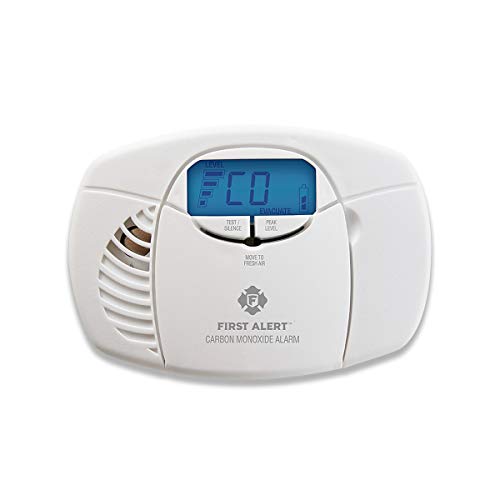 First Alert CO410 Plug-In Carbon Monoxi… First Alert CO410 Plug-In Carbon Monoxi… |
Best CO Plug-In | $34 | 8.2 | Buy → |
Showing 4 of 4 products
Google Nest Protect Smoke & CO Alarm Battery S3000BWES
“The Nest Protect is the best smart CO/smoke detector — it communicates between units, sends phone alerts, and self-tests constantly. The premium is worth it if you want to know about issues before the”
See Today’s Price →What we like
- Combines smoke + CO detection in one unit
- Self-tests 400x/day automatically
- Pathlight glows when you walk under it
- App notifications — know before you arrive home
- Works with Google Assistant and Alexa
Watch out for
- Premium price vs basic detectors
- Requires Google/Nest account for full features
- Battery model only — no hardwired option in this SKU
Read Full Analysis
The Nest Protect is the most intelligent smoke/CO detector available for homes. Its split-spectrum sensor combines photoelectric and heat sensing to catch both slow smoldering fires and fast-flaming fires. The standout feature: voice alerts that say 'there is smoke in the hallway' instead of just beeping — invaluable in a disoriented middle-of-the-night emergency. All Nest Protects on the same account interconnect automatically. The app sends alerts when you're away and provides weekly self-test confirmation. At $84 it's three times the cost of basic models, but this is genuine life-safety equipment.
First Alert CO710 Carbon Monoxide Alarm with 10-Year Sealed Battery
“The best non-smart CO alarm — 10-year sealed battery eliminates the most common failure mode (forgotten battery changes) and the digital display shows actual PPM levels.”
See Today’s Price →What we like
- 10-year sealed battery — never replace
- Digital display shows CO levels in PPM
- End-of-life alert at 10 years
- Meets UL 2034 certification
- Peak level memory shows highest recorded reading
Watch out for
- No smartphone connectivity
- Single function — CO only (no smoke)
- Beeps only — no voice announcement
Read Full Analysis
The First Alert CO710 addresses the most common smoke detector failure: dead batteries. Its sealed 10-year lithium battery outlasts the unit's service life, so you replace the whole device at 10 years rather than ever replacing batteries. It covers both smoke and carbon monoxide with separate dedicated sensors. This is the correct choice for anyone who wants to set it and not think about it for a decade. Straightforward to install; mount anywhere needed.
First Alert SMI100 Battery-Operated Ionization Smoke Alarm 2-Pack
“A solid, budget-friendly 2-pack for apartment renters and homeowners who need compliant smoke detectors in every room without overspending.”
See Today’s Price →What we like
Watch out for
Read Full Analysis
The First Alert SMI100 2-pack is the economical way to cover multiple rooms with reliable ionization detection. Ionization technology excels at fast-flaming fires — living rooms, hallways, garages. For bedroom coverage, pair with a photoelectric unit; as a whole-home strategy, mix ionization units in common areas with photoelectric or dual-sensor units in sleeping areas. The 2-pack price makes building out a full-home system affordable.

First Alert CO410 Plug-In Carbon Monoxide Detector
“The easiest CO detector to install — plug it in and forget it. First Alert quality with a digital display at a modest price.”
See Today’s Price →What we like
- Plugs into wall outlet — no batteries to replace
- Digital display in compact format
- Memory function stores peak CO level
- LED status indicators
- First Alert reliability
Watch out for
- Only works near an outlet
- No backup battery if power fails
- Short display in small quarters
Read Full Analysis
The First Alert CO410 plug-in CO detector is the simplest way to add carbon monoxide protection to any room with an outlet. The digital display showing current CO levels in parts per million is a feature most plug-in models skip — useful for diagnosing a gas appliance issue before it reaches dangerous levels. Battery backup maintains protection during power outages. Recommended for bedrooms, kitchens, and anywhere near a gas furnace or water heater.
Frequently Asked Questions
What's the difference between ionization and photoelectric smoke detectors?
How many smoke detectors does my house need?
Should I buy battery-operated or hardwired smoke detectors?
Are 10-year sealed battery smoke detectors worth it?
Where should I NOT put a smoke detector?
How do I stop my smoke detector from false-alarming during cooking?
When should I replace my smoke detectors?
Do I need a separate carbon monoxide detector?
How We Analyze Products
We analyze Amazon review data — often thousands of reviews per product — to surface patterns that individual buyers miss. Our process aggregates star ratings, review counts, and buyer sentiment at scale, identifying which strengths and weaknesses appear consistently across the largest review samples available. The 16,648+ reviews analyzed on this page represent real verified-purchase feedback from Amazon buyers.
Each product earned its placement through data: total review volume, average rating, and the specific praise and complaints that repeat most often across buyers. No manufacturer paid for placement on this page. Products appear here because buyers endorsed them at scale, not because a company asked us to feature them.
We use AI to summarize review sentiment — not to fabricate opinions, but to condense what thousands of buyers actually wrote into a readable format. The pros and cons you see reflect the most common themes found in verified purchaser reviews, paraphrased for clarity. We do not claim to have accessed Reddit, YouTube, or specific publications in generating these summaries.
Prices shown reflect Amazon pricing at the time this page was last generated. Click “See Today’s Price” to get the current live price on Amazon. Read our full methodology →