Affordable Alternatives to Jura Espresso Machines in 2026

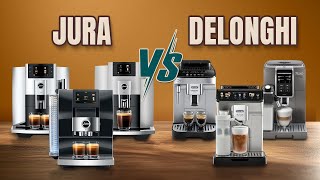
The DeLonghi Magnifica Evo is the best Jura alternative — a fully automatic bean-to-cup machine with built-in grinder and LatteCrema milk system delivers the same hands-off espresso experience as a Jura at roughly one-third the entry-level Jura price.
See Today’s Price →At a Glance
| # | Product | Award | Price |
|---|---|---|---|
| 1 | De'Longhi Magnifica Evo Espresso … De'Longhi |
Best Super-Auto Alt | $549.95 as of Nov 8, 2026 21:43 UTC details Buy → |
| 2 | Best Full-Auto | $528.99 as of Nov 8, 2026 21:33 UTC details Buy → |
|
| 3 | Best Semi-Auto | $499.95 as of Nov 8, 2026 21:43 UTC details Buy → |
|
| 4 | Best Enthusiast Pick | $457.21 as of Nov 8, 2026 21:15 UTC details Buy → |
|
| 5 | Best Beginner | $499.95 as of Nov 8, 2026 21:48 UTC details Buy → |
Affordable Alternatives to Jura Espresso Machines Buying Guide
 Photo by Chevanon Photography / Pexels
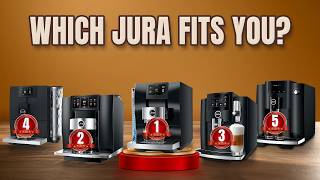
Jura machines range from $500 (JURA ENA 4) to $4,000 (JURA X10) and are the gold standard for super-automatic espresso at home — one-touch bean-to-cup brewing with integrated grinder, automatic milk frothing, and self-cleaning cycles. For most espresso drinkers, a $400-$600 alternative delivers genuine quality without the Jura premium.
What Jura Does Exceptionally Well
Jura's engineering advantage is the Pulse Extraction Process (P.E.P.) — a pre-infusion system that produces espresso closer to professional extraction quality than most super-automatics. The build quality is Swiss-engineered with a focus on longevity. Jura's app connectivity and programming depth is unmatched in the category. Their service network is reliable. These matter if you drink 3+ espresso drinks daily, have a discerning palate, or genuinely care about 10+ year appliance lifespan. For daily cappuccinos where you won't notice a 10-15% shot quality difference, there are strong alternatives.
Super-Automatic Alternatives: De'Longhi and Philips
De'Longhi Magnifica Evo is the most direct Jura ENA 4 alternative — fully automatic bean-to-cup with a conical burr grinder, programmable brew strength and temperature, and LatteCrema milk system for lattes and cappuccinos. For casual espresso drinkers who want convenience without the Jura service network pricing, this is the go-to. Philips 3200 Series with LatteGo is similarly priced and consistently rated alongside the Magnifica Evo — both handle the basics well with easier milk system cleanup than many competitors.
Semi-Automatic at a Lower Price Point
Gaggia Classic Evo Pro and De'Longhi La Specialista Arte at $418 take a different approach: you grind separately and pull shots manually, which produces better espresso than most super-automatics at any price if you invest in technique. These are for people who enjoy the process of making espresso, not just the result. Shot quality from a well-dialed Gaggia Classic rivals machines 3x the price. The learning curve is steeper, but the coffee ceiling is higher.
The Budget Entry Point
Breville Bambino Plus is the best bridge machine — semi-automatic with automatic steam wand, 3-second heat-up time, and enough control for beginners to learn real espresso technique. It's often the "next machine" after a pod machine, before someone decides whether to invest in a Jura or a prosumer setup.
Worth the Upgrade?
If you make 4+ drinks daily and want zero manual involvement, a mid-range Jura (E8 at $749.95) makes more sense than a De'Longhi that may need more maintenance at similar daily usage. For 1-2 drinks daily with occasional entertaining, the De'Longhi Magnifica Evo delivers genuine espresso quality at a third of typical Jura pricing.
The case for the De'Longhi Magnifica Evo Automatic Espresso & Coffee Machine
The De'Longhi Magnifica Evo Automatic Espresso & Coffee Machine is the top-ranked pick on this page. It holds a 3.8-star average from 656 Amazon customer reviews. Its listed strengths: 6 one-touch drinks with programmable My Menu; bean Adapt grind recommendations. The listed trade-off: 6 drinks — less variety than Jura E8. The closest alternative on this page is the Philips 3200 Series Fully Automatic Espresso Machine.
Watch Before You Buy
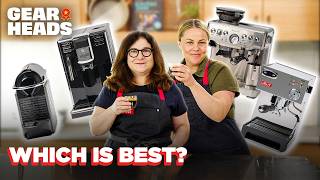
“The De'Longhi Magnifica Evo offers six one-touch drinks with a programmable My Menu and Bean Adapt grind recommendations across 13 settings — making it one of the easiest fully-automatic…”
See Today’s Price →What we like
- 6 one-touch drinks with programmable My Menu
- Bean Adapt grind recommendations
- 13 grind settings
- Auto-clean cycle
- ~$700 — best value on this list
Watch out for
- ~$700 — still a significant investment
- 6 drinks — less variety than Jura E8
- LatteCrema milk system requires regular cleaning
Read Full Analysis
De'Longhi Magnifica Evo earns the top spot on this Jura alternatives list as the most complete super-automatic at this price tier. Six one-touch drinks are programmable through the My Menu system — the kind of personalized push-button convenience that defines Jura machines at twice the cost. The Bean Adapt feature recommends grind settings based on your specific beans across 13 grind positions, an unusual capability. An auto-clean cycle handles daily maintenance without manual intervention. It sits at the same price as the Breville Barista Express on this page but delivers a fundamentally different experience — the Breville is semi-automatic and requires manual milk steaming technique, while the Magnifica Evo handles the full process automatically. The Gaggia Classic Evo Pro and Breville Bambino Plus at $399.95 cost less but demand barista skill to produce milk drinks. The Philips 3200 Series is the closest fully-automatic competitor worth comparing directly. The LatteCrema milk system is the one maintenance commitment: skip regular cleaning and milk performance degrades noticeably. The honest trade-off versus Jura is drink variety — six drinks versus the Jura E8's wider menu — but for most households, six covers everything needed daily. Choose De'Longhi Magnifica Evo if you want push-button espresso and milk drinks with Jura-style programmability without the Jura price. The Philips 3200 is a comparable fully-automatic worth putting side-by-side before committing.

“The Philips 3200 LatteGo distinguishes itself with a two-part milk system that rinses in seconds and an AquaClean filter rated for up to 5,000 cups before descaling — far lower maintenance than most…”
See Today’s Price →What we like
- 2-part LatteGo milk system — easiest cleaning here
- AquaClean filter — up to 5,000 cups before descaling
- 100% ceramic grinder — durable and clean
- 12 grind settings
- ~$800 — strong value at this tier
Watch out for
- 5 drinks — fewer than competitors at this price
- Less drink customization than Jura
- Philips app less developed than De'Longhi
Read Full Analysis
The Philips 3200 Series LatteGo at $533.34 takes rank 2 on this Jura-alternative page by solving the biggest daily frustration in fully automatic espresso: milk system cleaning. The two-part LatteGo carafe rinses under the tap in seconds — no internal tubes, no nozzles to soak overnight, no milk residue accumulating in channels you cannot reach. At this price point that operational difference is real: competing automatic machines like the De'Longhi Magnifica Evo at $549.95 require full milk circuit cleaning cycles that add minutes to every latte session. The AquaClean filter is the other standout spec: rated for up to 5,000 cups before descaling versus the 300-500 cup intervals typical of standard machines. For a household pulling two to three drinks daily that translates to years between descaling events rather than months. The 100% ceramic grinder with 12 settings is durable and runs cool, preserving volatile aromatics that steel burr grinders heat away during grinding. The Philips sits between the Breville Bambino Plus at $399.95 (rank 5, no built-in grinder, manual steaming) and the Breville Barista Express at $549.95 (rank 3, semi-automatic, skill-based). The Philips is the correct choice if you want consistently good lattes with minimal effort and minimal cleaning maintenance. Choose the Breville Barista Express if you want to develop espresso technique. The trade-off is drink variety: five programmable options is narrower than what the De'Longhi or Jura lineup offers at higher price points.

“The Breville Barista Express is the rare machine that grows with your skill — a conical burr grinder with 16 settings, PID temperature control to ±1°C, and pre-infusion give enthusiasts…”
See Today’s Price →What we like
- Conical burr grinder with 16 settings
- PID temperature control ±1°C
- Both pressurized and non-pressurized baskets included
- Pre-infusion for even extraction
- Grows from beginner to advanced technique
Watch out for
- ~$700 — significant investment
- Single boiler — wait between brew and steam
- Learning curve for grinder dialing
Read Full Analysis
The Breville Barista Express earns rank 3 on this page as the machine for espresso enthusiasts who want to develop real technique without buying a separate grinder. The integrated conical burr grinder with 16 settings is the defining advantage: fresh grinding immediately before extraction preserves aromatic compounds that pre-ground coffee loses within hours of opening, and 16 settings give enough range to dial in for different bean origins and roast levels. PID temperature control to ±1°C eliminates the thermal variance that undermines extraction consistency on machines without active temperature management. Both pressurized and non-pressurized filter baskets are included. The pressurized basket is forgiving during the learning period; the non-pressurized basket rewards proper grind-dose-tamp technique with noticeably cleaner espresso. Pre-infusion wets the puck gently before full pressure engages, reducing channeling on uneven tamping. These are genuine espresso fundamentals. The honest limitation is the single boiler: 20-30 seconds must pass between pulling a shot and steaming milk, which slows service for households making back-to-back lattes. The Philips 3200 LatteGo (rank 2, $533.34) eliminates this friction at $16 less — choose the Breville if skill development and grind control matter to you, choose the Philips if you want push-button consistency. The Gaggia Classic Evo Pro (rank 4, $449) offers commercial-grade components at $100 less but requires purchasing a separate grinder, pushing total cost to the same range.
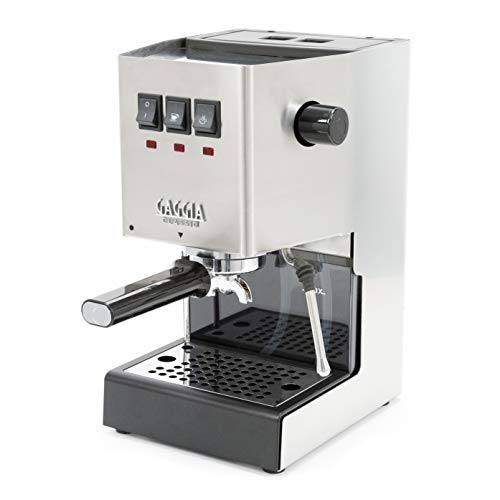
“The Gaggia Classic Evo Pro uses a commercial-grade 58mm portafilter — the same size as professional machines — giving it genuine upgrade potential as your technique improves. A solenoid…”
See Today’s Price →What we like
- Stainless steel 58mm commercial portafilter
- Commercial three-way solenoid valve
- Commercial steam wand
- Solid steel housing, made in Italy
- 9-bar espresso extractions
Watch out for
- No built-in grinder
- Manual steaming and dosing take practice
- Its listing gives no heat-up time, tank size or warranty figure
Read Full Analysis
The Gaggia Classic Evo Pro earns rank 4 as the enthusiast starting point that doesn't limit your ceiling. The 58mm commercial portafilter is the same diameter found in high-end café machines: it accepts the full ecosystem of third-party baskets, handles, and distribution tools that the proprietary portafilters on fully automatic machines — including the Philips 3200 at rank 2 and the De'Longhi at rank 1 — cannot use. That compatibility becomes meaningful as technique advances and you want to experiment with VST precision baskets, bottomless portafilters, or distribution tools. The solenoid valve is a practical operational detail: it depressurizes the group head instantly when brewing stops, letting the spent puck release dry rather than soaking wet. This prevents grounds scattering during knock-out and reduces residue buildup inside the machine. The steam wand produces actual microfoam — the glossy, consistent-texture milk required for latte art — rather than the coarse aerated froth that beginner-segment wands deliver. The critical limitation: the Gaggia has no built-in grinder. A decent entry-level burr grinder adds $100-200, pushing total cost to $549-649 — in the same range as the Breville Barista Express at $549.95 (rank 3), which includes an integrated grinder. The Breville is the better value if you're starting from scratch. Choose the Gaggia if you already own a grinder, or if you want to invest in a dedicated grinder that performs better than any machine-integrated grinder at this price tier can match.

“The Breville Bambino Plus at $498.49 heats up in just 3 seconds — fastest on this list — and includes an automatic milk frothing system that delivers steamed milk without technique. ThermoJet…”
See Today’s Price →What we like
- ThermoJet heating reaches extraction temperature in 3 seconds
- Automatic steam wand with adjustable milk temperature and texture
- PID digital temperature control and low-pressure pre-infusion
- Purges its heating system automatically after steaming
- Compact: 7.7 inches wide
Watch out for
- No built-in grinder
- The automatic wand gives less direct control than a manual wand
- 54mm portafilter rather than the 58mm commercial size
Read Full Analysis
The Breville Bambino Plus is the most accessible machine on this Jura alternatives page, earning Best Beginner through three features that lower the technical barrier to home espresso: a 3-second ThermoJet heat-up (the fastest on the page), an automatic milk frothing system that steams milk to the correct temperature and texture without manual technique, and pre-infusion that compensates for minor grind inconsistencies and reduces channeling. The 54mm portafilter grows with developing skills -- compatible with a wide range of basket and filter configurations as the user advances. On this page against the Breville Barista Express and Gaggia Classic Evo Pro, the Bambino Plus makes a clear tradeoff: it removes the technical barrier at the cost of customization depth. The Barista Express includes an integrated grinder and offers more manual extraction control -- the better path for users ready to develop barista skills. The Gaggia Classic Evo Pro is a commercial-grade manual semi-automatic that rewards technique with exceptional espresso quality, but demands precise grind and tamp discipline to produce consistent shots. The Bambino Plus is the right entry point before those machines. Buy the Breville Bambino Plus if you're new to home espresso and want a capable machine that produces consistently good lattes without a learning curve. The automatic steam wand and 3-second heat-up are the two features most new espresso drinkers appreciate immediately. Step up to the Barista Express or Gaggia Classic once you develop genuine interest in extraction variables and want full manual control over the process.
Frequently Asked Questions
What is the best alternative to a Jura espresso machine?
Is De'Longhi as good as Jura?
Are Jura machines worth the money?
What espresso machine do coffee shops use?
Is Nespresso a good Jura alternative?
How We Chose These Products
We compare each product’s Amazon listing, the manufacturer’s published specifications and Amazon customer ratings, shown with their review counts as Amazon’s data, and rank the products on how well they answer this page’s question. We do not test products in hand and we do not run our own analysis of review text. A publication or expert is named only where we cite its published findings about that product. No manufacturer paid for placement on this page.
A price appears only when Amazon’s API supplied it at a recent daily refresh, with the date and time beside it, and is withdrawn at 4 AM Central on the day after it turns 24 hours old; otherwise use “Check price on Amazon” for the live price. Read our full methodology →